Kirjojen hintavertailu. Mukana 11 244 527 kirjaa ja 12 kauppaa.

Kirjahaku

Etsi kirjoja tekijän nimen, kirjan nimen tai ISBN:n perusteella.

1000 tulosta hakusanalla W. H. BENNET

Vier Große Galizische Erzaehler Im Exil: W. H. Katz, Soma Morgenstern, Manès Sperber Und Joseph Roth
Die Erfahrung der Flucht und Vertreibung sowie der Emigration und des Exils kennzeichneten das Leben der hier besprochenen grossen galizischen Erzahler Joseph Roth, Manes Sperber, Soma Morgenstern und Henry William Katz. Die schriftstellerische Umsetzung dieser Erfahrung steht im Mittelpunkt der hier versammelten Beitrage. Berucksichtigt wird sowohl das fiktive als auch das essayistische und autobiographische Werk jener Autoren, das im Rahmen der einschneidenden Exilerfahrung hinsichtlich seines neugewichteten, verscharften Blicks auf die ehemalige gemeinsame ostjudische Heimat, die eigene judische Identitat sowie die verantwortlichen Totalitarismen ausgeleuchtet wird.
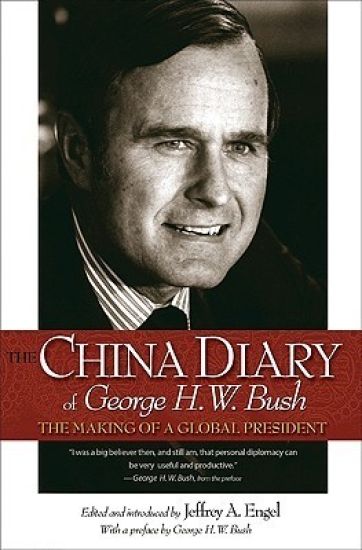
The China Diary of George H. W. Bush

The China Diary of George H. W. Bush

Princeton University Press
2008
sidottu
Available in print for the first time, this day-by-day diary of George H. W. Bush's life in China opens a fascinating window into one of the most formative periods of his career. As head of the United States Liaison Office in Beijing from 1974 to 1975, Bush witnessed high-level policy deliberations and daily social interactions between the two Cold War superpowers. The China Diary of George H. W. Bush offers an intimate look at this fundamental period of international history, marks a monumental contribution to our understanding of U.S.-China relations, and sheds light on the ideals of a global president in the making. In compelling words, Bush reveals a thoughtful and pragmatic realism that would guide him for decades to come. He considers the crisis of Vietnam, the difficulties of detente, and tensions in the Middle East, while lamenting the global decline in American power. He formulates views on the importance of international alliances and personal diplomacy, as he struggles to form meaningful relationships with China's top leaders. With a critical eye for detail, he depicts key political figures, including Gerald Ford, Donald Rumsfeld, Deng Xiaoping, and the ever-difficult Henry Kissinger. Throughout, Bush offers impressions of China and its people, describing his explorations of Beijing by bicycle, and his experiences with Chinese food, language lessons, and Ping-Pong. Complete with a preface by George H. W. Bush, and an introduction and essay by Jeffrey Engel that place Bush's China experience in the broad context of his public career, The China Diary of George H. W. Bush offers an unmediated perspective on American diplomatic history, and explores a crucial period's impact on a future commander in chief.
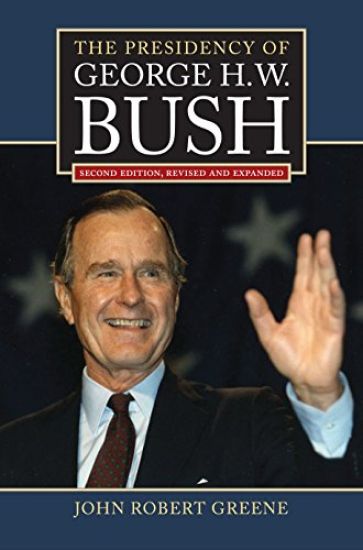
The Presidency of George H. W. Bush

The Presidency of George H. W. Bush

John Robert Greene

UNIVERSITY PRESS OF KANSAS
2026
nidottu
After George H. W. Bush lost his re-election bid to Bill Clinton in 1992, John Robert Greene’s verdict on the 41st president of the United States was that he “brought no discredit to the office” and “was both patient and prudent. . . mak [ing] few mistakes.” In the years since the release of Greene’s profile of the senior Bush, deemed by Publishers Weekly, “the essential introduction to Bush’s abbreviated, but still consequential, tenure in office,” a wealth of materials about Bush’s presidency has become available, even as distance has sharpened our perspective on the Bush years. In this significantly expanded second edition of The Presidency of George H. W. Bush, Greene takes full advantage of newly released documents to revisit Bush’s term, to consider his post-presidency accomplishment, and to enhance and clarify our understanding of his place in history. Such milestones as the fall of the Berlin Wall, the reunification of Germany, the fall of the Soviet Union, the savings and loan crisis, and the transition to the Clinton administration receive renewed and far more detailed treatment here, as do the ramifications of George H. W. Bush’s positions and policies. Greene also devotes ample attention to Bush’s post-presidency, including his relationship with his son, President George W. Bush, as well as the development of his close friendship with Bill Clinton. The elder Bush emerges from this reappraisal as a considerably more activist president, with a more activist administration, than was previously assumed. Greene’s concise and readable account drawing on the contents of the Bush Library, the papers of James A. Baker III, and personal interviews, shows us the 41st president—and thus an important chapter in American history—in a new and more revealing light.
Here Cometh the Son: The Gospel According to Jesus H. W. Christ
After 2,000 years of watching people act like, well, people, Jesus is one angry messiah. "Here Cometh the Son" is a rant two millennia in the making. Rather than turn another cheek, the Lamb of God spews forth His take on people, religion, sex, raisin bran, and on the burdens of being everybody's favorite divinity. Such as, 1) I hate people who describe populated events as "like a zoo." I'm having a difficult time equating this public pool (no matter how unpleasant) to a bunch of sad, drugged up animals passing their lives in cages. 2) I hate people who explain to me that their diets are "100% natural." Everybody's diet is 100% natural. Everything everyone has ever eaten is derived from nature. The alternative is that your diet is supernatural. Like you eat ghosts. So unless you were the inspiration for the Pac-Man character, your diet is totally natural. 3) I hate people who enjoy puzzles. There's nothing worse than a puzzle in a box. After hours of tedious labor, you marvel at your creation: the exact same picture you can clearly see on the cover of the box. 4) I hate people who say "my house is your house." Then why did you get so pissed when I hired a real estate agent and put it up on the market? It's mine. And I don't really want it. So why wouldn't I do that? I could totally use the money. Even if all I did was rearrange the furniture or paint the walls, you'd still be upset. It seems the real problem here is communication. First you tell me the house is mine - I own it - and then you throw a fit when I behave like a homeowner. I'm getting mixed signals. 5) I hate people who attend or participate in parades. Here, I stand on concrete in a crowd of people I don't like while scores of people I don't know (who aren't famous) pass by and wave at me. "It's the greatest thing since sliced bread ", they tell me. Okay, the "greatest thing since sliced bread" happened about thirty seconds after the first slicing. Even this book is greater than that.