
Kirjahaku
Etsi kirjoja tekijän nimen, kirjan nimen tai ISBN:n perusteella.
1000 tulosta hakusanalla William D. Howells
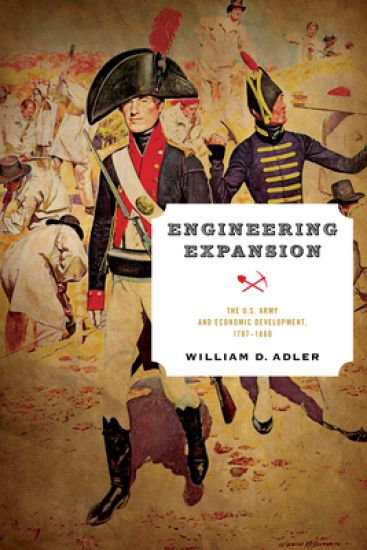
Engineering Expansion examines the U.S. Army's role in U.S. economic development from the nation's founding to the eve of the Civil War. William D. Adler starts with a simple question: if the federal government was weak in its early years, how could the economy and the nation have grown so rapidly? Adler answers this question by focusing on the strongest part of the early American state, the U.S. Army. The Army shaped the American economy through its coercive actions in conquering territory, expanding the nation's borders, and maintaining public order and the rule of law. It built roads, bridges, and railroads while Army engineers and ordnance officers developed new technologies, constructed forts that encouraged western settlement and nurtured nascent communities, cleared rivers, and created manufacturing innovations that spread throughout the private sector. Politicians fought for control of the Army, but War Department bureaucracies also contributed to their own development by shaping the preferences of elected officials. Engineering Expansion synthesizes a wide range of historical material and will be of interest to those interested in early America, military history, and politics in the early United States.
American Coastal Rescue Craft
William D. Wilkinson; Timothy R. Dring
University Press of Florida
2009
muu
William Wilkinson and Timothy Dring provide detailed history and technical design information on each and every type of small rescue craft ever used by the United States Life-Saving Service and United States Coast Guard, from the early 1800s to current day. By looking at these vessels, many of which featured innovative designs, they shed light on the brave men and women who served in USLSS and USCG stations, saving innumerable lives. In the book and on the accompanying CD, rare photographs and drawings of each type of boat accompany detailed design histories, specifications, and station assignments for each craft. Including motorized, wind-powered, and human-powered vessels, this work will become an important reference for maritime historians, rescue craft preservation groups, and museums, as well as members of the general public interested in these craft.

Love and Marriage in the Time of the Troubadours
William D. Paden
University Press of Florida
2026
sidottu
Overturning the myth that medieval marriages were loveless, shown through a close analysis of troubadour poetry and historical records Medieval marriages are often understood to have been loveless, due partly to assumptions about arranged matches that have been reinforced by scholars who suggest that troubadour poetry was not concerned with love but rather with poetic form and structure. In this book, William Paden challenges that belief, using historical sources to argue that the songs of the troubadours reveal an inextricable link between desire and marriage. Paden analyzes twelfth- through fourteenth-century troubadour poetry from the Occitan region, which stretched across portions of medieval France, Catalonia, and Italy; visual art, both images and objects; a corpus of over a thousand marriage contracts; and various liturgical manuscripts. Tracing literary and artistic output alongside the evolution of the institution of marriage from late antiquity to the early and high Middle Ages, Paden demonstrates that the stereotype of loveless unions reflects modern scholarly bias more than medieval reality. Love and Marriage in the Time of the Troubadours restores the period’s complexity, showing how desire and devotion often intertwined—and how courtly song reveals the relationship between the two.
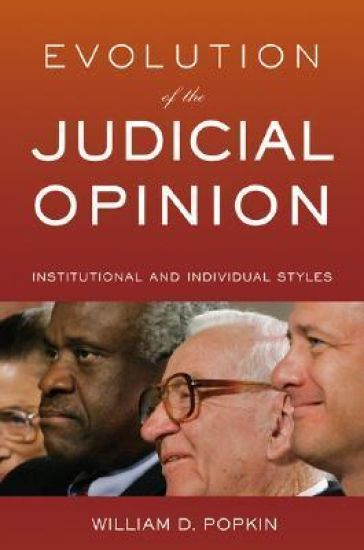
In this sweeping study of the judicial opinion, William D. Popkin examines how judges' opinions have been presented from the early American Republic to the present. Throughout history, he maintains, judges have presented their opinions within political contexts that involve projecting judicial authority to the external public, yet within a professional legal culture that requires opinions to develop judicial law through particular institutional and individual judicial styles. Tracing the history of judicial opinion from its roots in English common law, Popkin documents a general shift from unofficially reported oral opinions, to semi-official reports, to the U.S. Supreme Court's adoption in the early nineteenth century of generally unanimous opinions. While this institutional base was firmly established by the twentieth century, Popkin suggests that the modern U.S. judicial opinion has reverted—in some respects—to one in which each judge expresses an individual point of view. Ultimately, he concludes that a shift from an authoritative to a more personal and exploratory individual style of writing opinions is consistent with a more democratic judicial institution.
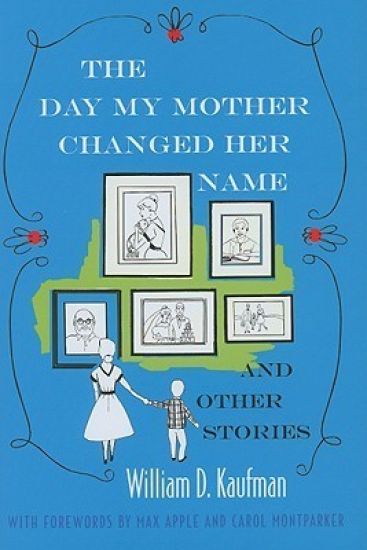
The Day My Mother Changed Her Name and Other Stories
William D. Kaufman
Syracuse University Press
2008
sidottu
William D. Kaufman grew up on his mother's kugel and his father's boyhood stories. The son of Jewish immigrants from Lithuania and the Ukraine and one of five children, he learned how to translate his colorful childhood into tales of his own, regaling audiences of family, friends, and eventually his retirement community with periodic public readings. Now, at the age of 93, Kaufman makes his stories, filled with a sharp wit and telling detail, available to a wider audience for the first time.In the title story a young Jewish boy is shamed by a narrow-minded teacher who forces him to admit, before the whole class, that his mother cannot read English. His mother's eventual encounter with the teacher offers a lesson in self-respect, with just the right balance of grace and moxie. In ""The Search for God in the A and P"" a young boy goes on a clandestine mission to compare prices at his father's grocery competition; the expedition meets with comic results when the young boy refuses to be bullied in this David-and-Goliath-style parable. These semi-autobiographical stories, populated with outsized and magnetic characters, subtly layer the specifics of the Jewish experience with universal dilemmas of childhood, growing up, and old age.
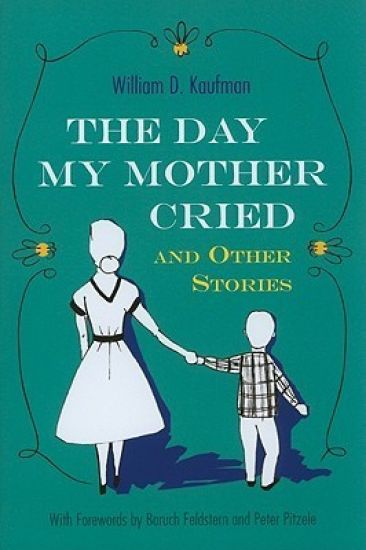
The lasting charm of Kaufman’s stories lies in a delightful mix of personal incidents and observations set against an anchoring backdrop of cultural tradition. His new collection is filled with tales from his parents’ homeland in the Ukraine, his own childhood reminiscences, and his adult travels. We watch the young author forced alongside ""every Jewish boy on the block"" to emulate Yehudi Menuhin on a ten-dollar violin with a moldy bow until the boy is spared by an innate lack of talent and his father’s judgment of his concert: "Enough is enough is more than enough." Kaufman is carefully attuned to the awkwardness of adulthood as well as to that of early adolescence. In "Interlude in Bangkok", his narrator scours the city for a synagogue while pursued by a prostitute. Later he and a friend encounter Greta Garbo in a museum café and are too frightened to approach her. "I am not she", intones the mysterious movie star, and in his own way, Kaufman says that of himself in these stories through an autobiographical narrator whose memories take on resonant, literary shapes in their retelling.
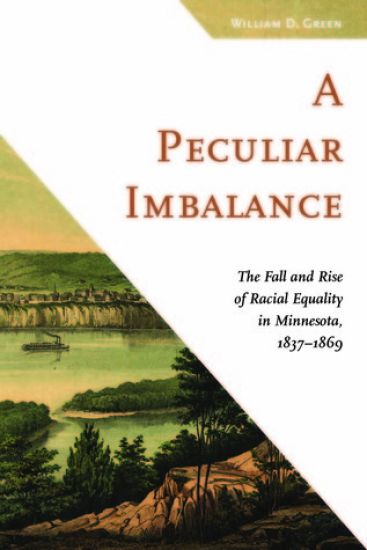
A Peculiar Imbalance is the little-known history of the black experience in Minnesota in the mid-1800s, a time of dramatic change in the region. William D. Green explains how, as white progressive politicians pushed for statehood, black men who had been integrated members of the community, owning businesses and maintaining good relationships with their neighbors, found themselves denied the right to vote or to run for office in those same communities. As Minnesota was transformed from a wilderness territory to a state, the concepts of race and ethnicity and the distinctions among them made by Anglo-Americans grew more rigid and arbitrary. A black man might enjoy economic success and a middle-class lifestyle but was not considered a citizen under the law. In contrast, an Irish Catholic man was able to vote-as could a mixed-blood Indian-but might find himself struggling to build a business because of the ethnic and religious prejudices of the Anglo-American community. A Peculiar Imbalance examines these disparities, reflecting on the political, social, and legal experiences of black men from 1837 to 1869, the year of black suffrage.

A pivotal in the study of history and politics, not only in Alabama but in the other states of the South. Barnard's account is elegantly concise, the labor of conspicuous scholarship. In an effort to analyze Alabama's political bedrock, the author has tapped virtually every source. What results is a cogent and harmonious theme.
This is a comprehensive analysis of major social problems affecting the world today. William D. Eldridge provides a developmental description of human maturation and dysfunctional social processes. The chapters outline the causes and results of significant dilemmas of poverty, cognitive ideology, education, morality, and human creativity with which progressive thinkers struggle in attempting solutions to our major social problems. The analyses are in-depth and systematically involved to include thorough coverage of all primary psycho-social energies that produce functional and dysfunctional ways of living. Contents: Understanding the 'Basics' of Human Growth and Development; Poverty, Crime and Drug Abuse; The Role of Education in Society Today; Peace and International Conflict; Morality and Religion; The Future and Human Creativity.

In Fire and Power William D. Atwill maps the cultural contours of space-age America through readings of some of the era’s most popular and influential narratives: Saul Bellow’s Mr. Sammler’s Planet, John Updike’s Rabbit Redux, Norman Mailer’s Of a Fire on the Moon, Tom Wolfe’s The Right Stuff, Thomas Pynchon’s Gravity’s Rainbow, and Don DeLillo’s Ratner’s Star. Together, Atwill demonstrates, these key texts comprise a literary history of the space age, an exploration of the novel’s possibilities in uncertain times, and a disturbing critique of postwar society.The massive technological enterprise known as the Manned Space Program was, in Atwill’s words, “the historical marker of our age,” and in our race to the moon, he says, Bellow, Updike, Mailer, Wolfe, Pynchon, and DeLillo found a trope for the postmodern condition. To these writers, the space program was the most visible and outward sign of a radical shift in the culture that fostered it—a shift from modernism’s search for interior, individual unity amidst chaos to the postmodern perception of the individual’s fragmentation and uncertain standing in the world.
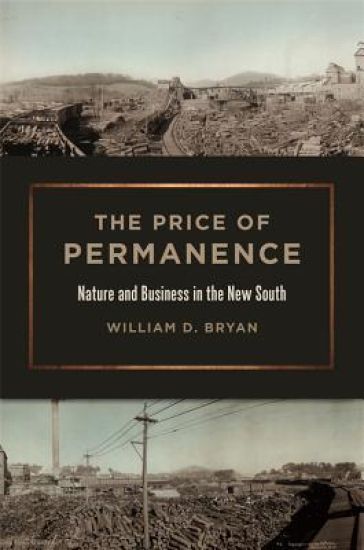
Using the lens of environmental history, William D. Bryan provides a sweeping reinterpretation of the post–Civil War South by framing the New South as a struggle over environmental stewardship. For more than six decades, scholars have caricatured southerners as so desperate for economic growth that they rapaciously consumed the region’s abundant natural resources. Yet business leaders and public officials did not see profit and environmental quality as mutually exclusive goals, and they promoted methods of conserving resources that they thought would ensure long-term economic growth. Southerners called this idea "permanence." But permanence was a contested concept, and these businesspeople clashed with other stakeholders as they struggled to find new ways of using valuable resources. The Price of Permanence shows how these struggles indelibly shaped the modern South.Bryan writes the region into the national conservation movement for the first time and shows that business leaders played a key role shaping the ideals of American conservationists. This book also dismantles one of the most persistent caricatures of southerners: that they had little interest in environmental quality. Conservation provided white elites with a tool for social control, and this is the first work to show how struggles over resource policy fueled Jim Crow. The ideology of "permanence" protected some resources but did not prevent degradation of the environment overall, and The Price of Permanence ultimately uses lessons from the New South to reflect on sustainability today.
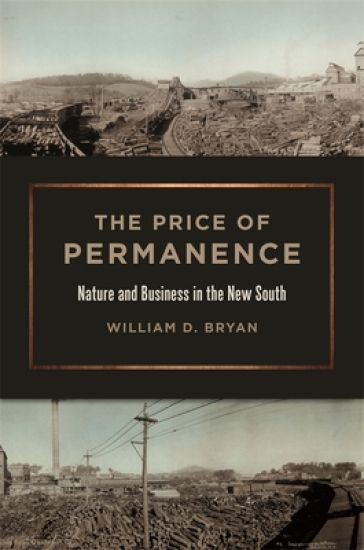
Using the lens of environmental history, William D. Bryan provides a sweeping reinterpretation of the post–Civil War South by framing the New South as a struggle over environmental stewardship. For more than six decades, scholars have caricatured southerners as so desperate for economic growth that they rapaciously consumed the region’s abundant natural resources. Yet business leaders and public officials did not see profit and environmental quality as mutually exclusive goals, and they promoted methods of conserving resources that they thought would ensure long-term economic growth. Southerners called this idea "permanence." But permanence was a contested concept, and these businesspeople clashed with other stakeholders as they struggled to find new ways of using valuable resources. The Price of Permanence shows how these struggles indelibly shaped the modern South.Bryan writes the region into the national conservation movement for the first time and shows that business leaders played a key role shaping the ideals of American conservationists. This book also dismantles one of the most persistent caricatures of southerners: that they had little interest in environmental quality. Conservation provided white elites with a tool for social control, and this is the first work to show how struggles over resource policy fueled Jim Crow. The ideology of "permanence" protected some resources but did not prevent degradation of the environment overall, and The Price of Permanence ultimately uses lessons from the New South to reflect on sustainability today.
Greatness and leadership are two ideas that often intersect, especially in the imagery of leading the pack of more than one hundred Supreme Court justices. Despite differences in interpretation, there are points of agreement concerning the names of the most remarkable people who have been and are the leaders of the pack. This book clarifies constitutional law and the history of America's highest bench by exploring the personalities and times of sixteen justices, from John Marshall to Sandra Day O'Connor and William H. Rehnquist.

Nathan Scott's Literary Criticism and Fundamental Theology
William D. Buhrman
Peter Lang Publishing Inc
2006
sidottu
"Nathan Scott's Literary Criticism and Fundamental Theology" reexamines the pioneering contribution of Nathan A. Scott, Jr. to the field of theology and literature. It both recalls Scott's achievement and suggests its continuing value by focusing on the question of Scott's method. Rather than following the traditional interpretation of Scott as a literary critic employing Paul Tillich's theology of culture, this book proposes that Scott's work is best understood as a form of fundamental theology. In doing so, it suggests that Scott's work models ways in which literary texts may be appropriately incorporated into theological discourse.
How do judges determine the meaning of laws? The extent to which judges should exercise their discretion in interpreting legislation has been a contentious issue throughout American history, involving questions about the balance of power between the legislature and the judiciary. In Statutes in Court William D. Popkin provides an indispensable survey of the history of American statutory interpretation and then offers his own theory of “ordinary judging” that defines the proper scope of judicial discretion.Popkin begins by discussing the British origins of statutory interpretation in this country. He then maps the evolving conceptions of the judicial role in the United States from Revolutionary times through the twentieth century before presenting his “ordinary judging” theory-one that asks the judge to use modest judicial discretion to assist the legislature in implementing good government. Claiming that theory cannot account for everything a judge does when determining statutory meaning or writing an opinion, Popkin shows how judges who strive to be conscientious in interpreting the law are often hampered by the lack of both a framework in which to fit their approach and a well-understood common vocabulary to explain what they do. Statutes in Court fills that gap. This work will be valuable to anyone concerned about the judicial role in the interpretation of laws-from judiciary officials and law professors to legal historians and political scientists.