Kirjojen hintavertailu. Mukana 12 390 323 kirjaa ja 12 kauppaa.

Kirjahaku

Etsi kirjoja tekijän nimen, kirjan nimen tai ISBN:n perusteella.

1000 tulosta hakusanalla William R Cook

Practical Criminal Investigations in Correctional Facilities
AN INSIDE LOOK INTO INVESTIGATING THE MOST VIOLENT SUB-CULTURE IN THE WORLD Once an offender is behind bars, many people believe that he is no longer a threat to society. However, the felonious activities of confined inmates reach out into society every day. These inmates run lucrative drug operations, commit fraud, hire contract murders, and commit a multitude of criminal offenses from inside the walls of our prisons. This book provides an in-depth resource guide to the relatively new field of corrections investigation. Illustrating the differences between street and prison investigations, Practical Criminal Investigations in Correctional Facilities provides a detailed list of how tos as well as numerous captivating case histories and photographs of actual crime scenes and evidentiary items. Chapters on intelligence gathering, undercover operations, and the use of confidential informants will aid you in the complex crimes that sometimes even involve officers and civilians. The book also covers legal aspects such as warrants, court preparation, and testimony to help you take a case from investigation to prosecution. Prison investigators must be able to respond effectively to every crime imaginable, from a grizzly homicide to a complex fraud case. Whether you're a long-time administrator or a novice criminal justice professional, Practical Criminal Investigations in Correctional Facilities gives you sound advice on how to handle crime in a community in which 100% of the population are convicted felons. ABOUT THE AUTHOR Coming from a family whose involvement with law enforcement dates back to the Civil War, William Bell's own education and career spans more than thirty years. Greatly influenced by his father, a retired Police Inspector, he began with the Dearborn, Michigan, Police Department where his responsibilities included work in road patrol, SWAT, undercover narcotics, and pattern crime. For nearly twenty years the author has been employed by the Colorado Department of Corrections, where he ultimately gained his expertise with the Criminal Investigation Division. He is noted for taking the investigation of prison crime into the streets.
Decolonization and Independence in Kenya, 1940-93
Kenyan historians chart Kenya's post-independence years. In this text, a group of Kenyan historians provide an analysis of the history of the 30 years since Kenya's independence in 1963. The first three chapters examine the transformation of the political arena from the period after World War II to the Mau Mau emergency and the period leading up to independence. There follows a section on Pax Kenyatta, when Jomo Kenyatta remained the pivotal agency in the postcolonial transformation. The chapters on the Moi eralooks to the recent past, as well as forward to the future as Kenya tries to develop its democratic procedures. North America: Ohio U Press; Kenya: EAEP
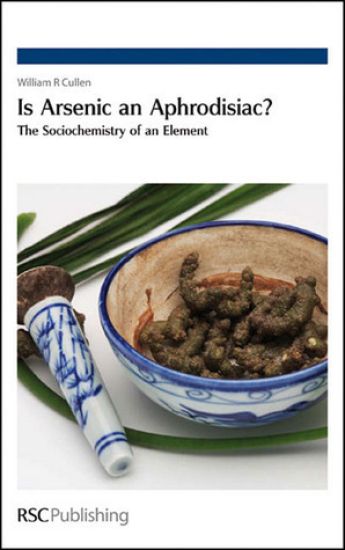
Is Arsenic an Aphrodisiac?

Is Arsenic an Aphrodisiac?

William R Cullen

Royal Society of Chemistry
2008
sidottu
Sex, drugs, rocks, gold, murder, war, mass poisonings, the deaths of Napoleon, Tchaikovsky, Mozart, and others are all linked by one element - arsenic! Arsenic has been around since the beginning of time and the word has become a metaphor for poison with associated shock value. The general public are fearful of any possible exposure to it and yet it holds a certain dark and eerie fascination! The average person has only one idea about arsenic - it is poison - and this reputation has a sound base. Some arsenic compounds are very toxic and have been used with criminal intent from the time of the ancient Romans to the present day. Up until now, there has been no book that covers arsenic with such breadth. This book is a general appreciation of how much the element, arsenic, has become part of our lives in an entertaining style covering the years 1000 BC to the present day. The coverage of the chemistry, toxicology, and medicinal aspects is deliberately kept at a level for the general reader to understand. It covers the way in which this ubiquitous element and its compounds have influenced the lives of the people of the world. The author's objective in writing this book was not to elaborate on the vast chemistry of the element, but to try to reveal to the general reader how the element and its compounds have become embedded in our social fabric, for good and for ill. No other element comes close in this regard and he uses the word sociochemistry to describe this interface between society and chemistry. The book covers a broad range of topics including the use of arsenic in human medicine in many cultures from Chinese medicine to the beginning of chemotherapy. This peaked in the western world in the early 20th century, with Ehrlich's discovery of salvarsan, an arsenic-based cure for syphilis that gave rise to the field of chemotherapy. Salvarsan and related compounds were eventually displaced by antibiotics such as penicillin. Arsenic trioxide has staged a comeback, however, and is being used as a successful treatment for a form of leukemia. Other chapters cover arsenic compounds which were widely used in agriculture and wood preservation during the 20th century and their associated myths as well as arsenic compounds as chemical warfare agents and the resulting stockpile. The topic of arsenic in the environment is discussed in depth - arsenic is all around us - in our soil, our water, and our food, and our bodies have adapted to its presence and it does not usually pose a problem. However, the natural presence of high concentrations of arsenic in drinking water currently threatens the lives of millions of people in India, Bangladesh, Mexico and elsewhere. It also covers mining and pesticide manufacturing which can lead to high local arsenic concentrations in soils, slag heaps and mine tailings which, when located close to human activities, can produce human health risks. Other chapters cover a variety of topics including: "A proposed connection between arsenic and Cot Death (SIDS) which caused panic "The high concentration of arsenic in kelp products-is this harmful? "What about the 237,000 tonnes of arsenic trioxide stored in a mine in Canada? "How toxic is arsenic anyway, and how do you assess the risks of exposure? "How did Napoleon die? These and many other topics are addressed at a level that will result in understanding without delving into too much technical detail or requiring a degree in chemistry. Essential reading for everyone with a general interest in science, this illuminating text covers a broad range of topics.
California Odyssey

California Odyssey

William R. Goulding; Howard R. Lamar

Arthur H. Clark Company
2009
sidottu
In 1849, William R. Goulding and the Knickerbocker Exploring Company struck out for California on the southern route--a road less traveled. This rare first-person diary of the southern Gold Rush trails, introduced and annotated by Patricia A. Etter, highlights an important alternative route to the Pacific Coast. One of the best-educated Gold Rush participants, Goulding kept a remarkably articulate journal that recounts his meetings with the interesting and important people he encountered along the way. He describes the details of the trail itself--the weather and scenery, birds and animals, and a march "amidst heards sic] of miriads of buffalo in all directions as far as the eyes could reach." Goulding also recorded encounters with Hispanics and American Indians.
The Indianization of Lewis and Clark

The Indianization of Lewis and Clark

William R. Swagerty

Arthur H. Clark Company
2012
sidottu
Although some have attributed the success of the Lewis and Clark expedition primarily to gunpowder and gumption, historian William R. Swagerty demonstrates in this two-volume set that adopting Indian ways of procuring, processing, and transporting food and gear was crucial to the survival of the Corps of Discovery. The Indianization of Lewis and Clark retraces the well-known trail of America's most famous explorers as a journey into the heart of Native America--a case study of successful material adaptation and cultural borrowing.Beginning with a broad examination of regional demographics and folkways, Swagerty describes the cultural baggage and material preferences the expedition carried west in 1804. Detailing this baseline reveals which Indian influences were already part of Jeffersonian American culture, and which were progressive adaptations the Corpsmen made of Indian ways in the course of their journey. Swagerty's exhaustive research offers detailed information on both Indian and Euro-American science, medicine, cartography, and cuisine, and on a wide range of technologies and material culture. Readers learn what the Corpsmen wore, what they ate, how they traveled, and where they slept (and with whom) before, during, and after the return.Indianization is as old as contact experiences between Native Americans and Europeans. Lewis and Clark took the process to a new level, accepting the hospitality of dozens of Native groups as they sought a navigable water route to the Pacific. This richly illustrated, interdisciplinary study provides a unique and complex portrait of the material and cultural legacy of Indian America, offering readers perspective on lessons learned but largely forgotten in the aftermath of the epic journey.
Badger and Coyote Were Neighbors

Badger and Coyote Were Neighbors

William R. Seaburg

Oregon State University
2000
nidottu
Anthropologist and folklorist Melville Jacobs worked to preserve the fast-disappearing languages and traditions of the Indian peoples of Oregon and Washington. This book presents an introduction to Jacobs's seminal research and gathers twenty stories that he collected and translated.
Dam Politics

Dam Politics

William R. Lowry

Georgetown University Press
2003
pokkari
The politics of building dams and levees and other structures are just part of the policies determining how American rivers are managed or mismanaged. America's well-being depends upon the health of those rivers and important decisions go beyond just dam-building or dam removal. American rivers are suffering from poor water quality, altered flows, and diminished natural habitat. Current efforts by policymakers to change the ways American rivers are managed range from the removal of dams to the simulation of seasonal flows to the restoration of habitat, all with varying degrees of success. Efforts to restore American rivers are clearly delineated by William Lowry in "Dam Politics" as he looks at how public policy and rivers interact, examines the physical differences in rivers that affect policies, and analyzes the political differences among the groups that use them. He argues that we are indeed moving into an era of restoration (defined in part as removing dams but also as restoring the water quality, seasonal flows, and natural habitat that existed before structural changes to the rivers), and seeks to understand the political circumstances that affect the degree of restoration. Lowry presents case studies of eight river restoration efforts, including dam removals on the Neuse and Kennebec rivers, simulation of seasonal flows on the Colorado river, and the failed attempt to restore salmon runs on the Snake river. He develops a typology of four different kinds of possible change - dependent on the parties involved and the physical complexity of the river - and then examines the cases using natural historical material along with dozens of interviews with key policymakers. Policy approaches such as conjunctive water management, adaptive management, alternative licensing processes, and water marketing are presented as possible ways of using our rivers more wisely. "Dam Politics" provides a useful and systematic account of how American waterways are managed and how current policies are changing. American rivers are literally the lifeblood of our nation. Lowry has written a lively and accessible book that makes it clear as a mountain stream that it matters deeply how those rivers are managed.
Preserving Public Lands for the Future

Preserving Public Lands for the Future

William R. Lowry

Georgetown University Press
1998
pokkari
Comparing national efforts to preserve public lands, William R. Lowry investigates how effectively and under what conditions governments can provide goods for future generations. Providing intergenerational goods, ranging from balanced budgets to space programs and natural environments, is particularly challenging because most political incentives reward short-term behavior. Lowry examines the effect of institutional structure on the public delivery of these goods. He offers a theoretical framework accounting for both the necessary conditions - public demand, political stability, and official commitment to long-term delivery - and constraining factors - the tensions between public agencies and politicians as well as between different levels of government - that determine the ability of a nation to achieve long-term goals. In support of this argument, Lowry evaluates data on park systems from more than one hundred countries and provides in-depth case studies of four - he United States, Australia, Canada, and Costa Rica - to show how and why the delivery of intergenerational goods can vary. For each of the cases, he reviews background information, discusses constraints on agency behavior, and assesses expansion of the park systems and restoration of natural conditions at specific locations. This extensive comparative analysis of the preservation of public lands offers new insights into the capability of nations to pursue long-term goals.
The Right Balance for Banks – Theory and Evidence on Optimal Capital Requirementd

The Right Balance for Banks – Theory and Evidence on Optimal Capital Requirementd

William R. Cline

The Peterson Institute for International Economics
2017
nidottu
The global financial crisis produced an important agreement among regulators in 2010-11 to raise capital requirements for banks to protect them from insolvency in the event of another emergency. In this book, William R. Cline, a leading expert on the global financial system, employs sophisticated economic models to analyze whether these reforms, embodied in the Third Basel Accord, have gone far enough. He calculates how much higher bank capital reduces the risk of banking crises, providing a benefit to the economy. On the cost side, he estimates how much higher capital requirements raise the lending rate facing firms, reducing investment in plant and equipment and thus reducing output in the economy. Applying a plausible range of parameters, Cline arrives at estimates for the optimal level of equity capital relative to total bank assets. This study also challenges the recent "too much finance" literature, which holds that in advanced countries banking sectors are already too large and are curbing growth.
Introduction to Gambling Theory Know the Odds

Introduction to Gambling Theory Know the Odds

William R. Parks

William R. Parks
2015
nidottu
ABOUT THE BOOK: "Introduction to Gambling Theory - Know the Odds " is a valuable 32 page concise summary in easy to understand language about the applications of probability theory to coin tossing, rolling dice and playing cards. This is a self-teaching guide with practical examples, exercises and answers. The three forms of gambling are sumarized and are important to gain valuable insight into how probability can be used to predict possible successful outcomes in gambling games. Questions are listed in exercises at the end of each section and the answer key is conveniently located after each exercise. ABOUT THE AUTHOR: William Parks, B.S., M.S., Ed.M., taught secondary level mathematics in private and public high schools in New York for five years. He taught community college mathematics and computer science for 25 years in New York, Tennessee, Maryland and Arizona. He was a computer science degree program developer at four colleges: SUNY Colleges at Buffalo and Fredonia, Elon University and D'Youville College. He was technical editor for "Personal Computing" and "PC AI" magazines. He also authored the following available at amazon.com: "Sets, Numbers and Flowcharts," "Introduction to Logic," "Computer Number Bases," and "Boolean Algebra and Switching Circuits."
Beginning Algebra: Real Numbers, Algebraic Expressions, Linear Equations & Graphs
This paperback, "Beginning Algebra," may be used for remote learning in self-paced distance learning activities which take place independently of the instructor. This is a self-teaching guide with practical examples, exercises and answers. Email the publisher [email protected] with proof of purchase of this paperback to receive a complete PDF file of this same title via email attachment for sharing on student home computers for remote learning applications. "Begiining Algebra," gives excellent explanations suitable for class instruction, homeschooling and library learning centers. Teachers who buy this book may reproduce pages only for their classes. Reproduction for commercial resale or for use in an entire school system is prohibited. The design of this book is to present information using simple terms in easy to understand explanations using programmed instruction methods. For beginners sometimes math textbooks present an overwhelming amount of information on a given topic. In this book, we have simplified explanations and also given examples that are easier to comprehend. Also, new information is presented in short sections with immediate testing. This form of personalized instruction is often used in on-line Internet-based courses for distance learning. A small amount of information is presented in each section before advancing to the next section. Exercises are listed after several sections followed by the answer key. Beginning Algebra was originally published by Williamsville Publishing Company as part of their popular audio-visual Tape 'n Text Math Series. The material in the series was submitted for review in "The Mathematics Teacher" and received praise: "The development was well done."This paperback is intended for classroom teachers, students and as a reference book for libraries and learning centers. Elementary algebra includes the study of basic operations found in arithmetic such as addition, subtraction, multiplication and division. What's new is that letters of the alphabet (called variables) are introduced to stand for numbers like in business formulas that are used to calculate interest. The letters, called variables stand for numbers such as integers 1, 2, 3 or decimal numbers such as .5, 1.5, 2.7, etc. The basic rules of arithmetic apply in elementary algebra. However, new concepts are added to arithmetic such as reasoning about relationships, generalizations about these relationships and the application of logical thinking. ABOUT THE AUTHOR: William Parks, B.S., M.S., Ed.M., taught secondary level mathematics in private and public high schools in New York for five years. He taught community college mathematics and computer science for 25 years in New York, Tennessee, Maryland and Arizona. He was a computer science degree program developer at four colleges: SUNY Colleges at Buffalo and Fredonia, Elon University and D'Youville College. He was a technical editor for "Personal Computing" and "PC AI" magazines.
We Remember the Day of President Kennedy's Assassination: November 22, 1963
This well documented book published by William R. Parks www.wrparks.com relates memories of senior citizens about their personal experiences on the day President John F. Kennedy was assassinated. He gave his life serving the nation.News commentators were prophetic when they said that people all over the world would remember what they were doing on the day President John F. Kennedy was assassinated in Dallas, Texas on Friday, November 22, 1963. This book is based on memory. Do you remember the impact the assassination of President John F. Kennedy had on you on a day 54 years prior to 2017? Obviously, respondents to this question must be senior citizens at least sixty years old. Quite a challenge for one's memory; however, was John F. Kennedy a remarkable man worthy of exploring a half-century memory bank? The answer to this question is based on American history and is a definite yes The publisher is William R. Parks. Over 800 books are on sale at: www.wrparks.com Here are two sample articles from the JFK book: Marjorie Meyers - Retired Nurses' Aide: It was Friday, November 22, 1963. I was living in Alden, New York and had no plans for that day. It was going to be a nice relaxing day. I seated myself comfortably in my front room in time to watch the motorcade of our president on television from Dallas, Texas. All of a sudden, I saw our president, John F. Kennedy slumped over in the back seat of an open convertible car in which he was riding. He was seated next to his wife, Jackie who jumped up in panic. I was so confused and shocked by what I was watching. I couldn't help but cry as the news unfolded. I didn't want to believe our president had been assassinated. This kind of thing couldn't happen to us. I was in disbelief. I had felt so safe before this; the thought of this occurring had never even crossed my mind. I still vividly remember the action of the first lady, Jackie - jumping up in a panic trying to save her own life after realizing her husband had been shot. That memory is something I will always remember. I kept the newspaper from that day to look back on. That day was so significant in our country's history. Kathleen Powers, Retired Secretary, SUNY Maritimes College: I was living in an apartment at 196th Street in Washington Heights, NY (borough of Manhattan) near Fort Tryon Park with my husband and two small children. Michael was a year-and-a- half, and Kathy was ten months old, better known as Irish twins. I often enjoyed taking them outdoors for a ride in the baby carriage. ---------------------------- After getting them dressed on this particular day in November 1963, I trudged down four flights of stairs to the sidewalk carrying one and taking the other by the hand. I was young and energetic and enjoyed getting them out for a walk through the neighborhood and talking with those we met along the way. Usually, there wasn't much to chat about except the weather and how we were all doing. But on this particular day, we overheard a lot of excitement in the voices of a crowd of pedestrians gathered at the corner. Others had gathered around and stopped to listen and inquire, and I, of course, did the same. I was shocked to learn that our president had been shot in Dallas, Texas. Everyone on the corner was stunned and frantic, but details were yet unknown. So I turned around and headed back to the apartment. After climbing four flights of stairs with two small children, I turned on the TV and soon learned that the gunshot wounds were fatal and had taken the life of our president. I felt sick when I heard all the details and watched replays of the actual shooting. Most vivid in my mind, I can still see the president slumped over in the arms of Jacqueline, wife and first lady. I'll never forget little John-John raising his right hand and saluting the casket while standing on the steps of St. Matthew's Cathedral in Washington, DC.
MYSTERIES of the ROSARY Illustrated with Master Artists Paintings
This highly illustrated colorful Catholic devotional book is about the Mysteries of the Rosary which chronicle important biblical events in the New Testament. It features some of the best artwork in the history of master artists. In addition to using this book as an aid to praying the Rosary, this book may be read by young adults or read by adults to young children. The beautiful paintings by master artists are in the public domain and may be duplicated. The reader may request a PDF file copy of the entiree book by emailing a request to the publisher at: [email protected]. In addition to the beautiful artwook, the devotional descriptions will inspire a greater appreciation for all mysteries of the Rosary. The following 15 promises concerning praying the Rosary were given by Our Lady to St. Dominic and Blessed Alain: 1) Whoever shall faithfully serve me by the recitation of the Rosary, shall receive signal graces. 2) I promise my special protection and the greatest graces to all those who shall recite the Rosary. 3) The Rosary shall be a powerful armor against hell, it will destroy vice, decrease sin, and defeat heresies. 4) The Rosary will cause virtue and good works to flourish; it will obtain for souls the abundant mercy of God; it will withdraw the hearts of men from the love of the world and its vanities, and will lift them to the desire for eternal things. Oh, that souls would sanctify themselves by this means. 5) The soul which recommends itself to me by the recitation of the Rosary, shall not perish. 6) Whoever shall recite the Rosary devoutly, applying himself to the consideration of its sacred mysteries shall never be conquered by misfortune. God will not chastise him in His justice, he shall not perish by an unprovided death; if he be just he shall remain in the grace of God, and become worthy of eternal life. 7) Whoever shall have a true devotion for the Rosary shall not die without the sacraments of the Church. 8) Those who are faithful to recite the Rosary shall have during their life and at their death the light of God and the plentitude of His graces; at the moment of death they shall participate in the merits of the saints in paradise. 9. I shall deliver from Purgatory those who have been devoted to the Rosary. 10) The faithful children of the Rosary shall merit a high degree of glory in Heaven. 11) You shall obtain all you ask of me by the recitation of the Rosary. 12) All those who propagate the Holy Rosary shall be aided by me in their necessities. 13) I have obtained from my Divine Son that all the advocates of the Rosary shall have for intercessors the entire celestial court during their life and at the hour of death. 14) All who recite the Rosary are my sons and daughters, and brothers and sisters of my only Son Jesus Christ. 15) Devotion of my Rosary is a great sign of predestination.
Strangers in the House

Strangers in the House

William R. Beer

Transaction Publishers
1989
sidottu
If present trends in divorce and remarriage continue, before the end of the century the stepfamily will outnumber all other types of family in the United States. In 1980 one out of five children under the age of eight were living in stepfamilies, and there were at least two million households in which the children were relation only by marriage (stepsiblings) or who shared only one parent in common (half-siblings). How are these new kinds of family relationships working out? In particular, how are children faring in these kinds of families?There are a number of books on the successes and difficulties of second marriages that involve children, but most of these look at problems from the perspective of one or both spouses. Popular literature in particular had emphasized the problem of the new spouse who 'inherits a family,' without really focusing on the relationships among stepsiblings. Strangers in the House focuses on the children of these marriages- both stepsiblings and half-siblings, and the relationships among them with the parents. It is a report on how they are faring, drawn from the results of original research by the author: case studies of stepfamilies, interviews with stepsiblings and half-siblings, a survey of members of the Stepfamily Association of America, and participation in three step family self-help groups. The result is a vivid portrait of nontraditional family constellations that provides an overview of changes in American families, the increased divorce and remarriage rates, and how stepfamilies differ from other families. Beer identifies major problem areas in stepsibling relations and shows how youngsters are adapting to these special situations. He examines classic rivalries over love, attention, space, and property shows how these are worked out within these special circumstances. The book concludes with an overview of the dynamics of sibling relations in these special families and analyzes how the stepsibling subsystem fits into the larger family structure. Beer shows that in many respects the problems of these families characterize changes in the social structure in postindustrial society.