Kirjojen hintavertailu. Mukana 12 016 292 kirjaa ja 12 kauppaa.

Kirjahaku

Etsi kirjoja tekijän nimen, kirjan nimen tai ISBN:n perusteella.

1000 tulosta hakusanalla Content Team Audiolearn

Content-Interaktionsbeziehungen im Internet

Content-Interaktionsbeziehungen im Internet

Silvia Thies; Prof. Dr. Dr. h.c. Sönke Albers

Deutscher Universitats-Verlag
2005
nidottu
Silvia Thies analysiert die Einflussfaktoren auf die Ausgestaltung und den Erfolg von Content-Kooperationen im Internet und gibt Aufschluss uber die finanzielle sowie die formale und informale Ausgestaltung der Kooperationen, die Aufgabenverteilung der Akteure und den Erfolg verschiedenartiger Content-Interaktionsbeziehungen. Sie zeigt, dass die die Anbahnungsphase von Content-Partnerschaften besonders wichtig ist und dass die Syndizierung der Inhalte sehr bedacht erfolgen muss.

Content Management integrierter Medienprodukte

Content Management integrierter Medienprodukte

Joachim Rawolle

Deutscher Universitatsverlag
2002
nidottu
Joachim Rawolle untersucht die produktpolitische Ausgestaltung und die technisch-organisatorische Umsetzung integrierter Medienprodukte. Er berucksichtigt dabei insbesondere innovative Konzepte und Technologien wie Content-Management-Systeme und die eXtensible Markup Language (XML) und geht okonomisch orientierten Fragen nach.
Content Infrastructure Management

Content Infrastructure Management

Alexander Benlian; Prof. Dr. Dres. h.c. Arnold Picot; Prof. Dr. Thomas Hess

Deutscher Universitats-Verlag
2006
nidottu
Information and communication technologies are leading to new forms of collabo- tion and interaction relationships inside and outside of companies. With regard to media companies, this impact is tremendous as resources, products, and processes are virtually immaterial allowing IT to permeate and restructure the entire value chain. However, especially in the print industry, where the impact of digitization on organi- tion designs and business practices is fervently discussed, companies most often realize that the degrees of freedom gained by the emergence of new technologies must be substantiated with rationalistic decision logic. One of the key questions in media companies is the way how and where digital content should be stored to op- mally support primary activities (or core processes). However, state-of-the-art lite- ture in MIS research falls short of giving answers to this question, as hardly the al- cation of hardware, software, or databases has been treated so far – mostly just from one single (or even no) theoretical perspective.
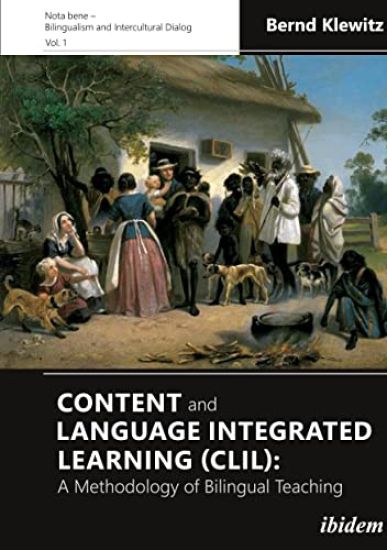
Content and Language Integrated Learning (CLIL): A Methodology of Bilingual Teaching

Content and Language Integrated Learning (CLIL): A Methodology of Bilingual Teaching

Bernd Klewitz

ibidem-Verlag, Jessica Haunschild u Christian Schon
2021
nidottu
Learning foreign languages is a process of acquiring authentic contents in cultural contexts. In this respect, bilingual programs provide an effective connection between content-based studies and linguistic activities. The European umbrella term CLIL (Content and Language Integrated Learning) not only comprises the aims and objectives of a sustainable format of teaching foreign languages but also the priority of content over language, in other words: language follows content, as in the Bauhaus precept form follows function. But in order to effectively integrate content and language, a comprehensive pedagogical approach is needed that goes beyond existing curricula and guidebooks. Bernd Klewitzaims at establishing the CLIL methodology by linking content requirements of subject areas, especially those in the social sciences, with linguistic building blocks and tools. The integrative methodology of bilingual programs extends to the study of literature, traditionally a domain of language tuition, but thought to be a seminal part of CLIL as well. The building blocks and language tools presented in this volume focus on learning foreign languages in cultural contexts, aims, and objectives of CLIL, parameters of an integrated bilingual teaching strategy, dimensions of bilingual learning, elements of a CLIL concept, Literary CLIL, CLIL tools and strategies, modules with worked examples, challenges, and desiderata, and a comprehensive glossary. Each section is completed with an interactive part of review, reflection, and practice.