Kirjojen hintavertailu. Mukana 12 390 323 kirjaa ja 12 kauppaa.

Kirjahaku

Etsi kirjoja tekijän nimen, kirjan nimen tai ISBN:n perusteella.

1000 tulosta hakusanalla D C Gilbert

La Letteratura Arabo-Cristiana E Le Scienze Nel Periodo Abbaside (750-1250 D.C.): Atti del II Convegno Di Studi Arabo-Cristiani, Roma 9-10 Marzo 2007
Papers presented include: M. Galizia, The Koran and the Syriac Christian tradition (it); B. Pirone, The emergence of Islam in the Works of three Arab-Christian writers (it); V. Berti, The Role of the Ba Shosh School in the Syriac Tradition and on Early Arabic Literature (it); S. Santoro, The Expression of the Syro-Oriental Church in the Thought of Timotheus the First (728-823) (it); D. Righi, The Evolution of Christology in the Theology of Abraham from Tiberias (it); P. Pizzo, The Religious Geography of Edessa at the time of Abu Qurrah (it); S.K. Samir, The Christian influence upon the Cultural Revolutions in Baghdad (it); W. Nasry, The Place of Reason in an Early Arab-Christian and Muslim Dialogue (en);R. Budelli, The Epistle of Hunayn Ibn Ishaq and its Critique in Arabic Sources (it); O. Lizzini, "Creation" in Yahya Ibn 'Adi (it); C. Baffioni, The so-called mawjudat in Yahya Ibn 'Adi (it); I. Zilio-Grandi, The kitab tahdhib al-akhlaq by Yahya Ibn 'Adi (it); A. Wadi, Arabic recensions of Paul from Tamma's Life (it); P. La Spisa, Indirect and New Direct Manuscript Sources for Theological work of Sulayman al-Gazzi (it); M. De Ghantuz Cubbe, Some traces of theological activity in maronite environment during first years of 13th century: Thomas of Kafartab (it).
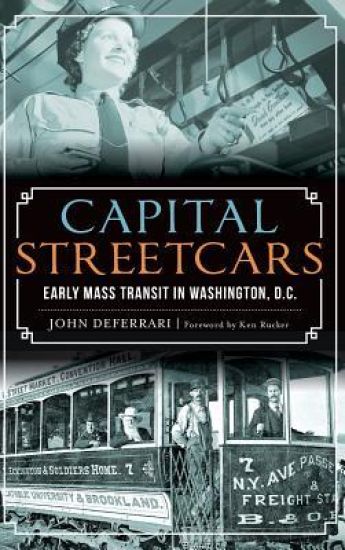
Capital Streetcars: Early Mass Transit in Washington, D.C.

Capital Streetcars: Early Mass Transit in Washington, D.C.

John DeFerrari

History Press Library Editions
2015
sidottu
Washington's first streetcars trundled down Pennsylvania Avenue during the Civil War. By the end of the century, streetcar lines crisscrossed the city, expanding it into the suburbs and defining where Washingtonians lived, worked and played. One of the most beloved routes was the scenic Cabin John line to the amusement park in Glen Echo, Maryland. From the quaint early days of small horse-drawn cars to the modern "streamliners" of the twentieth century, the stories are all here. Join author John DeFerrari on a joyride through the fascinating history of streetcars in the nation's capital.
William Henry Jernagin in Washington, D.C.: Faith in the Fight for Civil Rights
William Henry Jernagin was a devout Christian and fierce advocate for civil rights in the first half of the twentieth century. He was senior pastor of the Mount Carmel Baptist Church in the Mount Vernon Square neighborhood for more than forty-five years. His activism made him an internationally recognized figure. He was a foundational leader in the American civil rights movement. His residency allowed him to contribute to the collective action to abolish Jim Crow in the nation s capital. Through his office in the National Baptist Convention, he also identified the potential in a lesser-known leader of the time, Martin Luther King Jr. Jernagin s passion lifted him to leading positions in the National Baptist Convention and National Fraternal Council of Negro Churches, as well as close work with Presidents Roosevelt, Truman and Eisenhower. Author Ida E. Jones reveals the story of this often-overlooked leader and his fight for civil rights while living in the District of Columbia."
Urban Legends & Historic Lore of Washington, D.C.

Urban Legends & Historic Lore of Washington, D.C.

Robert S. Pohl

History Press Library Editions
2013
sidottu
A carving of General Lee on the back of the Lincoln monument, the birth of lobbying at the Willard Hotel, a romantic gesture that built the distinctive homes of Capitol Hill--these are legends of Washington, D.C. The capital is home to all manner of colorful rumors and tall tales. According to local lore, the missing J Street was L'Enfant's snub to Supreme Court justice John Jay, and the course of history could have been changed if only a young baseball player named Fidel Castro had accepted a contract with the Washington Senators. In search of the truth behind these legends and more, local guide and writer Robert S. Pohl takes readers on a tour of the historic lore and urban legends that surround the monuments, neighborhood streets and even the Metro stations of Washington, D.C.
A History Lover's Guide to Washington, D.C.: Designed for Democracy

A History Lover's Guide to Washington, D.C.: Designed for Democracy

Alison B. Fortier

History Press Library Editions
2014
sidottu
This tour of the nation's capital goes beyond the traditional guidebook to offer a historical journey through the federal district. Visit the White House, the only executive home in the world regularly open to the public. Travel to President Lincoln's Cottage and see where he wrote the Emancipation Proclamation. Look around lesser-known sites, such as the grave of Pierre L'Enfant, the city's Botanical Gardens, the Old Post Office and a host of historical homes throughout the capital. From George Washington's Mount Vernon to the Kennedy Center, trek through each era of Washington, D.C., for a tour of America's most beloved sites. Join author and Washington insider Alison Fortier as she carefully curates an expedition to our shining city on a hill.
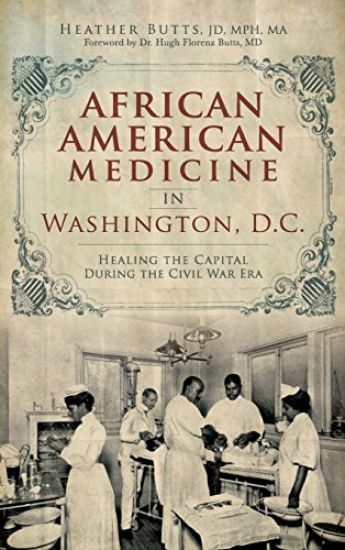
African American Medicine in Washington, D.C.: Healing the Capital During the Civil War Era

African American Medicine in Washington, D.C.: Healing the Capital During the Civil War Era

Heather M. Butts; Heather M. Butts Jd Mph Ma

History Press Library Editions
2014
sidottu
The service of African Americans in defense of the Union during the Civil War required African American nurses, doctors and surgeons to heal those soldiers. In the nation's capital, these brave healthcare workers created a medical infrastructure for African Americans by African Americans. Preeminent surgeon Alexander T. Augusta fought discrimination, visited President Lincoln, testified before Congress and aided the war effort. Washington's Freedmen's Hospital was formed to serve the District's growing free African American population, eventually becoming the Howard University Medical Center. These physicians would form the National Medical Association, the largest and oldest organization representing African American doctors and patients. Author Heather M. Butts recounts the heroic lives and work of Washington's African American medical community during the Civil War.
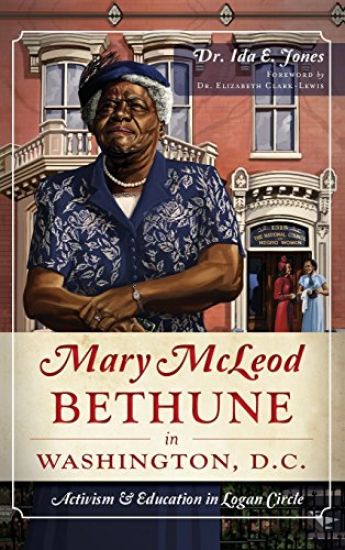
Mary McLeod Bethune in Washington, D.C.: Activism and Education in Logan Circle
Best known as an educator and early civil rights activist, Mary McLeod Bethune was the daughter of former slaves. After moving to Washington, D.C., in 1936, she organized and represented thousands of women with the National Council of Negro Women. She led the charge to change the segregationist policies of local hospitals and concert halls, and she acted as a mentor to countless African American women in the District. Residents of all races were brought together to honor Bethune's birthday with some of the first games between the local Negro League team and a white semi-pro team. Historian Ida E. Jones explores the monumental life of Mary McLeod Bethune as a leader, a crusader and a Washingtonian.
A Guide to Civil War Washington, D.C.: The Capital of the Union

A Guide to Civil War Washington, D.C.: The Capital of the Union

Lucinda Prout Janke

History Press Library Editions
2013
sidottu
When the first shots of the Civil War were fired in 1861, Washington, D.C., was a small, essentially Southern city. The capital rapidly transformed as it prepared for invasion--army camps sprung up in Foggy Bottom, the Navy Yard on Anacostia was a beehive of activity and even the Capitol was pressed into service as a barracks. Local citizens and government officials struggled to accommodate the fugitive slaves and troops that crowded into the city. From the story of one of the first African American army surgeons, Dr. Alexander Augusta, to the tireless efforts of Clara Barton, historian Lucinda Prout Janke renders an intimate portrait of a community on the front lines of war. Join Janke as she guides readers through the changing landscape of a capital besieged.
Classical Architecture and Monuments of Washington, D.C.: A History & Guide
Classical design formed our nation's capital. The soaring Washington Monument, the columns of the Lincoln Memorial and the spectacular dome of the Capitol Building speak to the founders' comprehensive vision of our federal city. Learn about the L'Enfant and McMillan plans for Washington, D.C., and how those designs are reflected in two hundred years of monuments, museums and representative government. View the statues of our Founding Fathers with the eye of a sculptor and gain insight into the criticism and controversies of modern additions to Washington's monumental structure. Author Michael Curtis guides this tour of the heart of the District of Columbia.
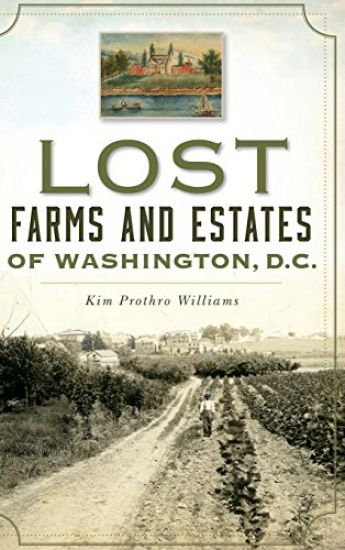
Lost Farms and Estates of Washington, D.C.

Lost Farms and Estates of Washington, D.C.

Kim Prothro Williams

History Press Library Editions
2018
sidottu
Washington has a rural history of agrarian landscapes and country estates. John Adlum, the Father of American Viticulture, experimented with American grape cultivation at The Vineyard, just north of today's Cleveland Park. Slave laborers rolled hogsheads--wooden casks filled with tobacco--down present-day Wisconsin Avenue from farms to the port at Georgetown. The growing merchant class built suburban villas on the edges of the District and became the city's first commuters. In 1791, the area was selected as the capital of a new nation, and change from rural to urban was both dramatic and progressive. Author Kim Prothro Williams reveals the rural remnants of Washington, D.C.'s past.
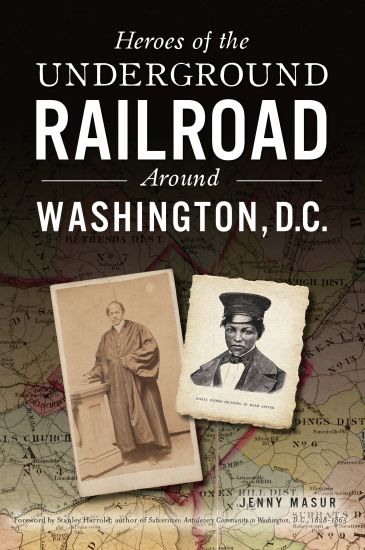
Heroes of the Underground Railroad Around Washington, D.C.

Heroes of the Underground Railroad Around Washington, D.C.

Jenny Masur

History Press Library Editions
2019
sidottu
Many of the unsung heroes of the Underground Railroad lived and worked in Washington, D.C. Men and women, black and white, operatives and freedom seekers--all demonstrated courage, resourcefulness and initiative. Leonard Grimes, a free African American, was arrested for transporting enslaved people to freedom. John Dean, a white lawyer, used the District courts to test the legality of the Fugitive Slave Act. Anna Maria Weems dressed as a boy in order to escape to Canada. Enslaved people engineered escapes, individually and in groups, with and without the assistance of an organized network. Some ended up back in slavery or in jail, but some escaped to freedom. Anthropologist and author Jenny Masur tells their stories.
The Three Little Pigs of Washington, D.C.

The Three Little Pigs of Washington, D.C.

Silly Goose

Createspace Independent Publishing Platform
2016
nidottu
A read-aloud picture book or beginning reader for kids ages 2-8. Perfect for homeschool and elementary school geography and civics. Oh no The big bad wolf is in Washington, D.C. But he is no match for these three little pigs Staring a big bad Siberian Husky, an adorable Guinea Pig, and famous Washington D.C. landmarks, this version of the Three Little Pigs turns the classic children's story into a triumphant tale about Washington D.C. Includes: the White House, the Lincoln Memorial, the National Air and Space Museum, the U.S. Botanic Garden, the Washington Monument, and a write your own story activity especially for children who are planning to visit or who live in the great city of Washington D.C. Written and illustrated by Dr. Silly Goose - a retired teacher and father of three silly goslings.
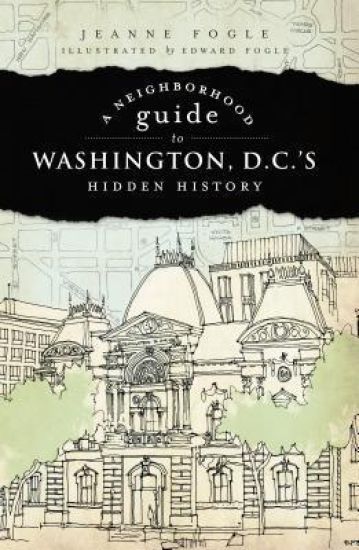
A Neighborhood Guide to Washington, D.C.'s Hidden History
Get off the National Mall and enjoy nine walking and driving tours of Washington, D. C. 's historic neighborhoods. A must-have for visitors and residents alike.Discover the hidden history of the nation's capital with tales of political intrigue, scandal, romance and tragedy. Experience the overlooked architectural and cultural treasures in such neighborhoods as Georgetown, Dupont Circle, Adams Morgan and Mount Vernon Square. Owner of A Tour de Force, Jeanne Fogle, leads her readers through the hidden sites and history of Washington, D. C. 's neighborhoods. Charming sketches by Edward Fogle and vintage photographs accompany each tour, casting a new light on the city. Visitors and local alike will be surprised and delighted by the discoveries that can be made beyond the monuments.
Heroes of the Underground Railroad Around Washington, D.C.
Many of the unsung heroes of the Underground Railroad lived and worked in Washington, D.C.Men and women, black and white, operatives and freedom seekers - all demonstrated courage, resourcefulness and initiative. Leonard Grimes, a free African American, was arrested for transporting enslaved people to freedom. John Dean, a white lawyer, used the District courts to test the legality of the Fugitive Slave Act. Anna Maria Weems dressed as a boy in order to escape to Canada. Enslaved people engineered escapes, individually and in groups, with and without the assistance of an organized network. Some ended up back in slavery or in jail, but some escaped to freedom. Anthropologist and author Jenny Masur tells their stories.
A History Lover's Guide to Washington, D.C.: Designed for Democracy
Join author Alison Fortier for a walk through our United States Capital and its iconic locations. This tour of the nation's capital goes beyond the traditional guidebook to offer a historical journey through the federal district. Visit the White House, the only executive home in the world regularly open to the public. Travel to President Lincoln's Cottage and see where he wrote the Emancipation Proclamation. Look around lesser-known sites, such as the grave of Pierre L'Enfant, the city's Botanical Gardens, the Old Post Office and a host of historical homes throughout the capital. From George Washington's Mount Vernon to the Kennedy Center, trek through each era of Washington, D.C., for a tour of America's most beloved sites. Join author and Washington insider Alison Fortier as she carefully curates an expedition to our shining city on a hill.