

Kirjahaku
Etsi kirjoja tekijän nimen, kirjan nimen tai ISBN:n perusteella.
1000 tulosta hakusanalla David J. Fitzpatrick

Dave Ranney; Or, Thirty Years on the Bowery; An Autobiography
David J Ranney
Trieste Publishing
2018
nidottu

You've probably seen it before: a human brain dramatically lit from the side, the camera circling it like a helicopter shot of Stonehenge, and a modulated baritone voice exalting the brain's elegant design in reverent tones.To which this book says: Pure nonsense. In a work at once deeply learned and wonderfully accessible, the neuroscientist David Linden counters the widespread assumption that the brain is a paragon of design--and in its place gives us a compelling explanation of how the brain's serendipitous evolution has resulted in nothing short of our humanity. A guide to the strange and often illogical world of neural function, The Accidental Mind shows how the brain is not an optimized, general-purpose problem-solving machine, but rather a weird agglomeration of ad-hoc solutions that have been piled on through millions of years of evolutionary history. Moreover, Linden tells us how the constraints of evolved brain design have ultimately led to almost every transcendent human foible: our long childhoods, our extensive memory capacity, our search for love and long-term relationships, our need to create compelling narrative, and, ultimately, the universal cultural impulse to create both religious and scientific explanations. With forays into evolutionary biology, this analysis of mental function answers some of our most common questions about how we've come to be who we are.

"They Never Want to Tell You" transcends the negative metaphors and cliches of life-threatening disease, to give voice to the culture of cancer and to the behavior and attitudes of those who function within that culture-as patients, medical professionals, family, and friends. In these extraordinary narratives, children coping with cancer reveal their most personal experiences, and they speak with a candor that breaks through the cultural taboos ostensibly designed to protect us from the disease. The rich, compassionate, and honest words of these children give expression to concerns that adults who are struggling with cancer find nearly impossible to articulate. Free of social conventions and cognitive distortions, each story presents a powerful variation on the theme of survival in the face of the continuing uncertainties of life-threatening disease. Bearison, a developmental psychologist and psychotherapist, is keenly aware of the psychological impact of cancer on children, particularly as survival times for childhood cancers lengthen and complex treatments intensify concern about the emotional-not merely physical-well-being of children. Bearison has culled from scores of interviews the most salient moments that represent these individual children in their shared struggle with disease. In these pages the children express their wildest hopes and worst fears about cancer. They speak of the absolute necessity of full disclosure, the problems of relating to friends and family, the difficult adjustment to hair loss, their feelings of punishment, grief, and spirituality, and many other issues. In the course of these stories the children reveal not only their will to survive and their extraordinary capacity to understand themselves and their condition, but their altruistic desire to share that understanding with other children as well as with adults who have cancer. "They Never Want to Tell You" is rich and rewarding reading for cancer patients, their families, and health-care professionals alike.
The adoption of firearms by American Indians between the seventeenth and nineteenth centuries marked a turning point in the history of North America’s indigenous peoples—a cultural earthquake so profound, says David Silverman, that its impact has yet to be adequately measured. Thundersticks reframes our understanding of Indians’ historical relationship with guns, arguing against the notion that they prized these weapons more for the pyrotechnic terror guns inspired than for their efficiency as tools of war. Native peoples fully recognized the potential of firearms to assist them in their struggles against colonial forces, and mostly against one another.The smoothbore, flintlock musket was Indians’ stock firearm, and its destructive potential transformed their lives. For the deer hunters east of the Mississippi, the gun evolved into an essential hunting tool. Most importantly, well-armed tribes were able to capture and enslave their neighbors, plunder wealth, and conquer territory. Arms races erupted across North America, intensifying intertribal rivalries and solidifying the importance of firearms in Indian politics and culture.Though American tribes grew dependent on guns manufactured in Europe and the United States, their dependence never prevented them from rising up against Euro-American power. The Seminoles, Blackfeet, Lakotas, and others remained formidably armed right up to the time of their subjugation. Far from being a Trojan horse for colonialism, firearms empowered American Indians to pursue their interests and defend their political and economic autonomy over two centuries.


Richard Wagner, Fritz Lang, and the Nibelungen
David J. Levin
Princeton University Press
1999
pokkari
This highly original book draws on narrative and film theory, psychoanalysis, and musicology to explore the relationship between aesthetics and anti-Semitism in two controversial landmarks in German culture. David Levin argues that Richard Wagner's opera cycle Der Ring des Nibelungen and Fritz Lang's 1920s film Die Nibelungen creatively exploit contrasts between good and bad aesthetics to address the question of what is German and what is not. He shows that each work associates a villainous character, portrayed as non-Germanic and Jewish, with the sometimes dramatically awkward act of narration. For both Wagner and Lang, narration--or, in cinematic terms, visual presentation--possesses a typically Jewish potential for manipulation and control. Consistent with this view, Levin shows, the Germanic hero Siegfried is killed in each work by virtue of his unwitting adoption of a narrative role. Levin begins with an explanation of the book's theoretical foundations and then applies these theories to close readings of, in turn, Wagner's cycle and Lang's film. He concludes by tracing how Germans have dealt with the Nibelungen myths in the wake of the Second World War, paying special attention to Michael Verhoeven's 1989 film The Nasty Girl. His fresh and interdisciplinary approach sheds new light not only on Wagner's Ring and Lang's Die Nibelungen, but also on the ways in which aesthetics can be put to the service of aggression and hatred. The book is an important contribution to scholarship in film and music and also to the broader study of German culture and national identity.

The processes occurring in surface marine sediments have a profound effect on the local and global cycling of many elements. This graduate text presents the fundamentals of marine sediment geochemistry by examining the complex chemical, biological, and physical processes that contribute to the conversion of these sediments to rock, a process known as early diagenesis. Research over the past three decades has uncovered the fact that the oxidation of organic matter deposited in sediment acts as a causative agent for many early diagenetic changes. Summarizing and discussing these findings and providing a much-needed update to Robert Berner's Early Diagenesis: A Theoretical Approach, David J. Burdige describes the ways to quantify geochemical processes in marine sediment. By doing so, he offers a deeper understanding of the cycling of elements such as carbon, nitrogen, and phosphorus, along with important metals such as iron and manganese. No other book presents such an in-depth look at marine sediment geochemistry. Including the most up-to-date research, a complete survey of the subject, explanatory text, and the most recent mathematical formulations that have contributed to our greater understanding of early diagenesis, Geochemistry of Marine Sediments will interest graduate students of geology, geochemistry, and oceanography, as well as the broader community of earth scientists. It is poised to become the standard text on the subject for years to come.
Fish travel in schools, birds migrate in flocks, honeybees swarm, and ants build trails. How and why do these collective behaviors occur? Exploring how coordinated group patterns emerge from individual interactions, Collective Animal Behavior reveals why animals produce group behaviors and examines their evolution across a range of species. Providing a synthesis of mathematical modeling, theoretical biology, and experimental work, David Sumpter investigates how animals move and arrive together, how they transfer information, how they make decisions and synchronize their activities, and how they build collective structures. Sumpter constructs a unified appreciation of how different group-living species coordinate their behaviors and why natural selection has produced these groups. For the first time, the book combines traditional approaches to behavioral ecology with ideas about self-organization and complex systems from physics and mathematics. Sumpter offers a guide for working with key models in this area along with case studies of their application, and he shows how ideas about animal behavior can be applied to understanding human social behavior. Containing a wealth of accessible examples as well as qualitative and quantitative features, Collective Animal Behavior will interest behavioral ecologists and all scientists studying complex systems.

Despite what history has taught us about imperialism's destructive effects on colonial societies, many classicists continue to emphasize disproportionately the civilizing and assimilative nature of the Roman Empire and to hold a generally favorable view of Rome's impact on its subject peoples. Imperialism, Power, and Identity boldly challenges this view using insights from postcolonial studies of modern empires to offer a more nuanced understanding of Roman imperialism. Rejecting outdated notions about Romanization, David Mattingly focuses instead on the concept of identity to reveal a Roman society made up of far-flung populations whose experience of empire varied enormously. He examines the nature of power in Rome and the means by which the Roman state exploited the natural, mercantile, and human resources within its frontiers. Mattingly draws on his own archaeological work in Britain, Jordan, and North Africa and covers a broad range of topics, including sexual relations and violence; census-taking and taxation; mining and pollution; land and labor; and art and iconography. He shows how the lives of those under Rome's dominion were challenged, enhanced, or destroyed by the empire's power, and in doing so he redefines the meaning and significance of Rome in today's debates about globalization, power, and empire. Imperialism, Power, and Identity advances a new agenda for classical studies, one that views Roman rule from the perspective of the ruled and not just the rulers. In a new preface, Mattingly reflects on some of the reactions prompted by the initial publication of the book.
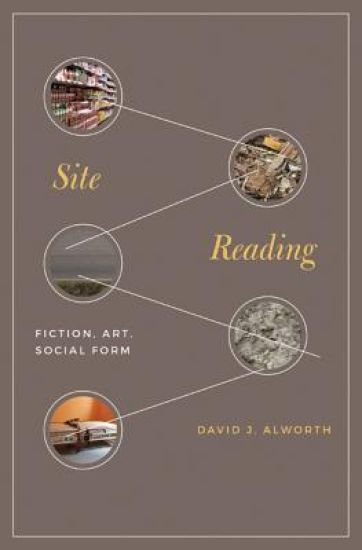
Site Reading offers a new method of literary and cultural interpretation and a new theory of narrative setting by examining five sites--supermarkets, dumps, roads, ruins, and asylums--that have been crucial to American literature and visual art since the mid-twentieth century. Against the traditional understanding of setting as a static background for narrative action and character development, David Alworth argues that sites figure in novels as social agents. Engaging a wide range of social and cultural theorists, especially Bruno Latour and Erving Goffman, Site Reading examines how the literary figuration of real, material environments reorients our sense of social relations. To read the sites of fiction, Alworth demonstrates, is to reveal literature as a profound sociological resource, one that simultaneously models and theorizes collective life. Each chapter identifies a particular site as a point of contact for writers and artists--the supermarket for Don DeLillo and Andy Warhol; the dump for William Burroughs and Mierle Laderman Ukeles; the road for Jack Kerouac, Joan Didion, and John Chamberlain; the ruin for Thomas Pynchon and Robert Smithson; and the asylum for Ralph Ellison, Gordon Parks, and Jeff Wall--and shows how this site mediates complex interactions among humans and nonhumans. The result is an interdisciplinary study of American culture that brings together literature, visual art, and social theory to develop a new sociology of literature that emphasizes the sociology in literature.
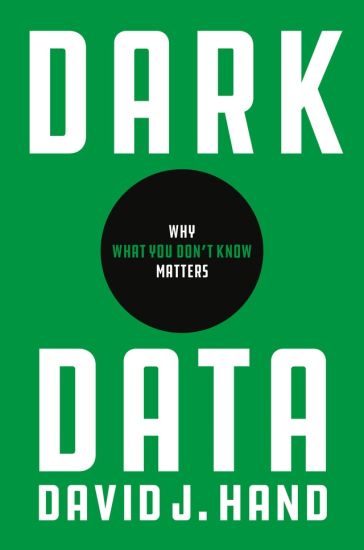
A practical guide to making good decisions in a world of missing dataIn the era of big data, it is easy to imagine that we have all the information we need to make good decisions. But in fact the data we have are never complete, and may be only the tip of the iceberg. Just as much of the universe is composed of dark matter, invisible to us but nonetheless present, the universe of information is full of dark data that we overlook at our peril. In Dark Data, data expert David Hand takes us on a fascinating and enlightening journey into the world of the data we don't see.Dark Data explores the many ways in which we can be blind to missing data and how that can lead us to conclusions and actions that are mistaken, dangerous, or even disastrous. Examining a wealth of real-life examples, from the Challenger shuttle explosion to complex financial frauds, Hand gives us a practical taxonomy of the types of dark data that exist and the situations in which they can arise, so that we can learn to recognize and control for them. In doing so, he teaches us not only to be alert to the problems presented by the things we don’t know, but also shows how dark data can be used to our advantage, leading to greater understanding and better decisions.Today, we all make decisions using data. Dark Data shows us all how to reduce the risk of making bad ones.
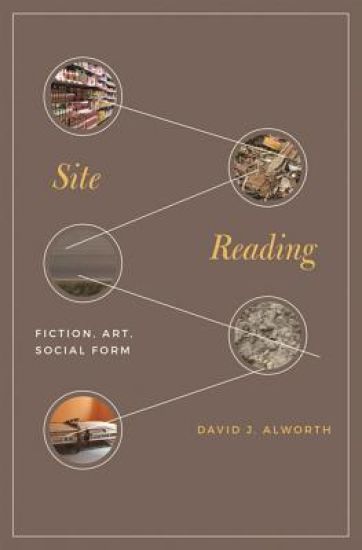
Site Reading offers a new method of literary and cultural interpretation and a new theory of narrative setting by examining five sites—supermarkets, dumps, roads, ruins, and asylums—that have been crucial to American literature and visual art since the mid-twentieth century. Against the traditional understanding of setting as a static background for narrative action and character development, David Alworth argues that sites figure in novels as social agents. Engaging a wide range of social and cultural theorists, especially Bruno Latour and Erving Goffman, Site Reading examines how the literary figuration of real, material environments reorients our sense of social relations. To read the sites of fiction, Alworth demonstrates, is to reveal literature as a profound sociological resource, one that simultaneously models and theorizes collective life.Each chapter identifies a particular site as a point of contact for writers and artists—the supermarket for Don DeLillo and Andy Warhol; the dump for William Burroughs and Mierle Laderman Ukeles; the road for Jack Kerouac, Joan Didion, and John Chamberlain; the ruin for Thomas Pynchon and Robert Smithson; and the asylum for Ralph Ellison, Gordon Parks, and Jeff Wall—and shows how this site mediates complex interactions among humans and nonhumans. The result is an interdisciplinary study of American culture that brings together literature, visual art, and social theory to develop a new sociology of literature that emphasizes the sociology in literature.

A practical guide to making good decisions in a world of missing dataIn the era of big data, it is easy to imagine that we have all the information we need to make good decisions. But in fact the data we have are never complete, and may be only the tip of the iceberg. Just as much of the universe is composed of dark matter, invisible to us but nonetheless present, the universe of information is full of dark data that we overlook at our peril. In Dark Data, data expert David Hand takes us on a fascinating and enlightening journey into the world of the data we don't see.Dark Data explores the many ways in which we can be blind to missing data and how that can lead us to conclusions and actions that are mistaken, dangerous, or even disastrous. Examining a wealth of real-life examples, from the Challenger shuttle explosion to complex financial frauds, Hand gives us a practical taxonomy of the types of dark data that exist and the situations in which they can arise, so that we can learn to recognize and control for them. In doing so, he teaches us not only to be alert to the problems presented by the things we don’t know, but also shows how dark data can be used to our advantage, leading to greater understanding and better decisions.Today, we all make decisions using data. Dark Data shows us all how to reduce the risk of making bad ones.

A wondrous story of scientific endeavor—probing the great ice sheets of AntarcticaFrom the moment explorers set foot on the ice of Antarctica in the early nineteenth century, they desired to learn what lay beneath. David J. Drewry provides an insider’s account of the ambitious and often hazardous radar mapping expeditions that he and fellow glaciologists undertook during the height of the Cold War, when concerns about global climate change were first emerging and scientists were finally able to peer into the Antarctic ice and take its measure.In this panoramic book, Drewry charts the history and breakthrough science of radio-echo sounding, a revolutionary technique that has enabled researchers to measure the thickness and properties of ice continuously from the air—transforming our understanding of the world’s great ice sheets. To those involved in this epic fieldwork, it was evident that our planet is rapidly changing, and its future depends on the stability and behavior of these colossal ice masses. Drewry describes how bad weather, downed aircraft, and human frailty disrupt the most meticulously laid plans, and how success, built on remarkable international cooperation, can spawn institutional rivalries.The Land Beneath the Ice captures the excitement and innovative spirit of a pioneering era in Antarctic geophysical exploration, recounting its perils and scientific challenges, and showing how its discoveries are helping us to tackle environmental challenges of global significance.
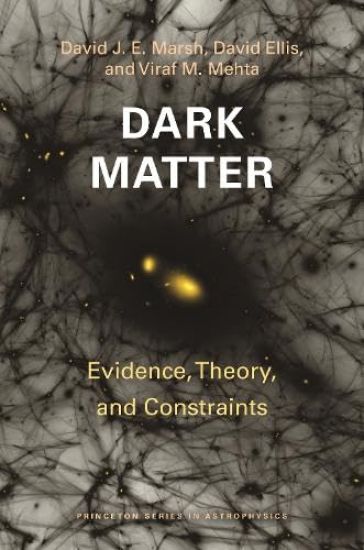
A complete treatment of all aspects of dark matter physicsThis book provides an incisive, self-contained introduction to one of the most intriguing subjects in modern physics, presenting the evidence we have from astrophysics for the existence of dark matter, the theories for what it could be, and the cutting-edge experimental and observational methods for testing them. It begins with a survey of the astrophysical phenomena, from rotation curves to lensing and cosmological structure formation. It goes on to offer the most comprehensive overview available of all three major theories, discussing weakly interacting massive particles (WIMPs), axions, and primordial black holes. The book explains the constraints on each theory, such as direct detection and indirect astrophysical limits, and enables students to build physical intuition using hands-on exercises and supplemental material.The only book to treat extensively WIMPs, axions, and primordial black holesProvides balanced coverage of the evidence, theory, and testing for dark matter from astrophysics, particle physics, and experimental physicsIncludes original problems and short quizzes throughoutAccompanied by Jupyter notebooks that give sample calculations and methods to reproduce key results and graphsAn ideal textbook for advanced undergraduate and graduate students and an essential reference for researchers

A complete treatment of all aspects of dark matter physicsThis book provides an incisive, self-contained introduction to one of the most intriguing subjects in modern physics, presenting the evidence we have from astrophysics for the existence of dark matter, the theories for what it could be, and the cutting-edge experimental and observational methods for testing them. It begins with a survey of the astrophysical phenomena, from rotation curves to lensing and cosmological structure formation. It goes on to offer the most comprehensive overview available of all three major theories, discussing weakly interacting massive particles (WIMPs), axions, and primordial black holes. The book explains the constraints on each theory, such as direct detection and indirect astrophysical limits, and enables students to build physical intuition using hands-on exercises and supplemental material.The only book to treat extensively WIMPs, axions, and primordial black holesProvides balanced coverage of the evidence, theory, and testing for dark matter from astrophysics, particle physics, and experimental physicsIncludes original problems and short quizzes throughoutAccompanied by Jupyter notebooks that give sample calculations and methods to reproduce key results and graphsAn ideal textbook for advanced undergraduate and graduate students and an essential reference for researchers

Pastors and Pluralism in Wurttemberg, 1918-1933
David J. Diephouse
Princeton University Press
2014
pokkari
Moving beyond earlier explanations of why the Protestant church opposed the Weimar Republic, David Diephouse emphasizes the social role of the church rather than its direct political activity. Originally published in 1987. The Princeton Legacy Library uses the latest print-on-demand technology to again make available previously out-of-print books from the distinguished backlist of Princeton University Press. These editions preserve the original texts of these important books while presenting them in durable paperback and hardcover editions. The goal of the Princeton Legacy Library is to vastly increase access to the rich scholarly heritage found in the thousands of books published by Princeton University Press since its founding in 1905.