Kirjojen hintavertailu. Mukana 12 016 292 kirjaa ja 12 kauppaa.

Kirjahaku

Etsi kirjoja tekijän nimen, kirjan nimen tai ISBN:n perusteella.

1000 tulosta hakusanalla David L Shaffer

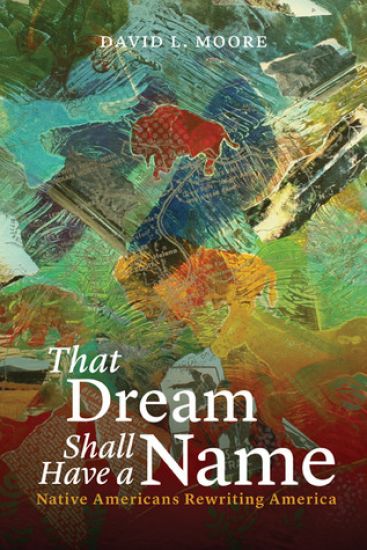
That Dream Shall Have a Name

That Dream Shall Have a Name

David L. Moore

University of Nebraska Press
2014
pokkari
The founding idea of “America” has been based largely on the expected sweeping away of Native Americans to make room for EuroAmericans and their cultures. In this authoritative study, David L. Moore examines the works of five well-known Native American writers and their efforts, beginning in the colonial period, to redefine an “America” and “American identity” that includes Native Americans. That Dream Shall Have a Name focuses on the writing of Pequot Methodist minister William Apess in the 1830s; on Northern Paiute activist Sarah Winnemucca in the 1880s; on Salish/MÉtis novelist, historian, and activist D’Arcy McNickle in the 1930s; and on Laguna poet and novelist Leslie Marmon Silko and on Spokane poet, novelist, humorist, and filmmaker Sherman Alexie, both in the latter twentieth and early twenty-first centuries. Moore studies these five writers’ stories about the conflicted topics of sovereignty, community, identity, and authenticity-always tinged with irony and often with humor. He shows how Native Americans have tried from the beginning to shape an American narrative closer to its own ideals, one that does not include the death and destruction of their peoples. This compelling work offers keen insights into the relationships between Native and American identity and politics in a way that is both accessible to newcomers and compelling to those already familiar with these fields of study.
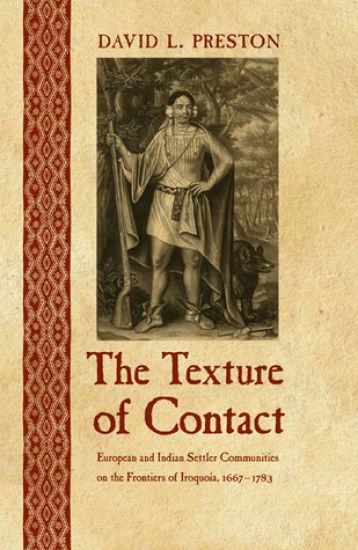
The Texture of Contact

The Texture of Contact

David L. Preston

University of Nebraska Press
2009
sidottu
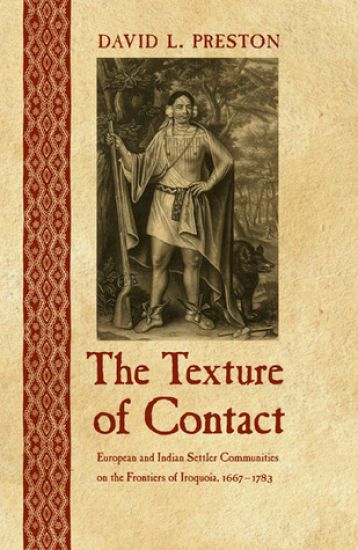
The Texture of Contact is a landmark study of Iroquois and European communities and coexistence in eastern North America before the American Revolution. David L. Preston details the ways in which European and Iroquois settlers on the frontiers creatively adapted to each other's presence, weaving webs of mutually beneficial social, economic, and religious relationships that sustained the peace for most of the eighteenth century. Drawing on a wealth of previously unexamined archival research, Preston describes everyday encounters between Europeans and Indians along the frontiers of the Iroquois Confederacy in the St. Lawrence, Mohawk, Susquehanna, and Ohio valleys. Homesteads, taverns, gristmills, churches, and markets were frequent sites of intercultural exchange and negotiation. Complex diplomatic and trading relationships developed as a result of European and Iroquois settlers bartering material goods. Innovative land-sharing arrangements included the common practice of Euroamerican farmers living as tenants of the Mohawks, sometimes for decades. This study reveals that the everyday lives of Indians and Europeans were far more complex and harmonious than past histories have suggested. Preston's nuanced comparisons between various settlements also reveal the reasons why peace endured in the Mohawk and St. Lawrence valleys while warfare erupted in the Susquehanna and Ohio valleys. One of the most comprehensive studies of eighteenth-century Iroquois history, The Texture of Contact broadens our understanding of eastern North America's frontiers and the key role that the Iroquois played in shaping that world.
The Texture of Contact

The Texture of Contact

David L. Preston

University of Nebraska Press
2012
pokkari
The Texture of Contact is a landmark study of Iroquois and European communities and coexistence in eastern North America before the American Revolution. David L. Preston details the ways in which European and Iroquois settlers on the frontiers creatively adapted to each other's presence, weaving webs of mutually beneficial social, economic, and religious relationships that sustained the peace for most of the eighteenth century. Drawing on a wealth of previously unexamined archival research, Preston describes everyday encounters between Europeans and Indians along the frontiers of the Iroquois Confederacy in the St. Lawrence, Mohawk, Susquehanna, and Ohio valleys. Homesteads, taverns, gristmills, churches, and markets were frequent sites of intercultural exchange and negotiation. Complex diplomatic and trading relationships developed as a result of European and Iroquois settlers bartering material goods. Innovative land-sharing arrangements included the common practice of Euroamerican farmers living as tenants of the Mohawks, sometimes for decades. This study reveals that the everyday lives of Indians and Europeans were far more complex and harmonious than past histories have suggested. Preston's nuanced comparisons between various settlements also reveal the reasons why peace endured in the Mohawk and St. Lawrence valleys while warfare erupted in the Susquehanna and Ohio valleys. One of the most comprehensive studies of eighteenth-century Iroquois history, The Texture of Contact broadens our understanding of eastern North America's frontiers and the key role that the Iroquois played in shaping that world.
Cultural Negotiations

Cultural Negotiations

David L. Browman

University of Nebraska Press
2013
sidottu
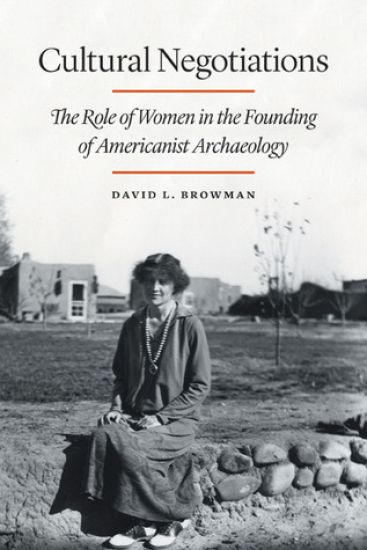
This meticulously researched reference work documents the role of women who contributed to the development of Americanist archaeology from 1865 to 1940. Between the Civil War and World War II, many women went into anthropology and archaeology, fields that, at the beginning of this period, welcomed and made room for amateurs of both genders. But over time, the increasingly professional structure of these fields diminished or even obscured the contributions of women due to their lack of access to prestigious academic employment and publishing opportunities. As a result, a woman archaeologist during this period often published her research under her husband's name or as a junior author with her husband. In Cultural Negotiations archaeologist David L. Browman has scoured the archaeological literature and archival records of several institutions to bring the stories of more than two hundred women in Americanist archaeology to light through detailed biographies that discuss their contributions and publications. This work highlights how the social and cultural construction of archaeology as a field marginalized women and will serve as an invaluable reference to those researchers who continue to uncover the history of women in the sciences.
The Blue Hen's Chick

The Blue Hen's Chick

David L. Petersen; A. B. Guthrie Jr.

University of Nebraska Press
1993
pokkari
"It was a fine country to grow up in. To find riches, a boy had only to go outside," writes A. B. Guthrie, Jr., aobut his childhood in Montana early in the twentieth century. This autobiography was originally published in 1965 when he was sixty-four and still had miles to go. It recounts lively adventures and reflects on a career that brought fame for The Big Sky (1947) and led to the Pulitzer Prize for The Way West (1949). In an afterword David Petersen, who edited Big Sky, Fair Land: The Environmental Essays of A. B. Guthrie, Jr. (1988), describes the last twenty-five years of Guthrie's life. The world-famous author died in 1991 at the age of ninety.
War and the Ivory Tower

War and the Ivory Tower

David L. Schalk

University of Nebraska Press
2006
pokkari
In War and the Ivory Tower, David L. Schalk explores the public role of the intellectual in times of national crisis. He compares American responses to the Vietnam War with French responses to the Algerian War, finding many similarities in the way intellectuals voiced their outrage at the policies of their governments. At a time when national crises abound but protest is out of fashion, and intellectuals are possibly a dying species, this book presents a needed reexamination of what it means for intellectuals to speak out on issues of international importance.
Flight to the Top of the World

Flight to the Top of the World

David L. Bristow

University of Nebraska Press
2018
sidottu
In his day Walter Wellman (1858-1934) was one of America's most famous men. To his contemporaries, he seemed like a character from a Jules Verne novel. He led five expeditions in search of the North Pole, two by dogsled and three by dirigible airship, and in 1910 made the first attempt to cross the Atlantic Ocean by air--which the self-styled expert on aerial warfare saw as a mission of world peace. He endured hardships, cheated death on more than one occasion, and surrounded himself with a team of assistants as eccentric and audacious as he was. In addition to his daring adventures, Wellman became a nationally known political reporter and unofficial spokesman for the McKinley and Roosevelt administrations. He was not the first newspaper-sponsored adventurer, but more than any of his predecessors he turned exploration into a real-time media event, and his reputation both flourished and suffered because of it. Wellman lived during a time of rapid social and technological change, when explorers were racing to fill in the last remaining blank spots on the map and when aviation promised to fulfill humanity's greatest hopes and darkest fears. Flight to the Top of the World is a window into Wellman's time and illuminates many of its dreams and contradictions.
No Law

No Law

David L. Lange; H. Jefferson Powell

Stanford University Press
2008
pokkari
The original text of the Constitution grants Congress the power to create a regime of intellectual property protection. The first amendment, however, prohibits Congress from enacting any law that abridges the freedoms of speech and of the press. While many have long noted the tension between these provisions, recent legal and cultural developments have transformed mere tension into conflict. No Law offers a new way to approach these debates. In eloquent and passionate style, Lange and Powell argue that the First Amendment imposes absolute limits upon claims of exclusivity in intellectual property and expression, and strips Congress of the power to restrict personal thought and free expression in the name of intellectual property rights. Though the First Amendment does not repeal the Constitutional intellectual property clause in its entirety, copyright, patent, and trademark law cannot constitutionally license the private commodification of the public domain. The authors claim that while the exclusive rights currently reflected in intellectual property are not in truth needed to encourage intellectual productivity, they develop a compelling solution for how Congress, even within the limits imposed by an absolute First Amendment, can still regulate incentives for intellectual creations. Those interested in the impact copyright doctrines have on freedom of expression in the U.S. and the theoretical and practical aspects of intellectual property law will want to take a closer look at this bracing, resonant work.
Democracy and War

Democracy and War

David L. Rousseau

Stanford University Press
2005
sidottu
Conventional wisdom in international relations maintains that democracies are only peaceful when encountering other democracies. Using a variety of social scientific methods of investigation ranging from statistical studies and laboratory experiments to case studies and computer simulations, Rousseau challenges this conventional wisdom by demonstrating that democracies are less likely to initiate violence at early stages of a dispute. Using multiple methods allows Rousseau to demonstrate that institutional constraints, rather than peaceful norms of conflict resolution, are responsible for inhibiting the quick resort to violence in democratic polities. Rousseau finds that conflicts evolve through successive stages and that the constraining power of participatory institutions can vary across these stages. Finally, he demonstrates how constraint within states encourages the rise of clusters of democratic states that resemble "zones of peace" within the anarchic international structure.
Identifying Threats and Threatening Identities

Identifying Threats and Threatening Identities

David L. Rousseau

Stanford University Press
2006
sidottu
How does a state determine if another state is an important military or economic threat? The issue of threat perception drives a wide variety of behaviors, from allegiance formation and defense spending to trade relations and regime membership. While liberal theorists and realists both agree that threat perception is a cornerstone of international relations, there is widespread disagreement on the factors that contribute to our fear of other states. In particular, the field is deeply divided between those who believe material factors such as the balance of military power determine the perception of threat and those who believe ideational factors such as shared democratic value determine the perception of threat. Using a variety of social scientific methods of investigation ranging from laboratory experiments and public opinion surveys to computer simulations and case studies, Rousseau challenges these conventional arguments and sheds new light on this debate. He presents a model of identity formation that can explain when ideas will (and will not) have a decisive impact on threat perception.
W. E. B. Du Bois

W. E. B. Du Bois

David L. Lewis

Henry Holt Company Inc
2009
pokkari
William Edward Burghardt Du Bois - the premier architect of the civil rights movement in America - was a towering and controversial personality, a fiercely proud individual blessed with the language of the poet and the impatience of the agitator. Now, David Levering Lewis has carved one volume out of his superlative two-volume biography of this monumental figure that set the standard for historical scholarship on this era. In his magisterial prose, Lewis chronicles Du Bois' long and storied career, detailing his monumental contributions the US character that echo still today.
Hebrews

Hebrews

David L. Allen

Broadman Holman Publishers
2010
sidottu
"For the word of God is living and active. Sharper than any doubleedged sword, it penetrates even to dividing soul and spirit, joints and marrow; it judges the thoughts and attitudes of the heart." -Hebrews 4:12 THE NEW AMERICAN COMMENTARY series is an exceptionally acclaimed resource for ministers and Bible students who want to understand and expound the Scriptures. Notable features in this new "Hebrews "volume by scholar David Allen include: Commentary based on the New International Version, NIV text printed in the body of the commentary, Sound scholarly methodology reflecting capable research in the original languages, Interpretation emphasizing the theological unity of each book and Scripture as a whole, Readable and applicable exposition.
A Letter to America

A Letter to America

David L. Boren

University of Oklahoma Press
2011
nidottu
A powerful wake-up call to all AmericansWith only 6 percent of the world's population, how long will the United States remain a global superpower? The answer, David Boren tells us in A Letter to America, depends on asking ourselves tough questions. A powerful wake-up call to Americans, A Letter to America, forces us to take a bold, objective look at ourselves.In A Letter to America, Boren explains with unsparing clarity why the country is at a crossroads and why decisive action is urgently needed and offers us an ambitious, hopeful plan.What the country needs, Boren asserts, are major reforms to restore the ability of our political system to act responsibly. By relying on our shared values, we can replace cynicism with hope and strengthen our determination to build a better future. We must fashion a post-Cold War foreign policy that fits twenty-first-century realities - including multiple contending superpowers. We must adopt campaign finance reform that curbs the influence of special interests and restores political power to the voters. Universal health care coverage, budget deficit reduction, affordable higher education, and a more progressive tax structure will strengthen the middle class.Boren also describes how we can renew our emphasis on quality primary and secondary education, revitalize our spirit of community, and promote volunteerism. He urges the teaching of more American history and government, for without educated citizens our system cannot function and our rights will not be preserved. Unless we understand how we became great, we will not remain great.The plan Boren puts forward is optimistic and challenges Americans to look into the future, decide what we want to be and where we want to go, and then implement the policies and actions we need to take us there.
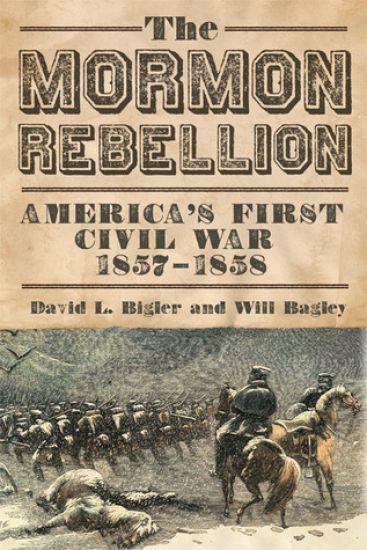
The Mormon Rebellion

The Mormon Rebellion

David L. Bigler; Will Bagley

University of Oklahoma Press
2012
nidottu
In 1857 President James Buchanan ordered U.S. troops to Utah to replace Brigham Young as governor and restore order in what the federal government viewed as a territory in rebellion. In this compelling narrative, award-winning authors David L. Bigler and Will Bagley use long-suppressed sources to show that - contrary to common perception - the Mormon rebellion was not the result of Buchanan's ""blunder,"" nor was it a David-and-Goliath tale in which an abused religious minority heroically defied the imperial ambitions of an unjust and tyrannical government. They argue that Mormon leaders had their own far-reaching ambitions and fully intended to establish an independent nation - the Kingdom of God - in the West.Long overshadowed by the Civil War, the tragic story of this conflict involved a tense and protracted clash pitting Brigham Young's Nauvoo Legion against Colonel Albert Sidney Johnston and the U.S. Army's Utah Expedition. In the end, the conflict between the two armies saw no pitched battles, but in the authors' view, Buchanan's decision to order troops to Utah, his so-called blunder, eventually proved decisive and beneficial for both Mormons and the American republic.A rich exploration of events and forces that presaged the Civil War, The Mormon Rebellion broadens our understanding of both antebellum America and Utah's frontier theocracy and offers a challenging reinterpretation of a controversial chapter in Mormon annals.
Buon Giorno, Arezzo

Buon Giorno, Arezzo

David L. Boren; Giuseppe Fanfani; Cindy Simon Rosenthal

University of Oklahoma Press
2016
nidottu
In the heart of Tuscany stands the city of Arezzo, beckoning those who would know more of the real Italy. A spectacular medieval town of 100,000 residents, Arezzo invites travelers to see its sights and sample its considerable charms. It reserves a special warmth for those who wish to stay a while and truly experience life under the Tuscan sun. In a similar fashion, Buon Giorno, Arezzo invites visitors to make themselves at home. The authors and photographers featured here are kindred spirits - Americans, Europeans, students, and scholars - all touched by Arezzo's magic and eager to share their experience with newcomers.Buon Giorno, Arezzo sketches the city's unique history, from ancient Italy to the present day, with beautifully illustrated forays into its rich tradition of architecture and art - including the masterwork of Renaissance painter Piero della Francesca. Contributors offer insight into Arezzo's language, introducing visitors to speech patterns and accents harking back to the Etruscans, as well as distinct dialects that put the region - the birthplace of Francesco Petrarca (Petrarch), a godfather of the Italian language - at the very ""center of the Italian language universe."" Italians are known internationally for their contributions to music, fashion, film, and wine - and Arezzo's significant influence in each of these areas comes to light and life as the authors explore the city's vibrant modern culture and economy. A congenial companion and knowledgeable guide, steeped in history and replete with photographs of Arezzo's visual delights, Buon Giorno, Arezzo is an essential resource for any traveler hoping to immerse themselves in the daily rhythms and cultural depths of this incomparable Italian city.
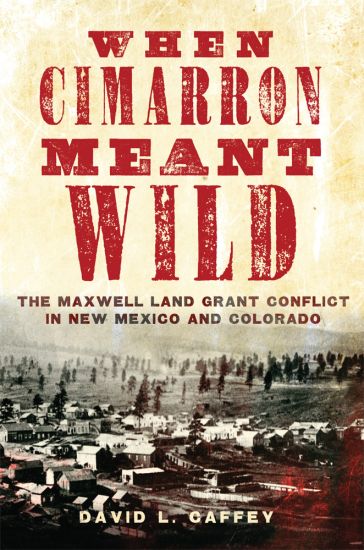
When Cimarron Meant Wild

When Cimarron Meant Wild

David L. Caffey

UNIVERSITY OF OKLAHOMA PRESS
2023
sidottu
The Spanish word cimarron, meaning “wild” or “untamed,” refers to a region in the southern Rocky Mountains where control of timber, gold, coal, and grazing lands long bred violent struggle. After the U.S. occupation following the 1846–1848 war with Mexico, this tract of nearly two million acres came to be known as the Maxwell Land Grant. WhenCimarron Meant Wild presents a new history of the collision that occurred over the region’s resources between 1870 and 1900. Author David L. Caffey describes the epic late-nineteenth-century range war in an account deeply informed by his historical perspective on social, political, and cultural issues that beset the American West to this day. Cimarron country churned with the tensions of the Old West—land disputes, lawlessness, violence, and class war among miners, a foreign corporation, local elites, Texas cattlemen, and the haughty “Santa Fe Ring” of lawyerly speculators. And present, still, were the indigenous Jicarilla Apache and Mouache Ute people, dispossessed of their homeland by successive Spanish, Mexican, and American regimes. A Mexican grant of uncertain size and bounds, awarded to Carlos Beaubien and Guadalupe Miranda in 1841 and later acquired by Lucien Maxwell, marked the beginning of a fight for control of the land and set off overlapping conflicts known as the Colfax County War, the Maxwell Land Grant War, and the Stonewall War. Caffey draws on new research to paint a complex picture of these events, and of those that followed the sale of the claim to investors in 1870. These clashes played out over the following thirty years, involving the new English owners, miners and prospectors, livestock grazers and farmers, and Native Americans. Just how wild was the Cimarron country in the late 1800s? And what were the consequences for the region and for those caught up in the conflict? The answers, pursued through this remarkable work, enhance our understanding of cultural and economic struggle in the American West.
When Cimarron Meant Wild

When Cimarron Meant Wild

David L. Caffey

UNIVERSITY OF OKLAHOMA PRESS
2024
nidottu
The Spanish word cimarron, meaning “wild” or “untamed,” refers to a region in the southern Rocky Mountains where control of timber, gold, coal, and grazing lands long bred violent struggle. After the U.S. occupation following the 1846–1848 war with Mexico, this tract of nearly two million acres came to be known as the Maxwell Land Grant. WhenCimarron Meant Wild presents a new history of the collision that occurred over the region’s resources between 1870 and 1900. Author David L. Caffey describes the epic late-nineteenth-century range war in an account deeply informed by his historical perspective on social, political, and cultural issues that beset the American West to this day. Cimarron country churned with the tensions of the Old West—land disputes, lawlessness, violence, and class war among miners, a foreign corporation, local elites, Texas cattlemen, and the haughty “Santa Fe Ring” of lawyerly speculators. And present, still, were the indigenous Jicarilla Apache and Mouache Ute people, dispossessed of their homeland by successive Spanish, Mexican, and American regimes. A Mexican grant of uncertain size and bounds, awarded to Carlos Beaubien and Guadalupe Miranda in 1841 and later acquired by Lucien Maxwell, marked the beginning of a fight for control of the land and set off overlapping conflicts known as the Colfax County War, the Maxwell Land Grant War, and the Stonewall War. Caffey draws on new research to paint a complex picture of these events, and of those that followed the sale of the claim to investors in 1870. These clashes played out over the following thirty years, involving the new English owners, miners and prospectors, livestock grazers and farmers, and Native Americans. Just how wild was the Cimarron country in the late 1800s? And what were the consequences for the region and for those caught up in the conflict? The answers, pursued through this remarkable work, enhance our understanding of cultural and economic struggle in the American West.
Friendship with Jesus

Friendship with Jesus

David L. Miller

Augsburg Fortress
1999
pokkari
Build a powerful friendship with Jesus through the ancient art of contemplative prayer. Perfect for individual or group use, this guide and workbook helps readers to actually experience events recorded in the Gospel of Mark, so that biblical times, places, and people come to life vividly. As the events unfold before the reader's eyes, God's revelation becomes a present event, and Jesus becomes a companion and friend. In his brief introduction, David Miller explains how the ancient art of contemplative prayer helped strengthen and deepen his relationship with God. After explaining the principles and practice of praying the Scriptures, Miller demonstrates how readers can use the technique for themselves. Then he walks readers, chapter by chapter, through an exciting prayer-reading of Mark's Gospel, pausing on special write-in pages for readers to record their experiences. In a final section, Miller offers journal entries from his own prayer journey through the Gospel, inviting readers to compare with him and with one another the exciting