Kirjojen hintavertailu. Mukana 12 390 323 kirjaa ja 12 kauppaa.

Kirjahaku

Etsi kirjoja tekijän nimen, kirjan nimen tai ISBN:n perusteella.

1000 tulosta hakusanalla David L. Goetsch

Sound Recording

Sound Recording

David L. Morton

Johns Hopkins University Press
2006
pokkari
How did one of the great inventions of the nineteenth century-Thomas Edison's phonograph-eventually lead to one of the most culturally and economically significant technologies of the twentieth and twenty-first centuries? Sound Recording traces the history of the business boom and the cultural revolution that Edison's invention made possible. Recorded sound has pervaded nearly every facet of modern life-not just popular music, but also mundane office dictation machines, radio and television programs, and even telephone answering machines. Just as styles of music have evolved, so too have the formats through which sound has been captured-from 78s to LPs, LPs to cassette tapes, tapes to CDs, and on to electronic formats. The quest for better sound has certainly driven technological change, but according to David L. Morton, so have business strategies, patent battles, and a host of other factors.

Electronics

Electronics

David L. Morton; Joseph Gabriel

Johns Hopkins University Press
2008
pokkari
Electronics provides a welcome, comprehensive history of one of the late twentieth century's greatest technologies: electronic devices. Some of them, the laser and the microchip for example, have become household words. Yet their origins and operation are largely unknown to the general public, remaining mysterious outside the field of engineering. Their advent brought about many of the most important historical developments in recent memory-the rise of television, the Cold War, the Space Race, the growth of Asian semiconductor manufacturers, and the emergence of the surveillance society. Electronics also relates the fascinating stories of how scientists and engineers created and commercialized such devices as the transistor, the Magnetron tube used to power microwave ovens, the CRT (cathode ray tube), the laser, the first integrated circuit, the microprocessor, and memory chips.
New Romanticisms

New Romanticisms

David L. Clark

University of Toronto Press
1994
sidottu
What is the fate of Romantic studies in the wake of deconstruction and post-structuralism? In an attempt to answer this question, Clark and Goellnicht have brought together nine essays that represent a cross-section of the diverse critical scene in Romantic studies today. These essays reflect the thinking of a younger generation of Canadian scholars - those who came of age while the lines of the current debate about the future of Romantic studies were being drawn. They call for a renewed sense of the plurality of Romanticisms, deliberately avoiding the suggestion that the focus of Romantic studies should simply shift from the rhetoric of Romantic texts to the culture of Romanticism.As a whole, the collection highlights the many ways in which contemporary theory has complicated our conception of Romanticism. Yet Romantic texts are not merely read through theory; they are shown to be sites of various forms of theorization themselves. Above all, the essays reveal the conflicting pressures at work within and among Romantic writers, whose texts are characterized by multiple strands of significance that entwine but do not build toward a synthesis.The scholars represented here deliberately avoid constructing a new master-narrative for Romantic studies. Designed to provide an indication of the different directions that Romantic studies are currently headed in, beyond the totalizing opposition which could see deconstruction secede to historicism, New Romanticisms emphasizes the plurality of critical positions available to the contemporary scholar.
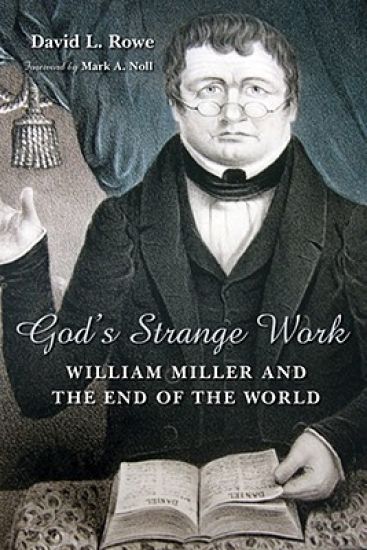
God's Strange Work

God's Strange Work

David L. Rowe

William B Eerdmans Publishing Co
2008
nidottu
The fascinating story of an intriguing -- and little understood -- religious figure in nineteenth-century America Calvinist Baptist preacher William Miller (1782 - 1849) was the first prominent American popularizer of using biblical prophecy to determine a specific and imminent time for Christ's return to earth. On October 22, 1844 -- a day known as the Great Disappointment - he and his followers gave away their possessions, abandoned their work, donned white robes, and ascended to rooftops and hilltops to await a Second Coming that never actually came. Or so the story goes. The truth -- revealed here -- is far less titillating but just as captivating. In fact, David Rowe argues, Miller was in many ways a mainstream, even typical figure of his time. Reflecting Rowe's meticulous research throughout, God's Strange Work does more than tell one man's remarkable story. It encapsulates the broader history of American Christianity in the time period and sets the stage for many significant later developments: the founding of the Seventh-day Adventist Church, the tenets of various well-known new religious movements, and even the enduring American fascination with end-times prophecy.Rowe rescues Miller from the fringes and places him where he rightly belongs -- in the center of American religious history.
Ordering Love

Ordering Love

David L. Schindler

William B Eerdmans Publishing Co
2011
nidottu
Metaphysical study of God, love, technology, and culture in modern society Reality most basically and properly considered, says David L. Schindler, is an order of love -- a gift that finds its objective only in an entire way of life. Love is what first brings things into existence, and everything exists in, through, and for love. With this understanding of reality, Schindler explores how modern culture marginalizes love, regarding it at best as a matter of piety or goodwill rather than as the very stuff that makes our lives and the things of the world real. Schindler examines how Western civilization's fixation with technology -- especially its displacement of experience with experiment and its privileging of knowing and making -- has undermined its capacity to build an authentic human culture. Schindler sees this as a technological age not simply because of technological advancements but because of the way we think as the result of our technological orientation. He shows, within the context of politics, economics, science, and cultural and professional life generally, that God-centered love is what gives things their deepest and most proper order and meaning.
Table and Temple: The Christian Eucharist and Its Jewish Roots

Table and Temple: The Christian Eucharist and Its Jewish Roots

David L. Stubbs

William B. Eerdmans Publishing Company
2020
sidottu
In most modern discussions of the Eucharist, the Jewish temple and its services of worship do not play a large role. They are often mentioned in passing, but little work is done in grounding, organizing, or explicating the connections between these things and the Eucharistic celebration. In Table and Temple, David Stubbs sheds light on the reasons for this neglect and shows the important role the temple and its worship played in the imagination of Jesus and his disciples about what was to become a central Christian practice. He then explores the five central meanings of the temple and its main services of worship, demonstrating their relationship to the five central meanings of the Christian Eucharist. These central meanings of the temple itself, the daily, weekly, and monthly sacrifices, and the three pilgrim feasts are linked to the history of salvation. Stubbs distills them to (1) the real presence of God and God's Kingdom among God's people, (2) thanksgiving for creation and providence, (3) remembrance of past deliverance, (4) covenant renewal in the present, and (5) a hopeful celebration of the feast to come. They provide a solid ground upon which to organize contemporary Christian Eucharistic imagination and practice. Such a solid ground not only expands our theology and enriches contemporary practice--it can also bring greater ecumenical unity to this central Christian rite.
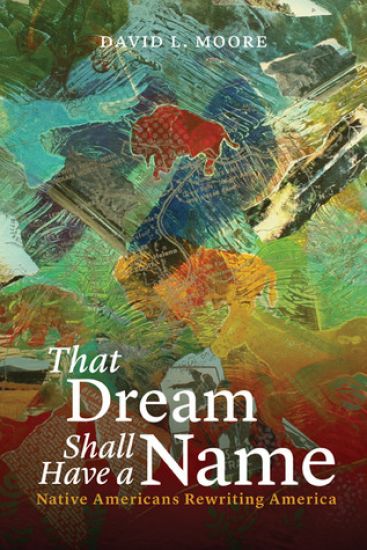
That Dream Shall Have a Name

That Dream Shall Have a Name

David L. Moore

University of Nebraska Press
2014
pokkari
The founding idea of “America” has been based largely on the expected sweeping away of Native Americans to make room for EuroAmericans and their cultures. In this authoritative study, David L. Moore examines the works of five well-known Native American writers and their efforts, beginning in the colonial period, to redefine an “America” and “American identity” that includes Native Americans. That Dream Shall Have a Name focuses on the writing of Pequot Methodist minister William Apess in the 1830s; on Northern Paiute activist Sarah Winnemucca in the 1880s; on Salish/MÉtis novelist, historian, and activist D’Arcy McNickle in the 1930s; and on Laguna poet and novelist Leslie Marmon Silko and on Spokane poet, novelist, humorist, and filmmaker Sherman Alexie, both in the latter twentieth and early twenty-first centuries. Moore studies these five writers’ stories about the conflicted topics of sovereignty, community, identity, and authenticity-always tinged with irony and often with humor. He shows how Native Americans have tried from the beginning to shape an American narrative closer to its own ideals, one that does not include the death and destruction of their peoples. This compelling work offers keen insights into the relationships between Native and American identity and politics in a way that is both accessible to newcomers and compelling to those already familiar with these fields of study.
The Texture of Contact

The Texture of Contact

David L. Preston

University of Nebraska Press
2009
sidottu
The Texture of Contact is a landmark study of Iroquois and European communities and coexistence in eastern North America before the American Revolution. David L. Preston details the ways in which European and Iroquois settlers on the frontiers creatively adapted to each other's presence, weaving webs of mutually beneficial social, economic, and religious relationships that sustained the peace for most of the eighteenth century. Drawing on a wealth of previously unexamined archival research, Preston describes everyday encounters between Europeans and Indians along the frontiers of the Iroquois Confederacy in the St. Lawrence, Mohawk, Susquehanna, and Ohio valleys. Homesteads, taverns, gristmills, churches, and markets were frequent sites of intercultural exchange and negotiation. Complex diplomatic and trading relationships developed as a result of European and Iroquois settlers bartering material goods. Innovative land-sharing arrangements included the common practice of Euroamerican farmers living as tenants of the Mohawks, sometimes for decades. This study reveals that the everyday lives of Indians and Europeans were far more complex and harmonious than past histories have suggested. Preston's nuanced comparisons between various settlements also reveal the reasons why peace endured in the Mohawk and St. Lawrence valleys while warfare erupted in the Susquehanna and Ohio valleys. One of the most comprehensive studies of eighteenth-century Iroquois history, The Texture of Contact broadens our understanding of eastern North America's frontiers and the key role that the Iroquois played in shaping that world.
The Texture of Contact

The Texture of Contact

David L. Preston

University of Nebraska Press
2012
pokkari
The Texture of Contact is a landmark study of Iroquois and European communities and coexistence in eastern North America before the American Revolution. David L. Preston details the ways in which European and Iroquois settlers on the frontiers creatively adapted to each other's presence, weaving webs of mutually beneficial social, economic, and religious relationships that sustained the peace for most of the eighteenth century. Drawing on a wealth of previously unexamined archival research, Preston describes everyday encounters between Europeans and Indians along the frontiers of the Iroquois Confederacy in the St. Lawrence, Mohawk, Susquehanna, and Ohio valleys. Homesteads, taverns, gristmills, churches, and markets were frequent sites of intercultural exchange and negotiation. Complex diplomatic and trading relationships developed as a result of European and Iroquois settlers bartering material goods. Innovative land-sharing arrangements included the common practice of Euroamerican farmers living as tenants of the Mohawks, sometimes for decades. This study reveals that the everyday lives of Indians and Europeans were far more complex and harmonious than past histories have suggested. Preston's nuanced comparisons between various settlements also reveal the reasons why peace endured in the Mohawk and St. Lawrence valleys while warfare erupted in the Susquehanna and Ohio valleys. One of the most comprehensive studies of eighteenth-century Iroquois history, The Texture of Contact broadens our understanding of eastern North America's frontiers and the key role that the Iroquois played in shaping that world.
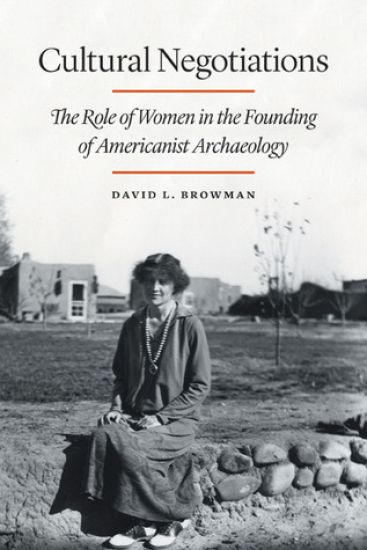
Cultural Negotiations

Cultural Negotiations

David L. Browman

University of Nebraska Press
2013
sidottu
This meticulously researched reference work documents the role of women who contributed to the development of Americanist archaeology from 1865 to 1940. Between the Civil War and World War II, many women went into anthropology and archaeology, fields that, at the beginning of this period, welcomed and made room for amateurs of both genders. But over time, the increasingly professional structure of these fields diminished or even obscured the contributions of women due to their lack of access to prestigious academic employment and publishing opportunities. As a result, a woman archaeologist during this period often published her research under her husband's name or as a junior author with her husband. In Cultural Negotiations archaeologist David L. Browman has scoured the archaeological literature and archival records of several institutions to bring the stories of more than two hundred women in Americanist archaeology to light through detailed biographies that discuss their contributions and publications. This work highlights how the social and cultural construction of archaeology as a field marginalized women and will serve as an invaluable reference to those researchers who continue to uncover the history of women in the sciences.
The Blue Hen's Chick

The Blue Hen's Chick

David L. Petersen; A. B. Guthrie Jr.

University of Nebraska Press
1993
pokkari
"It was a fine country to grow up in. To find riches, a boy had only to go outside," writes A. B. Guthrie, Jr., aobut his childhood in Montana early in the twentieth century. This autobiography was originally published in 1965 when he was sixty-four and still had miles to go. It recounts lively adventures and reflects on a career that brought fame for The Big Sky (1947) and led to the Pulitzer Prize for The Way West (1949). In an afterword David Petersen, who edited Big Sky, Fair Land: The Environmental Essays of A. B. Guthrie, Jr. (1988), describes the last twenty-five years of Guthrie's life. The world-famous author died in 1991 at the age of ninety.
War and the Ivory Tower

War and the Ivory Tower

David L. Schalk

University of Nebraska Press
2006
pokkari
In War and the Ivory Tower, David L. Schalk explores the public role of the intellectual in times of national crisis. He compares American responses to the Vietnam War with French responses to the Algerian War, finding many similarities in the way intellectuals voiced their outrage at the policies of their governments. At a time when national crises abound but protest is out of fashion, and intellectuals are possibly a dying species, this book presents a needed reexamination of what it means for intellectuals to speak out on issues of international importance.
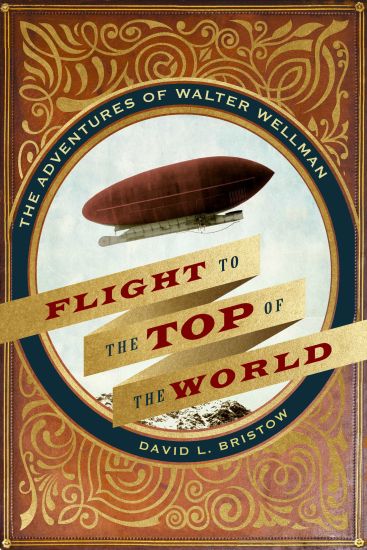
Flight to the Top of the World

Flight to the Top of the World

David L. Bristow

University of Nebraska Press
2018
sidottu
In his day Walter Wellman (1858-1934) was one of America's most famous men. To his contemporaries, he seemed like a character from a Jules Verne novel. He led five expeditions in search of the North Pole, two by dogsled and three by dirigible airship, and in 1910 made the first attempt to cross the Atlantic Ocean by air--which the self-styled expert on aerial warfare saw as a mission of world peace. He endured hardships, cheated death on more than one occasion, and surrounded himself with a team of assistants as eccentric and audacious as he was. In addition to his daring adventures, Wellman became a nationally known political reporter and unofficial spokesman for the McKinley and Roosevelt administrations. He was not the first newspaper-sponsored adventurer, but more than any of his predecessors he turned exploration into a real-time media event, and his reputation both flourished and suffered because of it. Wellman lived during a time of rapid social and technological change, when explorers were racing to fill in the last remaining blank spots on the map and when aviation promised to fulfill humanity's greatest hopes and darkest fears. Flight to the Top of the World is a window into Wellman's time and illuminates many of its dreams and contradictions.
No Law

No Law

David L. Lange; H. Jefferson Powell

Stanford University Press
2008
pokkari
The original text of the Constitution grants Congress the power to create a regime of intellectual property protection. The first amendment, however, prohibits Congress from enacting any law that abridges the freedoms of speech and of the press. While many have long noted the tension between these provisions, recent legal and cultural developments have transformed mere tension into conflict. No Law offers a new way to approach these debates. In eloquent and passionate style, Lange and Powell argue that the First Amendment imposes absolute limits upon claims of exclusivity in intellectual property and expression, and strips Congress of the power to restrict personal thought and free expression in the name of intellectual property rights. Though the First Amendment does not repeal the Constitutional intellectual property clause in its entirety, copyright, patent, and trademark law cannot constitutionally license the private commodification of the public domain. The authors claim that while the exclusive rights currently reflected in intellectual property are not in truth needed to encourage intellectual productivity, they develop a compelling solution for how Congress, even within the limits imposed by an absolute First Amendment, can still regulate incentives for intellectual creations. Those interested in the impact copyright doctrines have on freedom of expression in the U.S. and the theoretical and practical aspects of intellectual property law will want to take a closer look at this bracing, resonant work.
Democracy and War

Democracy and War

David L. Rousseau

Stanford University Press
2005
sidottu
Conventional wisdom in international relations maintains that democracies are only peaceful when encountering other democracies. Using a variety of social scientific methods of investigation ranging from statistical studies and laboratory experiments to case studies and computer simulations, Rousseau challenges this conventional wisdom by demonstrating that democracies are less likely to initiate violence at early stages of a dispute. Using multiple methods allows Rousseau to demonstrate that institutional constraints, rather than peaceful norms of conflict resolution, are responsible for inhibiting the quick resort to violence in democratic polities. Rousseau finds that conflicts evolve through successive stages and that the constraining power of participatory institutions can vary across these stages. Finally, he demonstrates how constraint within states encourages the rise of clusters of democratic states that resemble "zones of peace" within the anarchic international structure.
Identifying Threats and Threatening Identities

Identifying Threats and Threatening Identities

David L. Rousseau

Stanford University Press
2006
sidottu
How does a state determine if another state is an important military or economic threat? The issue of threat perception drives a wide variety of behaviors, from allegiance formation and defense spending to trade relations and regime membership. While liberal theorists and realists both agree that threat perception is a cornerstone of international relations, there is widespread disagreement on the factors that contribute to our fear of other states. In particular, the field is deeply divided between those who believe material factors such as the balance of military power determine the perception of threat and those who believe ideational factors such as shared democratic value determine the perception of threat. Using a variety of social scientific methods of investigation ranging from laboratory experiments and public opinion surveys to computer simulations and case studies, Rousseau challenges these conventional arguments and sheds new light on this debate. He presents a model of identity formation that can explain when ideas will (and will not) have a decisive impact on threat perception.
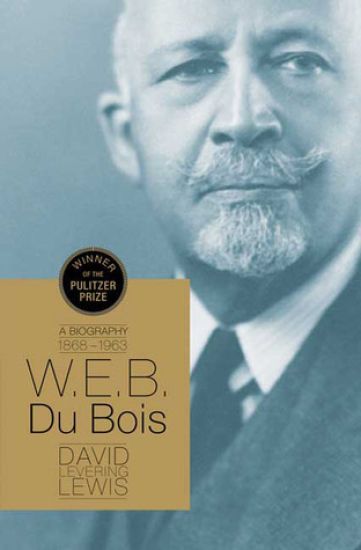
W. E. B. Du Bois

W. E. B. Du Bois

David L. Lewis

Henry Holt Company Inc
2009
pokkari
William Edward Burghardt Du Bois - the premier architect of the civil rights movement in America - was a towering and controversial personality, a fiercely proud individual blessed with the language of the poet and the impatience of the agitator. Now, David Levering Lewis has carved one volume out of his superlative two-volume biography of this monumental figure that set the standard for historical scholarship on this era. In his magisterial prose, Lewis chronicles Du Bois' long and storied career, detailing his monumental contributions the US character that echo still today.
Hebrews

Hebrews

David L. Allen

Broadman Holman Publishers
2010
sidottu
"For the word of God is living and active. Sharper than any doubleedged sword, it penetrates even to dividing soul and spirit, joints and marrow; it judges the thoughts and attitudes of the heart." -Hebrews 4:12 THE NEW AMERICAN COMMENTARY series is an exceptionally acclaimed resource for ministers and Bible students who want to understand and expound the Scriptures. Notable features in this new "Hebrews "volume by scholar David Allen include: Commentary based on the New International Version, NIV text printed in the body of the commentary, Sound scholarly methodology reflecting capable research in the original languages, Interpretation emphasizing the theological unity of each book and Scripture as a whole, Readable and applicable exposition.
A Letter to America

A Letter to America

David L. Boren

University of Oklahoma Press
2011
nidottu
A powerful wake-up call to all AmericansWith only 6 percent of the world's population, how long will the United States remain a global superpower? The answer, David Boren tells us in A Letter to America, depends on asking ourselves tough questions. A powerful wake-up call to Americans, A Letter to America, forces us to take a bold, objective look at ourselves.In A Letter to America, Boren explains with unsparing clarity why the country is at a crossroads and why decisive action is urgently needed and offers us an ambitious, hopeful plan.What the country needs, Boren asserts, are major reforms to restore the ability of our political system to act responsibly. By relying on our shared values, we can replace cynicism with hope and strengthen our determination to build a better future. We must fashion a post-Cold War foreign policy that fits twenty-first-century realities - including multiple contending superpowers. We must adopt campaign finance reform that curbs the influence of special interests and restores political power to the voters. Universal health care coverage, budget deficit reduction, affordable higher education, and a more progressive tax structure will strengthen the middle class.Boren also describes how we can renew our emphasis on quality primary and secondary education, revitalize our spirit of community, and promote volunteerism. He urges the teaching of more American history and government, for without educated citizens our system cannot function and our rights will not be preserved. Unless we understand how we became great, we will not remain great.The plan Boren puts forward is optimistic and challenges Americans to look into the future, decide what we want to be and where we want to go, and then implement the policies and actions we need to take us there.