The autobiographical story of a decade in the author's life includes her experiences as a wartime evacuee from London, sent to live in St. Ives and later in Trowbridge. Full of emotions from fun and laughter to fear and trepidation, this story makes fascinating reading.
This book is the first in English to consider women's movements and feminist discourses in twentieth-century Taiwan. Doris T. Chang examines the way in which Taiwanese women in the twentieth century selectively appropriated Western feminist theories to meet their needs in a modernizing Confucian culture. She illustrates the rise and fall of women's movements against the historical backdrop of the island's contested national identities, first vis-à-vis imperial Japan (1895-1945) and later with postwar China (1945-2000).In particular, during periods of soft authoritarianism in the Japanese colonial era and late twentieth century, autonomous women's movements emerged and operated within the political perimeters set by the authoritarian regimes. Women strove to replace the "Good Wife, Wise Mother" ideal with an individualist feminism that meshed social, political, and economic gender equity with the prevailing Confucian family ideology. However, during periods of hard authoritarianism from the 1930s to the 1960s, the autonomous movements collapsed.The particular brand of Taiwanese feminism developed from numerous outside influences, including interactions among an East Asian sociopolitical milieu, various strands of Western feminism, and even Marxist-Leninist women's liberation programs in Soviet Russia. Chinese communism appears not to have played a significant role, due to the Chinese Nationalists' restriction of communication with the mainland during their rule on post-World War II Taiwan.Notably, this study compares the perspectives of Madame Chiang Kai-shek, whose husband led as the president of the Republic of China on Taiwan from 1949 to 1975, and Hsiu-lien Annette Lu, Taiwan's vice president from 2000 to 2008. Delving into period sources such as the highly influential feminist monthly magazine Awakening as well as interviews with feminist leaders, Chang provides a comprehensive historical and cross-cultural analysis of the struggle for gender equality in Taiwan.
This text explores the creative processes in four classic works: "Death in Venice", "Treasure Island", "The Rubaiyat of Omar Khayyam" and "War and Peace". It considers how each of these works was compelled by an urgent life problem - conscious or unconscious - of its author.
An exploration of the creative process in four classic works: Death in Venice, Treasure Island, The Rubáiyát of Mar Khayyám, and War and Peace. Creating Literature Out of Life examines four very dissimilar masterpieces and their authors in search of evidence that will answer some of the many questions in the great mystery of creativity. Crossing boundaries of period, nation, and genre, the study looks into the "why" and "how" of the creation of Thomas Mann's Death in Venice, Robert Louis Stevenson's Treasure Island, Edward FitzGerald's The Rubáiyát of Mar Khayyám, and Lev Tolstoy's War and Peace. Doris Alexander finds that each of these works was compelled by an urgent life problem of its author, some of them partly conscious, others completely unconscious, which worked in harmony and counterpoint with the author's conscious theme to shape his work. She traces an interconnected nexus of memories—personal experiences, ideas, readings—that came alive in response to the author's problem and served as a reservoir out of which his characters, his images, his story line, and the emotional tone of his work emerged. Creating Literature Out of Life tells the exciting story of how Mann, Stevenson, FitzGerald, and Tolstoy fought out their major life battles in their works.
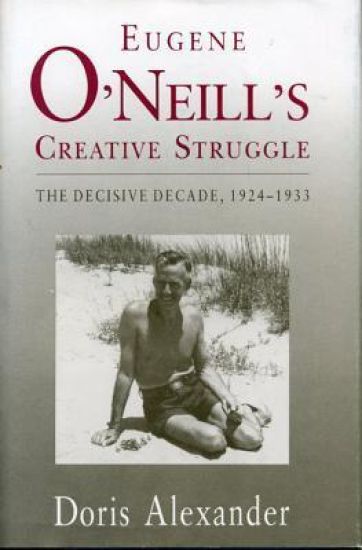
In Eugene O'Neill's Creative Struggle, Doris Alexander gives us a new kind of inside biography that begins where the others leave off. It follows O'Neill through the door into his writing room to give a blow-by-blow account of how he fought out in his plays his great life battles—love against hate, doubt against belief, life against death—to an ever-expanding understanding. It presents a new kind of criticism, showing how O'Neill's most intimate struggles worked their way to resolution through the drama of his plays. Alexander reveals that he was engineering his own consciousness through his plays and solving his life problems—while the tone, imagery, and richness of the plays all came out of the nexus of memories summoned up by the urgency of the problems he faced in them. By the way of O'Neill, this study moves toward a theory of the impulse that sets off a writer's creativity, and a theory of how that impulse acts to shape a work, not only in a dramatist like O'Neill but also in the case of writers in other mediums, and even of painters and composers. The study begins with Desire Under the Elms because that play's plot was consolidated by a dream that opened up the transfixing grief that precipitated the play for O'Neill, and it ends with Days Without End when he had resolved his major emotional-philosophical struggle and created within himself the voice of his final great plays. Since the analysis brings to bear on the plays all of his conscious decisions, ideas, theories, as well as the life-and-death struggles motivating them, documenting even the final creative changes made during rehearsals, this book provides a definitive account of the nine plays analyzed in detail (Desire Under the Elms, Marco Millions, The Great God Brown, Lazarus Laughed, Strange Interlude, Dynamo, Mourning Becomes Electra, Ah, Wilderness!, and Days Without End, with additional analysis of plays written before and after.
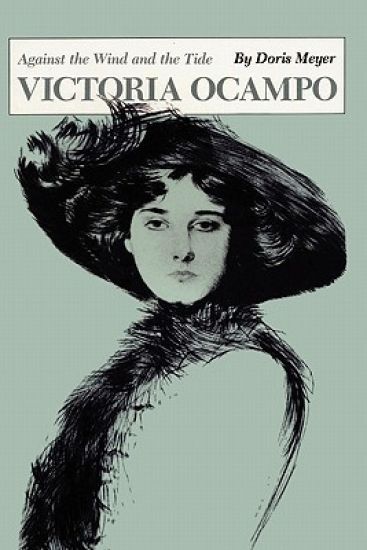
The "first lady of Argentine letters," Victoria Ocampo is best known as the architect of cultural bridges between the American and European continents and as the founder and director of Sur, an influential South American literary review and publishing house. In this first biographical study in English of "la superbe Argentine," originally published in 1979, Doris Meyer considers Victoria Ocampo's role in introducing European and North American writers and artists to the South American public-through the pages of her review, through translations of their work, and through lecture tours and recitations. She examines Ocampo's personal relationships with some of the most illustrious writers and thinkers of this century-including JosÉ Ortega y Gasset, Rabindranath Tagore, Count Hermann Keyserling, Virginia Woolf, Adrienne Monnier, Vita Sackville-West, Gabriela Mistral, and many others. And she portrays an extraordinary woman who rebelled against the strictures of family and social class to become a leading personality in the fight for women's rights in Argentina and, later, a steadfast opponent of the PerÓn regime, for which she was sent to jail in 1953. Fifteen of Victoria Ocampo's essays, selected from her more than ten volumes of prose and translated by Doris Meyer, complement the biographical study.
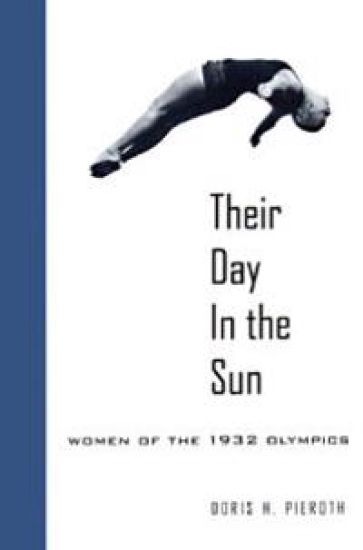
The 1932 Olympic games took place in Los Angeles in the depths of the Great Depression; that they were held at all falls barely short of miraculous. The United States sent thirty-seven women to compete—seventeen swimmers, seventeen track and field athletes, and three fencers. It was not easy, and far from acceptable, for a woman to be an athlete in 1932. As late as April 1931 the International Olympic Committee seriously considered eliminating women's events. The young Americans did their part to capture the imagination of spectators and reporters. Through the sports press they catapulted the Olympic Games and women's athletics into the nation's consciousness as never before.Doris Pieroth creates vivid portraits of the women, including the great Babe Didrikson, the confident and outspoken track and field star; Tidye Pickett, one of only two African American women who represented the United States despite encountering racial discrimination; and Helene Madison, winner of three gold medals in swimming, who returned triumphantly to Seattle's West Green Lake Beach—as a hotdog vendor (park department rules barred women from teaching swimming).The team truly represented America—a democratic cross-section from New York to California, Washington to Florida, Minnesota to Texas and points in between. Drawn from public pools, schools and playgrounds, municipal and industrial recreation programs, and private clubs alike it reflected the country's entire socio-economic spectrum. Their attainments and triumphs went a long way toward insuring that women's events would continue as an integral part of the Olympic Games—a prospect by no means certain in 1932.Pieroth's account is drawn from interviews with eleven of the women athletes, family members, other Olympians of the era, and witnesses of the 1932 games. She also quotes extensively from contemporary journalists such as Paul Gallico, Westbrook Pegler, and Damon Runyon, whose mixture of condescension, fulsome admiration for the "glamour girl" swimmers, and genuine, if sometimes grudging, admiration for the accomplishments of the athletes provides an intriguing view of the stereotypes these Olympic contestants were challenging.Their Day in the Sun: Women of the 1932 Olympics is the story of those remarkable people—their dedication and their delight in competition. In recounting their Olympic summer and their varied routes to Los Angeles, it adds to the history of sport the identities and details of a specific athletic cohort and their experiences in striving for excellence and acceptance.
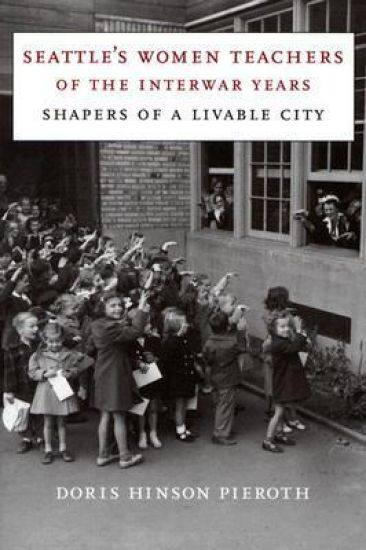
In Seattle's Women Teachers of the Interwar Years, Doris Pieroth describes the contributions of a remarkable group of women who dominated the Seattle public school system in the early years of the twentieth century and helped to produce well-educated citizens who were responsible for the widespread philanthropic, volunteer, and municipal activities that came to characterize the city.While most publications on the history of education have emphasized theory or administration, Pieroth focuses on individual teachers. Set against the backdrop of a developing city, the book provides vivid portraits of educated, strong, ambitious women making successful careers at a time when job opportunities for women were very limited.Pieroth interviewed as many of these women as she could find, and quotes from the interviews enhance her lively, well-written narrative. Using details drawn from local newspapers and school publications, she demonstrates that the influence of this cohort of women made modern Seattle the livable place that it remains today. Seattle's Women Teachers of the Interwar Years is a significant contribution to the history of Seattle and the region, to women's history, and to the history of education.
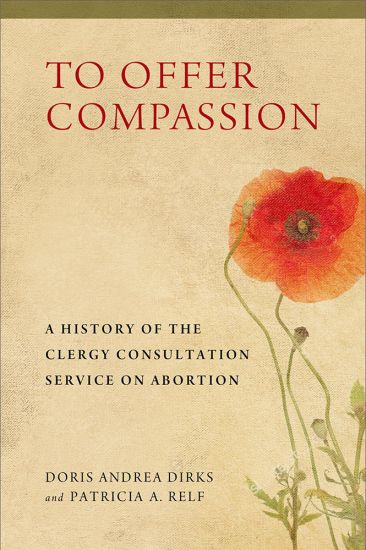
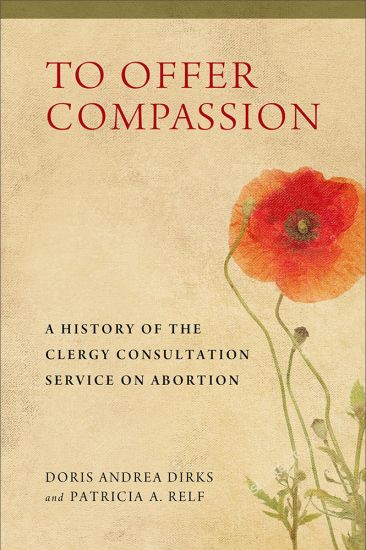
In 1967, when abortion was either illegal or highly restricted in every U.S. state, a group of ministers and rabbis formed to counsel women with unwanted pregnancies—including referral to licensed physicians willing to perform the procedure. By 1973, when the Roe v. Wade court decision made abortion legal nationwide, the Clergy Consultation Service on Abortion (CCS) had spread from coast to coast, referred hundreds of thousands of women for safe abortions without a single fatality, become a medical consumer advocacy group, and opened its own clinic in New York City.As religious leaders spoke out on issues of civil rights, peace, or poverty, CCS members were also called to action by the suffering of women who had approached them for help. Overwhelmingly male, white, affluent, and middle-aged, these mainline Protestant and Jewish clergy were nonetheless outspoken advocates for the rights of women, particularly poor women. To Offer Compassion is a detailed history of this unique and largely forgotten movement, drawing on extensive interviews with original participants and on primary documents from the CCS's operations.
In 1967, when abortion was either illegal or highly restricted in every U.S. state, a group of ministers and rabbis founded the Clergy Consultation Service on Abortion (CSS) to counsel women with unwanted pregnancies—including referral to licensed physicians willing to perform the procedure. By the time Roe v. Wade made abortion legal nationwide in 1973, CCS had grown into a surprisingly outspoken national medical consumer and women’s rights advocacy group. To Offer Compassion offers a detailed history of this unique and largely forgotten movement, drawing on extensive interviews with original participants and on primary documents from the CCS’s operations.
By turns wrenching, transcendent, and haunting, the rich stories in Minus One follow characters whose lives are upended by death, estrangement, and loss - and the ways they must negotiate loneliness and absence to rebuild their new realities. In intimate portraits, a psychiatrist analyzes the missed signs of her stepson's dangerous addiction, a resentful boy seeks revenge against his stepmother, a surgeon confronts his failed marriages, an artist searches for a new identity in widowhood, and a young dancer plots to escape a manipulative older partner. Woven through this slim and powerful volume are astute observations on how pain and grief can be inherited from one generation to the next. With tenderness and honesty, Doris Iarovici explores the plunging depths of the human experience, lingering on moments of familial warmth and joy but never shying away from conflict and tension. These stories reveal glimmers of hope and possibility, even in our darkest times.
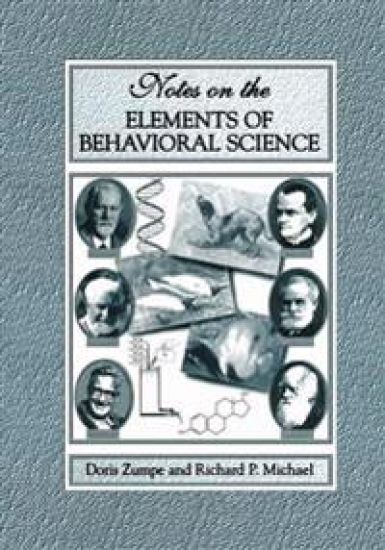
These notes are intended to help undergraduates who need to understand something of behavior both for its intrinsic interest and for their future careers in medicine, biology, psychology, anthropology, veterinary medicine, and nursing. In Emory University's Biology Department, a single-semester course called Evolutionary Perspectives on Behavior is given to undergraduates. It amounts to four, not eight months of study, so a great deal of compression is essential. There are several excellent textbooks available that deal with behavioral science from different perspectives, but we have found them too compendious for use in a short course when students are so heavily burdened; it is unsatisfactory to direct them to a chapter here and there in several different books or to this or that review article and original paper. In this volume, we have tried effectively and inexpensively to put in one place what we know is needed. The topics we have selected deal with their subjects in a simple, straightforward way without being too superficial. We could not cover everything and the gaps are not entirely idiosyncratic but reflect what students are given very well in other courses. Thus, there is no mention of the physiology of the axon and synapse; learning, memory, cognition, and basic genetics are hardly touched upon because students know about these matters from elsewhere.
A rewritten and enlarged version of the author's thesis, this study is concerned with Iraq's people--their social characteristics, population structure, and potentialities for population growth; and Iraq's resources--their present state of development, the level of living they provide, their potentialities, and the plans for fulfilling these potentialities.
This volume fills a conspicuous gap in the literature by providing the first resource guide devoted solely to Irish research collections located on both sides of the Atlantic Ocean. Organized geographically, the book covers the United States, Canada, Great Britain, and Ireland and provides comprehensive information about significant Irish collections in such areas as literature, history, current events, biography, Celtic studies, and the arts. Fully indexed and cross referenced, the guide will enable researchers to discover what is available and where it is located, systematically plan itineraries for visiting collections, and better determine duplication among collections.
This study focuses on the job evaluation procedures used in the federal government to evaluate all white-collar non-supervisory occupations. It examines the factor and factor weighing methodologies developed by the Civil Service Commission to provide the basis for institutionalized standards used to establish existing pay differences. The Factor Evaluation System (FES) appears responsive to recommendations of comparable worth advocates that the criteria for determining job worth be made explicit and as bias-free as possible. The volume provides an extensive analysis of the new FES in an effort to determine fully its usefulness from the standpoint of such advocacy. The study addresses whether the new FES is more beneficial to female-dominated jobs than the old narrative classification system. Female-dominated jobs, it is discovered, were rated lower on all factors used in the federal government's job evaluation system. Dr. Werwie then goes on to explore why this was the case and whether changing the weights assigned to job factors under the new system would alter the pay relationship between male-and female-dominated jobs. Also examined is the extent to which the factors, dimensions and operational indicators of the FES and other evaluation systems adequately define and measure the job content of female-dominate occupations. The results provide insights which will be useful to administrators and researchers interested in moving current job evaluation systems closer toward the goal of a bias-free evaluation system.
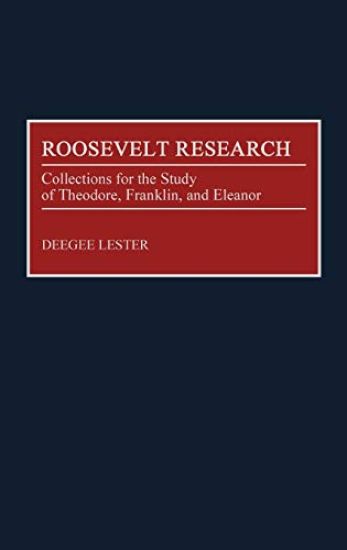
Roosevelt Research is the first resource guide to provide information on research collection for all three Roosevelts. The volume covers U.S. repositories, including the large collections at the Library of Congress, the National Archives, the FDR Library at Hyde Park, and the Theodore Roosevelt Collection at Harvard University's Houghton Library, and smaller collections throughout the country. In addition, it covers collections in Great Britain and the new Roosevelt Research Center in the Netherlands. The guide details collectons for easy access.Part I includes U.S. entries arranged alphabetically by state, city, and name of repository. Repositories in Great Britain and the Netherlands are also covered in part I. Each entry includes an address; hours; information on which Roosevelts the collections cover; whether sources are primary or secondary; and descriptions of the types of material available. The book is fully indexed and cross-referenced.
It may seem a strange match--AI and crop irrigation or AI and the Serengeti lions but researchers in Artifical Intelligence envision expert systems as a new technology for capturing the knowledge and reasoning process of experts in agriculture, wildlife management, and many other fields. These computer programs have a relevance for developing nations that desire to close the gap between themselves and the richer nations of the world. Despite the value and appeal of expert systems for economic and technological development, Schoenhoff discloses how this technology reflects the Western preoccupation with literacy and rationality. When expert systems are introduced into developing nations, they must interact with persons who reason and articulate their knowledge in ways unfamiliar to high-tech cultures. Knowledge, particularly in poor and and traditional communities, may be expressed in proverbs rather than propositions or in folklore rather than formulas. Drawing upon diverse disicplines, the author explores whether such indigenous knowledge can be incorporated into the formal language and artificial rationality of the computer-and the imperative for working toward this incorporation.