Originally published in 1987, the purpose of Stress, Crowding, and Blood Pressure in Prison was to present, in a single location, the rationale, background, methods, principal results, analyses, interpretations, and conclusions of the authors’ studies at Massachusetts correctional institutions. Employing a longitudinal method for studying 568 inmates, the authors drew on psychological, social and health sciences assessments to identify the effects of housing mode, prison employment, leisure activities, disciplinary actions, and personal and sociodemographic characteristics to identify what was particularly stressful for inmates. A parallel study of prison staff and a specific series of conclusions and recommendations concludes the book.
Since it first appeared, this casebook has sought to capture the evolving challenges of civil procedure in a way that engages students and fosters critical judgment on the underlying policy issues. The authors have closely monitored the evolution of procedure over this time, and adapted the basic structure of the book to take account of those changes.That evolution remains central to the seventh edition. The new edition retains the basic structure of the book, and a great deal of the existing superstructure of principal cases. It adds substantially revised text and note material to present contemporary issues in the context of those cases or new principal cases. The discovery chapter, for example, is infused with coverage of the 2015 rule amendments that have received somuch attention. The personal jurisdiction chapter integrates the many recent Supreme Court decisions into the existing framework, conveying the developments that have occurred since the last edition appeared in 2013.The new edition also offers new principal cases to examine and illustrate a number of issues. A new Rule 19 case on required parties presents the contemporary issues in a setting likely to be interesting to many students. A new Internet jurisdiction case involves online payday lending, an example of the fast-moving world of Internet-based commerce. A recent supplemental jurisdiction case enables students to work through the application of § 1367 in a setting that also involves appreciation of various joinder concepts. A new class-action case presents the challenges of consumer class actions. New Supreme Court and other principal cases address issues of subject matter jurisdiction and appellate jurisdiction. As reflects contemporary litigation, intellectual property cases are more prominent than in previous editions.
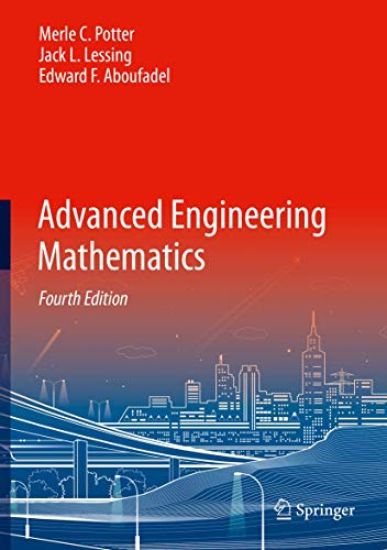
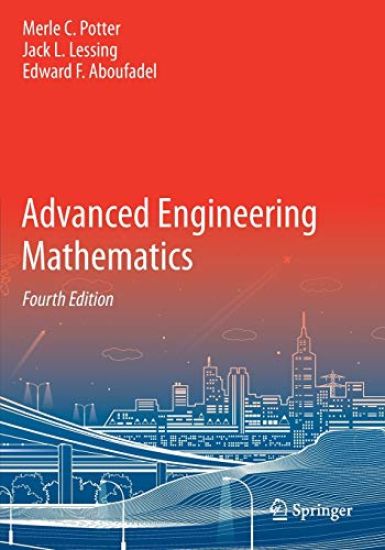
This book is designed to serve as a core text for courses in advanced engineering mathematics required by many engineering departments. The style of presentation is such that the student, with a minimum of assistance, can follow the step-by-step derivations. Liberal use of examples and homework problems aid the student in the study of the topics presented. Ordinary differential equations, including a number of physical applications, are reviewed in Chapter One. The use of series methods are presented in Chapter Two, Subsequent chapters present Laplace transforms, matrix theory and applications, vector analysis, Fourier series and transforms, partial differential equations, numerical methods using finite differences, complex variables, and wavelets. The material is presented so that four or five subjects can be covered in a single course, depending on the topics chosen and the completeness of coverage.Incorporated in this textbook is the use of certain computer software packages. Short tutorials on Maple, demonstrating how problems in engineering mathematics can be solved with a computer algebra system, are included in most sections of the text. Problems have been identified at the end of sections to be solved specifically with Maple, and there are computer laboratory activities, which are more difficult problems designed for Maple. In addition, MATLAB and Excel have been included in the solution of problems in several of the chapters.There is a solutions manual available for those who select the text for their course. This text can be used in two semesters of engineering mathematics. The many helpful features make the text relatively easy to use in the classroom.
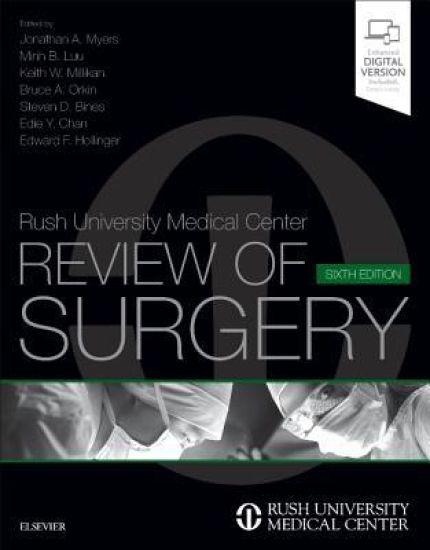
Study efficiently and effectively for high-stakes surgery exams with this superb review tool. Rush University Medical Center Review of Surgery, 6th Edition, has been thoroughly updated with new questions and answers in all chapters, and content has been revised to reflect what is most important on today's exams. A broad range of surgical topics provide a complete review of the information you need to know. Comprehensive coverage of both general surgery and surgical subspecialties in a user-friendly question-and-answer format that mimics actual exams. More than 1,500 peer-reviewed questions mirror standardized test blueprints. Single best answer format provides a realistic exam simulation. Questions are followed by answers and explanations, with rationales backed up by references to leading texts and references. Ideal for residents in training, surgeons preparing for certification or recertification exams, and experienced clinicians who need to stay up to date with current practices and recent advances. Written by one of the premier general surgery departments in the U.S., with a new editorial team led by Dr. Jonathan A. Myers. Expert ConsultT eBook version included with purchase. This enhanced eBook experience allows you to search all of the text, figures, and references from the book on a variety of devices.
This book has been considered by academicians and scholars of great significance and value to literature. This forms a part of the knowledge base for future generations. So that the book is never forgotten we have represented this book in a print format as the same form as it was originally first published. Hence any marks or annotations seen are left intentionally to preserve its true nature.
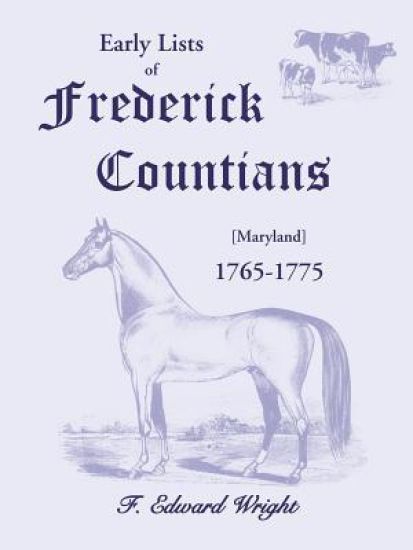
This work includes three alphabetically arranged lists and a petition for a road. The first list provides the names of persons that reported stray livestock on their property (1765-1775). The following two lists give the names of persons for which rent wa
E. F. Benson's "Michael" offers a fascinating glimpse into the intricacies of 20th-century English social life. This compelling work of psychological fiction delves into the complexities of human relationships and the subtle nuances of social customs prevalent in Great Britain. A meticulously prepared republication of a historical text, "Michael" explores themes relevant to family life through a literary lens, capturing a specific moment in time with enduring resonance. Readers interested in the social dynamics of early 20th-century England will find this novel a captivating study of character and societal expectations.This work has been selected by scholars as being culturally important, and is part of the knowledge base of civilization as we know it.This work is in the public domain in the United States of America, and possibly other nations. Within the United States, you may freely copy and distribute this work, as no entity (individual or corporate) has a copyright on the body of the work.Scholars believe, and we concur, that this work is important enough to be preserved, reproduced, and made generally available to the public. We appreciate your support of the preservation process, and thank you for being an important part of keeping this knowledge alive and relevant.