

Kirjahaku
Etsi kirjoja tekijän nimen, kirjan nimen tai ISBN:n perusteella.
1000 tulosta hakusanalla FREEDOM DIVIDEND
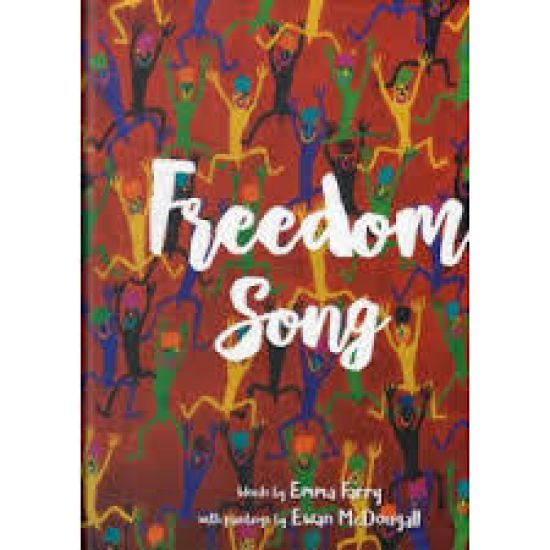
Freedom Song
Be Loved Press
2018
sidottu
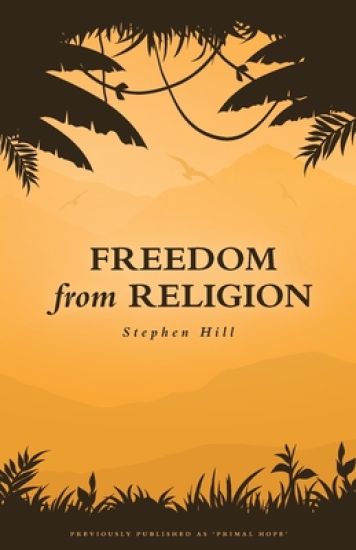
Are you exhausted by sacrificial living and pursuing God? Are you tired of searching to find fulfilment in your relationship with God? Are you looking for a Christianity that really works?This book is provocative and radical. But it will liberate you and bring you into hope that the Christian life does not need to be lived by your effort or energy. God Himself is the Initiator and Energiser of Christianity.Christianity is the life and love of God. The only thing that can set us free from guilt and condemnation is experiencing the substance of the Father's love.Freedom from Religion: shows that coming to the end of our striving can be the start of true freedom. sets out the real difference between religion and Christianity. injects us with hope that we can live confidently in our relationship with God.
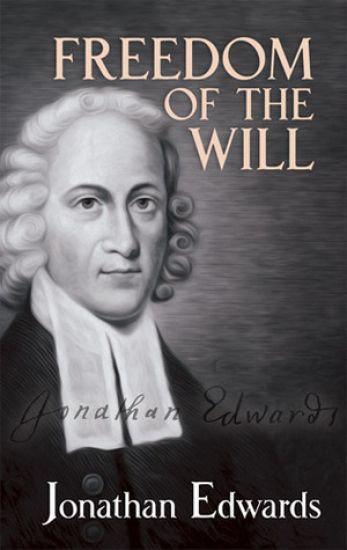
Eighteenth-century theologian Jonathan Edwards remains a significant influence on modern religion, and this book constitutes his most important contribution to Christian thought. Edwards raises timeless questions about desire, choice, good, and evil, contrasting the opposing Calvinist and Arminian views of free will and addressing issues related to God's foreknowledge, determinism, and moral agency.
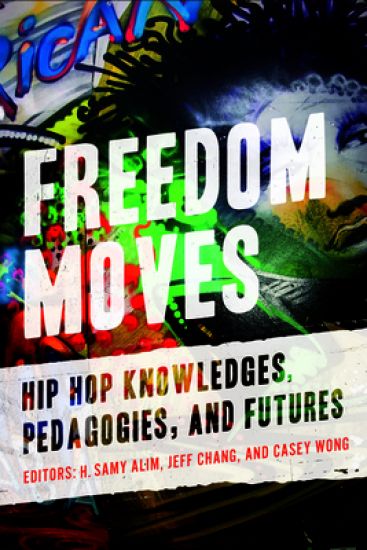
Freedom Moves
University of California Press
2023
sidottu
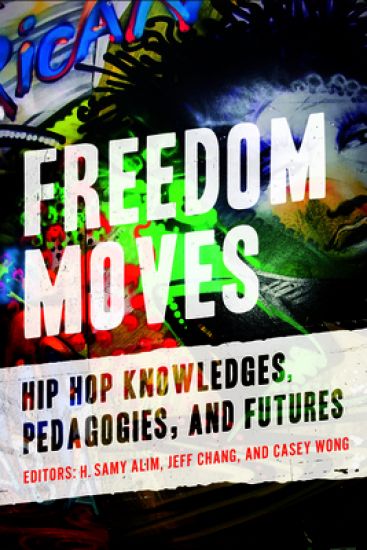
This expansive collection sets the stage for the next generation of Hip Hop scholarship as we approach the fiftieth anniversary of the movement’s origins. Celebrating 50 years of Hip Hop cultural history, Freedom Moves travels across generations and beyond borders to understand Hip Hop’s transformative power as one of the most important arts movements of our time. This book gathers critically acclaimed scholars, artists, activists, and youth organizers in a wide-ranging exploration of Hip Hop as a musical movement, a powerful catalyst for activism, and a culture that offers us new ways of thinking and doing freedom. Rooting Hip Hop in Black freedom culture, this state-of-the-art collection presents a globally diverse group of Black, Indigenous, Latinx, Asian American, Arab, European, North African, and South Asian artists, activists, and thinkers. The “knowledges” cultivated by Hip Hop and spoken word communities represent emerging ways of being in the world. Freedom Moves examines how educators, artists, and activists use these knowledges to inform and expand how we understand our communities, our histories, and our futures.
Freedom Moves
University of California Press
2023
pokkari
This expansive collection sets the stage for the next generation of Hip Hop scholarship as we approach the fiftieth anniversary of the movement’s origins. Celebrating 50 years of Hip Hop cultural history, Freedom Moves travels across generations and beyond borders to understand Hip Hop’s transformative power as one of the most important arts movements of our time. This book gathers critically acclaimed scholars, artists, activists, and youth organizers in a wide-ranging exploration of Hip Hop as a musical movement, a powerful catalyst for activism, and a culture that offers us new ways of thinking and doing freedom. Rooting Hip Hop in Black freedom culture, this state-of-the-art collection presents a globally diverse group of Black, Indigenous, Latinx, Asian American, Arab, European, North African, and South Asian artists, activists, and thinkers. The “knowledges” cultivated by Hip Hop and spoken word communities represent emerging ways of being in the world. Freedom Moves examines how educators, artists, and activists use these knowledges to inform and expand how we understand our communities, our histories, and our futures.
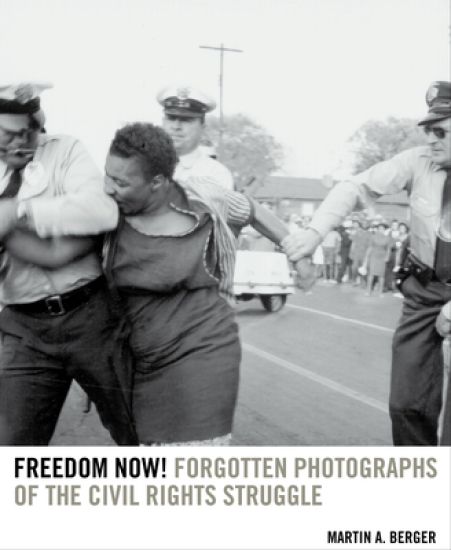
Photographers shot millions of pictures of the black civil rights struggle between the close of World War II and the early 1970s, yet most Americans today can recall just a handful of images that look remarkably similar. In the popular imagination, the civil rights movement is remembered in dramatic photographs of protestors attacked with police dogs and fire hoses, firebombs and shotguns, tear gas and billy clubs. The most famous images of the era show black activists victimized by violent Southern whites. But there are other stories to be told. Blacks changed America through their action, not their suffering. In this groundbreaking catalogue, Martin Berger presents a collection of forgotten photographs that illustrate the action, heroism, and strength of black activists in driving social and legislative change. Freedom Now! highlights the power wielded by black men, women, and children in courthouses, community centers, department stores, political conventions, schools, and streets. Freedom Now! reveals that we have inherited a photographic canon—and a picture of history—shaped by whites’ comfort with unthreatening images of victimized blacks. And it illustrates how and why particular people, events, and issues have been edited out of the photographic story we tell about our past. By considering the different values promoted in the forgotten photographs, readers will gain an understanding of African Americans’ role in rewriting U.S. history and the high stakes involved in selecting images with which to narrate our collective past.
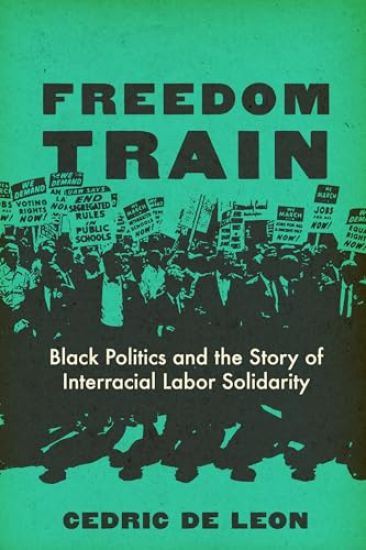
Revealing the central role of Black activists in spurring interracial solidarity in the US labor movement. Most accounts of interracial solidarity focus on white union activists. In Freedom Train, Cedric de Leon, a former organizer and elected leader in the US labor movement, argues that we can't comprehend the history of workers' triumphs in the United States without investigating the role of Black liberation. This book shows that, from the early twentieth century to the years immediately following the March on Washington and beyond, independent Black labor organizations have pushed the white labor movement toward a fierce and effective interracial solidarity. Drawing on the minutes, correspondence, and speeches of Black labor activists and organizations from 1917 to 1968, de Leon reveals that Black people have been the most ardent and consistent proponents of racial inclusion, leadership representation, and programs linking economic and racial justice. He also demonstrates how conflict and consensus among Black labor groups fueled the fight for solidarity, as different factions split and consolidated to form successive and sometimes competing Black labor organizations. Freedom Train centers the contributions of Black people to the multiracial unions we have today and demonstrates that internal conflict can be a source of strategic innovation and social movement success.
Revealing the central role of Black activists in spurring interracial solidarity in the US labor movement. Most accounts of interracial solidarity focus on white union activists. In Freedom Train, Cedric de Leon, a former organizer and elected leader in the US labor movement, argues that we can't comprehend the history of workers' triumphs in the United States without investigating the role of Black liberation. This book shows that, from the early twentieth century to the years immediately following the March on Washington and beyond, independent Black labor organizations have pushed the white labor movement toward a fierce and effective interracial solidarity. Drawing on the minutes, correspondence, and speeches of Black labor activists and organizations from 1917 to 1968, de Leon reveals that Black people have been the most ardent and consistent proponents of racial inclusion, leadership representation, and programs linking economic and racial justice. He also demonstrates how conflict and consensus among Black labor groups fueled the fight for solidarity, as different factions split and consolidated to form successive and sometimes competing Black labor organizations. Freedom Train centers the contributions of Black people to the multiracial unions we have today and demonstrates that internal conflict can be a source of strategic innovation and social movement success.
Freedom and Religion in Kant and his Immediate Successors
George di Giovanni
Cambridge University Press
2009
pokkari
The theologians of the late German Enlightenment saw in Kant's Critique of Pure Reason a new rational defence of their Christian faith. In fact, Kant's critical theory of meaning and moral law totally subverted the spirit of that faith. This challenging new study examines the contribution made by the Critique of Pure Reason to this change of meaning. George di Giovanni stresses the revolutionary character of Kant's critical thought but also reveals how this thought was being held hostage to unwarranted metaphysical assumptions that caused much confusion and rendered the First Critique vulnerable to being reabsorbed into modes of thought typical of Enlightenment popular philosophy. Amongst the striking features of this book are nuanced interpretations of Jacobi and Reinhold, a lucid exposition of Fichte's early thought, and a rare, detailed account of Enlightenment popular philosophy.
This book discusses a central chapter in the history of free speech in the Western world. The nature and limits of freedom of speech prompted sophisticated debate in a wide range of areas in the early seventeenth century; it was one of the 'liberties of the subject' fought for by individuals and groups across the political landscape. David Colclough argues that freedom of speech was considered to be a significant civic virtue during this period. Discussions of free speech raised serious questions about what it meant to live in a free state, and how far England was from being such a state. Examining a wide range of sources, from rhetorical handbooks to Parliamentary speeches and manuscript miscellanies, Dr Colclough demonstrates how freedom of speech was conceived positively in the period c.1603–28, rather than being defined in opposition to acts of censorship.

Freedom: A Documentary History of Emancipation, 1861–1867 2 Volume Paperback Set: Volume 1, The Destruction of Slavery
Barbara J. Fields; Glymph Thavolia; Reidy Joseph P.; Rowland Leslie S.
Cambridge University Press
2010
muu
The American Civil War destroyed slavery in the South. At first, most white Americans denied what would eventually seem self-evident. But black Americans saw clearly that the sectional conflict was their greatest opportunity for liberation. This volume of Freedom presents a documentary record of the transformation of the Civil War into a war against slavery, and the slaves' role in their own emancipation. The Destruction of Slavery shows the process by which a war for Union became a war for freedom. It demonstrates how three interrelated circumstances opened opportunities to slaves: first, the character of slave society; second, the course of the war itself; and third, the policies of the Union and Confederate governments. Together, they made emancipation an uneven, halting, and often tenuous process in which slaves played the central role.
Freedom Bound is about the origins of modern America - a history of colonizing, work and civic identity from the beginnings of English presence on the mainland until the Civil War. It is a history of migrants and migrations, of colonizers and colonized, of households and servitude and slavery, and of the freedom all craved and some found. Above all it is a history of the law that framed the entire process. Freedom Bound tells how colonies were planted in occupied territories, how they were populated with migrants - free and unfree - to do the work of colonizing and how the newcomers secured possession. It tells of the new civic lives that seemed possible in new commonwealths and of the constraints that kept many from enjoying them. It follows the story long past the end of the eighteenth century until the American Civil War, when - just for a moment - it seemed that freedom might finally be unbound.
Originally published in 1976, this book was written specifically to guide students of political theory who want to understand Hegel's political ideas as they appear in The Phenomenology of Mind. Professor Shklar's commentary uses plain language and English translations of references wherever possible. The core of Hegel's argument is that freedom is the identity of the personal goals of individual citizens and the public ends of the polity as a whole. This is a dynamic process, in which all laws are created by each and all, and in turn expressed and realised in the minds and actions of every member of society. The text emphasises Hegel's criticism of every type of subjectivity. The failure to recognise the cultural character of all experience is the core of Hegel's critical review of all past philosophy, and led him to develop his own theory of history and of knowledge as retrospective thinking.
Freedom and Anthropology in Kant's Moral Philosophy
Patrick R. Frierson
Cambridge University Press
2011
pokkari
This book offers a comprehensive account of Kant's theory of freedom and his moral anthropology. The point of departure is the apparent conflict between three claims to which Kant is committed: that human beings are transcendentally free, that moral anthropology studies the empirical influences on human beings, and that more anthropology is morally relevant. Frierson shows why this conflict is only apparent. He draws on Kant's transcendental idealism and his theory of the will and describes how empirical influences can affect the empirical expression of one's will in a way that is morally significant but still consistent with Kant's concept of freedom. As a work which integrates Kant's anthropology with his philosophy as a whole, this book will be an unusually important source of study for all Kant scholars and advanced students of Kant.
Freedom in Machinery: Volume 2, Screw Theory Exemplified
Phillips Jack Phillips
Cambridge University Press
1990
sidottu
Freedom: Volume 3, Series 1: The Wartime Genesis of Free Labour: The Lower South
Cambridge University Press
1991
sidottu
Union occupation of parts of the Confederacy during the Civil War forced federal officials to confront questions about the social order that would replace slavery. This volume of Freedom, first published in 1991, presents a documentary history of the emergence of free-labor relations in the large plantation areas of the Union-occupied Lower South. The documents illustrate the experiences of former slaves as military laborers, as residents of federally sponsored 'contraband camps', as wage laborers on plantations and in towns, and, in some instances, as independent farmers and self-employed workers. Together with the editors' interpretative essays, these documents portray the different understandings of freedom advanced by the many participants in the wartime evolution of free labor - former slaves and free blacks; former slaveholders; Union military officers and officials in Washington; and Northern planters, ministers and teachers. The war sealed the fate of slavery only to open a contest over the meaning of freedom. This volume documents an important chapter of that contest.
This book discusses both the freedom of the Ukrainian-Russian borderland of the Donbas and the terror it has suffered because of that freedom. In a detailed panorama the book presents the tumultuous history of this steppe frontier land from its foundation as a modern coal and steel industrial centre to the post-Soviet present. Wild and unmanageable, this haven for fugitives posed a constant political challenge to Moscow and Kiev. In the light of new information gained from years of work in previously closed Soviet archives (including the former KGB archives in the Donbas), the book presents, from a regional perspective, new interpretations of critical events in modern Ukrainian and Russian history: the Russian Revolution, the famine of 1932–33, the Great Terror, World War II, collaboration, the Holocaust, and de-Stalinization.
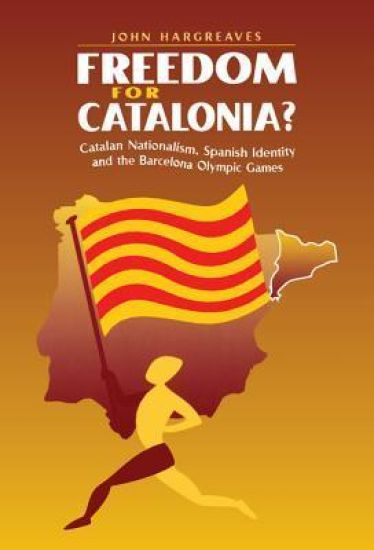
Although the fight for independence by national minorities has received much attention recently, there is no study of how globalised sport in its most advanced form can help to stimulate it. This book shows how the 1992 Olympic Games raised the tension that already existed between Catalonia and Spain, from the time they were awarded to Barcelona until they opened. John Hargreaves analyses and explains the way in which the conflict developed and eventually was resolved, in terms of the special characteristics of Catalan nationalism, the nature of the new Spanish democracy and the special role played by the International Olympic Committee. This book will be relevant to academics, researchers and postgraduates specialising in nationalism and Catalan nationalism, as well as being of interest to teachers, researchers and students of political sociology, cultural studies and sports studies, and professionals working in the fields of culture, sport, recreation and leisure.
Although the fight for independence by national minorities has received much attention recently, there is no study of how globalised sport in its most advanced form can help to stimulate it. This book shows how the 1992 Olympic Games raised the tension that already existed between Catalonia and Spain, from the time they were awarded to Barcelona until they opened. John Hargreaves analyses and explains the way in which the conflict developed and eventually was resolved, in terms of the special characteristics of Catalan nationalism, the nature of the new Spanish democracy and the special role played by the International Olympic Committee. This book will be relevant to academics, researchers and postgraduates specialising in nationalism and Catalan nationalism, as well as being of interest to teachers, researchers and students of political sociology, cultural studies and sports studies, and professionals working in the fields of culture, sport, recreation and leisure.