Kirjojen hintavertailu. Mukana 11 717 486 kirjaa ja 12 kauppaa.

Kirjahaku

Etsi kirjoja tekijän nimen, kirjan nimen tai ISBN:n perusteella.

1000 tulosta hakusanalla Geoff Ryan P.M.P.

Historical Dictionary of Crime Films

Historical Dictionary of Crime Films

Geoff Mayer

Scarecrow Press
2012
sidottu
The crime film genre consists of detective films, gangster films, suspense thrillers, film noir, and caper films and is produced throughout the world. Crime film was there at the birth of cinema, and it has accompanied cinema over more than a century of history, passing from silent films to talkies, from black-and-white to color. The genre includes such classics as The Maltese Falcon, The Godfather, Gaslight, The French Connection, and Serpico, as well as more recent successes like Seven, Drive, and L.A. Confidential. The Historical Dictionary of Crime Films covers the history of this genre through a chronology, an introductory essay, and an extensive bibliography. The dictionary section has over 300 cross-referenced entries on key films, directors, performers, and studios. This book is an excellent access point for students, researchers, and anyone wanting to know more about crime cinema.
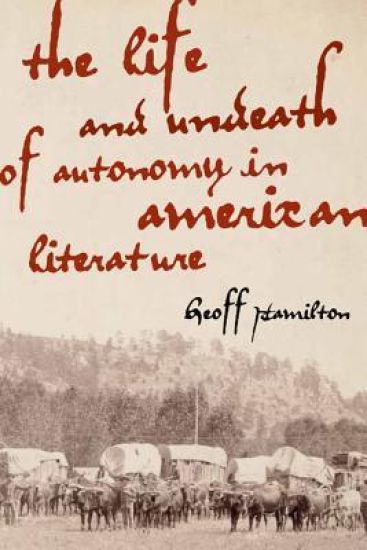
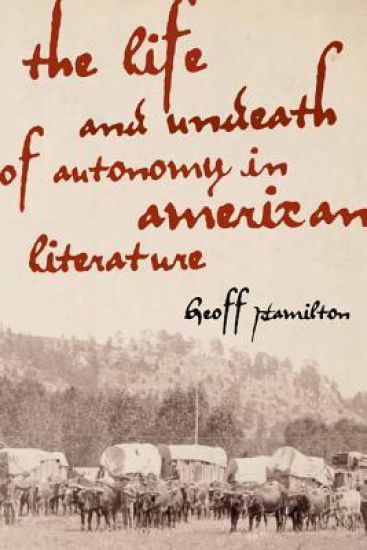
The Life and Undeath of Autonomy in American Literature

The Life and Undeath of Autonomy in American Literature

Geoff Hamilton

University of Virginia Press
2013
sidottu
In The Life and Undeath of Autonomy in American Literature, Geoff Hamilton charts the evolution of the fundamental concept of autonomy in the American imaginary across the span of the nation’s literary history. Whereas America’s ideological roots are typically examined in relation to Enlightenment Europe, this book traces the American literary representation of autonomy back to its pastoral, political, and ultimately religious origins in ancient Greek thought. Tracking autonomy’s evolution in America from the Declaration of Independence to contemporary works, Hamilton considers affinities between American and Greek literary characters—Natty Bumppo and Odysseus, Emerson’s ""poet"" and Socrates, Cormac McCarthy’s Judge Holden and Callicles—and reveals both what American literary history has in common with that of ancient Greece and what is distinctively its own. The author argues for the link with antiquity not only to understand better the boundaries between self and society but also to show profound transitions in the understanding of autonomy from a nourishing liberty of fulfilment, through an aggressive agency destructive to both human and natural worlds, to a sterile isolation and detachment. The result is an insightful analysis of the history of individualism, the evolution of frontier mythology and American Romanticism, and the contemporary representation of social alienation and violent criminality.
The Life and Undeath of Autonomy in American Literature

The Life and Undeath of Autonomy in American Literature

Geoff Hamilton

University of Virginia Press
2013
nidottu
In The Life and Undeath of Autonomy in American Literature, Geoff Hamilton charts the evolution of the fundamental concept of autonomy in the American imaginary across the span of the nation’s literary history. Whereas America’s ideological roots are typically examined in relation to Enlightenment Europe, this book traces the American literary representation of autonomy back to its pastoral, political, and ultimately religious origins in ancient Greek thought. Tracking autonomy’s evolution in America from the Declaration of Independence to contemporary works, Hamilton considers affinities between American and Greek literary characters—Natty Bumppo and Odysseus, Emerson’s ""poet"" and Socrates, Cormac McCarthy’s Judge Holden and Callicles—and reveals both what American literary history has in common with that of ancient Greece and what is distinctively its own. The author argues for the link with antiquity not only to understand better the boundaries between self and society but also to show profound transitions in the understanding of autonomy from a nourishing liberty of fulfilment, through an aggressive agency destructive to both human and natural worlds, to a sterile isolation and detachment. The result is an insightful analysis of the history of individualism, the evolution of frontier mythology and American Romanticism, and the contemporary representation of social alienation and violent criminality.
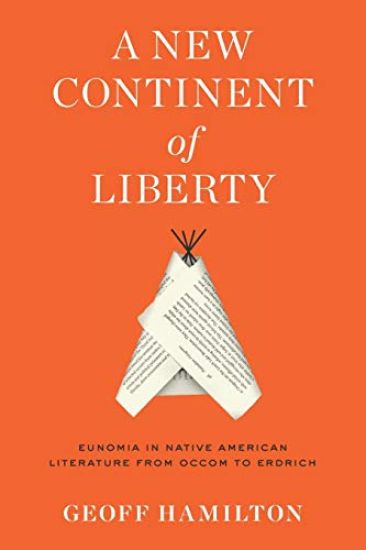
A New Continent of Liberty

A New Continent of Liberty

Geoff Hamilton

University of Virginia Press
2019
sidottu
The first book to chart autonomy's conceptual growth in Native American literature from the late eighteenth to the early twenty-first century, A New Continent of Liberty examines, against the backdrop of Euro-American literature, how Native American authors have sought to reclaim and redefine distinctive versions of an ideal of self-rule grounded in the natural world. Beginning with the writings of Samson Occom, and extending through a range of fiction and nonfiction works by William Apess, Sarah Winnemucca, Zitkala-Sa, N. Scott Momaday, Gerald Vizenor, and Louise Erdrich, Geoff Hamilton sketches a movement of gradual but resolute ascent: from often desperate early efforts, pitted against the historical realities of genocide and cultural annihilation, to preserve any sense of self and community, toward expressions of a resurgent autonomy that affirm new, iIndigenous models of eunomia, a fertile blending of human and natural orders.
A New Continent of Liberty

A New Continent of Liberty

Geoff Hamilton

University of Virginia Press
2019
nidottu
The first book to chart autonomy's conceptual growth in Native American literature from the late eighteenth to the early twenty-first century, A New Continent of Liberty examines, against the backdrop of Euro-American literature, how Native American authors have sought to reclaim and redefine distinctive versions of an ideal of self-rule grounded in the natural world. Beginning with the writings of Samson Occom, and extending through a range of fiction and nonfiction works by William Apess, Sarah Winnemucca, Zitkala-Sa, N. Scott Momaday, Gerald Vizenor, and Louise Erdrich, Geoff Hamilton sketches a movement of gradual but resolute ascent: from often desperate early efforts, pitted against the historical realities of genocide and cultural annihilation, to preserve any sense of self and community, toward expressions of a resurgent autonomy that affirm new, iIndigenous models of eunomia, a fertile blending of human and natural orders.
How

How

Geoff Wyss

OHIO STATE UNIVERSITY PRESS
2012
pokkari
If every story is born of a question-How did we get here? How do you make your arm do that?-the stories in Geoff Wyss's How search for answers to the mysteries of an astonishing range of characters. The narrator of "How I Come to Be Here at the GasFast" explains why he hasn't left a truck stop in the two days since he scratched a winning lottery ticket. In "How to Be a Winner," a sports consultant browbeats a high school football team with his theory of history and a justification of his failed coaching career. Lost in the mazes they've made of themselves, Wyss's characters search for exits on ground that shifts dizzyingly from humor to pathos, from cynicism to earnestness, from comedy to tragedy, often within the same sentence. Although propelled by a razor-sharp, contemporary voice, Wyss's stories-many set in a New Orleans unknown to television and tourists-have more in common with Chekhov and O'Connor than with "Treme."
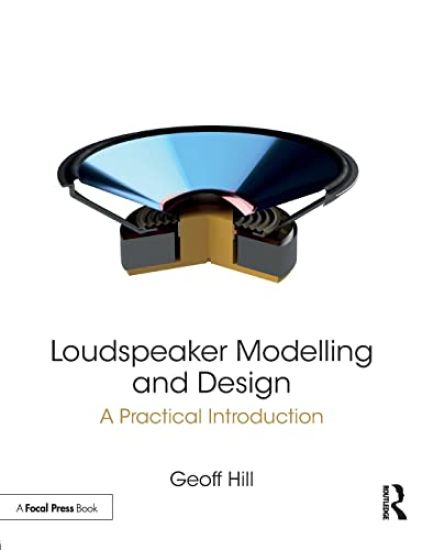
Loudspeaker Modelling and Design

Loudspeaker Modelling and Design

Geoff Hill

CRC Press Inc
2018
sidottu
In this book, Geoff Hill demonstrates modern software and hardware being applied to the processes behind loudspeaker design and modelling. Modern computing power has progressed to the point that such analyses are now practical for any interested individual or small company. Loudspeaker Modelling and Design: A Practical Introduction examines the process from initial concept through specifications and theoretical simulations and onto detailed design. It demonstrates the processes of design and specification, by using detailed simulations of a loudspeaker driver; sufficient to give re-assurance that a design is practical and will perform as expected.This book brings together many different strands of modelling from electro-magnetic through to mechanical and acoustic, without getting bogged down in theoretical discussions and arguments. This practice-based book shows the techniques used in designing modern loudspeakers and transducers.
Loudspeaker Modelling and Design

Loudspeaker Modelling and Design

Geoff Hill

CRC Press Inc
2018
nidottu
In this book, Geoff Hill demonstrates modern software and hardware being applied to the processes behind loudspeaker design and modelling. Modern computing power has progressed to the point that such analyses are now practical for any interested individual or small company. Loudspeaker Modelling and Design: A Practical Introduction examines the process from initial concept through specifications and theoretical simulations and onto detailed design. It demonstrates the processes of design and specification, by using detailed simulations of a loudspeaker driver; sufficient to give re-assurance that a design is practical and will perform as expected.This book brings together many different strands of modelling from electro-magnetic through to mechanical and acoustic, without getting bogged down in theoretical discussions and arguments. This practice-based book shows the techniques used in designing modern loudspeakers and transducers.
Handbook of Corporate University Development
From the moment the first corporate university (CU) was created and the term was coined, the central metaphor of university has proved a double-edged sword. The emphasis on university has been a driving force in moving companies beyond a restricted and siloed approach to training, to a central vision for learning within the organization. On the other hand, there have been failures and many corporate universities have struggled to bring a business rigour to learning or to align their development with the key business and financial drivers of the organization. Handbook of Corporate University Development draws on experience from around the world, to provide anyone responsible for strategy and learning - at senior levels in government, education and business - with a picture of current best practice. The Handbook is not a prescriptive 'how-to', rather an exploration of key issues such as: ? Who owns a corporate university initiative? ? How is the funding managed? ? How is the CU aligned with business strategy? ? How do CU directors and project managers deploy resources? ? How do they deal with suppliers? ? How do they report and measure CU performance? ? What are the processes and technologies needed to provide and support different forms of learning? ? How can you blend different media? ? How do you assess what learning has taken place? ? What are the future prospects and potential for corporate universities? It is time for the corporate university to demonstrate how business rigour, handled deftly and with strong and perceptive leadership, can revolutionize learning both inside and outside the organization. Handbook of Corporate University Development is an important catalyst towards this process.
International Law Issues in the South Pacific

International Law Issues in the South Pacific

Geoff Leane; Barbara von Tigerstrom

CRC Press Inc
2017
sidottu
Exploring a selection of current issues in international law as they pertain to South Pacific countries and Antarctica, this volume covers diverse topics including mass refugee flows, transnational crime, international terrorism, freedom of navigation, climate change, international trade agreements and bioprospecting in Antarctica. As well as presenting a critical evaluation of these issues, the book offers an introduction to the South Pacific region and the instruments and institutional arrangements which facilitate co-operation and co-ordination within it. Tensions and interactions with external forces emanating from the global community and from key players outside the region are analyzed in the context of particular issues. International Law Issues in the South Pacific will be a valuable resource for students, researchers and policy makers with an interest in the region and in contemporary international law issues.
Chicago Hustle and Flow

Chicago Hustle and Flow

Geoff Harkness

University of Minnesota Press
2014
sidottu
On September 4, 2012, Joseph Coleman, an eighteen-year-old aspiring gangsta rapper, was gunned down in the Englewood neighborhood of Chicago. Police immediately began investigating the connections between Coleman’s murder and an online war of words and music he was having with another Chicago rapper in a rival gang. In Chicago Hustle and Flow, Geoff Harkness points out how common this type of incident can be when rap groups form as extensions of gangs. Gangs and rap music, he argues, can be a deadly combination. Set in one of the largest underground music scenes in the nation, this book takes readers into the heart of gangsta rap culture in Chicago. From the electric buzz of nightclubs to the sights and sounds of bedroom recording studios, Harkness presents gripping accounts of the lives, beliefs, and ambitions of the gang members and rappers with whom he spent six years. A music genre obsessed with authenticity, gangsta rap promised those from crime-infested neighborhoods a ticket out of poverty. But while firsthand experiences with gangs and crime gave rappers a leg up, it also meant carrying weapons and traveling collectively for protection. Street gangs serve as a fan base and provide protection to rappers who bring in income and help to recruit for the gang. In examining this symbiotic relationship, Chicago Hustle and Flow ultimately illustrates how class stratification creates and maintains inequalities, even at the level of a local rap-music scene.
Chicago Hustle and Flow

Chicago Hustle and Flow

Geoff Harkness

University of Minnesota Press
2014
nidottu
On September 4, 2012, Joseph Coleman, an eighteen-year-old aspiring gangsta rapper, was gunned down in the Englewood neighborhood of Chicago. Police immediately began investigating the connections between Coleman’s murder and an online war of words and music he was having with another Chicago rapper in a rival gang. In Chicago Hustle and Flow, Geoff Harkness points out how common this type of incident can be when rap groups form as extensions of gangs. Gangs and rap music, he argues, can be a deadly combination. Set in one of the largest underground music scenes in the nation, this book takes readers into the heart of gangsta rap culture in Chicago. From the electric buzz of nightclubs to the sights and sounds of bedroom recording studios, Harkness presents gripping accounts of the lives, beliefs, and ambitions of the gang members and rappers with whom he spent six years. A music genre obsessed with authenticity, gangsta rap promised those from crime-infested neighborhoods a ticket out of poverty. But while firsthand experiences with gangs and crime gave rappers a leg up, it also meant carrying weapons and traveling collectively for protection. Street gangs serve as a fan base and provide protection to rappers who bring in income and help to recruit for the gang. In examining this symbiotic relationship, Chicago Hustle and Flow ultimately illustrates how class stratification creates and maintains inequalities, even at the level of a local rap-music scene.
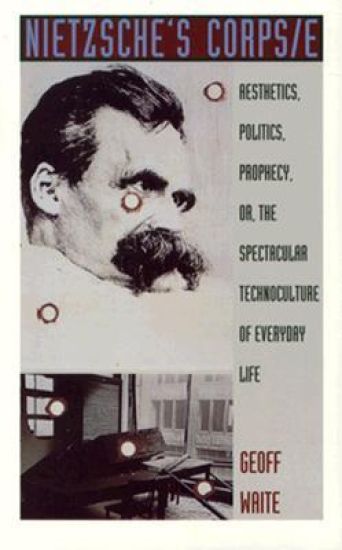
Nietzsche's Corps/e

Nietzsche's Corps/e

Geoff Waite

Duke University Press
1996
nidottu
Appearing between two historical touchstones-the alleged end of communism and the 100th anniversary of Nietzsche's death-this book offers a provocative hypothesis about the philosopher's afterlife and the fate of leftist thought and culture. At issue is the relation of the dead Nietzsche (corpse) and his written work (corpus) to subsequent living Nietzscheanism across the political spectrum, but primarily among a leftist corps that has been programmed and manipulated by concealed dimensions of the philosopher's thought. If anyone is responsible for what Geoff Waite maintains is the illusory death of communism, it is Nietzsche, the man and concept. Waite advances his argument by bringing Marxist-especially Gramscian and Althusserian-theories to bear on the concept of Nietzsche/anism. But he also goes beyond ideological convictions to explore the vast Nietzschean influence that proliferates throughout the marketplace of contemporary philosophy, political and literary theory, and cultural and technocultural criticism. In light of a philological reconstruction of Nietzsche's published and unpublished texts, Nietzsche's Corps/e shuttles between philosophy and everyday popular culture and shows them to be equally significant in their having been influenced by Nietzsche-in however distorted a form and in a way that compromises all of our best interests. Controversial in its "decelebration" of Nietzsche, this remarkable study asks whether the postcontemporary age already upon us will continue to be dominated and oriented by the haunting spectre of Nietzsche's corps/e. Philosophers, intellectual historians, literary theorists, and those interested in western Marxism, popular culture, Friedrich Nietzsche, and the intersection of French and German thought will find this book both appealing and challenging.
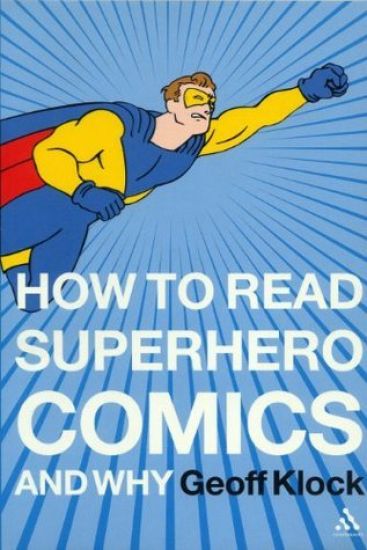
How to Read Superhero Comics and Why

How to Read Superhero Comics and Why

Geoff Klock

Continuum International Publishing Group Ltd.
2002
nidottu
Superhero comic books are traditionally thought to have two distinct periods, two major waves of creativity: the Golden Age and the Silver Age. In simple terms, the Golden Age was the birth of the superhero proper out of the pulp novel characters of the early 1930s, and was primarily associated with the DC Comics Group. Superman, Batman, Green Lantern, and Wonder Woman are the most famous creations of this period. In the early 1960s, Marvel Comics launched a completely new line of heroes, the primary figures of the Silver Age: the Fantastic Four, Spider-Man, the Incredible Hulk, the X-Men, the Avengers, Iron Man, and Daredevil. In this book, Geoff Klock presents a study of the Third Movement of superhero comic books. He avoids, at all costs, the temptation to refer to this movement as "Postmodern," "Deconstructionist," or something equally tedious. Analyzing the works of Frank Miller, Alan Moore, Warren Ellis, and Grant Morrison among others, and taking his cue from Harold Bloom, Klock unearths the birth of self-consciousness in the superhero narrative and guides us through an intricate world of traditions, influences, nostalgia and innovations - a world where comic books do indeed become literature.
Imaginary Biographies

Imaginary Biographies

Geoff Klock

Continuum International Publishing Group Ltd.
2007
sidottu
In 1946, French film critic Nino Frank, having just seen "The Maltese Falcon", "Double Indemnity", "Laura", and "Murder", "My Sweet" linked them all with the term "film noir." No one working on these projects knew they were making film noirs; Frank invented a label that connected them after the fact, and it is because of his label that the genre became famous. "Imaginary Biographies: Misreading the Lives of the Poets" aims to do for poetry what Frank did for film: to gather together previously unrelated works in order to better understand and appreciate them as a new, unrecognized literary genre. In "Imaginary Biographies", Geoff Klock argues that the bizarre portrayal of historical writers in post-Enlightenment English poetry constitutes a genre, a battleground for two central conflicts: the confrontation of the self-sufficient Romantic imagination with the brute fact of external precursors (in the nineteenth century); and the participation in, and simultaneous deflation of, Romantic idealism (in the twentieth). In William Blake's "Milton", the author of "Paradise Lost" returns to earth to redeem his female half, confront Satan and herald the apocalypse. Percy Bysshe Shelley's Jean-Jacques Rousseau has been physically deformed and mentally ruined by a hellish chariot in "The Triumph of Life". Algernon Charles Swinburne, in his Anactoria, hijacks the ancient Greek poetess Sappho and turns her into his anti-Christian Sadistic lesbian vampire cannibal Muse. In "The Changing Light at Sandover", James Merrill contacts W.H. Auden and William Butler Yeats with a Ouija board and discovers their part in an insane cosmic hierarchy. Samuel Taylor Coleridge and Robert Southey abandoned their youthful plans to establish a utopian community in America; Paul Muldoon's Madoc imagines they went through with it and describes the ensuing disaster. John Ashbery's "Sleepers Awake" gages the work of Miguel de Cervantes, James Joyce and Homer in terms of how much they slept while writing. In "TV Men", Anne Carson portrays "Thucydides", "Sappho", and "Antonin Artaud" anachronistically preparing, or being prepared for, television adaptations. Klock makes the audacious and fascinating case that the imaginary biography is in continuity with literary criticism. He concentrates on how one poet misreads another by explicitly naming the earlier poet in the latter poem. This "misreading" forms a new genre, creating a new kind of character and a new kind of poem. The result is a dazzling work of literary scholarship that will stimulate debate for years to come.
How to Be a Successful Deputy Head

How to Be a Successful Deputy Head

Geoff Brookes

Continuum International Publishing Group Ltd.
2006
sidottu
This is the definitive guide to school management for deputy heads. Geoff Brookes covers every aspect of this demanding role, from managing staff and running meetings, to delegation, dealing with the press and moving onto a new role. Accessibly and engagingly written, and packed with real-life examples, this book will prove essential reading for ambitious deputy heads everywhere.
How to Be a Successful Deputy Head

How to Be a Successful Deputy Head

Geoff Brookes

Continuum International Publishing Group Ltd.
2006
nidottu
This is the definitive guide to school management for deputy heads. Geoff Brookes covers every aspect of this demanding role, from managing staff and running meetings, to delegation, dealing with the press and moving onto a new role. Accessibly and engagingly written, and packed with real-life examples, this book will prove essential reading for ambitious deputy heads everywhere.
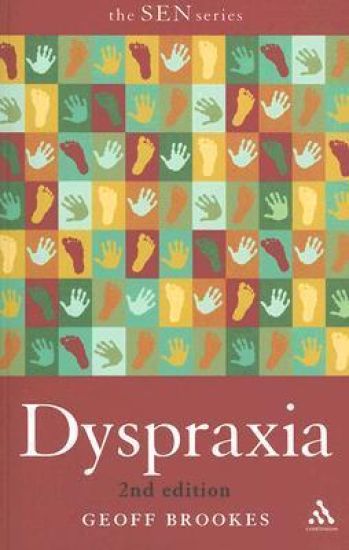
Dyspraxia 2nd Edition

Dyspraxia 2nd Edition

Geoff Brookes

Continuum International Publishing Group Ltd.
2007
nidottu
Up to ten per cent of the population is believed to suffer from some form of dyspraxia. Accessible and engaging, this practical guide provides teachers with tips and techniques for teaching students with dyspraxia. There are symptoms, there are problems, there are frustrations, there are tears. But there are strategies that can lead to positive outcomes. And while it is important to understand where it comes from, providing support and guidance is what this book is all about. From the introduction, this book will prove invaluable reading for everyone who works with young people. This new edition contains new chapters on cures and adolescence.
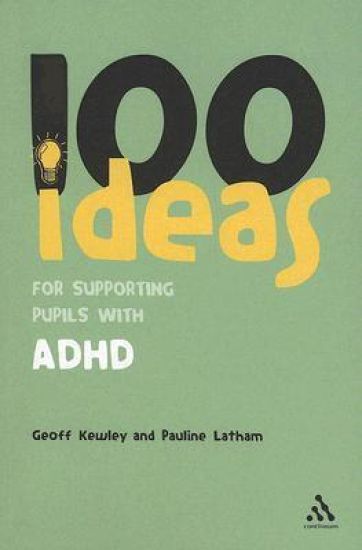
100 Ideas for Supporting Pupils with ADHD

100 Ideas for Supporting Pupils with ADHD

Geoff Kewley; Pauline Latham

Continuum International Publishing Group Ltd.
2008
nidottu
This is an invaluable and practical guide providing those working with children suffering from ADHD one hundred ideas on how to support and develop their learning. This useful, resourceful and practical guide provides those working with children suffering from ADHD one hundred ideas on how to support and develop their learning. It contains lists covering the entire school age ranges with ideas from developing effective strategies to helping the child in the classroom to encouraging the progression of individual skills such as handwriting, comprehension processing tasks.The "Continuum One Hundreds" series offers 100 invaluable and practical ideas for teachers of all levels.