Kirjojen hintavertailu. Mukana 11 717 486 kirjaa ja 12 kauppaa.

Kirjahaku

Etsi kirjoja tekijän nimen, kirjan nimen tai ISBN:n perusteella.

1000 tulosta hakusanalla George Malcolm Stratton

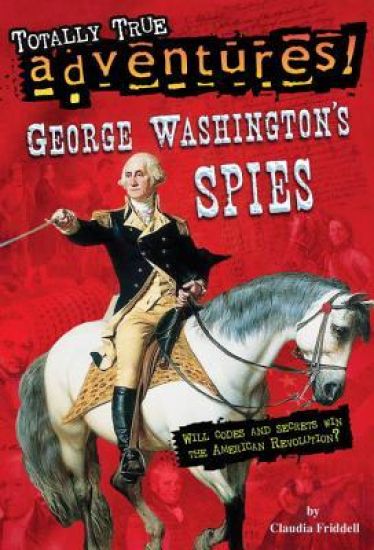
George Washington's Spies (Totally True Adventures)

George Washington's Spies (Totally True Adventures)

Claudia Friddell

Random House Books for Young Readers
2016
pokkari
Think you know everything about Washington? "Think again." During the Revolutionary War, General George Washington (AKA Agent 711 ) was the leader of a ring of spies The group called the Culper Ring used secret names, codes, invisible ink, and more to spy on the British and pass along information. Nobody knew about it at the time (and few do so today), but those sneaky heroes risked their lives to help win the American Revolution Illustrated throughout in black and white, with an appendix that includes photographs, bonus content, and links to primary source materials, this Totally True Adventures series book is ideal for supporting the Common Core State Standards and today's renewed interest in nonfiction. It s a thrilling read made even better because it "really happened ""
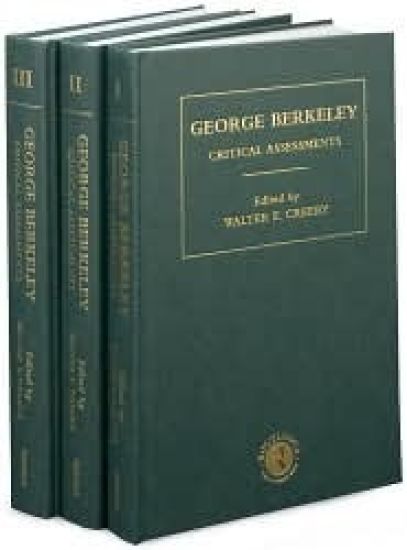
George Berkeley
This work is a comprehensive collection of the critical works on George Berkeley in the past thirty years. The eighty six articles will be an essential reference tool to all scholars of Berkeley
George Herbert Mead
George Herbert Mead (1863-1931) is widely seen as the father of symbolic interactionism. He is celebrated as probably the most original and important American sociologist of the twentieth century. This collection of critical assessments shows why Mead is important for symbolic interactionism. But it also traces Mead's influence in social behaviourism and theories of the mind. The articles are gathered together in four sections: section one considers the Biography and Intellectual context of Mead's work, special attention is paid to Mead's links with Pragmatism, Social Reform, the `Chicago School', social behavioursm and symbolic interactionism. Section two, is devoted to Mead and symbolic interactionism. Section three, focuses on the links between Mead and behaviourism. The final section contains articles exploring Mead's theory of the mind, which many now see as the most important area of his work.
George Berkeley Alciphron in Focus
Alciphron, or the Minute Philosopher (1732) is Berkeley's main work of philosophical theology and a crucial source of his views on meaning and language. This edition contains the four most important dialogues and a selection of critical essays and commentaries reflecting the response of such writers as Hutcheson, Mill and Antony Flew. The only single edition currently in print, it argues that Alciphron has a more important place both in the Berkeley canon and in early modern philosophy than is generally thought.
George Herbert
First Published in 1995. The Critical Heritage gathers together a large body of critical sources on major figures in literature. Each volume presents contemporary responses to a writer's work, enabling students and researchers to read for themselves, for example, comments on early performances of Shakespeare's plays, or reactions to the first publication of Jane Austen's novels. The carefully selected sources range from landmark essays in the history of criticism to journalism and contemporary opinion, and little published documentary material such as letters and diaries. Significant pieces of criticism from later periods are also included, in order to demonstrate the fluctuations in an author's reputation. Each volume contains an introduction to the writer's published works, a selected bibliography, and an index of works, authors and subjects. The Collected Critical Heritage set will be available as a set of 68 volumes and the series will also be available in mini sets selected by period (in slipcase boxes) and as individual volumes.
George Crabbe

George Crabbe

Routledge
1995
sidottu
The Critical Heritage gathers together a large body of critical sources on major figures in literature. Each volume presents contemporary responses to a writer's work, enabling students and researchers to read for themselves, for example, comments on early performances of Shakespeare's plays, or reactions to the first publication of Jane Austen's novels. The carefully selected sources range from landmark essays in the history of criticism to journalism and contemporary opinion, and little published documentary material such as letters and diaries. Significant pieces of criticism from later periods are also included, in order to demonstrate the fluctuations in an author's reputation. Each volume contains an introduction to the writer's published works, a selected bibliography, and an index of works, authors and subjects. The Collected Critical Heritage set will be available as a set of 68 volumes and the series will also be available in mini sets selected by period (in slipcase boxes) and as individual volumes.
George Eliot

George Eliot

Routledge
1995
sidottu
The Critical Heritage gathers together a large body of critical sources on major figures in literature. Each volume presents contemporary responses to a writer's work, enabling students and researchers to read for themselves, for example, comments on early performances of Shakespeare's plays, or reactions to the first publication of Jane Austen's novels.The carefully selected sources range from landmark essays in the history of criticism to journalism and contemporary opinion, and little published documentary material such as letters and diaries. Significant pieces of criticism from later periods are also included, in order to demonstrate the fluctuations in an author's reputation.Each volume contains an introduction to the writer's published works, a selected bibliography, and an index of works, authors and subjects.The Collected Critical Heritage set will be available as a set of 68 volumes and the series will also be available in mini sets selected by period (in slipcase boxes) and as individual volumes.
George Meredith
The Critical Heritage gathers together a large body of critical sources on major figures in literature. Each volume presents contemporary responses to a writer's work, enabling the student and researcher to read the material themselves.
George Gissing
The Critical Heritage gathers together a large body of critical sources on major figures in literature. Each volume presents contemporary responses to a writer's work, enabling students and researchers to read for themselves, for example, comments on early performances of Shakespeare's plays, or reactions to the first publication of Jane Austen's novels.The carefully selected sources range from landmark essays in the history of criticism to journalism and contemporary opinion, and little published documentary material such as letters and diaries. Significant pieces of criticism from later periods are also included, in order to demonstrate the fluctuations in an author's reputation.Each volume contains an introduction to the writer's published works, a selected bibliography, and an index of works, authors and subjects.The Collected Critical Heritage set will be available as a set of 68 volumes and the series will also be available in mini sets selected by period (in slipcase boxes) and as individual volumes.
George Orwell

George Orwell

Routledge
1997
sidottu
This set comprises 40 volumes covering nineteenth and twentieth century European and American authors. These volumes will be available as a complete set, mini boxed sets (by theme) or as individual volumes. This second set compliments the first 68 volume set of Critical Heritage published by Routledge in October 1995.
George Bernard Shaw
This set comprises 40 volumes covering nineteenth and twentieth century European and American authors. These volumes will be available as a complete set, mini boxed sets (by theme) or as individual volumes. This second set compliments the first 68 volume set of Critical Heritage published by Routledge in October 1995.
George Eliot

George Eliot

Jan Jedrzejewski

Routledge
2007
sidottu
As a woman in an illegal marriage, publishing under a male pseudonym, George Eliot was one of the most successful yet controversial writers of the Victorian period. Today she is considered a key figure for women’s writing and her novels, including The Mill on the Floss and Middlemarch, are commonly ranked as literary classics.This guide to Eliot’s enduringly popular work offers:an accessible introduction to the contexts and many interpretations of Eliot’s texts, from publication to the present an introduction to key critical texts and perspectives on Eliot’s life and work, situated in a broader critical history cross-references between sections of the guide, in order to suggest links between texts, contexts and criticism suggestions for further reading. Part of the Routledge Guides to Literature series, this volume is essential reading for all those beginning detailed study of George Eliot and seeking not only a guide to her works but also a way through the wealth of contextual and critical material that surrounds them.
George Eliot

George Eliot

Jan Jedrzejewski

Routledge
2007
nidottu
As a woman in an illegal marriage, publishing under a male pseudonym, George Eliot was one of the most successful yet controversial writers of the Victorian period. Today she is considered a key figure for women’s writing and her novels, including The Mill on the Floss and Middlemarch, are commonly ranked as literary classics.This guide to Eliot’s enduringly popular work offers:an accessible introduction to the contexts and many interpretations of Eliot’s texts, from publication to the present an introduction to key critical texts and perspectives on Eliot’s life and work, situated in a broader critical history cross-references between sections of the guide, in order to suggest links between texts, contexts and criticism suggestions for further reading. Part of the Routledge Guides to Literature series, this volume is essential reading for all those beginning detailed study of George Eliot and seeking not only a guide to her works but also a way through the wealth of contextual and critical material that surrounds them.
George Eliot: Family History
Any understanding of George Eliot's mature art must begin with an appreciation of the rich, difficult family dynamic out of which it was forged. Her friends and relations understood this, and went into print with their own accounts of the process by which George Eliot's early recollections became the basis, not just for her fiction, but also for her philosophic conservatism. The past - and memory of that past - was the cornerstone on which Eliot believed any chance of social or political progress must securely rest.This set, the fifth collection in the Family History series brings together valuable sources, including manuscript material from letters and diaries which give insights into these crucial influences. A new introduction places the material in its literary and historical context.
George Elton Mayo
George Elton Mayo (1880-1949) is widely recognized as the progenitor of the human relations movement in management and his work laid the foundations for later management and organizational thinking.Mayo's work highlighted the importance of communication between management and workers and identified the now-accepted notion that work satisfaction, and therefore productivity, lies in recognition, security, and a sense of belonging, rather than monetary rewards. His findings were contrary to the theories of his contemporaries that the worker is motivated solely by self-interest (e.g. Taylorism). Mayo's work on human motivation revolutionized the theory and practice of management. This collection evaluates Mayo's role in shaping business and management studies upto the present day. It includes a new introduction and an extensive annotated bibliography.Recent titles in this series include, Alfred P. Sloan (October 2003, 2 volumes, £250) and Frank and Lilian Gilbreth (May 2003, 2 volumes, £250). Forthcoming titles include, W. E. Deming (November 2004, 3 volumes, c.£395) and Joseph M. Juran (2005, 1 volume, c.£145)
George Eliot's English Travels

George Eliot's English Travels

Kathleen McCormack

Routledge
2005
sidottu
George Eliot’s more than fifty long and short journeys within England took her to dozens of sites scattered around the country. Revising the traditional notion that George Eliot drew her settings and characters only from the areas of her Warwickshire childhood, Kathleen McCormack demonstrates that English travel furnished the novelist with a wide variety of originals for the composite characters and settings she would so memorably create.McCormack traces the way in which George Eliot gathered material during her travels and also drafted long sections of the novels while away from her London home. She argues that by examining the choices George Eliot made in transforming, discarding or directly describing her English originals, we might take a significant step forward in the interpretation of her writings. Where other critics have tried to interpret characters as one-to-one renderings of living or dead models, for example, this study reveals more elaborate blendings of what George Eliot called the ‘widely sundered elements’ that made up her fiction. McCormack also reaches the fascinating conclusion that the novels were a form of coded communication between the author and people in her life, including other prominent Victorians such as Edward Burne-Jones, Robert Lytton and Barbara Bodichon.Presenting fresh biographical information and original insights into George Eliot’s writing strategies, George Eliot’s English Travels promises a decisive shift in our understanding of one of the most important figures in Victorian literature.
George W. Bush's Foreign Policies

George W. Bush's Foreign Policies

Donette Murray; David Brown; Martin A. Smith

Routledge
2017
sidottu
This book offers a fresh assessment of George W. Bush’s foreign policies.It is not designed to offer an evaluation of the totality of George W. Bush’s foreign policy. Instead, the analysis will focus on the key aspects of his foreign and security policy record, in each case considering the interplay between principle and pragmatism. The underpinning contention here is that policy formulation and implementation across Bush’s two terms can more usefully be analysed in terms of shades of grey, rather than the black and white hues in which it has often been painted. Thus, in some key policy areas it will be seen that the overall record was more pragmatic and successful than his many critics have been prepared to give him credit for. The president and his advisers were sometimes prepared to alter and amend their policy direction, on occasion significantly. Context and personalities, interpersonal and interagency, both played a role here. Where these came together most visibly – for instance in connection with dual impasses over Iraq and Iran – exigencies on the ground sometimes found expression in personnel changes. In turn, the changing fortunes of Bush’s first term principals presaged policy changes in his second. What emerges from a more detached study of key aspects of the Bush administration – during a complicated and challenging period in the United States’ post-Cold War history, marked by the dramatic emergence of international Islamist terrorism as the dominant international security threat – is a more complex picture than any generalization can ever hope to sustain, regardless of how often it is repeated.This book will be of much interest to students of US foreign policy, international politics and security studies.
George Orwell

George Orwell

Routledge
2011
nidottu
This set comprises 40 volumes covering nineteenth and twentieth century European and American authors. These volumes will be available as a complete set, mini boxed sets (by theme) or as individual volumes. This second set compliments the first 68 volume set of Critical Heritage published by Routledge in October 1995.
George Eliot

George Eliot

Routledge
2009
nidottu
The Critical Heritage gathers together a large body of critical sources on major figures in literature. Each volume presents contemporary responses to a writer's work, enabling students and researchers to read for themselves, for example, comments on early performances of Shakespeare's plays, or reactions to the first publication of Jane Austen's novels. The carefully selected sources range from landmark essays in the history of criticism to journalism and contemporary opinion, and little published documentary material such as letters and diaries. Significant pieces of criticism from later periods are also included, in order to demonstrate the fluctuations in an author's reputation. Each volume contains an introduction to the writer's published works, a selected bibliography, and an index of works, authors and subjects. The Collected Critical Heritage set will be available as a set of 68 volumes and the series will also be available in mini sets selected by period (in slipcase boxes) and as individual volumes.
George Cheyne: The English Malady (1733) (Psychology Revivals)
‘Nerves’ became a highly eligible illness in early Georgian London and Bath. What Freud was for Vienna at the end of the nineteenth-century, George Cheyne was for eighteenth-century fashionable ailments. The English Malady was one of the best known and most influential books of the Georgian age, dealing with what we would now call psychiatric disorders. Such disorders, he contended, should be regarded as diseases of ‘civilization’ and the product of the pressures and affluence of modern life. By making ‘neurosis’ acceptable, even fashionable, Cheyne’s book assumed considerably wider significance during the Enlightenment. Prefaced by a scholarly introduction by Roy Porter, this reprint edition, originally published in 1991 as part of the Tavistock Classics in the History of Psychiatry series, places Cheyne and his work in the development of British psychiatry.