Kirjojen hintavertailu. Mukana 12 016 653 kirjaa ja 12 kauppaa.

Kirjahaku

Etsi kirjoja tekijän nimen, kirjan nimen tai ISBN:n perusteella.

1000 tulosta hakusanalla George Michell

George Eliot and Nineteenth-Century Psychology
In his study of Eliot as a psychological novelist, Michael Davis examines Eliot's writings in the context of a large volume of nineteenth-century scientific writing about the mind. Eliot, Davis argues, manipulated scientific language in often subversive ways to propose a vision of mind as both fundamentally connected to the external world and radically isolated from and independent of that world. In showing the alignments between Eliot's work and the formulations of such key thinkers as Herbert Spencer, Charles Darwin, T. H. Huxley, and G. H. Lewes, Davis reveals how Eliot responds both creatively and critically to contemporary theories of mind, as she explores such fundamental issues as the mind/body relationship, the mind in evolutionary theory, the significance of reason and emotion, and consciousness. Davis also points to important parallels between Eliot's work and new and future developments in psychology, particularly in the work of William James. In Middlemarch, for example, Eliot demonstrates more clearly than either Lewes or James the way the conscious self is shaped by language. Davis concludes by showing that the complexity of mind, which Eliot expresses through her imaginative use of scientific language, takes on a potentially theological significance. His book suggests a new trajectory for scholars exploring George Eliot's representations of the self in the context of science, society, and religious faith.
George Eliot and Europe
This book is based on a conference held in Warwick in July 1995. It is a collection of essays which explore various aspects of George Eliot's relation to the literature and culture of Continental Europe. The essays range widely over the novelist's life and work, examining her Journals and Impressions of Theophratus Such as well as her novels, and focusing on different countries and cultures, including not only France, Germany and Italy, but also Holland and Spain. Some essays examine the complex general issues of language and culture raised in her work, while others concentrate on her response to specific European writers and texts. There are investigations of intertextualities and possibilities of influence, as well as contextual discussions and comparative readings of her novels alongside works by European writers. The overall effect is to illuminate her writing by setting it in the wider European context which, with her knowledge of languages, her travels and her extraordinary wide reading, she knew so well.
George Newnes and the New Journalism in Britain, 1880–1910
This is a study of the noted newspaper proprietor, publisher and editor, George Newnes and his involvement in the so-called New Journalism in Britain from 1880 to 1910. The author examines seven of Newnes’s most successful periodicals - Tit-Bits (1881), The Strand Magazine (1891), The Million (1892), The Westminster Gazette (1893), The Wide World Magazine (1898), The Ladies’ Field (1898) and The Captain (1899) - from a biographical, journalistic and broader cultural perspective. Newnes assumed a pioneering role in the creation of the penny miscellany paper, the short-story magazine, the true-story magazine and the respectable boys’ paper, in the development of colour printing, magazine illustration and photographic reproduction, and in the redefinition of both political and sporting journalism. His publications were shaped by his own distinctive brand of paternalism, his professional progression within the field of journalism, his liberal-democratic and imperialist beliefs, and his particular skill as an entrepreneur. This innovative periodical publisher utilised the techniques of personalised journalism, commercial promotion and audience targeting to establish an interactive relationship and a strong bond of identification with his many readers. Kate Jackson employs an interdisciplinary approach, building on recent scholarship in the field of periodical research, to demonstrate that Newnes balanced and synthesised various potentially conflicting imperatives to create a kind of synergy between business and benevolence, popular and quality journalism, old and new journalism and , ultimately, culture and profit.
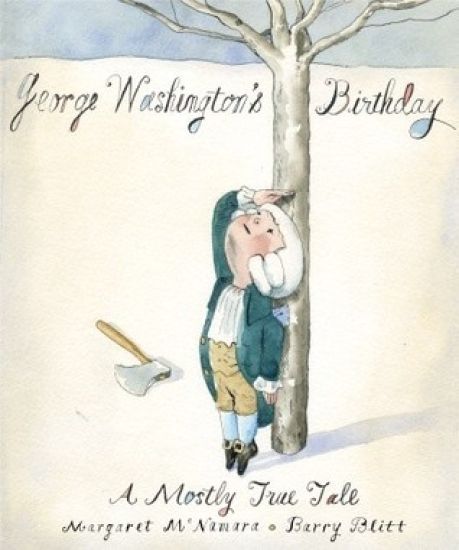
George Washington's Birthday: A Mostly True Tale

George Washington's Birthday: A Mostly True Tale

Margaret McNamara

Schwartz Wade Books
2012
sidottu
A perfect picture book biography from award-winning author Margaret McNamara and New Yorker artist Barry Blitt comes this partly true and completely funny story of George Washington's 7th birthday. In this clever approach to history, readers will discover the truths and myths about George Washington. Did George Washington wear a wig? No. Did George Washington cut down a cherry tree? Probably not. Readers young and old who are used to seeing George Washington as an old man, will get a new look at the first president--as a kid. Perfect for classrooms, Presidents' Day, or as a birthday gift.
George Frideric Handel

George Frideric Handel

Ellen T. Harris

WW Norton Co
2014
sidottu
During his lifetime, the sounds of Handel’s music reached from court to theatre, echoed in cathedrals and filled crowded taverns. But the man himself is a mystery. Though he took meticulous care of his musical manuscripts and provided for their preservation in his will, very little of an intimate nature survives. In search of the private man behind the public persona, Ellen T. Harris has tracked down the letters, diaries, financial accounts, court cases and other documents connected with the composer’s closest friends. The result is a tightly woven tapestry of London life in the first half of the eighteenth century, one that weaves together vibrant descriptions of Handel’s music with stories of loyalty, cunning and betrayal. With this new approach, Harris reveals an ambitious, shrewd, generous, brilliant and flawed man.
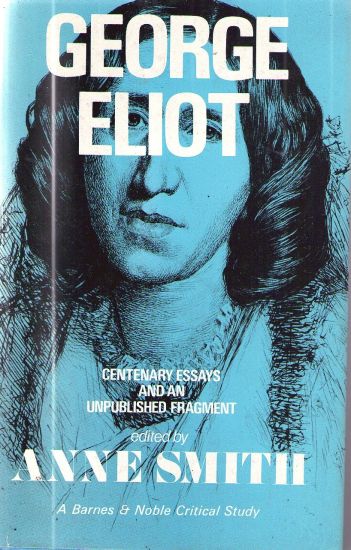
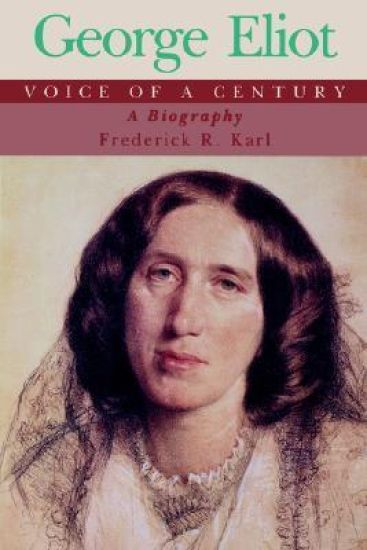
George Eliot, Voice of a Century: A Biography

George Eliot, Voice of a Century: A Biography

Frederick Robert Karl

W. W. Norton Company
1990
nidottu
Frederick R. Karl's magisterial biography of George Eliot proves her to be one of the most fascinating and iconic individuals of her time. Born in 1819 as Mary Anne Evans, she grew up near rural Coventry when the pastoral life was being destroyed by the rapid rise of industrialism. Her father, Robert Evans, took care of an estate, where the family lived. Eliot, his youngest child, absorbed the world around her, its beauty and its delicate sense of stability, which was about to be thoroughly disrupted. Eliot thrived on learning while she stayed home, taking care of her aging father. Upon his death, she began her long process of emergence and change. Her unusual intelligence and literary capacity brought her to the attention of John Chapman, who enlisted her to work on the intellectual Westminster Review in London. While there she met some of the leading thinkers of her era, including Herbert Spencer. Karl focuses on her relationships with these men in a way earlier biographers have been unable, using many letters and documents previously unavailable.
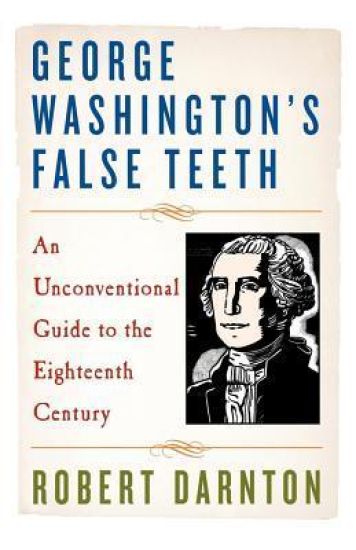
George Washington's False Teeth

George Washington's False Teeth

Robert Darnton

WW Norton Co
2010
nidottu
George Washington was inaugurated as president in 1789 with one tooth in his mouth, a lower left bicuspid. The Father of His Country had sets of false teeth that were made of everything but wood, from elephant ivory and walrus tusk to the teeth of a fellow human. With characteristic learning and bracing insight, Robert Darnton shows us that the Enlightenment had false teeth alsothat it was not the Father of Our Modern World, responsible for all its advances and transgressions. In restoring the Enlightenment to human scale, Darnton locates its real aims, ambitions, and significance. So too with the French Revolution, another icon of the eighteenth century, approached here through the gossip, songs, and broadsides that formed the political nervous system of Paris in the Old Regime. Figures we think we knowVoltaire, Jefferson, Rousseau, Condorcet, even historians themselvesemerge afresh in Darnton's hands, their vitality, if not their teeth, intact. 17 b/w illustrations.
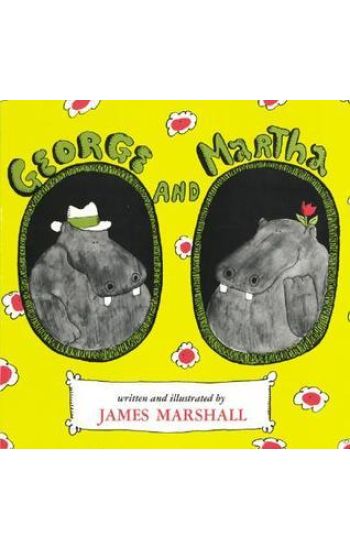
George and Martha

George and Martha

Marshall James

HOUGHTON MIFFLIN
1972
sidottu
Two lovable hippos teach the meaning of friendship in five separate vignettes: "Split Pea Soup," "The Flying Machine," "The Tub," "The Mirror," "The Tooth." "The secret of Mr. Marshall's success lies not just in the freshness of his sense of the ridiculous, but in the carefulness of his control and editorial judgment." -- New York Times Book Review ALA Notable Book Horn Book Fanfare Selection New York Times Best Illustrated Children's Books of the Year
George and Martha

George and Martha

Marshall James

HOUGHTON MIFFLIN
1974
nidottu
Two lovable hippos impart lessons on the meaning of friendship in five short stories by the picture book master James Marshall. Like all best friends, George and Martha do everything together. George and Martha teach each other (and adoring readers) that even in a close friendship, privacy is important, practical jokes can sometimes backfire, and among other things, pouring split pea soup into your loafers to spare the chef's feelings is not the best-laid plan. A man with a talent for friendship, James Marshall defined its very essence in his stories about the world's two best friends. Each of these five brief tales is filled with humor, and James Marshall's drawings are guaranteed to spark feelings of empathy, delight, and self-recognition.
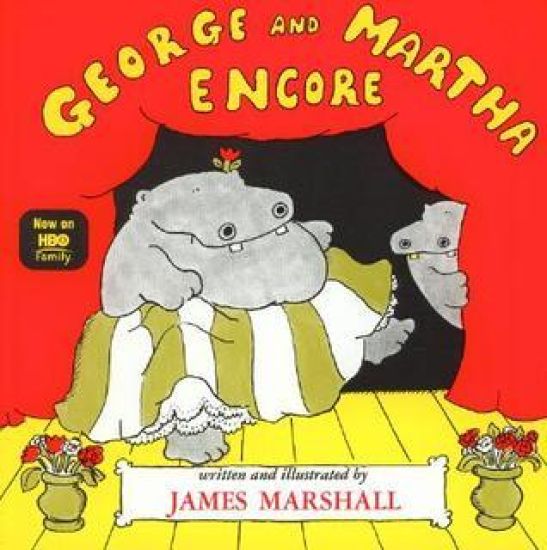
George and Martha Encore

George and Martha Encore

Marshall James

HOUGHTON MIFFLIN
1977
nidottu
More stories about the two great chums: "The Dance Recital," "The French Lesson," "The Disguise," "The Beach," "The Garden." "The idyllic friendship of those shy, pin-eyed, buck-toothed hippos ambles on." -- Kirkus Reviews
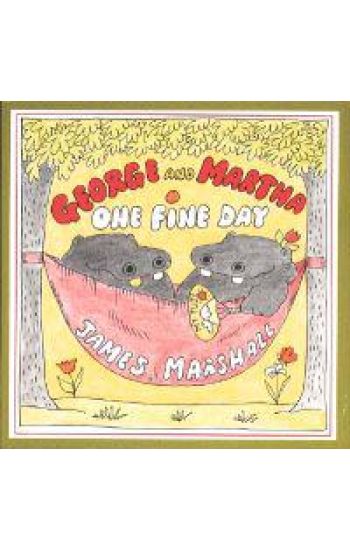
George and Martha One Fine Day

George and Martha One Fine Day

Marshall James

HOUGHTON MIFFLIN
1984
nidottu
Five new episodes in the friendship of two hippos: "The Tight Rope," "The Diary," "The Icky Story," "The Big Scare," "The Amusement Park." "Every bit as agreeable as its predecessors." -- School Library Journal, starred review ALA Notable Book