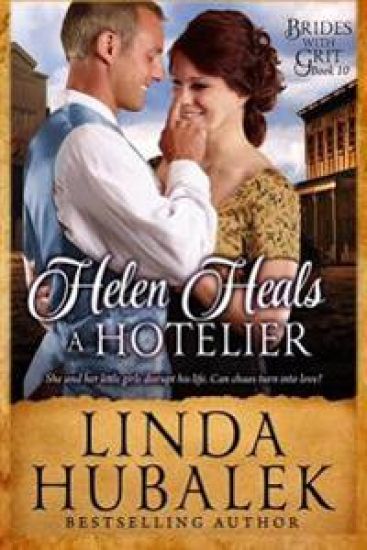
Helen Higby answers an ad for a mail-order bride but finds out her groom is already married-and wanted by the law-after their wedding ceremony.Now stuck in Clear Creek, Kansas, with her four little girls, Helen needs a way to provide for her family. Ethan Paulson is in charge of the family hotel while his parents take an extended trip. Ethan's fianc e, Sarah Wilerson, left him at the altar last summer and he's had a hard time accepting her rejection-until a beautiful woman and her children take up residence in the Paulson Hotel. Helen had worked in a hotel in Pennsylvania before traveling to Kansas, so she helps Ethan organize and improve the offerings of the Paulson Hotel while falling in love with him. Sparks fly when Mrs. Paulson, Ethan's mother, returns to find changes, including a family making themselves at home in the hotel, and in Ethan's heart. Can chaos and drama turn into love and a happy ending for everyone living in the Paulson Hotel?Read all these romance novels set in the fictional town of Clear Creek, Kansas.Brides with Grit Series (first series in the years 1873-1874)1. Rania Ropes a Rancher (Rania and Jacob)2. Millie Marries a Marshal (Millie and Adam)3. Hilda Hogties a Horseman (Hilda and Noah)4. Cora Captures a Cowboy (Cora and Dagmar)5. Sarah Snares a Soldier (Sarah and Marcus)6. Cate Corrals a Cattleman (Cate and Isaac)7. Darcie Desires a Drover (Darcie and Reuben)8. Tina Tracks a Trail Boss (Tina and Leif)9. Lorna Loves a Lawyer (Lorna and Lyle)10. Helen Heals a Hotelier (Helen and Ethan)11. Faye Favors a Foreman (Faye and Rusty)12. Amy Admires an Amish Man (Amy and Eli))Grooms with Honor Series (second series covering 1885-1892)1. Angus' Trust (Angus and Daisy)2. Fergus' Honor (Fergus and Iris)3. Gabe's Pledge (Gabe and Iva Mae)4. Mack's Care (Mack and Pansy)5. Cullen's Love (Cullen and Rose)6. Seth's Promise (Seth and Lily)7. Adolph's Choice (Adolph and Poppy)8. Nolan's Vow (Nolan and Holly)9. Elof's Mission (Elof and Linnea)10. Jasper's Wish (Jasper and Julip)11. Tully's Faith (Tully and Violet)12. Kiowa's Oath (Kiowa and Mary)Mismatched Mail-Order Brides Series (new third series, 1892) all available and future titles1. The Peashooter Society's Plan (introduction story)2. Amelia changes her Fellow (Amelia and Barton)3. Avalee exchanges her Fianc (Avalee and Gordon)4. Maggie shifts her Gent (Maggie and Peter)5. Maisie swaps her Groom (Maisie and Squires)6. Molly switches her Man (Molly and Tobin)7. Nadine trades her Partner (Nadine and Wesley)
BROKEN FAMILY BONDS - ESTRANGED RELATIONSHIPS.CAN THE BONDS BE RESTORED?Helen's Tomorrow, set shortly after World War II, is a story of rejection, manipulation, jealousy and pride.Helen, daughter of middle-class mill owners, defies her mother when she marries 'beneath her' and finds happiness with husband, Jim. But when tragedy strikes she is left widowed and penniless and, with two young daughters to support, she struggles to survive.Determined not to accept charity from her remorseful, guilt-ridden mother, Helen finds success when she returns to her job in antiques. But she is not prepared for the spiteful ways and bitter reprisals of scheming sister, Laura. At the same time she is forced to contend with the unwanted attention and conniving ways of greedy mill hand Jack.During a visit to a London exhibition Helen's hopes and dreams are shattered once more, but unexpectedly she finds love when she meets surgeon, Charles Ravel. But will her problems dissipate?
Helen Maria Hunt Jackson, born Helen Fiske (October 15, 1830 - August 12, 1885), was an American poet and writer who became an activist on behalf of improved treatment of Native Americans by the U.S. government. She described the adverse effects of government actions in her history A Century of Dishonor (1881). Her novel Ramona (1884) dramatized the federal government's mistreatment of Native Americans in Southern California after the Mexican-American War and attracted considerable attention to her cause. Commercially popular, it was estimated to have been reprinted 300 times and most readers liked its romantic and picturesque qualities rather than its political content.The novel was so popular that it attracted many tourists to Southern California who wanted to see places from the book.She was born Helen Maria Fiske in Amherst, Massachusetts, the daughter of Nathan Welby Fiske and Deborah Waterman Vinal Fisk. Helen's father was a minister, author, and professor of Latin, Greek, and philosophy at Amherst College. She had two brothers, both of whom died soon after birth, and a sister Anne. They were raised as Unitarian.Anne became the wife of E. C. Banfield, a federal government official who served as Solicitor of the United States Treasury. The girls lost their mother in 1844, when Helen was fifteen. Three years later their father died. He had provided financially for Helen's education and arranged for an uncle to care for her. Fiske attended Ipswich Female Seminary and the Abbott Institute, a boarding school in New York City run by Reverend J.S.C. Abbott. She was a classmate of Emily Dickinson, also from Amherst; Emily became a renowned poet. The two corresponded for the rest of their lives, but few of their letters have surviveed.In 1852 at age 22, Fiske married U.S. Army Captain Edward Bissell Hunt. They had two sons, one of whom, Murray Hunt, died as an infant in 1854 of a brain disease. In 1863, her husband died in a military accident. Her second son Rennie Hunt died of diphtheria in 1865. Hunt traveled widely. In the winter of 1873-1874 she was in Colorado Springs, Colorado at the resort of Seven Falls, seeking rest in hopes of a cure for tuberculosis, which was often fatal before the invention of antibiotics. (See Tuberculosis treatment in Colorado Springs).While in Colorado Springs, Hunt met William Sharpless Jackson, a wealthy banker and railroad executive. They married in 1875 and she took the name Jackson, under which she was best known for her later writings.Helen Hunt began writing after the deaths of her family members. She published her early work anonymously, usually under the name "H.H."Ralph Waldo Emerson admired her poetry and used several of her poems in his public readings. He included five of them in his Parnassus: An Anthology of Poetry (1880). Over the next two years, she published three novels in the anonymous No Name Series, including Mercy Philbrick's Choice and Hetty's Strange History.She also encouraged a contribution from Emily Dickinson to A Masque of Poets as part of the same series........
Helen Maria Hunt Jackson, born Helen Fiske (October 15, 1830 - August 12, 1885), was an American poet and writer who became an activist on behalf of improved treatment of Native Americans by the U.S. government. She described the adverse effects of government actions in her history A Century of Dishonor (1881). Her novel Ramona (1884) dramatized the federal government's mistreatment of Native Americans in Southern California after the Mexican-American War and attracted considerable attention to her cause. Commercially popular, it was estimated to have been reprinted 300 times and most readers liked its romantic and picturesque qualities rather than its political content.The novel was so popular that it attracted many tourists to Southern California who wanted to see places from the book.She was born Helen Maria Fiske in Amherst, Massachusetts, the daughter of Nathan Welby Fiske and Deborah Waterman Vinal Fisk. Helen's father was a minister, author, and professor of Latin, Greek, and philosophy at Amherst College. She had two brothers, both of whom died soon after birth, and a sister Anne. They were raised as Unitarian.Anne became the wife of E. C. Banfield, a federal government official who served as Solicitor of the United States Treasury. The girls lost their mother in 1844, when Helen was fifteen. Three years later their father died. He had provided financially for Helen's education and arranged for an uncle to care for her. Fiske attended Ipswich Female Seminary and the Abbott Institute, a boarding school in New York City run by Reverend J.S.C. Abbott. She was a classmate of Emily Dickinson, also from Amherst; Emily became a renowned poet. The two corresponded for the rest of their lives, but few of their letters have surviveed.In 1852 at age 22, Fiske married U.S. Army Captain Edward Bissell Hunt. They had two sons, one of whom, Murray Hunt, died as an infant in 1854 of a brain disease. In 1863, her husband died in a military accident. Her second son Rennie Hunt died of diphtheria in 1865. Hunt traveled widely. In the winter of 1873-1874 she was in Colorado Springs, Colorado at the resort of Seven Falls, seeking rest in hopes of a cure for tuberculosis, which was often fatal before the invention of antibiotics. (See Tuberculosis treatment in Colorado Springs).While in Colorado Springs, Hunt met William Sharpless Jackson, a wealthy banker and railroad executive. They married in 1875 and she took the name Jackson, under which she was best known for her later writings.Helen Hunt began writing after the deaths of her family members. She published her early work anonymously, usually under the name "H.H."Ralph Waldo Emerson admired her poetry and used several of her poems in his public readings. He included five of them in his Parnassus: An Anthology of Poetry (1880). Over the next two years, she published three novels in the anonymous No Name Series, including Mercy Philbrick's Choice and Hetty's Strange History.She also encouraged a contribution from Emily Dickinson to A Masque of Poets as part of the same series......
Helen Maria Hunt Jackson, born Helen Fiske (October 15, 1830 - August 12, 1885), was an American poet and writer who became an activist on behalf of improved treatment of Native Americans by the U.S. government. She described the adverse effects of government actions in her history A Century of Dishonor (1881). Her novel Ramona (1884) dramatized the federal government's mistreatment of Native Americans in Southern California after the Mexican-American War and attracted considerable attention to her cause. Commercially popular, it was estimated to have been reprinted 300 times and most readers liked its romantic and picturesque qualities rather than its political content.The novel was so popular that it attracted many tourists to Southern California who wanted to see places from the book.She was born Helen Maria Fiske in Amherst, Massachusetts, the daughter of Nathan Welby Fiske and Deborah Waterman Vinal Fisk. Helen's father was a minister, author, and professor of Latin, Greek, and philosophy at Amherst College. She had two brothers, both of whom died soon after birth, and a sister Anne. They were raised as Unitarian.Anne became the wife of E. C. Banfield, a federal government official who served as Solicitor of the United States Treasury. The girls lost their mother in 1844, when Helen was fifteen. Three years later their father died. He had provided financially for Helen's education and arranged for an uncle to care for her. Fiske attended Ipswich Female Seminary and the Abbott Institute, a boarding school in New York City run by Reverend J.S.C. Abbott. She was a classmate of Emily Dickinson, also from Amherst; Emily became a renowned poet. The two corresponded for the rest of their lives, but few of their letters have surviveed.In 1852 at age 22, Fiske married U.S. Army Captain Edward Bissell Hunt. They had two sons, one of whom, Murray Hunt, died as an infant in 1854 of a brain disease. In 1863, her husband died in a military accident. Her second son Rennie Hunt died of diphtheria in 1865. Hunt traveled widely. In the winter of 1873-1874 she was in Colorado Springs, Colorado at the resort of Seven Falls, seeking rest in hopes of a cure for tuberculosis, which was often fatal before the invention of antibiotics. (See Tuberculosis treatment in Colorado Springs).While in Colorado Springs, Hunt met William Sharpless Jackson, a wealthy banker and railroad executive. They married in 1875 and she took the name Jackson, under which she was best known for her later writings.Helen Hunt began writing after the deaths of her family members. She published her early work anonymously, usually under the name "H.H."Ralph Waldo Emerson admired her poetry and used several of her poems in his public readings. He included five of them in his Parnassus: An Anthology of Poetry (1880). Over the next two years, she published three novels in the anonymous No Name Series, including Mercy Philbrick's Choice and Hetty's Strange History.She also encouraged a contribution from Emily Dickinson to A Masque of Poets as part of the same series
Helen Maria Hunt Jackson, born Helen Fiske (October 15, 1830 - August 12, 1885), was an American poet and writer who became an activist on behalf of improved treatment of Native Americans by the U.S. government. She described the adverse effects of government actions in her history A Century of Dishonor (1881). Her novel Ramona (1884) dramatized the federal government's mistreatment of Native Americans in Southern California after the Mexican-American War and attracted considerable attention to her cause. Commercially popular, it was estimated to have been reprinted 300 times and most readers liked its romantic and picturesque qualities rather than its political content.The novel was so popular that it attracted many tourists to Southern California who wanted to see places from the book.She was born Helen Maria Fiske in Amherst, Massachusetts, the daughter of Nathan Welby Fiske and Deborah Waterman Vinal Fisk. Helen's father was a minister, author, and professor of Latin, Greek, and philosophy at Amherst College. She had two brothers, both of whom died soon after birth, and a sister Anne. They were raised as Unitarian.Anne became the wife of E. C. Banfield, a federal government official who served as Solicitor of the United States Treasury. The girls lost their mother in 1844, when Helen was fifteen. Three years later their father died. He had provided financially for Helen's education and arranged for an uncle to care for her. Fiske attended Ipswich Female Seminary and the Abbott Institute, a boarding school in New York City run by Reverend J.S.C. Abbott. She was a classmate of Emily Dickinson, also from Amherst; Emily became a renowned poet. The two corresponded for the rest of their lives, but few of their letters have surviveed.In 1852 at age 22, Fiske married U.S. Army Captain Edward Bissell Hunt. They had two sons, one of whom, Murray Hunt, died as an infant in 1854 of a brain disease. In 1863, her husband died in a military accident. Her second son Rennie Hunt died of diphtheria in 1865. Hunt traveled widely. In the winter of 1873-1874 she was in Colorado Springs, Colorado at the resort of Seven Falls, seeking rest in hopes of a cure for tuberculosis, which was often fatal before the invention of antibiotics. (See Tuberculosis treatment in Colorado Springs).While in Colorado Springs, Hunt met William Sharpless Jackson, a wealthy banker and railroad executive. They married in 1875 and she took the name Jackson, under which she was best known for her later writings.Helen Hunt began writing after the deaths of her family members. She published her early work anonymously, usually under the name "H.H."Ralph Waldo Emerson admired her poetry and used several of her poems in his public readings. He included five of them in his Parnassus: An Anthology of Poetry (1880). Over the next two years, she published three novels in the anonymous No Name Series, including Mercy Philbrick's Choice and Hetty's Strange History.She also encouraged a contribution from Emily Dickinson to A Masque of Poets as part of the same series
Helen Maria Hunt Jackson, born Helen Fiske (October 15, 1830 - August 12, 1885), was an American poet and writer who became an activist on behalf of improved treatment of Native Americans by the U.S. government. She described the adverse effects of government actions in her history A Century of Dishonor (1881). Her novel Ramona (1884) dramatized the federal government's mistreatment of Native Americans in Southern California after the Mexican-American War and attracted considerable attention to her cause. Commercially popular, it was estimated to have been reprinted 300 times and most readers liked its romantic and picturesque qualities rather than its political content.The novel was so popular that it attracted many tourists to Southern California who wanted to see places from the book.She was born Helen Maria Fiske in Amherst, Massachusetts, the daughter of Nathan Welby Fiske and Deborah Waterman Vinal Fisk. Helen's father was a minister, author, and professor of Latin, Greek, and philosophy at Amherst College. She had two brothers, both of whom died soon after birth, and a sister Anne. They were raised as Unitarian.Anne became the wife of E. C. Banfield, a federal government official who served as Solicitor of the United States Treasury. The girls lost their mother in 1844, when Helen was fifteen. Three years later their father died. He had provided financially for Helen's education and arranged for an uncle to care for her. Fiske attended Ipswich Female Seminary and the Abbott Institute, a boarding school in New York City run by Reverend J.S.C. Abbott. She was a classmate of Emily Dickinson, also from Amherst; Emily became a renowned poet. The two corresponded for the rest of their lives, but few of their letters have surviveed.In 1852 at age 22, Fiske married U.S. Army Captain Edward Bissell Hunt. They had two sons, one of whom, Murray Hunt, died as an infant in 1854 of a brain disease. In 1863, her husband died in a military accident. Her second son Rennie Hunt died of diphtheria in 1865. Hunt traveled widely. In the winter of 1873-1874 she was in Colorado Springs, Colorado at the resort of Seven Falls, seeking rest in hopes of a cure for tuberculosis, which was often fatal before the invention of antibiotics. (See Tuberculosis treatment in Colorado Springs).While in Colorado Springs, Hunt met William Sharpless Jackson, a wealthy banker and railroad executive. They married in 1875 and she took the name Jackson, under which she was best known for her later writings.Helen Hunt began writing after the deaths of her family members. She published her early work anonymously, usually under the name "H.H."Ralph Waldo Emerson admired her poetry and used several of her poems in his public readings. He included five of them in his Parnassus: An Anthology of Poetry (1880). Over the next two years, she published three novels in the anonymous No Name Series, including Mercy Philbrick's Choice and Hetty's Strange History.She also encouraged a contribution from Emily Dickinson to A Masque of Poets as part of the same series.......
Helen Maria Hunt Jackson, born Helen Fiske (October 15, 1830 - August 12, 1885), was an American poet and writer who became an activist on behalf of improved treatment of Native Americans by the U.S. government. She described the adverse effects of government actions in her history A Century of Dishonor (1881). Her novel Ramona (1884) dramatized the federal government's mistreatment of Native Americans in Southern California after the Mexican-American War and attracted considerable attention to her cause. Commercially popular, it was estimated to have been reprinted 300 times and most readers liked its romantic and picturesque qualities rather than its political content.The novel was so popular that it attracted many tourists to Southern California who wanted to see places from the book.She was born Helen Maria Fiske in Amherst, Massachusetts, the daughter of Nathan Welby Fiske and Deborah Waterman Vinal Fisk. Helen's father was a minister, author, and professor of Latin, Greek, and philosophy at Amherst College. She had two brothers, both of whom died soon after birth, and a sister Anne. They were raised as Unitarian.Anne became the wife of E. C. Banfield, a federal government official who served as Solicitor of the United States Treasury. The girls lost their mother in 1844, when Helen was fifteen. Three years later their father died. He had provided financially for Helen's education and arranged for an uncle to care for her. Fiske attended Ipswich Female Seminary and the Abbott Institute, a boarding school in New York City run by Reverend J.S.C. Abbott. She was a classmate of Emily Dickinson, also from Amherst; Emily became a renowned poet. The two corresponded for the rest of their lives, but few of their letters have surviveed.In 1852 at age 22, Fiske married U.S. Army Captain Edward Bissell Hunt. They had two sons, one of whom, Murray Hunt, died as an infant in 1854 of a brain disease. In 1863, her husband died in a military accident. Her second son Rennie Hunt died of diphtheria in 1865. Hunt traveled widely. In the winter of 1873-1874 she was in Colorado Springs, Colorado at the resort of Seven Falls, seeking rest in hopes of a cure for tuberculosis, which was often fatal before the invention of antibiotics. (See Tuberculosis treatment in Colorado Springs).While in Colorado Springs, Hunt met William Sharpless Jackson, a wealthy banker and railroad executive. They married in 1875 and she took the name Jackson, under which she was best known for her later writings.Helen Hunt began writing after the deaths of her family members. She published her early work anonymously, usually under the name "H.H."Ralph Waldo Emerson admired her poetry and used several of her poems in his public readings. He included five of them in his Parnassus: An Anthology of Poetry (1880). Over the next two years, she published three novels in the anonymous No Name Series, including Mercy Philbrick's Choice and Hetty's Strange History.She also encouraged a contribution from Emily Dickinson to A Masque of Poets as part of the same series.........