Kirjojen hintavertailu. Mukana 12 016 292 kirjaa ja 12 kauppaa.

Kirjahaku

Etsi kirjoja tekijän nimen, kirjan nimen tai ISBN:n perusteella.

1000 tulosta hakusanalla Herman Tester

The Value of Herman Melville

The Value of Herman Melville

Geoffrey Sanborn

Cambridge University Press
2018
pokkari
In The Value of Herman Melville, Geoffrey Sanborn presents Melville to us neither as a somber purveyor of dark truths nor as an ironist who has outthought us in advance but as a quasi-maternal provider, a writer who wants more than anything else to supply us with the means of enriching our experiences. In twelve brief chapters, Sanborn examines the distinctive qualities of Melville's style - its dynamism, its improvisatoriness, its intimacy with remembered or imagined events - and shows how those qualities, once they have become a part of our equipment for living, enable us to sink deeper roots into the world. Ranging across his career, but focusing in particular on Moby-Dick, 'Bartleby, the Scrivener', 'Benito Cereno', and Billy Budd, Sanborn shows us a Melville who is animating rather than overawing, who encourages us to bring more of ourselves to the present and to care more about the life that we share with others.
The Value of Herman Melville

The Value of Herman Melville

Geoffrey Sanborn

Cambridge University Press
2018
sidottu
In The Value of Herman Melville, Geoffrey Sanborn presents Melville to us neither as a somber purveyor of dark truths nor as an ironist who has outthought us in advance but as a quasi-maternal provider, a writer who wants more than anything else to supply us with the means of enriching our experiences. In twelve brief chapters, Sanborn examines the distinctive qualities of Melville's style - its dynamism, its improvisatoriness, its intimacy with remembered or imagined events - and shows how those qualities, once they have become a part of our equipment for living, enable us to sink deeper roots into the world. Ranging across his career, but focusing in particular on Moby-Dick, 'Bartleby, the Scrivener', 'Benito Cereno', and Billy Budd, Sanborn shows us a Melville who is animating rather than overawing, who encourages us to bring more of ourselves to the present and to care more about the life that we share with others.
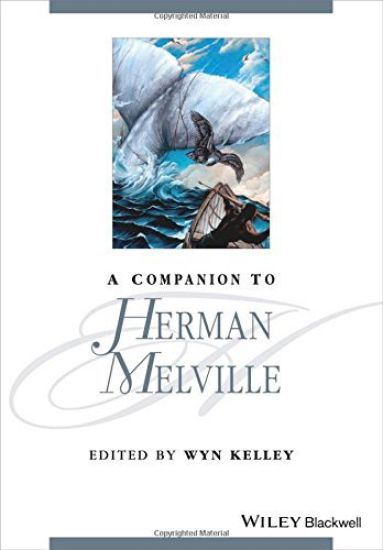
A Companion to Herman Melville
In a series of 35 original essays, this companion demonstrates the relevance of Melville’s works in the twenty-first century. Presents 35 original essays by scholars from around the world, representing a range of different approaches to MelvilleConsiders Melville in a global context, and looks at the impact of global economies and technologies on the way people read MelvilleTakes account of the latest and most sophisticated scholarship, including postcolonial and feminist perspectivesLocates Melville in his cultural milieu, revising our views of his politics on race, gender and democracyReveals Melville as a more contemporary writer than his critics have sometimes assumed
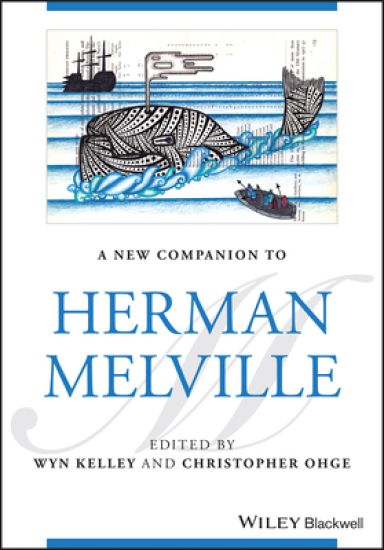
A New Companion to Herman Melville
Discover a fascinating new set of perspectives on the life and work of Herman Melville A New Companion to Herman Melville delivers an insightful examination of Melville for the twenty-first century. Building on the success of the first Blackwell Companion to Herman Melville, and offering a variety of tools for reading, writing, and teaching Melville and other authors, this New Companion offers critical, technological, and aesthetic practices that can be employed to read Melville in exciting and revelatory ways. Editors Wyn Kelley and Christopher Ohge create a framework that reflects a pluralistic model for humanities teaching and research. In doing so, the contributing authors highlight the ways in which Melville himself was concerned with the utility of tools within fluid circuits of meaning, and how those ideas are embodied, enacted, and mediated. In addition to considering critical theories of race, gender, sexuality, religion, transatlantic and hem­ispheric studies, digital humanities, book history, neurodiversity, and new biography and reception studies, this book offers: A thorough introduction to the life of Melville, as well as the twentieth- and twenty-first-century revivals of his workComprehensive explorations of Melville’s works, including Moby-Dick, Pierre, Piazza Tales, and Israel Potter, as well as his poems and poetic masterpiece ClarelPractical discussions of material books, print culture, and digital technologies as applied to MelvilleIn-depth examinations of Melville's treatment of the natural worldTwo symposium sections with concise reflections on art and adaptation, and on teaching and public engagement A New Companion to Herman Melville provides essential reading for scholars and students ranging from undergraduate and graduate students to more advanced scholars and specialists in the field.
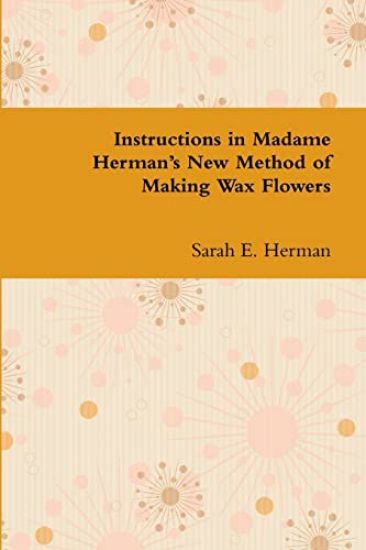
Instructions in Madame Herman's New Method of Making Wax Flowers
Instructions in Madame Herman's New Method of Making Wax Flowers by Sarah E. Herman, first published in 1873. This book has been made more particularly to supply the wants of persons living at a distance, and who can not come to this city to learn this method. Any one with the "love of the beautiful " can not but admire well-made wax flowers which resemble nature so well that many persons are daily deceived by them, mistaking them for natural flowers; they are well adapted to decorative purposes, and nothing is more pretty for presents than wax flowers.
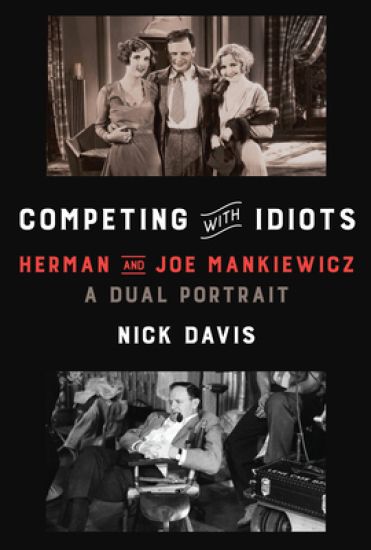
Competing with Idiots: Herman and Joe Mankiewicz, a Dual Portrait
A fascinating, complex dual biography of Hollywood's most dazzling--and famous--brothers, and a dark, riveting portrait of competition, love, and enmity that ultimately undid them both. One most famous for having written Citizen Kane (with Orson Welles, as most recently portrayed in David Fincher's acclaimed Netflix film, Mank); the other, All About Eve; one, who only wrote screenplays but believed himself to be a serious playwright, slowly dying of alcoholism and disappointment; the other, a four-time Academy Award-winning director, auteur, sorcerer, and seducer of leading ladies, one of Hollywood's most literate and intelligent filmmakers. Herman Mankiewicz brought us the Marx Brothers' Monkey Business, Horse Feathers, Duck Soup, W. C. Fields's Million Dollar Legs, wrote screenplays for Dinner at Eight, Pride of the Yankees, cowrote Citizen Kane (Pauline Kael proclaimed that the script was mostly Herman's), and eighty-nine others . . . Talented, witty (Alexander Woollcott thought him the funniest man who ever lived, ), huge-hearted, wildly immature, a figure of renown and success. Herman went to Hollywood in 1926, was almost immediately successful (his telegram to Hecht back east: MILLIONS ARE TO BE GRABBED OUT HERE AND YOUR ONLY COMPETITION IS IDIOTS. DON'T LET THIS GET AROUND.), becoming one of the highest-paid screenwriters in Hollywood . . . Joe, eleven years younger, focused, organized, a disciplined writer, with a far more distinguished career, surpassing his worshipped older brother . . . producing The Philadelphia Story, writing and directing A Letter to Three Wives and All About Eve, both of which won him Oscars for writing and directing (All About Eve received a record fourteen Oscar nominations), before seeing his career upended by the spectacular fiasco of Cleopatra . . . In this large, moving portrait, meticulously woven together by the grandson of Herman, great-nephew of Joe, we see the lives of these two men--their dreams and desires, their fears and feuds, struggling to free themselves from their dark past; and the driving forces that kept them bound to a system they loved and hated.
Rebooting the Herman & Chomsky Propaganda Model in the Twenty-First Century
Using the Herman & Chomsky «Propaganda Model» that was introduced in 1988, Goss offers a rigorous and accessible portrait of contemporary news media. Following a current survey of media ownership and news worker routines, in a series of case studies, he shows how recent news discourse has developed an Us/Them narrative. Cases include The New York Times’ accounts of the Bush administration and United Nations in the lead-up to the 2003 invasion of Iraq; and analysis of the 2011 riots in the United Kingdom in a comparison between two British broadsheets (The Guardian and The Daily Telegraph). Further case studies demonstrate important, if partial, new media discontinuities with respect to «old» news media. The book’s international reach and sustained attention to new media indicate that it is not simply high-fidelity repetition of Herman & Chomsky, but re-engineers the model’s architecture for the twenty-first century.
Rebooting the Herman & Chomsky Propaganda Model in the Twenty-First Century
Using the Herman & Chomsky «Propaganda Model» that was introduced in 1988, Goss offers a rigorous and accessible portrait of contemporary news media. Following a current survey of media ownership and news worker routines, in a series of case studies, he shows how recent news discourse has developed an Us/Them narrative. Cases include The New York Times’ accounts of the Bush administration and United Nations in the lead-up to the 2003 invasion of Iraq; and analysis of the 2011 riots in the United Kingdom in a comparison between two British broadsheets (The Guardian and The Daily Telegraph). Further case studies demonstrate important, if partial, new media discontinuities with respect to «old» news media. The book’s international reach and sustained attention to new media indicate that it is not simply high-fidelity repetition of Herman & Chomsky, but re-engineers the model’s architecture for the twenty-first century.