Kirjojen hintavertailu. Mukana 12 396 419 kirjaa ja 12 kauppaa.

Kirjahaku

Etsi kirjoja tekijän nimen, kirjan nimen tai ISBN:n perusteella.

1000 tulosta hakusanalla Iain Sinclair

Rethinking Death in and after Heidegger

Rethinking Death in and after Heidegger

Iain D. Thomson

Cambridge University Press
2026
nidottu
Iain D. Thomson is renowned for radically rethinking Heidegger's views on metaphysics, technology, education, art, and history, and in this book, he presents a compelling rereading of Heidegger's important and influential understanding of existential death. Thomson lucidly explains how Heidegger's phenomenology of existential death led directly to the insights which forced him to abandon Being and Time's guiding pursuit of a fundamental ontology, and thus how his early, pro-metaphysical work gave way to his later efforts to do justice to being in its real phenomenological richness and complexity. He also examines and clarifies the often abstruse responses to Heidegger's rethinking of death in Levinas, Derrida, Agamben, Beauvoir, and others, explaining the enduring significance of this work for ongoing efforts to think clearly about death, mortality, education, and politics. The result is a powerful and illuminating study of Heidegger's understanding of existential death and its enduring importance for philosophy and life.
Rethinking Death in and after Heidegger

Rethinking Death in and after Heidegger

Iain D. Thomson

Cambridge University Press
2024
sidottu
Iain D. Thomson is renowned for radically rethinking Heidegger's views on metaphysics, technology, education, art, and history, and in this book, he presents a compelling rereading of Heidegger's important and influential understanding of existential death. Thomson lucidly explains how Heidegger's phenomenology of existential death led directly to the insights which forced him to abandon Being and Time's guiding pursuit of a fundamental ontology, and thus how his early, pro-metaphysical work gave way to his later efforts to do justice to being in its real phenomenological richness and complexity. He also examines and clarifies the often abstruse responses to Heidegger's rethinking of death in Levinas, Derrida, Agamben, Beauvoir, and others, explaining the enduring significance of this work for ongoing efforts to think clearly about death, mortality, education, and politics. The result is a powerful and illuminating study of Heidegger's understanding of existential death and its enduring importance for philosophy and life.
Heidegger on Technology's Danger and Promise in the Age of AI

Heidegger on Technology's Danger and Promise in the Age of AI

Iain D. Thomson

Cambridge University Press
2025
sidottu
How exactly is technology transforming us and our worlds, and what (if anything) can and should we do about it? Heidegger already felt this philosophical question concerning technology pressing in on him in 1951, and his thought-full and deliberately provocative response is still worth pondering today. What light does his thinking cast not just on the nuclear technology of the atomic age but also on more contemporary technologies such as genome engineering, synthetic biology, and the latest advances in information technology, so-called “generative AIs” like ChatGPT? These are some of the questions this book addresses, situating the latest controversial technologies in the light of Heidegger's influential understanding of technology as an historical mode of ontological disclosure. In this way, we seek to take the measure of Heidegger's ontological understanding of technology as a constellation of intelligibility with an important philosophical heritage and a dangerous but still promising future.
Heidegger on Technology's Danger and Promise in the Age of AI

Heidegger on Technology's Danger and Promise in the Age of AI

Iain D. Thomson

Cambridge University Press
2025
pokkari
How exactly is technology transforming us and our worlds, and what (if anything) can and should we do about it? Heidegger already felt this philosophical question concerning technology pressing in on him in 1951, and his thought-full and deliberately provocative response is still worth pondering today. What light does his thinking cast not just on the nuclear technology of the atomic age but also on more contemporary technologies such as genome engineering, synthetic biology, and the latest advances in information technology, so-called “generative AIs” like ChatGPT? These are some of the questions this book addresses, situating the latest controversial technologies in the light of Heidegger's influential understanding of technology as an historical mode of ontological disclosure. In this way, we seek to take the measure of Heidegger's ontological understanding of technology as a constellation of intelligibility with an important philosophical heritage and a dangerous but still promising future.
Neville Chamberlain; 0

Neville Chamberlain; 0

Iain 1913-1970 MacLeod

Hassell Street Press
2021
nidottu
This work has been selected by scholars as being culturally important and is part of the knowledge base of civilization as we know it.This work is in the public domain in the United States of America, and possibly other nations. Within the United States, you may freely copy and distribute this work, as no entity (individual or corporate) has a copyright on the body of the work.Scholars believe, and we concur, that this work is important enough to be preserved, reproduced, and made generally available to the public. To ensure a quality reading experience, this work has been proofread and republished using a format that seamlessly blends the original graphical elements with text in an easy-to-read typeface.We appreciate your support of the preservation process, and thank you for being an important part of keeping this knowledge alive and relevant.
The Business of People

The Business of People

Iain Fraser; Madeleine Taylor

Taylor Francis Ltd
2021
nidottu
The Business of People is purposefully focused on people. The book will assist you to develop and support yourself with your people leadership, knowledge, and skills. It is an opportunity to better manage yourself and lead others, including your organization, into the modern volatile, uncertain, complex, and ambiguous (VUCA) world. It is also a sequel to the top-selling book The Business of Portfolio Management: Boosting Organizational Value.Authors Madeleine Taylor and Iain Fraser combine to give you the very best in knowledge and experience in a variety of situations. This is a book that cuts through the nonsense and presents real-world solutions for situations facing leaders today and tomorrow.Shifting from managing people to leading people requires a pivot...Leadership matters because the future is at greater risk without it. Regardless of where you are in your leadership journey I am confident this new book from Madeleine and Iain will be a valuable resource for you. Enjoy the journey, it never ends. —Mark A. Langley, Former President and CEO, Project Management InstituteIain and Madeleine are honest and raw about the challenges faced, and the resiliency needed, to lead in business. —Suzanne M. O’Gorman, Senior Strategic Business Architect, United Healthcare GroupIn a world where leadership increasingly requires emotional and cultural intelligence skills, this masterpiece couldn’t be any timelier. —Dr. Hilary Aza, Senior Portfolio Manager, Tarrant County, TexasEssential for anyone seeking to better understand their personal leadership and to inform further development. —Rob Loader, Executive, Capital Planning & Delivery, Telstra CorporationThe book to me is written from a position of empowerment, cultural acknowledgment, hopefulness, and purpose.—Elissa Farrow, Founder, About Your TransitionThis book will challenge your own thinking and behaviour and give you an opportunity to develop your adaptability and leadership style for an evolving future. —Thomas Davis, GM, Corporate Services, Capital & Coast District Health Board, New Zealand
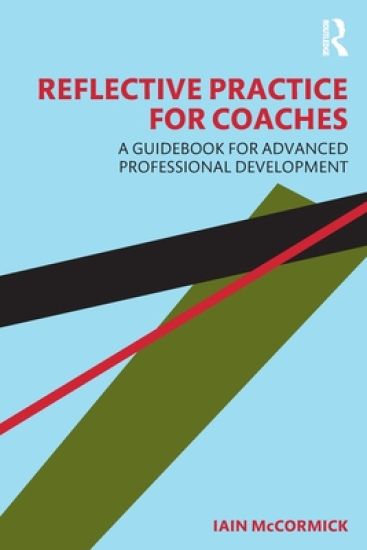
Reflective Practice for Coaches

Reflective Practice for Coaches

Iain McCormick

TAYLOR FRANCIS LTD
2023
nidottu
This practical evidence-based guide to running Reflective Practice professional development programmes provides a dynamic and engaging resource for a wide range of coaches. Reflective Practice is a proven learning and development approach that involves consciously and deliberately thinking about experiences to develop insights and apply these within coaching practice. McCormick argues that it is vital that coaches regularly reflect on their work to develop and grow professionally, and this book provides a definitive and rich source of material on how and what to reflect on. Topics include how to reflect as an individual coach; working in pairs and small groups; applying reflective practice in a training context; and how to run advanced group sessions for coaches. The book features a wide range of practical workbook exercises to challenge the reader’s current practice and extend their capability, as well as an evidence-based guide to enhancing skills in recently developed areas such as Unified Protocol Cognitive Behavioural Therapy, Internet Supplemented Acceptance and Commitment Therapy, and Using Schema Therapy with Mindfulness Techniques.Written by a highly experienced executive coach, this book is full of practical and effective ways to become more capable and proficient. It is essential reading for any career, life or executive coach who wishes to enhance their coaching capability through reflective practice, as well as for coaching training organisations, senior executive coaches offering sessions for other coaches, and academic institutions offering coaching qualifications.
Reflective Practice for Coaches

Reflective Practice for Coaches

Iain McCormick

TAYLOR FRANCIS LTD
2023
sidottu
This practical evidence-based guide to running Reflective Practice professional development programmes provides a dynamic and engaging resource for a wide range of coaches. Reflective Practice is a proven learning and development approach that involves consciously and deliberately thinking about experiences to develop insights and apply these within coaching practice. McCormick argues that it is vital that coaches regularly reflect on their work to develop and grow professionally, and this book provides a definitive and rich source of material on how and what to reflect on. Topics include how to reflect as an individual coach; working in pairs and small groups; applying reflective practice in a training context; and how to run advanced group sessions for coaches. The book features a wide range of practical workbook exercises to challenge the reader’s current practice and extend their capability, as well as an evidence-based guide to enhancing skills in recently developed areas such as Unified Protocol Cognitive Behavioural Therapy, Internet Supplemented Acceptance and Commitment Therapy, and Using Schema Therapy with Mindfulness Techniques.Written by a highly experienced executive coach, this book is full of practical and effective ways to become more capable and proficient. It is essential reading for any career, life or executive coach who wishes to enhance their coaching capability through reflective practice, as well as for coaching training organisations, senior executive coaches offering sessions for other coaches, and academic institutions offering coaching qualifications.
The Private Life of the Genome

The Private Life of the Genome

Iain Brassington

TAYLOR FRANCIS LTD
2024
nidottu
This innovative and engaging book argues that because our genetic information is directly linked to the genetic information of others, it is impossible to assert a ‘right to privacy’ in the same way that we can in other areas of life. This position throws up questions around access to sensitive data. It suggests that we may have to abandon certain intuitions about who may access our genetic information; and it raises concerns about discrimination against people with certain genetic characteristics. But the author asserts that regulating access to genetic information requires a more nuanced perspective that does not rely on the familiar language of rights. The book proposes new ways in which we may think about who has access to what genetic information, and on what basis they do so. Conceptually challenging, the book will prove engaging reading for scholars and students interested in the area of bioethics and medical law, as well as policy makers working with these pressing issues.
The Private Life of the Genome

The Private Life of the Genome

Iain Brassington

TAYLOR FRANCIS LTD
2023
sidottu
This innovative and engaging book argues that because our genetic information is directly linked to the genetic information of others, it is impossible to assert a ‘right to privacy’ in the same way that we can in other areas of life. This position throws up questions around access to sensitive data. It suggests that we may have to abandon certain intuitions about who may access our genetic information; and it raises concerns about discrimination against people with certain genetic characteristics. But the author asserts that regulating access to genetic information requires a more nuanced perspective that does not rely on the familiar language of rights. The book proposes new ways in which we may think about who has access to what genetic information, and on what basis they do so. Conceptually challenging, the book will prove engaging reading for scholars and students interested in the area of bioethics and medical law, as well as policy makers working with these pressing issues.
Health Policy

Health Policy

Iain Crinson

TAYLOR FRANCIS LTD
2024
nidottu
This important new textbook provides comparative and critical analysis of health care policy from high-income countries in Europe to low-income developing countries in the Global South.It integrates conceptual themes drawn from the fields of sociology, policy analysis, and political science to offer a unique combination of theory, historical background, and wider social commentary. The book is divided into three sections:Section I establishes the conceptual basis for the analysis of the health policymaking process, including implementation.Section II provides an introduction to the key elements of conducting a comparative health system’s analysis, including chapters that provide examples of performance analysis in both high- and low-income developing countries.Section III examines key challenges now facing health policy-makers that include long-term social care provision, widening the scope of public health to address social inequalities in health outcome, the integration of genomic medicine within a health care system, and the establishment of an effective national pharmaceutical policy.Each chapter includes case studies, historical-institutional contexts, and summaries of key health policies. Detailed and clearly written, it is the ideal text for health and social science students in this expanding area of analysis.
Rudolph Ganz, Patriotism, and Standardization of The Star-Spangled Banner, 1907-1958
This book examines the succession of events toward the potential standardization of the music for “The Star-Spangled Banner” from an initial letter to President Roosevelt in 1907 to the 1958 congressional hearings on the National Anthem, and the later work of the Swiss-Born American pianist, Rudolph Ganz. These events took place across five decades when a culture of public patriotism was especially pronounced for immigrant musicians. This book contextualizes the complementary experiences of a leading immigrant musician, Ganz, who successfully navigated the world of public patriotism while pursuing the realization of a standardized version. The materials are discussed through the lens of the performance practice.The legacy of standardization has not previously been examined. The response and actions of an immigrant, Ganz, in a culture of necessary patriotism for foreign-born artists shed important new light on this topic. It demonstrates the challenges, fears, and cultural expectations regarding the standardization of an important patriotic work.
Rudolph Ganz, Patriotism, and Standardization of The Star-Spangled Banner, 1907-1958
This book examines the succession of events toward the potential standardization of the music for “The Star-Spangled Banner” from an initial letter to President Roosevelt in 1907 to the 1958 congressional hearings on the National Anthem, and the later work of the Swiss-Born American pianist, Rudolph Ganz. These events took place across five decades when a culture of public patriotism was especially pronounced for immigrant musicians. This book contextualizes the complementary experiences of a leading immigrant musician, Ganz, who successfully navigated the world of public patriotism while pursuing the realization of a standardized version. The materials are discussed through the lens of the performance practice.The legacy of standardization has not previously been examined. The response and actions of an immigrant, Ganz, in a culture of necessary patriotism for foreign-born artists shed important new light on this topic. It demonstrates the challenges, fears, and cultural expectations regarding the standardization of an important patriotic work.
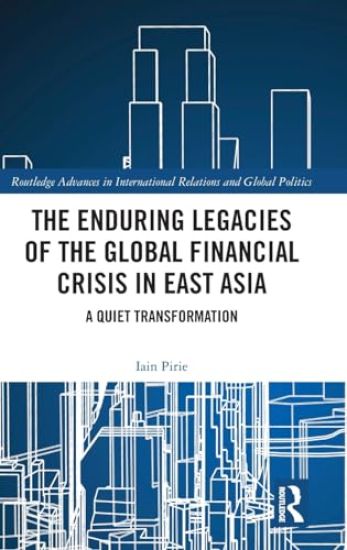
The Enduring Legacies of the Global Financial Crisis in East Asia
The Enduring Legacies of the Global Financial Crisis in East Asia challenges the assumption that the global financial crisis had a limited structural impact on East Asian political economies, arguing that the crisis has led to a significant, if uneven, reorganization of major national political economies within the region where, in response to the crisis, states have promoted domestic processes of financialization as a means of stimulating their economies.The major East Asian economies, bar Japan, enjoyed strong recoveries from the 2008–2009 financial crisis. However, this success has been achieved by promoting domestic processes of financialization to maintain demand – more precisely, the rapid build-up of household debt (Malaysia, Korea, Taiwan, China) and asset price bubbles (China, Japan). In short, East Asia has employed precisely those practices that the global financial crisis itself illustrated the unsustainability of, to maintain growth. Using a post-Keynesian framework, the book argues that the dependency on these forms of financialization to support demand is a direct product of a failure to address the issue of inequality. High levels of inequality slow the growth of non-debt-based domestic consumption. An alternative approach to supporting demand in the post-crisis period would need to focus on progressive redistribution through strengthening of labour rights and systems of social support, which would directly challenge the interests of economic and political elites. The structural vulnerabilities that accelerated financialization is creating in East Asia demonstrate the necessity of a post-Keynesian growth strategy based on redistribution and curbing financialization. The book also argues that in certain Northeast Asian economies the crisis has led to a consolidation of systems of industrial activism/state control, which could have occurred without accelerated financialization, and vice versa.This book will be of great interest to students and scholars of political economy and Asian studies.
The Enduring Legacies of the Global Financial Crisis in East Asia
The Enduring Legacies of the Global Financial Crisis in East Asia challenges the assumption that the global financial crisis had a limited structural impact on East Asian political economies, arguing that the crisis has led to a significant, if uneven, reorganization of major national political economies within the region where, in response to the crisis, states have promoted domestic processes of financialization as a means of stimulating their economies. The major East Asian economies, bar Japan, enjoyed strong recoveries from the 2008–2009 financial crisis. However, this success has been achieved by promoting domestic processes of financialization to maintain demand – more precisely, the rapid build-up of household debt (Malaysia, Korea, Taiwan, China) and asset price bubbles (China, Japan). In short, East Asia has employed precisely those practices that the global financial crisis itself illustrated the unsustainability of, to maintain growth. Using a post-Keynesian framework, the book argues that the dependency on these forms of financialization to support demand is a direct product of a failure to address the issue of inequality. High levels of inequality slow the growth of non-debt-based domestic consumption. An alternative approach to supporting demand in the post-crisis period would need to focus on progressive redistribution through strengthening of labour rights and systems of social support, which would directly challenge the interests of economic and political elites. The structural vulnerabilities that accelerated financialization is creating in East Asia demonstrate the necessity of a post-Keynesian growth strategy based on redistribution and curbing financialization. The book also argues that in certain Northeast Asian economies the crisis has led to a consolidation of systems of industrial activism/state control, which could have occurred without accelerated financialization, and vice versa. This book will be of great interest to students and scholars of political economy and Asian studies.