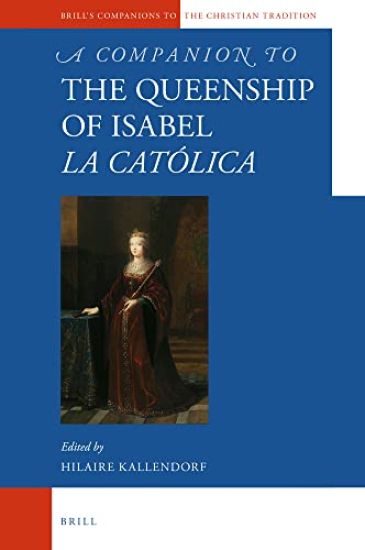
The queenship of the first European Renaissance queen regnant never ceases to fascinate. Was she a saint or a bigoted zealot? A pious wife or the one wearing the pants? Was she ultimately responsible for genocide? A case has been made to canonize her. Does she deserve to be called Saint Isabel? As different groups from fascists to feminists continue to fight over Isabel as cultural capital, we ask which (if any) of these recyclings are legitimate or appropriate. Or has this figure taken on a life of her own? Contributors to this volume: Roger Boase, David A. Boruchoff, John Edwards, Emily Francomano, Edward Friedman, Cristina Guardiola-Griffiths, Michelle Hamilton, Elizabeth Teresa Howe, Hilaire Kallendorf, William D. Phillips, Jr., Nuria Silleras-Fernandez, Caroline Travalia, and Jessica Weiss.
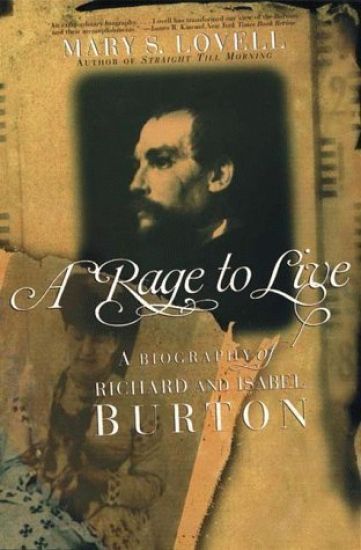
Their marriage was both improbable and inevitable. Isabel Arundell was a schoolgirl, the scion of England's most distinguished Catholic family. When she first saw him while walking at a seaside resort, Richard Burton had already made his mark as a linguist (he was fluent in twenty-nine languages), scholar, soldier, and explorer--at once a symbol of Victorian England's vision of empire and an avowed rebel against its mores. When she turned and saw him staring after her, she decided that she would marry him. By their next meeting, Burton had become the first infidel to infiltrate Mecca as one of the faithful, and, in an expedition to discover the source of the Nile, would soon be the first white man to see Lake Tanganyika. After being married, the Burtons traveled and experienced the world, from diplomatic postings in Brazil and Africa to hair-raising adventures in the Syrian desert. In later life Richard courted further controversy as a self-proclaimed erotologist and the translator of The Kama Sutra. Based on previously unavailable archives, Mary Lovell has written a compelling joint biography that sets Isabel in her proper place as Burton's equal in daring and endurance, a fascinating figure in her own right.
The kingdom of Valencia was home to Christian Spain's largest Muslim population during the reign of the Catholic Monarchs, Fernando and Isabel. How did Muslim-Christian coexistence in Valencia remain relatively stable in this volatile period that saw the establishment of the Spanish Inquisition, the Expulsion of the Jews, the conquest of Granada, and the conversion of the Muslims of Granada and Castile? In explanation, Mark Meyerson achieves the first thorough analysis of Fernando and Isabel's policy toward both Muslims and Jews. His findings will stimulate much discussion among Hispanists, Arabists, and historians. Meyerson argues that the key to the persistence of Muslim-Christian coexistence in Valencia lies in the hitherto unexamined differences between the royal couple concerning matters of religion. More than a study of the minority policy of the Catholic Monarchs, however, The Muslims of Valencia is an exemplary analysis of the economic life of Valencia's Muslims and the complex institutional and social network that held them suspended "between coexistence and crusade." This title is part of UC Press's Voices Revived program, which commemorates University of California Press’s mission to seek out and cultivate the brightest minds and give them voice, reach, and impact. Drawing on a backlist dating to 1893, Voices Revived makes high-quality, peer-reviewed scholarship accessible once again using print-on-demand technology. This title was originally published in 1991.
The kingdom of Valencia was home to Christian Spain's largest Muslim population during the reign of the Catholic Monarchs, Fernando and Isabel. How did Muslim-Christian coexistence in Valencia remain relatively stable in this volatile period that saw the establishment of the Spanish Inquisition, the Expulsion of the Jews, the conquest of Granada, and the conversion of the Muslims of Granada and Castile? In explanation, Mark Meyerson achieves the first thorough analysis of Fernando and Isabel's policy toward both Muslims and Jews. His findings will stimulate much discussion among Hispanists, Arabists, and historians. Meyerson argues that the key to the persistence of Muslim-Christian coexistence in Valencia lies in the hitherto unexamined differences between the royal couple concerning matters of religion. More than a study of the minority policy of the Catholic Monarchs, however, The Muslims of Valencia is an exemplary analysis of the economic life of Valencia's Muslims and the complex institutional and social network that held them suspended "between coexistence and crusade." This title is part of UC Press's Voices Revived program, which commemorates University of California Press’s mission to seek out and cultivate the brightest minds and give them voice, reach, and impact. Drawing on a backlist dating to 1893, Voices Revived makes high-quality, peer-reviewed scholarship accessible once again using print-on-demand technology. This title was originally published in 1991.
This study examines a long-recognized characteristic of Spanish Golden Age historical drama, that dramatists of the period interpreted factual history according to their own literary purposes. The study is based on five of Lope de Vega's plays that dramatize key moments in the reign of the Catholic Monarchs. The author points out basic patterns which guided Lope's restructuring of history, at the same time highlighting the differences in the approach to historical material in each work. Finally, the author examines Lope's portrayal of Isabel and Fernando and the implications of such a portrayal.
Moving away from territorially-bound narratives toward a more kinetic conceptualization of identity, this book represents the first analysis of the politics of American identity within the fiction and memoirs of Isabel Allende. Craig offers a radical transformation of societal frameworks through revised notions of place, temporality, and space.
Title: The Evolution of France under the Third Republic ... Translated from the French by Isabel F. Hapgood. Authorized edition with special preface and additions, and introdtion by Dr. Albert Shaw. With plates.]Publisher: British Library, Historical Print EditionsThe British Library is the national library of the United Kingdom. It is one of the world's largest research libraries holding over 150 million items in all known languages and formats: books, journals, newspapers, sound recordings, patents, maps, stamps, prints and much more. Its collections include around 14 million books, along with substantial additional collections of manuscripts and historical items dating back as far as 300 BC.The HISTORY OF EUROPE collection includes books from the British Library digitised by Microsoft. This collection includes works chronicling the development of Western civilisation to the modern age. Highlights include the development of language, political and educational systems, philosophy, science, and the arts. The selection documents periods of civil war, migration, shifts in power, Muslim expansion into Central Europe, complex feudal loyalties, the aristocracy of new nations, and European expansion into the New World. ++++The below data was compiled from various identification fields in the bibliographic record of this title. This data is provided as an additional tool in helping to insure edition identification: ++++ British Library Coubertin, Pierre de; Hapgood, Isabel Florence; Shaw, Albert; 1897 xli, 430 p.; 8 . 09225.g.3.
Title: The Evolution of France under the Third Republic ... Translated from the French by Isabel F. Hapgood. Authorized edition with special preface and additions, and introdtion by Dr. Albert Shaw. With plates.]Publisher: British Library, Historical Print EditionsThe British Library is the national library of the United Kingdom. It is one of the world's largest research libraries holding over 150 million items in all known languages and formats: books, journals, newspapers, sound recordings, patents, maps, stamps, prints and much more. Its collections include around 14 million books, along with substantial additional collections of manuscripts and historical items dating back as far as 300 BC.The HISTORY OF EUROPE collection includes books from the British Library digitised by Microsoft. This collection includes works chronicling the development of Western civilisation to the modern age. Highlights include the development of language, political and educational systems, philosophy, science, and the arts. The selection documents periods of civil war, migration, shifts in power, Muslim expansion into Central Europe, complex feudal loyalties, the aristocracy of new nations, and European expansion into the New World. ++++The below data was compiled from various identification fields in the bibliographic record of this title. This data is provided as an additional tool in helping to insure edition identification: ++++ British Library Coubertin, Pierre de; Hapgood, Isabel Florence; Shaw, Albert; 1898. 8 . 9231.l.16.
Moving away from territorially-bound narratives toward a more kinetic conceptualization of identity, this book represents the first analysis of the politics of American identity within the fiction and memoirs of Isabel Allende. Craig offers a radical transformation of societal frameworks through revised notions of place, temporality, and space.
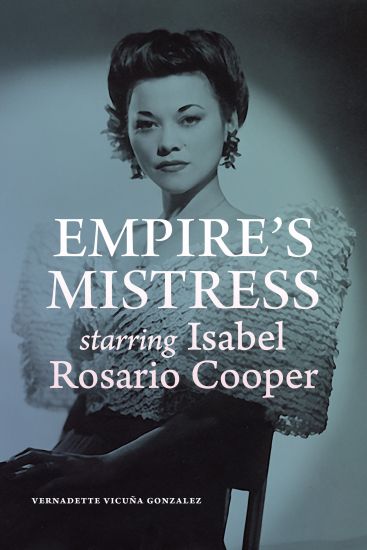
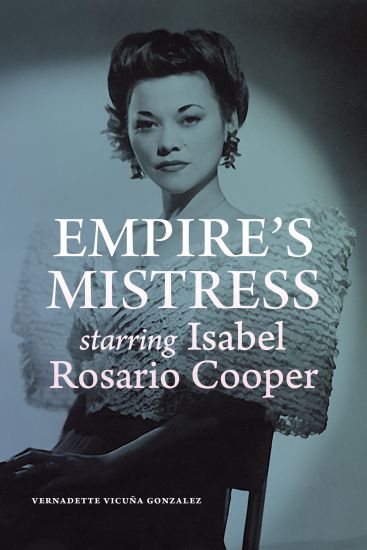
In Empire's Mistress Vernadette VicuÑa Gonzalez follows the life of Filipina vaudeville and film actress Isabel Rosario Cooper, who was the mistress of General Douglas MacArthur. If mentioned at all, their relationship exists only as a salacious footnote in MacArthur's biography-a failed love affair between a venerated war hero and a young woman of Filipino and American heritage. Following Cooper from the Philippines to Washington, D.C. to Hollywood, where she died penniless, Gonzalez frames her not as a tragic heroine, but as someone caught within the violent histories of U.S. imperialism. In this way, Gonzalez uses Cooper's life as a means to explore the contours of empire as experienced on the scale of personal relationships. Along the way, Gonzalez fills in the archival gaps of Cooper's life with speculative fictional interludes that both unsettle the authority of “official” archives and dislodge the established one-dimensional characterizations of her. By presenting Cooper as a complex historical subject who lived at the crossroads of American colonialism in the Philippines, Gonzalez demonstrates how intimacy and love are woven into the infrastructure of empire.
In Empire's Mistress Vernadette VicuÑa Gonzalez follows the life of Filipina vaudeville and film actress Isabel Rosario Cooper, who was the mistress of General Douglas MacArthur. If mentioned at all, their relationship exists only as a salacious footnote in MacArthur's biography-a failed love affair between a venerated war hero and a young woman of Filipino and American heritage. Following Cooper from the Philippines to Washington, D.C. to Hollywood, where she died penniless, Gonzalez frames her not as a tragic heroine, but as someone caught within the violent histories of U.S. imperialism. In this way, Gonzalez uses Cooper's life as a means to explore the contours of empire as experienced on the scale of personal relationships. Along the way, Gonzalez fills in the archival gaps of Cooper's life with speculative fictional interludes that both unsettle the authority of “official” archives and dislodge the established one-dimensional characterizations of her. By presenting Cooper as a complex historical subject who lived at the crossroads of American colonialism in the Philippines, Gonzalez demonstrates how intimacy and love are woven into the infrastructure of empire.
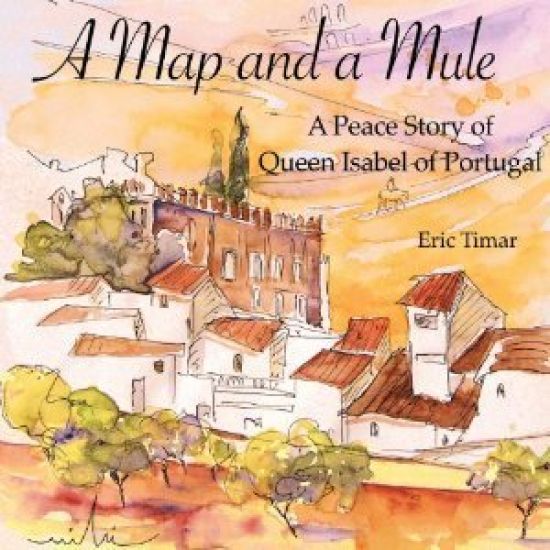
Two scenes from the life of Queen Isabel of Portugal, a peacemaker of the Middle Ages. Illustrations include portraits of Isabel, a period painting of knights, the cover watercolor, and a detail of a vintage map. Ages 5 - 8. Now updated with an additional modern map showing Serpa and Alvalade, as suggested by readers.