

Kirjahaku
Etsi kirjoja tekijän nimen, kirjan nimen tai ISBN:n perusteella.
1000 tulosta hakusanalla Jacob Tomassi

Credited by Dinno as the epitome of Syriac spiritual heritage, Mor Jacob of Serugh interpreted the physical world with the hidden realities of God. A prominent theme in Mor Jacob's mimre is the economy of salvation.
Jacob of Serugh and His Influence on John of Dara as Exemplified by the Use of Two Verse-Homilies
Aho Shemunkasho
Gorgias Press
2011
nidottu
Some of John of Dara’s 9th century treatises survive in Codex 356 in Mardin, in which Jacob of Serugh is called “Jacob of Batnan”, “Jacob”, and titles of respect. This article describes Jacob’s significant influence, comparing two-verse homilies in detail.
Brock provides an indispensable bibliographic resource for Jacob of Serugh scholarship. This guide lists Jacob's mimre by biblical passage and liturgical events, uplifted saints and topics, other works including prose and letters, and recommended secondary sources for further study.
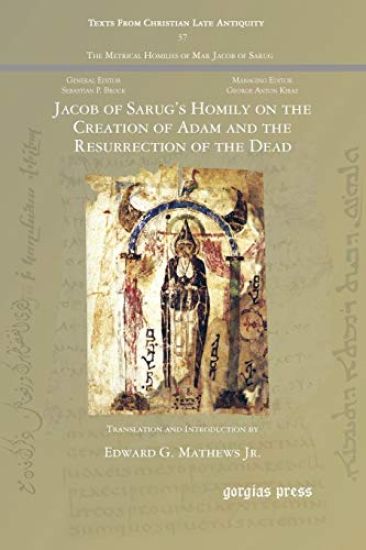
Jacob of Sarug's Homily on the Creation of Adam and the Resurrection of the Dead
Edward G Mathews Jr
Gorgias Press
2014
nidottu
Mêmrâ 72 is a meditation on the fall of Adam and its consequences, subjecting all creation to corruption. God’s mercy, however, will restore everything to a spiritual, incorruptible state that will exist eternally in the unending light of Christ.
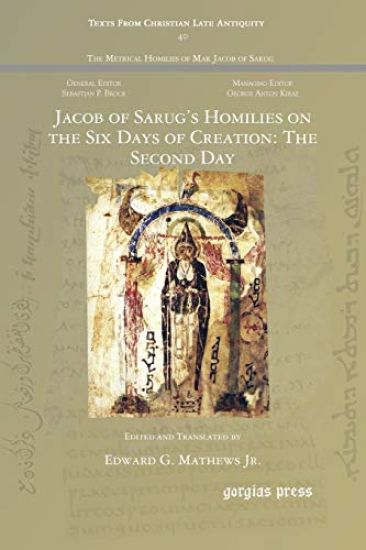
Jacob of Sarug’s Homilies on the Six Days of Creation: The Second Day
Gorgias Press
2016
nidottu
In this second part of Homily 71, On the Fashioning of Creation, Jacob treats the making of the firmament: what it was, where it was, what – as far as can be determined – was placed above it and what below it, its purpose and utility for humanity, and the importance of its place in the Genesis account of the six day progression of creation.

Jacob of Sarug's Homilies on Women Whom Jesus Met
Gorgias Press
2016
nidottu
Five homilies by Jacob of Sarug on women whom Jesus met: the Canaanite Woman, the Samaritan Woman, the Hemorrhaging Woman, the Woman Bent Double, and Jairus' Daughter.
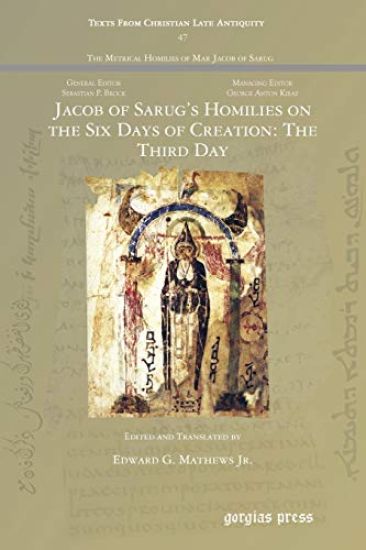
Jacob of Sarug’s Homilies on the Six Days of Creation: The Third Day
Gorgias Press
2016
nidottu
In this third part of Homily 71, On the Fashioning of Creation, Jacob treats the God's separation of the waters from the earth, and the bringing forth of vegetation on the newly-revealed dry land.
Two homilies by Jacob of Sarug on Good Friday, one of which has only survived in Armenian translation.
Jacob of Sarug’s Homilies on the Six Days of Creation: The Fourth Day
Gorgias Press
2017
nidottu
In this fourth installment of the long Homily 71, On the Six Days of Creation, Jacob treats of the events of the fourth day, the creation of the spheres of light over the earth: the sun to rule over the day, and the moon and the stars to rule over the night.
Jacob of Sarug’s Homilies on the Six Days of Creation: The Fifth Day
Gorgias Press
2019
nidottu
In this fifth installment of the long Homily 71, On the Six Days of Creation, Jacob treats of the events of the fifth day, the creation from the waters of the various species of fish and reptiles, as well as the assorted types of birds and other winged creatures. God created them all in wisdom and in love, prepared everything that they would need and endowed them with the natural characteristics required for their particular type of life. Jacob highlights the fact that the creation of these animals on the fifth day to inhabit the land and water separated on the third day is a symbol of the Resurrection of Christ.
Jacob of Sarug's Homilies
Gorgias Press
2020
nidottu
Recognized as a saint by both Chalcedonian and non-Chalcedonian Christians alike, Jacob of Sarug (d. 521) produced many narrative poems that have rarely been translated into English. Of his reported 760 metrical homilies, only about half survive. Part of a series of fascicles containing the bilingual Syriac-English editions of Saint Jacob of Sarug’s homilies, this volume contains two of his homilies on Jacob. The Syriac text is fully vocalized, and the translation is annotated with a commentary and biblical references. The volume is one of the fascicles of Gorgias Press’s Complete Homilies of Saint Jacob of Sarug, which, when complete, will contain all of Jacob’s surviving sermons.
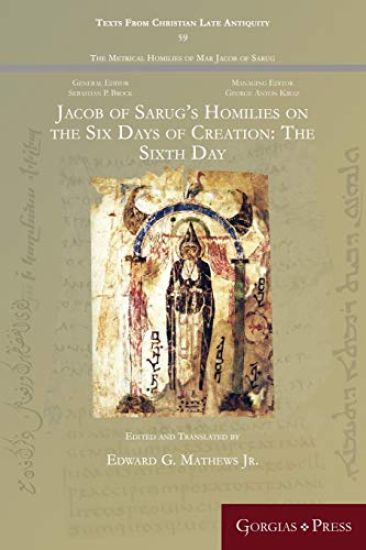
Jacob of Sarug’s Homilies on the Six Days of Creation: The Sixth Day
Gorgias Press
2020
nidottu
In this sixth installment of the long Homily 71, On the Six Days of Creation, Jacob treats the events of the sixth day.Recognized as a saint by both Chalcedonian and non-Chalcedonian Christians alike, Jacob of Sarug (d. 521) produced many narrative poems that have rarely been translated into English. Of his reported 760 metrical homilies, only about half survive. Part of a series of fascicles containing the bilingual Syriac-English editions of Saint Jacob of Sarug’s homilies, this volume contains his homilies on the Six Days of Creation. The Syriac text is fully vocalized, and the translation is annotated with a commentary and biblical references. The volume is one of the fascicles of Gorgias Press’s The Metrical Homilies of Mar Jacob of Sarug, which, when complete, will contain all of Jacob’s surviving sermons.In this sixth installment of the long Homily 71, On the Six Days of Creation, Jacob treats the events of the sixth day, the creation of the large beasts and other land animals, and then the creation of man and woman in the persons of Adam and Eve.
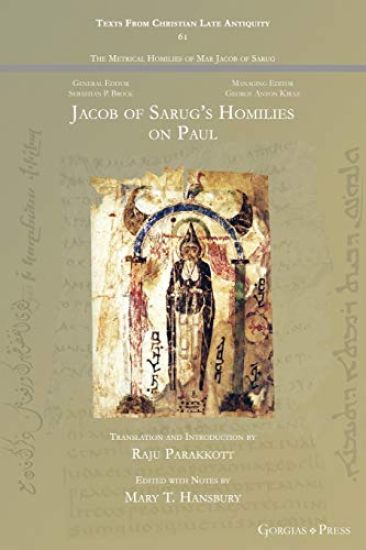
Jacob of Sarug's Homilies on Paul
Gorgias Press
2021
nidottu
Recognized as a saint by both Chalcedonian and non-Chalcedonian Christians alike, Jacob of Sarug (d. 521) produced many narrative poems that have rarely been translated into English. Of his reported 760 metrical homilies, only about half survive. Part of a series of fascicles containing the bilingual Syriac-English editions of Saint Jacob of Sarug’s homilies, this volume contains two of his homilies on Paul. The Syriac text is fully vocalized, and the translation is annotated with a commentary and biblical references. The volume is one of the fascicles of Gorgias Press’s Complete Homilies of Saint Jacob of Sarug, which, when complete, will contain all of Jacob’s surviving sermons.
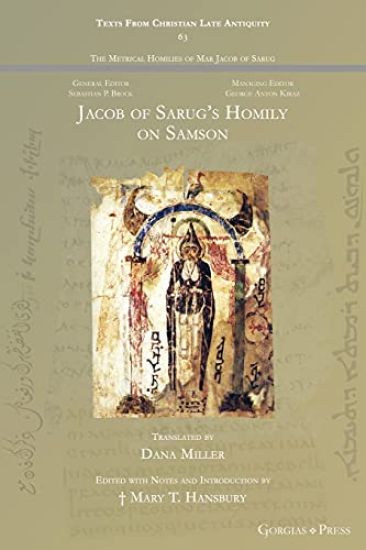
Jacob of Sarug's Homily on Samson
Gorgias Press
2021
nidottu
Recognized as a saint by both Chalcedonian and non-Chalcedonian Christians alike, Jacob of Sarug (d. 521) produced many narrative poems that have rarely been translated into English. Of his reported 760 metrical homilies, only about half survive. Part of a series of fascicles containing the bilingual Syriac-English editions of Saint Jacob of Sarug’s homilies, this volume contains his homily on Samson. The Syriac text is fully vocalized, and the translation is annotated with a commentary and biblical references. The volume is one of the fascicles of Gorgias Press's Complete Homilies of Saint Jacob of Sarug, which, when complete, will contain all of Jacob’s surviving sermons.
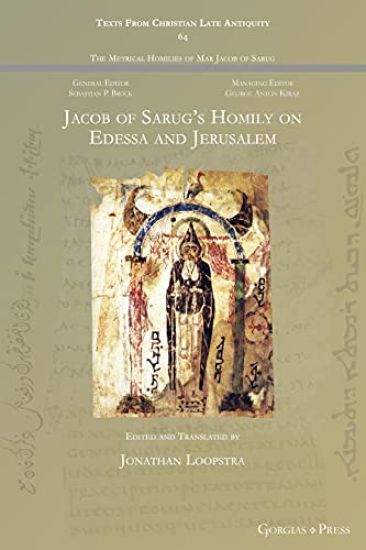
Jacob of Sarug's Homily on Edessa and Jerusalem
Gorgias Press
2021
nidottu
Recognized as a saint by both Chalcedonian and non-Chalcedonian Christians alike, Jacob of Sarug (d. 521) produced many narrative poems that have rarely been translated into English. Of his reported 760 metrical homilies, only about half survive. Part of a series of fascicles containing the bilingual Syriac-English editions of Saint Jacob of Sarug’s homilies, this volume contains his homily on Edessa and Jerusalem. The Syriac text is fully vocalized, and the translation is annotated with a commentary and biblical references. The volume is one of the fascicles of Gorgias Press's Complete Homilies of Saint Jacob of Sarug, which, when complete, will contain all of Jacob’s surviving sermons.
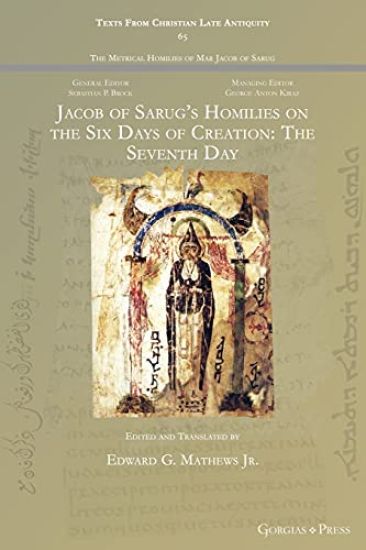
Jacob of Sarug's Homilies on the Six Days of Creation: The Seventh Day
Gorgias Press
2021
nidottu
Recognized as a saint by both Chalcedonian and non-Chalcedonian Christians alike, Jacob of Sarug (d. 521) produced many narrative poems that have rarely been translated into English. Of his reported 760 metrical homilies, only about half survive. Part of a series of fascicles containing the bilingual Syriac-English editions of Saint Jacob of Sarug’s homilies, this volume contains his homilies on the Six Days of Creation. The Syriac text is fully vocalized, and the translation is annotated with a commentary and biblical references. The volume is one of the fascicles of Gorgias Press’s The Metrical Homilies of Mar Jacob of Sarug, which, when complete, will contain all of Jacob’s surviving sermons.In this final installment of the long Homily 71, On the Six Days of Creation, Jacob treats the events of the seventh day, on which God rests from all his labors of creation carried out over the course of the previous six days.