
Kirjahaku
Etsi kirjoja tekijän nimen, kirjan nimen tai ISBN:n perusteella.
1000 tulosta hakusanalla Jameson Fitzpatrick

A Handbook To The Public Galleries Of Art In And Near London
Anna Jameson
Hutson Street Press
2025
sidottu

A Handbook To The Public Galleries Of Art In And Near London
Anna Jameson
Hutson Street Press
2025
pokkari

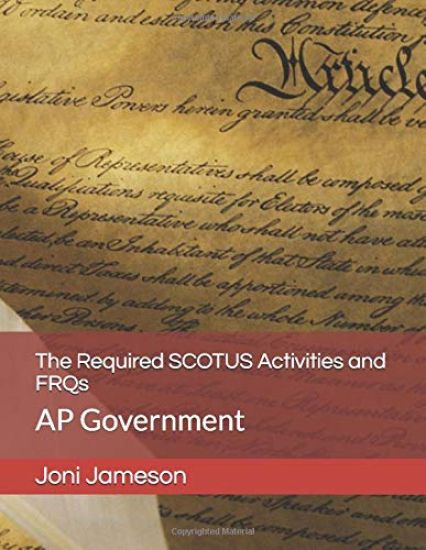
The Required SCOTUS Activities and FRQs: AP Government
Joni Jameson
Independently Published
2019
nidottu
The Required SCOTUS Activity Book includes the 15 Required SCOTUS cases and 33 activities with reproducible handouts, to prepare high school students for FRQ 3 on the newly designed AP U.S. Government examination. The enduring understandings, essential knowledge, and skills outlined in the new College Board CED. Lessons focus on the required SCOTUS cases and the integration of essential knowledge and skills from the course curriculum. Includes notes, suggested procedures, readings, and additional sources. Practice FRQ questions and rubrics are provided for each Required Case. Advanced students. Table of ContentsNotes & Resources:1Lesson 1Marbury v Madison (1803) Judicial Review5Handout 1.1 The Birth of Judicial Review7Handout 1.2: Marbury at a Glance15Lesson 2 McCulloch v Maryland (1819) Necessary and Proper17Handout 2.1 Powers of Congress19Handout 2.2 Conflict between "necessary and proper" and a limited national government19Handout 2.3 Balance between governmental power and individual rights19Lesson 3 U.S. v Lopez (1995) Federal v State Powers20Handout 3.1 The extent of Congressional power to regulate commerce22Handout 3.2 Commerce Clause and Schools27Lesson 4 Baker v Carr (1962) Majority Rule and Minority Rights31Handout 4.1 Elections and the Constitution33Handout 4.2 Evaluating Legal Arguments35Lesson 5 Shaw v Reno (1993) Strict Scrutiny and Equal Protection37Handout 5.1 Constitutional Basis39Handout 5.2 Equal Representation43Handout 5.3 Strict Scrutiny46Lesson 6 Engel v Vitale (1962) Establishment Clause49Handout 6.1 Establishment Clause50Handout 6.2 Applying the Establishment Clause52Lesson 7 Wisconsin v Yoder (1972) Freedom of Religion60Handout 7.1 Wisconsin v Yoder (1972)61Lesson 8 Tinker v Des Moines Independent School District (1969) First Amendment64Handout 8.1 Symbolic Speech65Handout 8.2 The Case for Freedom of Speech in Schools71Lesson 9 New York Times Co v United States (1971) Freedom of the Press75Handout 9.1 The Whistleblower76Handout 9.2 Freedom of the Press versus National Security79Handout 9.3 Alternative Decision82Lesson 10 Schenck v United States (1919) Freedom of Speech83Handout 10.1 A Clear and Present Danger84Lesson 11 McDonald v Chicago (2010) The Right to Bear Arms87Handout 11.1 Writing a Legal Brief88Lesson 12 Gideon v Wainwright (1963) The Right to Counsel90Handout 12.1 Criminal Rights91Handout 12.2 The Right to an Attorney94Lesson 13 Roe v Wade (1973) Right to Privacy104Handout 13.1 Basis for the Right to Privacy105Handout 13.2 The Supreme Court and the Right to Privacy108Handout 13.3 Roe v Wade112Lesson 14 Brown v Board of Education (1954) Separate But Equal117Handout 14.1 Separate but Equal118Handout 14.2 Brown v Board of Education (1954)120Handout 14.3 All Deliberate Speed124Lesson 15 Citizens United v Federal Election Commission (2010) Freedom of Speech126Handout 15.1 The Parties127Handout 15.2 Court Brief135Handout 15.3 Making a Decision144Appendix152Case at a Glance152SCOTUS Required at a Glance154Similarities and Differences158Key Concepts159Practice SCOTUS FRQ Q3163
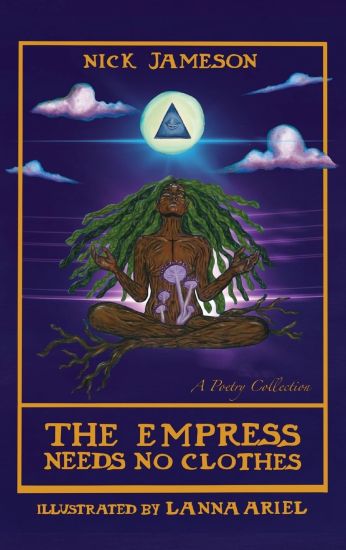
The Empress Needs No Clothes is a collection of the favorite poems of philosopher-poet Nick Jameson. Written over a period of nearly two decades, it spans a great spectrum of subjects and inspirations. The anguish of unrequited love, the insights of spirituality free of the erroneous specifications and confines of religion, the war with traditional modes of mass economic exploitation and mental oppression, the love and worship of Spirit through nature, the answering of age-old philosophical and spiritual conundrums and the exploration of subjects whose comprehension offer uniquely elucidating, edifying benefits to the reader are hereby offered. Buyer beware: this isn't the typical collection of poems, but the verse of one whose honor, pure spirituality and progressive convictions compel him to go to war with all that which enslaves and erodes humanity, even when that means being misunderstood and condemned by those whom he thereby serves. Complemented by the talented Brazilian-cum-Irish artist Lanna Ariel, the "Witch of Paintings," this book is a sword stained with the author's blood, forged in the fires of rage and revelation, wielded against, and for, everything that compels him to put the pen to the page.

Small towns...for some it can be a picturesque experience; fresh air, clear sky, beautiful nature, and of course, friendly neighbors. For Brennon O'Connell, the new teenage resident at Desert Winds, the experience is far from that. It all starts innocently enough one night when he discovers the presence of unusual lights in the sky but quickly escalates to more disturbing events; lies, conspiracy, abductions, and murder. As Brennon begins to search for answers, he quickly discovers that his natural curiosity is not welcomed by anyone, even those closest to him. The topic of UFOs, alien abductions, and alien invasions is not a popular one for the residents of Desert Winds, but even less appealing when coming from the lips of Brennon. Undeterred, he continues his pursuit of the truth, but the more he digs, the closer the facts lead him to uncover a dangerous secret. Brennon has no idea that the truth will put him and everyone he cares for on a collision course with death. Yes, an alien invasion appears imminent but even worse, Brennon and his friends will learn that aliens have been secretly living amongst humans on Earth for hundreds of years, and they will stop at nothing to keep it a secret.
Veritas Ex Spiritu, meaning "Truth Through Spirit," is a compilation of spiritual writings composed over a period of nearly fifteen years. The title alludes to the fact that, even when in ignorance and/or denial, we're all spiritual beings by our very nature, and that all truth comes from this source, with the mind always playing translator. This compilation represents the desire of the author to share his spirituality through one condensed work. In the process it offers answers to the great moral, spiritual and philosophical quandaries of the ages. The fully-inclusive nature of God, or 'Spirit, ' and its inseparability from every one of its manifestations is investigated through multiple genres, and theories and principles of the greatest possible value to life, and to the progression of the human race, are explored in detail.Attempting to control what constitutes divinity is the hubristic foolishness of religion. The roads to the truth are always endless, and everyone has a prophet inside of them; it's all a matter of centering oneself and learning how to listen. This is precisely what makes the 'spiritual but not religious' perspective, the fully inclusive viewpoint, superior to the religious perspective, the excluding viewpoint made of attempting to stuff the all-encompassing Spirit and its manifestations into a single box in which it shall not only never fit, but which leads to innumerable ills for humankind, including promoting the propensity for tribal thought and divisiveness.True spirituality, that which possesses the greatest power to unite all people, seeks no supremacy, listens to no labels, builds no boundaries, identifies with no idolatry, heeds no hierarchies and enforces no exclusions. Those are the man-made corruptions that created the religions by which the powerful have long controlled and oppressed the people as a whole. Ironically, the cure to religion is spirituality.This collection includes: - 2 short books, based upon the Tao Te Ching and the Gnostic Gospels, respectively- 1 excerpt on the nature of divinity, from the philosophical novel "Infinite of One"- 4 short spiritual papers on the 'spiritual but not religious' supersession of religion- 30 standard-length poems exploring various aspects of spirituality- 1 'epic poem' based upon Khalil Gibran's "The Prophet"- 1 novel reflection on the spiritual classic "Siddhartha"
The Tao Te Ching is the greatest guiding treatise for living by divine, natural providence, born of an inherent spiritual wisdom lost by a human race that has buried that wisdom beneath the pretenses of knowledge, power, covetousness and control. Taoism predates all the major religions, and promulgates ideas and principles which those religions pretend to be their own. Indeed, those from later faiths shall here, if reading with open heart and mind, find the roots of their own faith. The Way of the Tao Te Ching is as the sacred seed buried in the soil, forever regenerating the existence trodden upon and taken for granted by a human race that now dishonors nature, believing that it has the right to dominate it.All the great religions followed in Lao Tzu's footsteps, tracing a path which The Old Philosopher himself speaks of coming from eons long past; a trail as ancient as humankind itself, which The Old Philosopher knew of himself to be but a traveler of. I have, here, set upon the path myself, being a long-running student of spirituality. As part of my practice I'm enriched by performing 'active reading exercises' in order to improve my understanding of my reading, in which I gather the insights and principles of the original text and word them as they make the most sense to me, and hopefully to other readers as well.I do this not, in this case, as a foolish attempt to 'one-up' the master metaphysician, but, again, to expand upon my own understanding, hopefully do a service to modern readers, and as a means to more actively consider and pay homage to his wisdom. I do this also to honor that fact that sacred wisdom is both ineffable and, at the same time, by the same nature, may be limitlessly expressed and reworded, like a glorious white light shining through an infinitely-faceted prism.

Attempting to control what constitutes divinity is the hubristic foolishness of religion. The roads to the truth are always endless, and everyone has a prophet inside of them; it's all a matter of centering oneself and learning how to listen. This is precisely what makes the 'spiritual but not religious' perspective, the fully inclusive viewpoint, superior to the religious perspective, the excluding viewpoint made of attempting to stuff the all-encompassing Spirit and its manifestations into a single box in which it shall not only never fit, but which leads to innumerable ills for humankind, including promoting the propensity for tribal thought and divisiveness. True spirituality, that which possesses the greatest power to unite all people, seeks no supremacy, listens to no labels, builds no boundaries, identifies with no idolatry, heeds no hierarchies and enforces no exclusions. Those are the man-made corruptions that created the religions by which the powerful have long controlled and oppressed the people as a whole. Ironically, the cure to religion is spirituality. This compilation represents the desire of the author to share his spirituality through one condensed work. In the process it offers answers to the great moral, spiritual and philosophical quandaries of the ages. The fully-inclusive nature of God, or 'Spirit, ' and its inseparability from every one of its manifestations is investigated through multiple genres, and theories and principles of the greatest possible value to life, and to the progression of the human race, are explored in detail.
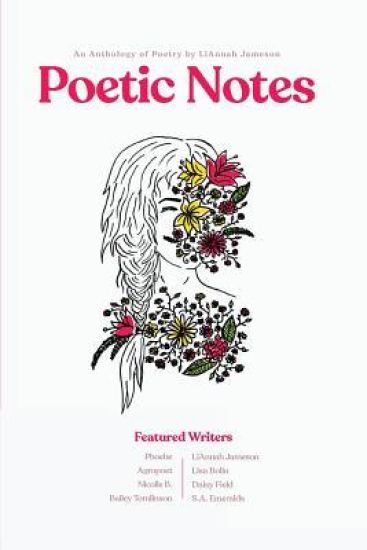
An anthology of poetry consisting of eight different writers from around the world. Whether you're looking for poems about nature, heartbreak, hope, depression, anxiety, or domestic violence - you'll find it all here in this book and more.
Spicilegia Antiquitatum Aegypti Atque Ei Vicinarum Gentium (1720)
William Jameson
KESSINGER PUBLISHING, LLC
2009
pokkari

Nick's Notes - My 1st Half Dozen Indoor Medical Marijuana Growing Lessons
Nick Jameson (a Gadfly)
Lulu.com
2012
pokkari
A streamlined version of the typical 'How-To' guides on growing medicinal-grade marijuana written by a medical cannabis card holder in Sonoma County, California. Written for medicinal marijuana license holders by a medicinal marijuana license holder. This literature is NOT intended to promote illicit grow projects Start learning the science of marijuana horticulture from the ground-up, avoiding the pitfalls made by most beginning growers without having to read hundreds of pages Start with the basics here and learn the details as you and your plants grow
Characteristics of Women (1832) by Anna Jameson was the first attempt by a woman to analyse the characteristics of twenty-three heroines of Shakespeare's plays. In this book, Jameson, an English writer, feminist, and art historian, addresses problems of women's education and participation in public life while providing insightful and original readings of Shakespeare's women. Jameson classifies the heroines into four categories: characters of intellect, characters of passion and imagination, characters of the affections and historical characters, explored articulately across these two volumes.
Characteristics of Women (1832) by Anna Jameson was the first attempt by a woman to analyse the characteristics of twenty-three heroines of Shakespeare's plays. In this book, Jameson, an English writer, feminist, and art historian, addresses problems of women's education and participation in public life while providing insightful and original readings of Shakespeare's women. She divides the heroines into four classes, two of which — characters of intellect and characters of passion and imagination — are discussed in Volume 1. Portia, Isabella, Beatrice, and Rosalind — the characters of intellect — are sufficiently connected by that common tie and are distinct from Juliet, Helena, Perdita, Viola, Ophelia, and Miranda, who are categorised as characters of passion and imagination. Illustrated with fifty attractive etchings made by the author herself, this eloquent book is a must-have for Shakespeare collectors, students of women's studies and others interested in nineteenth-century literary criticism.
Robert Jameson (1774–1854) was a renowned geologist who held the chair of natural history at Edinburgh from 1804 until his death. A pupil of Gottlob Werner at Freiberg, he was in turn one of Charles Darwin's teachers. Originally a follower of Werner's influential theory of Neptunism to explain the formation of the earth's crust, and an opponent of Hutton and Playfair, he was later won over by the idea that the earth was formed by natural processes over geological time. He was a controversial writer, accused of bias towards those who shared his Wernerian sympathies such as Cuvier, while attacking Playfair, Hutton and Lyell. He built up an enormous collection of geological specimens, which provided the evidence for his System of Mineralogy, first published in 1808 and here reprinted from the second edition of 1816. Volume 1 deals with what Jameson terms 'earthy minerals', including diamonds, rubies and feldspar.
Robert Jameson (1774–1854) was a renowned geologist who held the chair of natural history at Edinburgh from 1804 until his death. A pupil of Gottlob Werner at Freiberg, he was in turn one of Charles Darwin's teachers. Originally a follower of Werner's influential theory of Neptunism to explain the formation of the earth's crust, and an opponent of Hutton and Playfair, he was later won over by the idea that the earth was formed by natural processes over geological time. He was a controversial writer, accused of bias towards those who shared his Wernerian sympathies such as Cuvier, while attacking Playfair, Hutton and Lyell. He built up an enormous collection of geological specimens, which provided the evidence for his System of Mineralogy, first published in 1808 and here reprinted from the second edition of 1816. Volume 3 deals with metal ores such as gold, iron and lead.
Anna Jameson (1794–1860) was an inspirational figure to a generation of young women writers and artists including Barbara Bodichon and Bessie Rayner Parkes. Her work was reviewed by leading figures such as Mary Shelley and Charles Kingsley, and even Thomas Carlyle, though less complimentary, referred to her as the 'celebrated Mrs Jamieson'. This book, first published in 1838, secured her growing reputation as a writer of history, literary criticism and travel literature, and has been popular ever since. Inspired by a journey made to support the career of her estranged husband, one of its key themes is the condition of women, which recurs regularly in Jameson's writing. In Volume 1, Jameson describes her difficulty adapting to the winter cold, her impressions of Ontario's landscape, peoples, and political system, and her reflections on literature, especially Goethe. For more information on this author, see http://orlando.cambridge.org/public/svPeople?person_id=jamean