Kirjojen hintavertailu. Mukana 12 390 323 kirjaa ja 12 kauppaa.

Kirjahaku

Etsi kirjoja tekijän nimen, kirjan nimen tai ISBN:n perusteella.

1000 tulosta hakusanalla John L Cook

The Birds of Konza

The Birds of Konza

John L. Zimmerman

University Press of Kansas
1993
sidottu
Renowned for its tall grasses, the Konza Prairie in east-central Kansas provides shelter for a variety of birds, from the mourning dove to the wild turkey. Yet many birds come to the prairie for other reasons - the Virginian rail prefers the seasonal marshy swales, the northern rough-winged swallow searches the clay banks of active streams for its nest sites, the common poorwill nests in the sparsely vegetated rocky outcrops and the yellow-rumped warbler favours a broad range of woody habitats, from clumps of dogwood in the upland prairies to the denser interior of the gallery forest. Just passing over in search of wetter spots, the Great Blue Heron occasionally alights on a pond or a creek. Living up to its name, the chimney swift resides only in the chimney of the stone house at Konza Prairie headquarters. Konza Prairie, an 8,600-acre ocean of tallgrass cut by occasional stands of forests along streams and creeks, is a stomping ground or permanent home to more than 200 species of birds. Owned by The Nature Conservancy and administered by the Division of Biology and Kansas State University, Konza is located in the middle of the Flint Hills, which are covered by the last major remnants of virgin tallgrass prairie that once stretched from the eastern Dakotas to Oklahoma and east through Iowa and Illinois to Indiana and Ohio. Featuring a valuable synopsis of the seasonal occurrence, habitat preference, breeding status and abundance for all 208 species that have been recorded on the site, "The Birds of Konza" provides a basis for comparisons to other habitats and geographic areas, as well as the benchmark for continuing studies in the tallgrass prairie.
Cheyenne Bottoms

Cheyenne Bottoms

John L. Zimmerman

University Press of Kansas
1990
nidottu
This is an introduction to Cheyenne Bottoms. Narrating the natural history of the Bottoms from its formation 100,000 years ago, it describes the variety of birds, mammals and reptiles that depend on it and the intricate web of interactions among them that preserves its ecosystem.
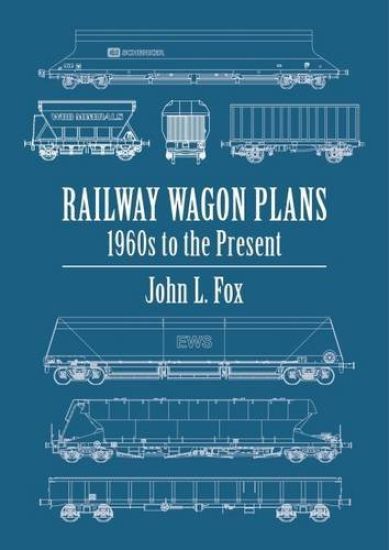
Railway Wagon Plans

Railway Wagon Plans

John L. Fox

Ian Allan Publishing
2016
sidottu
The author has been a railway modeller for many years and he is also a trained draughtsman. As detailed drawings of current wagons are difficult to obtain he decided to produce a series of his own drawings of modern British railway wagons (back as far as the 1980s). The book contains approximately 50 collections of drawings in 4mm/ft scale with enlarged detail at 8mm/ft or scaled as appropriate. Each wagon is shown in three elevations, normally over two pages, most accompanied by a colour detail photographs of each particular wagon. There is also an appendix of wagon loads to fit the drawings, which includes Hapag/Lloyd containers, RMC 'Inbulk' Tank, Charter Rail lorry for KOA wagon and Scorpion light tank for KFA wagon. Photographs accompany about half the wagons shown in the appendix.
7 Steps to Wealth

7 Steps to Wealth

John L. Fitzgerald

John Wiley Sons Australia Ltd
2018
nidottu
Get the most out of property investment and secure your financial future 7 Steps to Wealth is the only real estate book in Australia endorsed by three of Australia's property billionaires. It shares John L. Fitzgerald's own 35-year proven property strategy, supported statistically and with real life case studies from readers of earlier editions. Now in its 8th edition the book is completely up-to-date with the latest census data, location criteria and growth forecasts. Most importantly the book exposes the difference between property and real estate, proving that it’s only the land that appreciates and that the buildings that sit on the land actually depreciate. Indeed 7 Steps to Wealth uses Warren Buffet’s secret of compound growth but adapted for Australian property investors. Fitzgerald proves that certain residential land is Australia's best growth asset –– and will continue to be given current record population growth. • Unlock the secret power of compound growth and make it work for you • Avoid the common mistakes that most property investors make • Read case studies and testimonials from millionaires using the 7 step strategies • Understand how to safely build wealth in property, be cashflow positive and still get a tax deduction. With Australia's record population growth, there is no better time for Australians to use this proven strategy to safely build wealth for a comfortable retirement, one that doesn’t mean relying on government welfare.
7 Steps to Accelerated Wealth

7 Steps to Accelerated Wealth

John L. Fitzgerald; Ian Leslie

Wrightbooks
2010
nidottu
In Seven Steps to Accelerated Wealth John Fitzgerald shares his seven key principles of accelerated wealth building through property. This practical guide shows readers how to make $1 million by following the author\'s simple and proven system of developing a low-maintenance, low-risk portfolio of investment property as an asset base.Author John Fitzgerald is a property investor and developer. A self-made success story, he made his first million at age 23, having developed a successful formula for real estate investment. He has since bought and sold over 8000 properties.
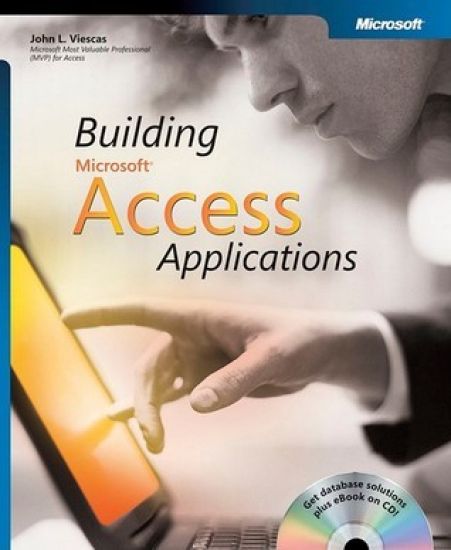
Building Microsoft Access Applications

Building Microsoft Access Applications

John L. Viescas

Pagina förlags AB
2005
nidottu
Get expert design guidance and fully functional sample databases from John L. Viescas— popular author, consultant, and Microsoft Most Valuable Professional (MVP) for Access. Designed for everyone from Access power users to application developers to beginners, this book focuses on five of the most common database types: Inventory Management, Membership, Customer Support/Event Tracking, Reservation Management, and Questionnaire/Statistical Analysis. For each, you’ll walk through usage scenarios, design considerations, typical problems, and multiple solutions, along with complete sample databases. You’ll examine the logic behind the table design for the application type and see how to use it as a template for quickly creating your own Access solutions. You get everything you need to design with confidence, avoid common pitfalls, and hit the ground running! Key Book Benefits: For each of six common database types, explore a range of solution options from the simple to the complex. Review query, form, report, and code examples specific to each application type. Use the table designs in the sample databases to model your own solutions. The book is geared for power users who work with everything from Access 97 to Access 2003. The CD includes eBook and complete database solutions for Microsoft Office Access 2002 and Access 2003 The author has been recognized as a Microsoft MVP for Access every year since 1993.
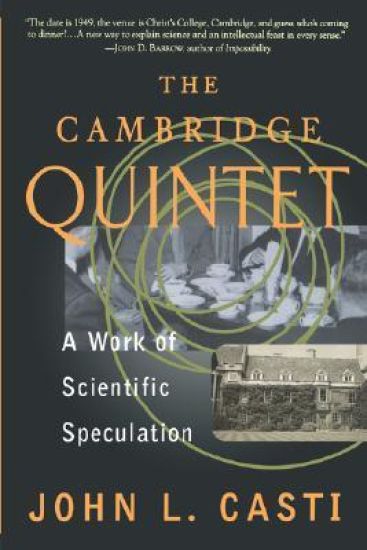
The Cambridge Quintet

The Cambridge Quintet

John L. Casti

Basic Books
1999
pokkari
In this narrative tour de force, gifted scientist and author John L. Casti contemplates an imaginary evening of intellectual inquiry--a sort of "My Dinner with" not Andre, but five of the most brilliant thinkers of the twentieth century.Imagine, if you will, one stormy summer evening in 1949, as novelist and scientist C. P. Snow, Britain's distinguished wartime science advisor and author of The Two Cultures, invites four singular guests to a sumptuous seven-course dinner at his alma mater, Christ's College, Cambridge, to discuss one of the emerging scientific issues of the day: Can we build a machine that could duplicate human cognitive processes? The distinguished guest list for Snow's dinner consists of physicist Erwin Schrodinger, inventor of wave mechanics; Ludwig Wittgenstein, the famous twentieth-century philosopher of language, who posited two completely contradictory theories of human thought in his lifetime; population geneticist/science popularizer J.B.S. Haldane; and Alan Turing, the mathematician/codebreaker who formulated the computing scheme that foreshadowed the logical structure of all modern computers.Capturing not only their unique personalities but also their particular stands on this fascinating issue, Casti dramatically shows what each of these great men might have argued about artificial intelligence, had they actually gathered for dinner that midsummer evening.With Snow acting as referee, a lively intellectual debate unfolds. Philosopher Wittgenstein argues that in order to become conscious, a machine would have to have life experiences similar to those of human beings--such as pain, joy, grief, or pleasure. Biologist Haldane offers the idea that mind is a separate entity from matter, so that regardless of how sophisticated the machine, only flesh can bond with that mysterious force called intelligence. Both physicist Schrodinger and, of course, computer pioneer Turing maintain that it is not the substance, but rather the organization of that substance, that makes a mind conscious.With great verve and skill, Casti recreates a unique and thrilling moment of time in the grand history of scientific ideas. Even readers who have already formed an opinion on artificial intelligence will be forced to reopen their minds on the subject upon reading this absorbing narrative.After almost four decades, the solutions to the epic scientific and philosophical problems posed over this meal in C. P. Snow's old rooms at Christ's College remains tantalizingly just out of reach, making this adventure into scientific speculation as valid today as it was in 1949.
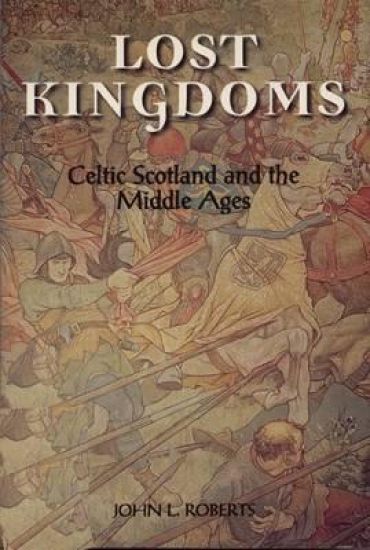
Lost Kingdoms

Lost Kingdoms

John L Roberts

Edinburgh University Press
1997
nidottu
Lucid and entertaining, this book follows the history of Celtic Scotland from the ancient kingdoms of the Picts and Scots to the downfall of Clan Donald at the end of the fifteenth century. The roles played by Somerled and his descendants, the Canmore kings, Edward I as the 'Hammer of the Scots', and Robert the Bruce, are recounted, along with the impact of the Wars of Scottish Independence, and their aftermath in the North. It was only in the Western Highlands of Scotland that Celtic society survived in quasi-independence as the Lordship of the Isles, until its final forfeiture in 1493. John L Roberts adds academic accuracy to his gift for storytelling in this hugely enjoyable and scholarly history.
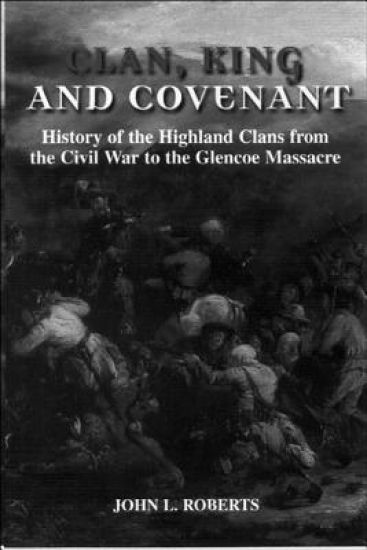
Clan, King and Covenant

Clan, King and Covenant

John L Roberts

Edinburgh University Press
2000
nidottu
Clan, King and Covenant explores the turbulent history of the Highlands during the seventeenth century. The signing of the National Covenant in 1638 first challenged the powers of Charles I in Scotland, but it was only when Alisdair MacDonald joined Montrose in raising the Royalist clans that the country erupted into civil war. Central to the conflict was the ancient enmity between the MacDonalds and the Campbells, Earls of Argyll, as clan Donald attempted to reclaim their ancestral lands in Argyll. There followed a whirlwind year of spectacular victories for Montrose in the name of the King as the Highland clans emerged upon the national stage, before his campaign subsided into eventual defeat. However it was only after the Restoration of Charles II that a bitter and protracted struggle broke out between Church and Crown, after Bishops were reappointed to the national Church. Political and religious tensions mounted with the acession of James VII of Scotland (James II of England) as a Catholic king ruling over a predominantly Presbyterian people. It reached a climax in the outbreak of the Highland War, when Viscount Dundee won a devastating victory at Killiecrankie on behalf of James VII over the Presbyterian forces of Lowland Scotland, but at the cost of his own life. Subsequently the Crown imposed an uneasy peace upon the Highlands, after the cold-blooded plotting of 'murder under trust' culminated in the Glencoe Massacre. Condoned by William of Orange, few events in the blood-stained history of the Highland clans have quite the dreadful resonance of this act, carried out cynically as a matter of public policy. Also available by the same author: Lost Kingdoms and Feuds, Forays and Rebellions (both Edinburgh University Press)
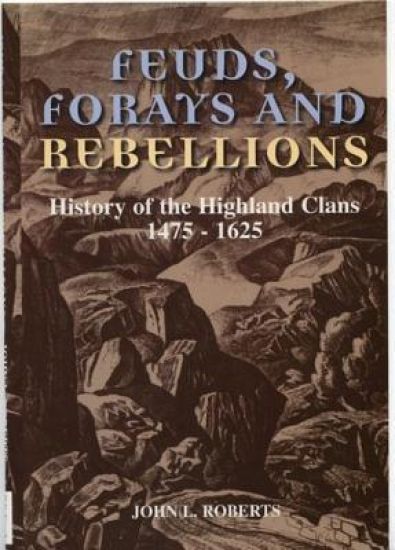
Feuds, Forays and Rebellions

Feuds, Forays and Rebellions

John L Roberts

Edinburgh University Press
1999
nidottu
Feuds, Forays and Rebellions is a history of the Highland Clans over the hundred and fifty years after the MacDonalds, Lords of the Isles, forfeited the Earldom of Ross in 1475. It describes the fragmentation of Clan Donald and its vassal kindreds as they resisted the impact of central authority, by James IV and his successors. Only by service to the Crown did the other leading families in the Highlands and Western Isles flourish and prosper until James VI of Scotland imposed apeace of sorts after the Union of the Crowns in 1603. Key Features *Clear but comprehensive account of a complex period in Highland history *Charts the fortunes of all the major Highland clans *Sufficiently detailed and authoritative to be used as a valuable reference book *Written in a lucid and entertaining style
Ars nova

Ars nova

John L. Nádas; Michael Scott Cuthbert

Ashgate Publishing Limited
2009
sidottu
In the early fourteenth century, musicians in France and later Italy established new traditions of secular and sacred polyphony. This ars nova, or "new art," popularized by theorists such as Philippe de Vitry and Johannes de Muris was the among the first of many later movements to establish the music of the present as a clean break from the past. The rich music of this period, by composers such as Guillaume de Machaut and Francesco Landini, is not only beautiful, but also rewards deep study and analysis. Yet contradictions and gaps abound in the ars nova of the fourteenth and early fifteenth centuries-how do we read this music? how do we perform this music? what was the cultural context of these performances? These problems are well met by the ingenuity of approaches and solutions found by scholars in this volume. The twenty-seven articles brought together reflect the broad methodological and chronological range of scholarly inquiry on the ars nova.
Transit Oriented Development

Transit Oriented Development

John L. Renne

Ashgate Publishing Limited
2009
sidottu
Transit Oriented Development: Making it Happen brings together the different stakeholders and disciplines that are involved in the conception and implementation of TOD to provide a comprehensive overview of the realization of this concept in Australia, North America, Asia and Europe. The book identifies the challenges facing TOD and through a series of key international case studies demonstrates ways to overcome and avoid them. The insights gleaned from these encompass policy and regulation, urban design solutions, issues for local governance, the need to work with community and the commercial realities of TOD.
Democracy is Dangerous

Democracy is Dangerous

John L. Safford

University Press of America
2002
nidottu
In Democracy is Dangerous, Safford maintains that democracy is disadvantageous to economic and intellectual elites. The author dwells upon the problem of "the tyranny of the majority," which Alexis de Tocqueville employed to describe American democracy, and which Lani Guinier also used to describe the purpose behind her legal writings. Rather than adopting an uncritical, enthusiastic view of democracy, this work underscores the perspective of those who perceive themselves as being vulnerable to majority tyranny. It is especially relevant at this time because of the recent revolutions throughout Eastern Europe and elsewhere.
Henry Wilson and the Coming of the Civil War

Henry Wilson and the Coming of the Civil War

John L. Myers

University Press of America
2005
nidottu
This biography deals with the life of Henry Wilson, one of the most important figures of the middle third of the Nineteenth Century, up to the time of the Civil War. Among its concerns are the political antislavery movement, economic development, the rise of a working class politician in an aristocratic-controlled state, prohibition, and Massachusetts state history.
Senator Henry Wilson and the Civil War

Senator Henry Wilson and the Civil War

John L. Myers

University Press of America
2007
nidottu
By the beginning of the Civil War, Massachusetts Senator Henry Wilson had established himself as one of the leaders of the Republican party. Together with Abraham Lincoln and Henry B. Stanton, Wilson ranks as one of the three most important civilian figures that contributed to creating and sustaining the military. As Chairman of the Senate Military Affairs Committee, he introduced and succeeded in passing most of the necessary legislation to obtain and to support an army, including the Enrollment Act of 1863. Wilson, more than any other politician was responsible for influencing the successful passage of antislavery legislation during the Civil War years. Contemporary newspapers gave him the primary credit for abolishing slavery in the District of Columbia, which was the most important abolition step prior to the Emancipation Proclamation. When free Black men were admitted to the army, Wilson worked hard to obtain equal pay for them. Late in the war, he played a major role in the creation of the Freedmen's Bureau. Among his other legendary achievements, Wilson used his influential position to support Clara Barton, enabling her to aid wounded soldiers. He also introduced and succeeded in having passed legislation creating the Congressional Medal of Honor and establishing the National Academy of Science.
Henry Wilson and the Era of Reconstruction

Henry Wilson and the Era of Reconstruction

John L. Myers

University Press of America
2009
nidottu
Already a leader of the Republican party when the Civil War began, Henry Wilson had distinguished himself as the most important Congressional figure on military and antislavery and pro-black legislation during the war. During the Era of Reconstruction, Wilson fought to protect the rights of the newly-freed slaves, but he was opposed to the severe punishment of Confederate leaders and initially tried to be conciliatory toward President Johnson's lenient policies. Soon Wilson joined others in promoting Congress's own Reconstruction program, including the 14th and 15th Amendments, the Military Reconstruction Acts, and the impeachment of the President. He became the Republican Party's most frequently-used campaign speaker. Long recognized as a spokesman for labor, he was also the foremost national politician promoting the cause of prohibition. He wrote the most authoritative three-volume work on the causes of the Civil War from the northern viewpoint. He was also a frequent contributor to the era's most influential religious periodical. In 1872, Wilson was rewarded for his political activities when he was nominated and elected as the country's vice-president.
Dogma’s Primrose Path

Dogma’s Primrose Path

John L. Martinez

Hamilton Books
2015
nidottu
Dogma’s Primrose Path addresses how the perpetual presence of ignorance, poverty, and war throughout the world is accepted by most people as an inevitable consequence of human life given man’s incurably evil, greedy, and violent nature. John L. Martinez argues that this almost universal acceptance is itself a dogmatically learned and programmed condition. This book suggests that human beings need to discard their dogmatic straightjackets and begin to thrive upon reason, logic, perception, and experience in order to live together fruitfully and peaceably.