Kirjojen hintavertailu. Mukana 11 342 296 kirjaa ja 12 kauppaa.

Kirjahaku

Etsi kirjoja tekijän nimen, kirjan nimen tai ISBN:n perusteella.

1000 tulosta hakusanalla Jon Stratton

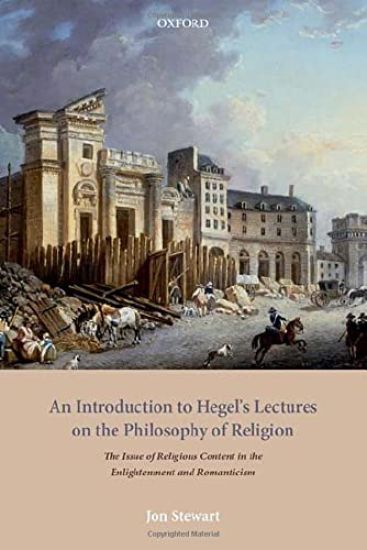
An Introduction to Hegel's Lectures on the Philosophy of Religion
An Introduction to Hegel's Lectures on the Philosophy of Religion examines Hegel's religious thinking by seeing it against the backdrop of the main religious trends in his own day, specifically the Enlightenment and Romanticism. A basic introduction to Hegel's lectures, it provides an account of the criticism of religion by key Enlightenment thinkers such as Voltaire, Lessing, Hume, and Kant. This is followed by an analysis of how the Romantic thinkers, such as Rousseau, Jacobi and Schleiermacher, responded to these challenges. For Hegel, the views of these thinkers from both the Enlightenment and Romanticism tended to empty religion of its content. The goal that he sets for his own philosophy of religion is to restore this lost content. The book provides a detailed account of Hegel's Lectures on the Philosophy of Religion and argues that the basic ideas of the Enlightenment and Romanticism are still present today, and remain an important issue for both academics and non-academics, regardless of their religious orientation.

Safe Haven

Safe Haven

Jon Silverman; Robert Sherwood

Oxford University Press
2023
sidottu
The controversial 1991 War Crimes Act gave new powers to courts to try non-British citizens resident in the UK for war crimes committed during WWII. But in spite of the extensive investigative and legal work that followed, and the expense of some £11 million, it led to just one conviction: that in 1999 of Anthony (Andrzej) Sawoniuk. Drawing on previously unavailable archival documents, transcripts of interviews with suspects, and disclosures by senior lawyers and policer offers in the War Crimes Units (WCUs), in parallel with the history of bungled investigations in the 1940s, Safe Haven considers for the first time why and how convictions failed to follow investigations. Within the broader context of war crimes investigations in the United States, Germany, and Australia, the authors reassess the legal and investigative processes and decisions that stymied inquiries, from the War Crimes Act itself to the restrictive criteria applied to it. Taken together, the authors argue that these -- including the interpretations of who could and should be prosecuted and decisions about the nature and amount of evidence needed for trial -- meant that many Nazi collaborators escaped justice and never appeared in a criminal court. The authors situate this history within the legacy of the Holocaust: how, if at all, do the belated attempts to address a failure of justice sit with an ever-growing awareness of the Holocaust, represented by memorialization and education? In so doing, Safe Haven provokes a timely reconsideration of the relationship between law, history, and truth.
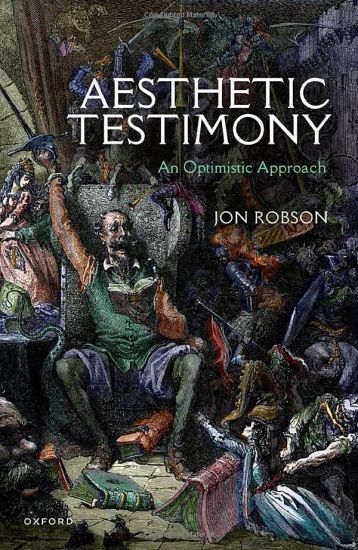
Aesthetic Testimony

Aesthetic Testimony

Jon Robson

Oxford University Press
2022
sidottu
Aesthetic judgements that are formed on the basis of testimony are commonly held to be defective, illegitimate, or otherwise problematic. This book assesses the debate surrounding aesthetic testimony and argues for the surprising conclusion that this widespread view is mistaken. Aesthetic testimony is in no way inferior as a source of judgement when compared to either first-hand aesthetic judgement or testimony concerning non-aesthetic matters. Alongside establishing this position (an extreme form of 'optimism' concerning aesthetic testimony), Jon Robson also responds to the most prominent arguments for the opposing view ('pessimism' concerning aesthetic testimony). Along the way, it also re-examines our understanding of the norms which govern both judgement and assertion in aesthetics.
Calvinism

Calvinism

Jon Balserak

Oxford University Press
2026
nidottu
Very Short Introductions: Brilliant, Sharp, Inspiring Since its beginnings during the Protestant Reformation, Calvinism has spread throughout Europe and America and eventually to Africa and Asia. Today it is one of the largest schools of thought in Protestantism. In this Very Short Introduction, Jon Balserak explores how Calvinist ideas and practices arose, spread, and took root. Considering its influence on modern thought on everything from theology to money, politics, and the arts, Balserak also combats some of the common misconceptions about Calvinism, and outlines the Calvinist understanding of God, the world, humankind, and the meaning of life. He also addresses Calvinism in a twenty-first century context and considers the challenges it faces today. ABOUT THE SERIES: The Very Short Introductions series from Oxford University Press contains hundreds of titles in almost every subject area. These pocket-sized books are the perfect way to get ahead in a new subject quickly. Our expert authors combine facts, analysis, perspective, new ideas, and enthusiasm to make interesting and challenging topics highly readable.
The Liar

The Liar

Jon Barwise; John Etchemendy

Oxford University Press Inc
1989
nidottu
This monograph purports to provide a solution to semantical paradoxes like the Liar. The authors base this solution on J. L. Austin's idea of truth, which is fundamental to situation semantics. They compare two models of language, propositions and truth, one based on Russell and the other on Austin, as they bear on the Liar Paradox. In Russell's view, a sentence expresses a proposition, which is true or not. According to Austin, however, there is always a contextual parameter - the situation the sentence is about - that comes between the sentence and proposition. The Austinian perspective proves to have fruitful applications to the analysis of semantic paradox. The authors show that, on this account, the liar is a genuine diagonal argument. This argument can be shown to have profound consequences for our understanding of some of the most basic semantical mechanisms at work in our language. Jon Barwise is, with John Perry, a co-founder of the Centre for the Study of Language and Information at Stanford.
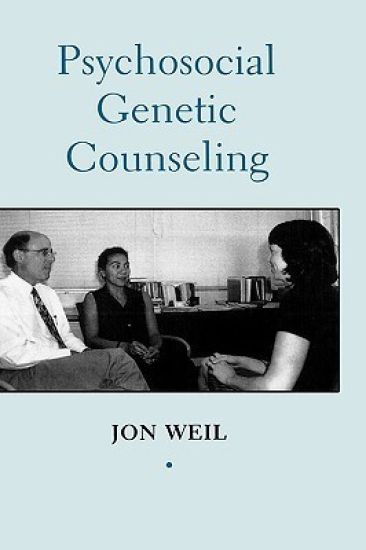
Psychosocial Genetic Counseling

Psychosocial Genetic Counseling

Jon Weil

Oxford University Press Inc
2000
sidottu
Psychosocial issues are integral to all genetic counselling interactions. They include counsellees' beliefs about the cause of birth defects and genetic disorders, the cognitive procession of medical information and risk figures, emotions such as anxeity and guilt, and the complex process of decision making. Drawing on direct clinical experience and the growing body of relevant literatue, Psychosocial Genetic Counseling provides a comprehensive, integrated approach to understanding these issues and their applications to genetic counselling. The book combines theoretical and practical approaches, including many clinical vignettes and examples of dialogue. It is written in an engaging style that conveys the emotional immediacy of genetic counselling. The emotional and social effects of genetic disorders are discussed with reference to the individual and to couple, family, and social interactions. Counselling techniques and the agenda of the genetic counselling session are then addressed in detail. Specialized aspects of prenatal diagnosis counselling, cancer risk counselling, and genetic counselling with children and adolescents are integrated with these general principles. Nondirective counselling and the psychology of risk interpretation and decision making are discussed from theoretical and historical perspectives, leading to recommendations for their application to clinical practice. The influences of ethnocultural history, beliefs and practices, for counsellee and counsellor, are then discussed as they enter into all aspects of genetic counselling.
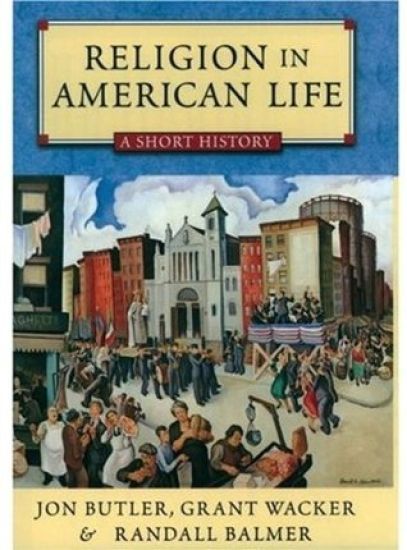
Religion in American Life: A Short History

Religion in American Life: A Short History

Jon Butler; Grant Wacker; Randall Herbert Balmer

Oxford University Press
2003
sidottu
Accessible and wide-ranging, Religion in American Life illuminates the rich spiritual heritage central to nearly every event in American history. Jon Butler begins by describing the state of religious affairs in both the Old and New Worlds on the eve of colonization. He traces the progress of religion in the colonies through the time of the American Revolution, covering all the religious groups in the colonies: Protestants, Jews, Catholics, as well as the unique religious experiences of Native Americans and African Americans Grant Wacker continues the story with a fascinating look at the ever-shifting religious landscape of 19th-century America. He focuses on the rapid growth of evangelical Protestants-Methodists, Presbyterians, Baptists, and others-and their competition for dominance over religions such as Catholicism and Judaism, which continued to increase with large immigrant arrivals from Ireland, Eastern Europe, and other countries. The 20th century saw massive cultural changes. Randall Balmer discusses the effects industrialization, modernization, and secularization had on new and established religions. He examines Protestants, Hindus, Jews, New Age believers, Mormons, Buddhists, Roman Catholics, and many more, providing a clear look into the kaleidoscope of religious belief in modern-day America
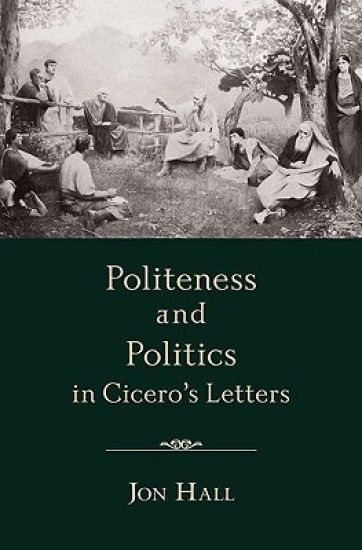
Politeness and Politics in Cicero's Letters

Politeness and Politics in Cicero's Letters

Jon Hall

Oxford University Press Inc
2009
sidottu
Politeness and Politics in Cicero's Letters presents a fresh examination of the letters exchanged between Cicero and correspondents, such as Pompey, Julius Caesar and Mark Antony during the final turbulent decades of the Roman Republic. Drawing upon sociolinguistic theories of politeness, it argues that formal relationships between powerful members of the elite were constrained by distinct conventions of courtesy and etiquette. By examining in detail these linguistic conventions of politeness, Jon Hall presents new insights into the social manners that shaped aristocratic relationships. The book begins with a discussion of the role of letter-writing within the Roman aristocracy and the use of linguistic politeness to convey respect to fellow members of the elite. Hall then analyzes the deployment of conventionalized expressions of affection and goodwill to cultivate alliances with ambitious rivals and the diplomatic exploitation of "polite fictions" at times of political tension. The book also explores the strategies of politeness employed by Cicero and his correspondents when making requests and dispensing advice, and when engaging in epistolary disagreements. (His exchanges with Appius Claudius Pulcher, Munatius Plancus, and Mark Antony receive particular emphasis.) Its detailed analysis of specific letters places the reader at the very heart of Late Republican political negotiations and provides a new critical approach to Latin epistolography.
Avicenna

Avicenna

Jon McGinnis

Oxford University Press Inc
2010
sidottu
Ibn Sina - Avicenna in Latin - (980-1037) played a considerable role in the development of both eastern and western philosophy and science. His contributions to the fields of logic, natural science, psychology, metaphysics and theology and even medicine are difficult to overstate. The great Islamic philosopher al-Ghazali thought that if one could show the incoherence of Avicenna's thought, then one would have shown the incoherence of philosophy in general. No other author is directly cited by Thomas Aquinas more often than Avicenna. But Avicenna's significance and influence do not stop with the medieval period. His logic, natural philosophy, and metaphysics are still taught in the Islamic world as living philosophy. And many contemporary Catholic and evangelical Christian philosophers still come under his influence through Aquinas's work. Despite Avicenna's important place in the history of ideas, however, there is no single volume that both does justice to the complete range of his intellectual activity and provides a rigorous analysis of the philosophical content of his thought. This book is designed to remedy that lack. It will provide a general introduction to Avicenna's intellectual system and offer a careful philosophical analysis of most of the major aspects of his thought, presented in such a way as to be accessible to students as well as serving as a resource for specialists in Islamic studies, philosophers, and historians of science.
Avicenna

Avicenna

Jon McGinnis

Oxford University Press Inc
2010
nidottu
Ibn Sina - Avicenna in Latin - (980-1037) played a considerable role in the development of both eastern and western philosophy and science. His contributions to the fields of logic, natural science, psychology, metaphysics and theology and even medicine are difficult to overstate. The great Islamic philosopher al-Ghazali thought that if one could show the incoherence of Avicenna's thought, then one would have shown the incoherence of philosophy in general. No other author is directly cited by Thomas Aquinas more often than Avicenna. But Avicenna's significance and influence do not stop with the medieval period. His logic, natural philosophy, and metaphysics are still taught in the Islamic world as living philosophy. And many contemporary Catholic and evangelical Christian philosophers still come under his influence through Aquinas's work. Despite Avicenna's important place in the history of ideas, however, there is no single volume that both does justice to the complete range of his intellectual activity and provides a rigorous analysis of the philosophical content of his thought. This book is designed to remedy that lack. It will provide a general introduction to Avicenna's intellectual system and offer a careful philosophical analysis of most of the major aspects of his thought, presented in such a way as to be accessible to students as well as serving as a resource for specialists in Islamic studies, philosophers, and historians of science.
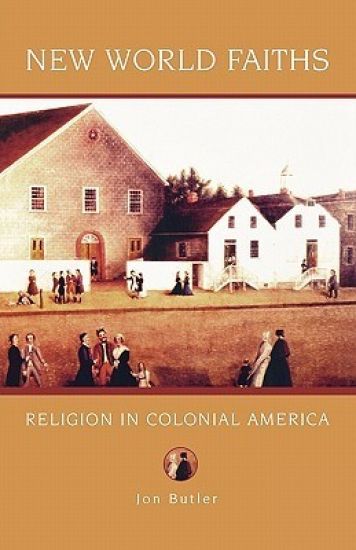
New World Faiths

New World Faiths

Jon Butler

Oxford University Press Inc
2008
nidottu
Many people believe that the piety of the Pilgrims typified early American religion. However, by the 1730s Catholics, Jews, and Africans had joined Native Americans, Puritans, and numerous other Protestants in the colonies. Jon Butler launches his narrative with a description of the state of religious affairs in both the Old and New Worlds. He explores the failure of John Winthrop's goal to achieve Puritan perfection, the controversy over Anne Hutchinson's tenacious faith, the evangelizing stamina of ex-slave and Methodist preacher Absalom Jones, and the spiritual resilience of the Catawba Indians. The meeting of these diverse groups and their varied use of music, dance, and ritual produced an unprecedented evolution of religious practice, including the birth of revivals. And through their daily interactions, these Americans created a living foundation for the First Amendment. After Independence their active diversity of faiths led Americans to the groundbreaking idea that government should abandon the use of law to support any religious group and should instead guarantee free exercise of religion for everyone.
Privacy

Privacy

Jon L Mills

Oxford University Press Inc
2009
sidottu
The disturbing reality of contemporary life is that technology has laid bare the private facts of most people's lives. Email, cell phone calls, and individual purchasing habits are no longer secret. Individuals may be discussed on a blog, victimized by an inaccurate credit report, or have their email read by an employer or government agency without their knowledge. Government policy, mass media, and modern technology pose new challenges to privacy rights, while the law struggles to keep up with the rapid changes. Privacy: The Lost Right evaluates the status of citizens' right to privacy in today's intrusive world. Mills reviews the history of privacy protections, the general loss of privacy, and the inadequacy of current legal remedies, especially with respect to more recent privacy concerns, such as identity theft, government surveillance, tabloid journalism, and video surveillance in public places. Mills concludes that existing regulations do not adequately protect individual privacy, and he presents options for improving privacy protections.
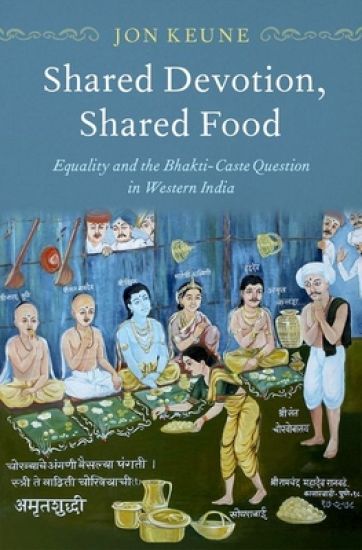
Shared Devotion, Shared Food

Shared Devotion, Shared Food

Jon Keune

Oxford University Press Inc
2021
sidottu
When Hindu devotional or bhakti traditions welcomed marginalized people-women, low castes, and Dalits-were they promoting social equality? In this book, Jon Keune deftly examines the root of this deceptively simple question. The modern formulation of the bhakti-caste question is what Dalit leader B. R. Ambedkar had in mind when he concluded that the saints promoted spiritual equality but did not transform society. While taking Ambedkar's judgment seriously, Jon Keune argues that, when viewed in the context of intellectual history and social practice, the bhakti-caste question is more complex. Shared Devotion, Shared Food explores how people in western India wrestled for centuries with two competing values: a theological vision that God welcomes all people, and the social hierarchy of the caste system. Keune examines the ways in which food and stories about food were important sites where this debate played out, particularly when people of high and low social status ate together. By studying Marathi manuscripts, nineteenth-century publications, plays, and films, Shared Devotion, Shared Food reveals how the question of caste, inclusivity, and equality was formulated in different ways over the course of three centuries, and it explores why social equality remains so elusive in practice.
The Origins and Dynamics of Inequality

The Origins and Dynamics of Inequality

Jon D. Wisman

OXFORD UNIVERSITY PRESS INC
2022
sidottu
Argues that the struggle over income, wealth, status and privilege-inequality-has been the principal, defining issue in human history and provides a novel framework for understanding inequality today Whereas President Barack Obama declared inequality as the defining issue of our time, in The Origins and Dynamics of Inequality, Jon D. Wisman claims more: it is the defining issue of all human history. The struggle over inequality has been the underlying force driving human history's unfolding. Drawing on the dynamics of inequality, Wisman re-interprets economic history and society. Beyond according inequality the central role in history, this book is novel in two other respects: First, transcending the general failure of social scientists and historians to anchor their work in explicit theories of human behaviour, this book grounds the origins and dynamics of inequality in evolutionary psychology, or more specifically, Darwin's theory of sexual selection. Second, this book accords central importance to ideology in legitimating inequality, a role typically inadequately addressed by social scientists and historians. Because of the central role of inequality in history, inequality's explosion over the past forty years has not been an anomaly. It is a return to the political dynamics by which elites have, since the rise of the state, taken practically everything for themselves, leaving all others with little more than the means with which to survive. Due to elites' persuasive ideology, even after workers in advanced capitalist countries gained the franchise to become the overwhelming majority of voters, inequality continued to increase. Sweeping and provocative, Jon D. Wisman presents a fresh perspective on why economic inequality exists and how its dynamics have shaped human history.
Geneva's Use of Lies, Deceit, and Subterfuge, 1536-1563

Geneva's Use of Lies, Deceit, and Subterfuge, 1536-1563

Jon Balserak

OXFORD UNIVERSITY PRESS INC
2024
sidottu
Geneva was hated and loved in sixteenth-century France. Representing those who hated them were the French Catholic government, who tried desperately to eradicate Genevan Calvinism from its borders--for good reason, as it was growing significantly within France between 1540 and 1563. This book presents a new reading of the battle that raged between the Genevan ministers and the French government during this period. It argues that Calvin, after fleeing France in 1534, began during his wanderings to devise plans to establish Christ's kingdom in his homeland, rescuing it from the "idolatrous" Catholicism imposed on the French people by their monarchs. It shows that Calvin's plans entailed the systematic use of lying and deception which were necessary in order to evade detection from the French authorities. These mendacious means were employed by the Genevans to hide their support of the French Reformed congregations, to conceal political maneuvering among the French nobility who could open France to reform, and to cloak their assisting of the Huguenots during the first French civil war. Jon Balserak sets out the character of Calvin's plans and argues that even the formation of the Genevan company of pastors and the Bourse française were, in part, designed to assist Calvin with his proselytizing goals. The last third of this volume examines the ways in which Calvin adapted Geneva's missionary efforts to deal with three unexpected circumstances that arose between 1559 and 1563: the rise to the throne of Francis II, the assuming of the regency government by Catherine de Medici, and the beginning of war. Though they continued their clandestine operations in support of the Reformed faith in France, these challenges called forth from the Genevans' new efforts, which Balserak analyzes. Calvin's call to the Huguenots to cease fighting and humble themselves before God following Louis of Condé's disastrous signing of the 1563 Peace of Amboise brilliantly illustrates the complex godliness that characterized this entire operation.
Dangerous Enthusiasm

Dangerous Enthusiasm

Jon Mee

Clarendon Press
1992
sidottu
William Blake's work presents a stern challenge to historical criticism. Jon Mee's new study meets that challenge by investigating contexts outside the domains of standard literary histories. He traces the distinctive rhetoric of the illuminated books to the French Revolution controversy of the 1790s and Blake's fusion of the diverse currents of radicalism abroad in that decade. Dangerous Enthusiasm presents a more comprehensively politicized picture of Blake than any previous study. It is supported by a wealth of original research which will be of interest to historians and literary critics alike. Blake emerges from these pages as a `bricoleur' who fused the language of London's popular dissenting culture with the more sceptical radicalism of the Enlightenment. His prophetic books are shown to be less the expressions of isolated genius than the products of a complex response to the cultural politics of his contemporaries.
Dangerous Enthusiasm

Dangerous Enthusiasm

Jon Mee

Clarendon Press
1994
pokkari
Dangerous Enthusiasm considers Blake's prophetic books written during the 1790s in the light of the French Revolution controversy raging at the time. His works are shown to be less the expressions of isolated genius than the products of a complex response to the cultural politics of his contemporaries. William Blake's work presents a stern challenge to historical criticism. Jon Mee's well-received study meets the challenge by investigating contexts outside the domains of standard literary histories. He traces the distinctive rhetoric of the illuminated books to the French Revolution controversy of the 1790s and Blake's fusion of the diverse currents of radicalism abroad in that decade. The study is supported by a wealth of original research which will be of interest to historians and literary critics alike. Blake emerges from these pages as a 'bricoleur' who fused the language of London's popular dissenting culture with the more sceptical radicalism of the Enlightenment. Dangerous Enthusiasm presents a more comprehensively politicized picture of Blake than any previous study. "Mee...places Blake well and correctly...Dangerous Enthusiasm will do much to take Blake out of the somewhat attenuated discourse of analytic academicism and to put his back in a credible place.' 'a general, incontestable conclusion that, whatever their personal relations, Blake's political opinions, expressed in both his writings and his engravings, were much more Paineite than has ever been previously appreciated. Here in these pages Paine grows in stature, with the eager Blake at his side,,, [a] splendid volume...'
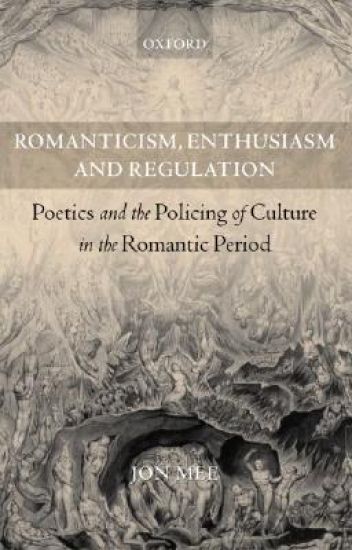
Romanticism, Enthusiasm, and Regulation

Romanticism, Enthusiasm, and Regulation

Jon Mee

Oxford University Press
2003
sidottu
What is enthusiasm? Enthusiasm for most of the eighteenth century was identified with excess of religious feeling, although it came increasingly to be used to describe the unregulated and infectious urgings of the crowd more generally. Yet there was a developing alternative understanding of the term which identified it with a therapeutic influx of feeling in an increasingly formalistic and commodified world. This understanding came to be particularly identified with poetry. Enthusiasm was deemed a necessary condition of poetry by the end of the century, but not a sufficient one. For without proper regulation, poetic enthusiasm might become nothing more than the formless emotionalism of the crowd that the literary elite perceived all around them. Although enthusiasm might be thought of as a distinctly Romantic term, this study looks at the way the inherited discourse of enthusiasm structured most writing of the Romantic period. Many of those new to writing as a career in the period took enthusiasm to license their feelings as a legitimate basis for turning to print. Others took this as an alarming version of the old virus. A few elite writers, Coleridge and Wordsworth included, did not take pains to show they were on the right side of the fence that separated the noble enthusiasm of the poet from either the fanaticism of the crowd or the undisciplined pretensions of hacks and scribblers. Understanding the influence of these processes of regulation and the difficulty faced by writers in clearly articulating the difference they were meant to enshrine is at the centre of Romanticism, Enthusiasm, and Regulation.
Oxford Reading Tree TreeTops Greatest Stories: Oxford Level 11: Rip Van Winkle
Rip Van Winkle is a kind man with a grumpy wife! One afternoon, he meets a group of old-fashioned men high in the Catskill mountains, and tries an unusual drink which sends him straight to sleep ... When he awakes, Rip has grown a long beard but that isn't the only thing to have changed. What else will he discover when he returns home? Washington Irving's classic story about the man who falls asleep for twenty years will enchant a new generation of readers in this fabulously illustrated retelling. TreeTops Greatest Stories offers children some of the worlds best-loved tales in a collection of timeless classics. Top children's authors and talented illustrators work together to bring to life our literary heritage for a new generation, engaging and delighting children. The books are carefully levelled, making it easy to match every child to the right book. Each book contains inside cover notes to help children explore the content, supporting their reading development. Teaching notes on Oxford Owl offer cross-curricular links and activities to support guided reading, writing, speaking and listening.
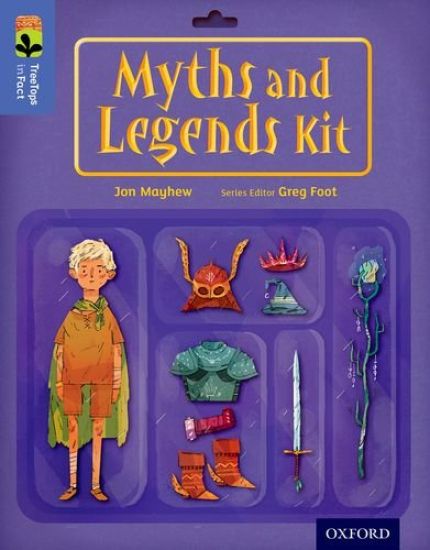
Oxford Reading Tree TreeTops inFact: Level 17: Myths and Legends Kit
This kit sifts out the ingredients of classic myths and legends, using stories from all over the world as examples. Learn what makes a fantastic story and mix up your own! TreeTops inFact is a non-fiction series that aims to engage children in reading for pleasure as powerfully as fiction does. The variety of topics means there are books to interest every child in this compelling series. The series is written by top children's authors and subject experts. The books are carefully levelled, making it easy to match every child to the right book.