
Kirjahaku
Etsi kirjoja tekijän nimen, kirjan nimen tai ISBN:n perusteella.
1000 tulosta hakusanalla Joyce Rodgers
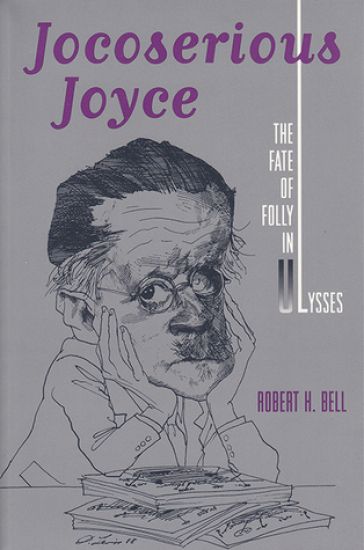
This work analyses the level and depth of the humour employed by Joyce in ""Ulysses"". It shows its serious function within the narrative, shedding fresh light on many familiar characters and episodes. The particular matter of ""folly"" is demonstrated as being ""richly consistent"" in the three major characters of the book, while their source of selfhood is seen as ""surprisingly familiar and traditional"".
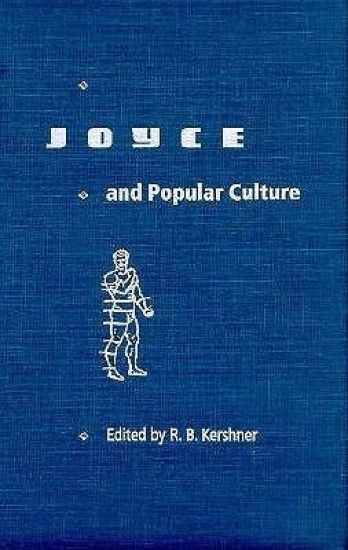
James Joyce and Popular Culture
University Press of Florida
1996
sidottu
Joyce not only used popular culture, he contributed to it. These essays employ a variety of critical techniques to bring out his involvement in the popular culture of his time. Treating all of Joyce's work from ""Dubliners"" through ""Finnegan's Wake"", they question the conventional idea that popular culture is the inverse of modernist high art, showing instead how popular culture intertwines with modernist (and postmodernist) art. In a general historical introduction, R.B. Kershner looks at the entire question of Joyce and popular cutlure within the context of Joyce criticism and the cultural studies movement.
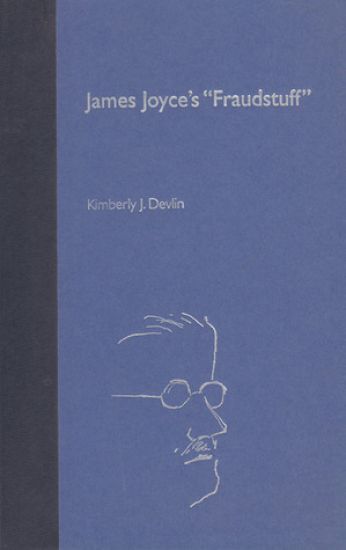
In James Joyce's ""Fraudstuff,"" Kimberly Devlin considers Stephen Hero in illuminating juxtaposition to the developing artistic subject portrayed in Portrait and Ulysses. By tracing the concepts of ""fraudulence"" and ""inauthenticity"" in Joyce, Devlin reveals his increasingly sophisticated exploration of modern identity from Stephen Hero to Finnegans Wake. Devlin examines Joyce's continual rethinking of what it means to have a ""self,"" of the acting that passes as being. She demonstrates how Joyce explored the various ways identity is constructed, sustained, subverted, and dissolved. Whereas Stephen Hero presents a narrator who feels authentic compared to the fraudulence all around him, the Stephen of Portrait becomes aware of how his own identity is a pastiche of borrowed narratives and his actions a series of posturings. Moving deftly from Stephen Hero, to Portrait, to Ulysses and Finnegans Wake, Devlin traces Joyce's increasing interest in and experimentation with the theatrical props that support identity, from his early concern with moments of epiphanic truth and authentic insight to an obsessive celebration of selfhood as imposture and fraud - and as an ultimately unknowable entity. Building on studies of the performative dimension of selfhood, Devlin demonstrates that Joyce grew increasingly skeptical about locating a core of being, and she explores his ""Fraudstuff"" in an array of forms: mimetic identifications, female masquerade, male parade, trans-gender impersonations, verbal mimicry, and police fantasies that induce elaborate posturings. In a refreshingly clear application of Lacanian theory, she also shows how modern identity, for Joyce, is based on the imagined gaze of the ""Other."" Her sophisticated, nonreductive application of contemporary psychoanalytic theory to Joyce's preoccupation with identity will challenge established Joyce scholars and will appeal broadly to scholars and students of literary modernism.

Thomas Rice uses the concept of cannibalism (what he calls ""dismemberment, ingestion, and reprocessing"") to describe Joyce's incorporation of so many literary and cultural allusions, both ""high"" and ""popular."" Beginning with examples of actual and symbolic cannibalism that fascinated Joyce - the Donner party, the Catholic Eucharist - Rice moves on to the ways Joyce appropriated language and elements of material culture into his work.In ""Cannibal Joyce"", Rice deftly offers a wide range of surprising connections and fascinating insights. A look at Berlitz's approach to teaching language leads to an examination of Joyce's aesthetic of disjunction in language. He compares Joyce and Joseph Conrad in light of the difficulties of modernism for readers through a startling and convincing discussion of the condom. And by focusing attention on colonial tales of cannibalism and Britain's treatment of the Irish, he provides a unique perspective on Joyce's politics.
Renascent Joyce
University Press of Florida
2013
sidottu
Revival, reinvention, and regeneration: the concept of renascence pervades Joyce’s work through the inescapable presence of his literary forebears. By persistently re-examining tradition, reinterpreting his literary heritage in light of the present, and translating and re-translating from one system of signs to another, Joyce exhibits the spirit of the greatest of Renaissance writers and artists. In fact, his writing derives some of its most important characteristics from Renaissance authors, as this collection of essays shows. Though critical work has often focused on Joyce’s relationship to medieval thinkers like Thomas Aquinas and Dante, Renascent Joyce examines Joyce’s connection to the Renaissance in such figures as Shakespeare, Rabelais, and Bruno. Joyce’s own writing can itself be viewed through the rubric of renascence with the tools of genetic criticism and the many insights afforded by the translation process. Several essays in this volume examine this broader idea, investigating the rebirth and reinterpretation of Joyce’s texts. Topics include literary historiography, Joyce’s early twentieth-century French cultural contexts, and the French translation of Ulysses. Attentive to the current state of Joyce studies, the writers of these extensively researched essays investigate the Renaissance spirit in Joyce to offer a volume at once historically informed and innovative.
In order to demonstrate that one story from the Dubliners is not only a turning point in that book but also a microcosm of a wide range of important Joycean influences and preoccupations, Cóilín Owens examines the dense intertextuality of "A Painful Case." Assuming the position of the ideal contemporary Irish reader that Joyce might have anticipated, Owens argues that the main character, James Duffy, is a "spoiled priest," emotionally arrested by his guilt at having rejected the call to the priesthood. Duffy's intellectual life thereafter progresses through German idealism to eventual nihilism. The contrast of nihilist thought and Christian belief is Owens's main focus, and he demonstrates how this dichotomy is evident at various points in the life of James Duffy. From this springboard, Owens constructs a larger discussion of Joyce's cultural influences, including Schopenhauer, Wagner, Tolstoy, and others. He considers many other complex interrelationships that inform Joyce's text--theology, philosophy, music, opera, literary history, Irish cultural history, and Joyce's own poetry--and offers detailed elucidations informed by historical, geographical, linguistic, and biographical information.
James Joyce and the Exilic Imagination
Michael Patrick Gillespie
University Press of Florida
2015
nidottu
James Joyce left Ireland in 1904 in self-imposed exile. Though he never permanently returned to Dublin, he continued to characterize the city in his prose throughout the rest of his life. This volume elucidates the ways Joyce wrote about his homeland with conflicting bitterness and affection - a common ambivalence in expatriate authors, whose time in exile tends to shape their creative approach to the world. Yet this duality has not been explored in Joyce’s work until now.The first book to read Joyce’s writing through the lens of exile studies, James Joyce and the Exilic Imagination challenges the tendency of scholars to stress the writer’s negative view of Ireland. Instead, it showcases the often-overlooked range of emotional attitudes imbuing Joyce’s work and produces a fuller understanding of Joyce’s canon.

Renascent Joyce
University Press of Florida
2014
nidottu
Revival, reinvention, and regeneration: the concept of renascence pervades Joyce’s work through the inescapable presence of his literary forebears. By persistently reexamining tradition, reinterpreting his literary heritage in light of the present, and translating and re-translating from one system of signs to another, Joyce exhibits the spirit of the greatest of Renaissance writers and artists.In fact, his writing derives some of its most important characteristics from Renaissance authors, as this collection of essays shows. Though critical work has often focused on Joyce's relationship to medieval thinkers like Thomas Aquinas and Dante, Renascent Joyce examines Joyce's connection to the Renaissance in such figures as Shakespeare, Rabelais, and Bruno.Joyce's own writing can itself be viewed through the rubric of renascence with the tools of genetic criticism and the many insights afforded by the translation process. Several essays in this volume examine this broader idea, investigating the rebirth and reinterpretation of Joyce's texts. Topics include literary historiography, Joyce's early twentieth-century French cultural contexts, and the French translation of Ulysses. Attentive to the current state of Joyce studies, the writers of these extensively researched essays investigate the Renaissance spirit in Joyce to offer a volume at once historically informed and innovative.
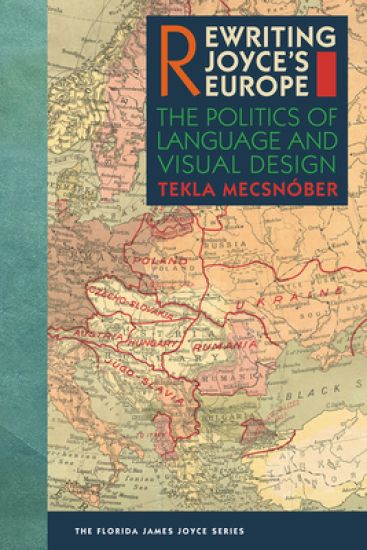
Rewriting Joyce's Europe sheds light on how the text and physical design of James Joyce's two most challenging works, Ulysses and Finnegans Wake, reflect changes that transformed Europe between World War I and II. Looking beyond the commonly studied Irish historical context of these works, Tekla Mecsnóber calls for more attention to their place among broader cultural and political processes of the interwar era.Published in 1922 and 1939, Ulysses and Finnegans Wake display Joyce's keen interest in naming, language choice, and visual aspects of writing. Mecsnóber shows the connections between these literary explorations and the real-world remapping of national borders that was often accompanied by the imposition of new place names, languages, and alphabets. In addition to drawing on extensive research in newspaper archives as well as genetic criticism, Mecsnóber provides the first comprehensive analysis of meanings suggested by the typographic design of early editions of Joyce's texts.Mecsnóber argues that Joyce's fascination with the visual nature of writing not only shows up as a motif in his books but also can be seen in the writer's active role within European and North American print culture as he influenced the design of his published works. This illuminating study highlights the enduring—and often surprising—political stakes in choices regarding the use and visual representation of languages.A volume in the Florida James Joyce Series, edited by Sebastian D. G. Knowles
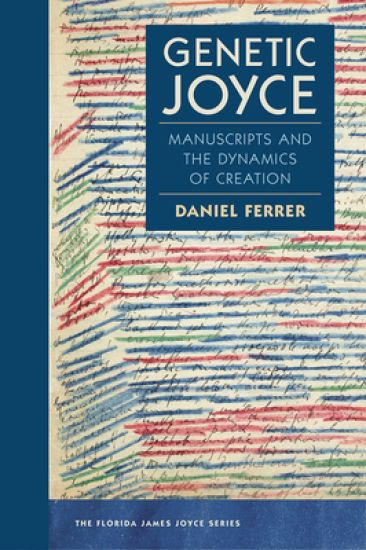
An introduction to the fascinating world of Joyce’s manuscriptsThis book shows how the creative process of modernist writer James Joyce can be reconstructed from his manuscripts. Daniel Ferrer offers a practical demonstration of the theory of genetic criticism, the study of the manuscript and textual development of a literary text. Using a concrete approach focused on the materiality of Joyce’s writing process, Ferrer demonstrates how to recover the process of invention and its internal dynamics.Using specific, detailed examples, Ferrer analyzes the part played by chance in Joyce’s creative process, the spatial dimension of writing, the genesis of the “Sirens” episode, and the transition from Ulysses to Finnegans Wake. The book includes a study of Joyce’s mysterious Finnegans Wake notebooks, examining their strange form of intertextuality in light of Joyce’s earlier forms of note-taking. Moving beyond the single author perspective, Ferrer contrasts Joyce’s notes alluding to Virginia Woolf’s criticism of Ulysses with Woolf’s own notes on the novel’s first episodes.Throughout this book, Ferrer describes the logic of the creative process as seen in the record left by Joyce in notebooks, drafts, typescripts, proofs, correspondence, early printed versions, and other available documents. Each change detected reveals a movement from one state to another, a new direction, challenging readers to understand the reasons for each movement and to appreciate the wealth of information to be found in Joyce’s manuscripts.A volume in the Florida James Joyce Series, edited by Sam Slote

This book offers the first critical edition of the forty short texts James Joyce called “epiphanies.” Among Joyce’s earliest literary compositions, although published posthumously, the epiphanies are a series of highly polished miniatures, many of which Joyce reused in his later writings. By presenting the epiphanies with background details and thorough annotations, this edition provides a vivid insight into his art.Collected Epiphanies of James Joyce features an introduction to the texts that summarizes Joyce’s concept of epiphany; their biographical and cultural context; their echoes and adaptations in Stephen Hero, Dubliners, A Portrait of the Artist as a Young Man, Ulysses, and Finnegans Wake; and their critical reception and editorial history. Each epiphany is transcribed directly from its original manuscript, accompanied by extensive notes that include more information specific to each piece, as well as textual variants.Styled as prose poems, dramatic sketches, or combinations of the two, the epiphanies can be seen not only as lyrical counterparts to Joyce’s poetry in Chamber Music but also as bridges to the writer’s landmark fiction. This collection demonstrates that the epiphanies offer a paradigm case for studying the development of Joyce’s work as a whole, prompting a reassessment of their literary significance.

Exploring how Ulysses imitates the human mindat work, connecting close readings to psychological theories of Joyce's time In this book, JohnGordon uses historically oriented close readings to demonstrate that Ulyssesis a book that mimics the workings of the human mind. Gordon highlights James Joyce'sexceptional ability to capture and represent lived experiences, showing how Joyce'swritings display the ways specific minds interact with their environments. Ulyssesis portrayed here as having its own evolving consciousness. Sensational Joyce is the first bookon Joyce's psychology to engage deeply with theorists beyond Freud, Jung, orLacan. Gordon explains how Joyce used other psychological theories, likeWilliam James's ideas on stimulus and response, Gestalt psychology, JohnWatson's behaviorism, and trauma research. The book also includes discussionsof phenomena considered experimental at the time, such as telepathy, telekinesis, precognition, and spiritualism. Gordon examines the characters ofsensitive intellectual Stephen Dedalus and advertising professional Leopold Bloom, following the book's centers of consciousness into the visionary, hallucinatory, and prophetic final chapters. Gordon highlightshow Joyce's unique writing style transforms sensations and stimuli intothoughts and responses. As Ulysses progresses, the sensational--meaningsensory data--becomes sensationalistic. In tracing the contemporary theories ofpsychology evidenced in the novel, Sensational Joyce presents many newand original interpretations that can be applied to other works by Joyce, especially Finnegans Wake. A volume in the Florida James Joyce Series, edited by Sam Slote
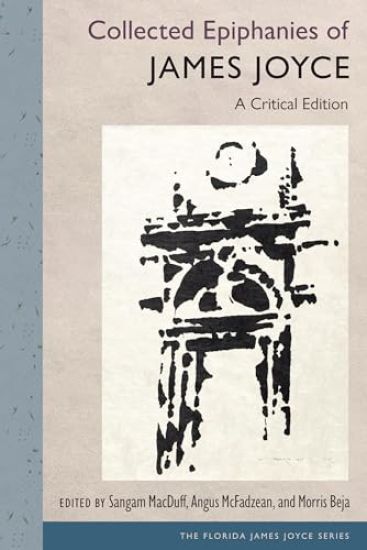
Joyce’s early texts, which informed his later masterpieces, available for the first time in a comprehensive critical edition This book offers the first critical edition of the forty short texts James Joyce called “epiphanies.” Among Joyce’s earliest literary compositions, although published posthumously, the epiphanies are a series of highly polished miniatures, many of which Joyce reused in his later writings. By presenting the epiphanies with background details and thorough annotations, this edition provides a vivid insight into his art.Collected Epiphanies of James Joyce features an introduction to the texts that summarizes Joyce’s concept of epiphany; their biographical and cultural context; their echoes and adaptations in Stephen Hero, Dubliners, A Portrait of the Artist as a Young Man, Ulysses, and Finnegans Wake; and their critical reception and editorial history. Each epiphany is transcribed directly from its original manuscript, accompanied by extensive notes that include more information specific to each piece, as well as textual variants.Styled as prose poems, dramatic sketches, or combinations of the two, the epiphanies can be seen not only as lyrical counterparts to Joyce’s poetry in Chamber Music but also as bridges to the writer’s landmark fiction. This collection demonstrates that the epiphanies offer a paradigm case for studying the development of Joyce’s work as a whole, prompting a reassessment of their literary significance.A volume in the Florida James Joyce Series, edited by Sam Slote

When James Joyce's Ulysses began to appear in installments in 1918, it provoked widespread outrage and disgust. The novel violated a long list of taboos by denigrating English royalty, describing masturbation, and mingling the erotic with the excremental--in a style that some early reviewers called literary bolshevism. As a result, U.S. Postal authorities denied several installments of Ulysses access to the mails, initiating a series of suppressions that would result in a thirteen-year ban on Joyce's novel. Obscenity trials spanned the next decade. Using personal interviews and primary sources never before discussed in depth, James Joyce and Censorship closely examines the legal trials of Ulysses from 1920 to 1934. Paying particular attention to the decision that lifted the ban on Ulysses in 1933, a decision that the ACLU cites to this day in cases involving censorship, Vanderham traces the growth of the fallacy that literature is incapable of influencing individuals. He argues persuasively that underneath every esthetic lie ethical, political, philosophical, and religious convictions.The legal and the literary aspects of the Ulysses controversy, Vanderham insists, are virtually inseparable. By analyzing the writing and revising of Ulysses in the context of Joyce's lifelong struggle with the censors, he argues that the censorship of Ulysses affected not only the critical reception of the novel but its very shape.
Jeremiah Joyce was one of the accused in the famous Treason Trials of 1794 which marked the suppression of radical agitation in Britain for the ensuing twenty years. He was a political radical who imbibed the traditions of the 'commonwealthman' and actively campaigned for a more democratic and representative state. Through the early 1790s he acted as the metropolitan political agent for his patron the Earl of Stanhope and he liased between radical groups whilst also distributing radical literature including Tom Paine's Rights of Man. He was one of the very few artisans at the end of the eighteenth century adopted by the literary and scientific intelligentsia and was unique in training to become a Unitarian minister at the age of 23 after serving a seven-year trade apprenticeship and having worked as a journeyman. This work traces the legacies, traditions and visions of the English Enlightenment as they are expressed through Joyce's life and literary production. It explores the evolution of these traditions against the threatening background of the French revolution and the developing imperatives for education in general, and science education in particular. By tracing the linkages between political, educational, scientific and publishing cultures, it reflects on the issues of late eighteenth century patronage, the literary forms of popular science and the evolution of the metropolitan book trade. In so doing the book recovers the life of a hitherto much neglected science writer and political activist and contributes to the histories of politics, education, science and the developing discipline of book history.
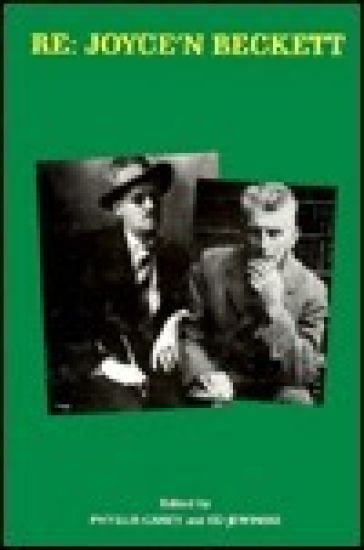
Re: Joyce 'n Beckett
Fordham University Press
1992
sidottu
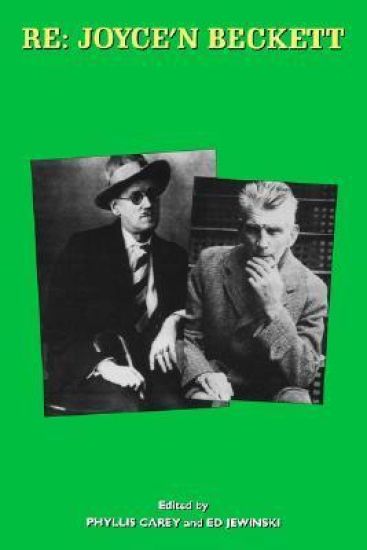
The relationship between James Joyce and Samuel Beckett has long been of interest to literary critics and readers alike and Re: Joyce 'n Beckett explores that relationship more fully that any other single work of the current scholarship. This volume provides the reader with an overview of the main trends and dilemmas that have dominated discussions on the complex Joyce/Beckett relationship, and pulls together previously scattered materials into a cohesive whole. It also contains an extensive bibliography of particular interest to scholars who will find this composite of sources priceless. The main section offers eleven engaging new essays written from many points of view on a variety of topics including, the impact of biographies written on both Joyce and Beckett, the handling of Irish materials in the short story form, the use of allusion as well as larger narrative structures, the portrayal of the concept of the artist, and the way in which each author deals with the problem of "authority" in their writings. An original one-act play by Denis Regan is also included; the play premiered in April 1990 at the Milwaukee Irishfest. This work does much to challenge previous misconceptions about the Joyce/Beckett relationship. Re: Joyce 'n Beckett is a rich, lively work that brings the relationship of these two, crucially important literary figures of the twentieth century together in one definitive volume.
Re: Joyce 'n Beckett
Fordham University Press
1992
pokkari
The relationship between James Joyce and Samuel Beckett has long been of interest to literary critics and readers alike and Re: Joyce 'n Beckett explores that relationship more fully that any other single work of the current scholarship. This volume provides the reader with an overview of the main trends and dilemmas that have dominated discussions on the complex Joyce/Beckett relationship, and pulls together previously scattered materials into a cohesive whole. It also contains an extensive bibliography of particular interest to scholars who will find this composite of sources priceless. The main section offers eleven engaging new essays written from many points of view on a variety of topics including, the impact of biographies written on both Joyce and Beckett, the handling of Irish materials in the short story form, the use of allusion as well as larger narrative structures, the portrayal of the concept of the artist, and the way in which each author deals with the problem of "authority" in their writings. An original one-act play by Denis Regan is also included; the play premiered in April 1990 at the Milwaukee Irishfest. This work does much to challenge previous misconceptions about the Joyce/Beckett relationship. Re: Joyce 'n Beckett is a rich, lively work that brings the relationship of these two, crucially important literary figures of the twentieth century together in one definitive volume.
The Joyce Well Site
University of Utah Press,U.S.
2002
nidottu
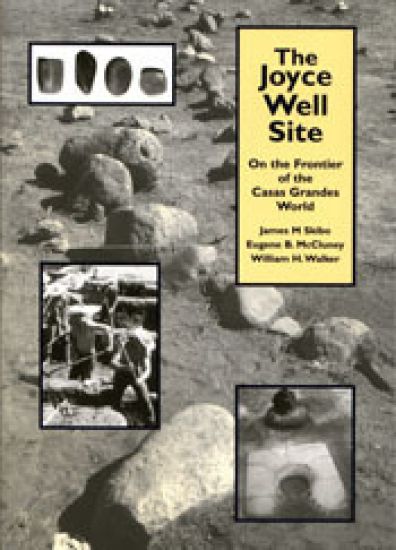
The Joyce Well site is in the remote boot heel of New Mexico, within the Gray Ranch, a huge spread whose owners continue to exercise careful control over its archaeological and natural resources. The site consists of a single-story pueblo of about 200 rooms that appears to have been associated with the Casas Grandes culture (Paquime) farther south in Chihuahua. Habitation peaked between AD 1200 and 1400. One of the questions researchers have sought to answer is the nature of the interaction between Paquime and sites such as Joyce Well. In 1963 Eugene McCluney excavated a portion of the pueblo and wrote a preliminary report. Since then, other researchers have conducted less ambitious projects there until Skibo and Walker excavated the ball court and conducted a large-scale investigation of the site and surrounding region in 1999 and 2000. This volume contains the 1963 report, plus all subsequent work. Analysis topics include plant remains, human skeletal material, ball courts and ritual performance, archaeomagnetic dating, and Animas Phase and Paquime comparisons. This publication makes the Joyce Well site accessible to all archaeologists for the first time.