The Man Who Knew Too Much A prolific and popular writer, G. K. Chesterton (1874-1936) is best known as the creator of detective-priest Father Brown (even though Chesterton's mystery stories constitute only a small fraction of his writings). The eight adventures in this classic British mystery trace the activities of Horne Fisher, the man who knew too much, and his trusted friend Harold March. Although Horne's keen mind and powerful deductive gifts make him a natural sleuth, his inquiries have a way of developing moral complications. Notable for their wit and sense of wonder, these tales offer an evocative portrait of upper-crust society in pre-World War I England.
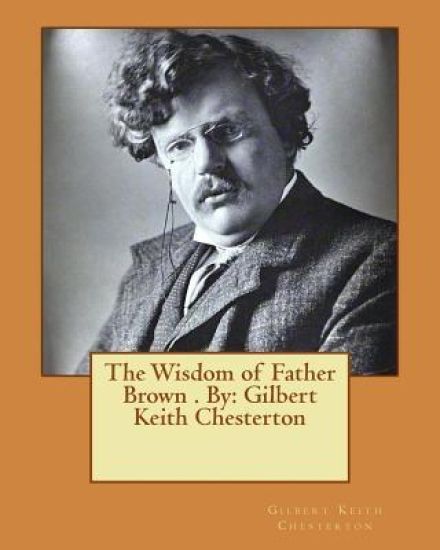
Gilbert Keith Chesterton (29 May 1874 - 14 June 1936), better known as G. K. Chesterton, was an English writer, poet, philosopher, dramatist, journalist, orator, lay theologian, biographer, and literary and art critic. Chesterton is often referred to as the "prince of paradox". Time magazine has observed of his writing style: "Whenever possible Chesterton made his points with popular sayings, proverbs, allegories-first carefully turning them inside out."Chesterton was born in Campden Hill in Kensington, London, the son of Marie Louise, n e Grosjean, and Edward Chesterton.He was baptised at the age of one month into the Church of England, though his family themselves were irregularly practising Unitarians.
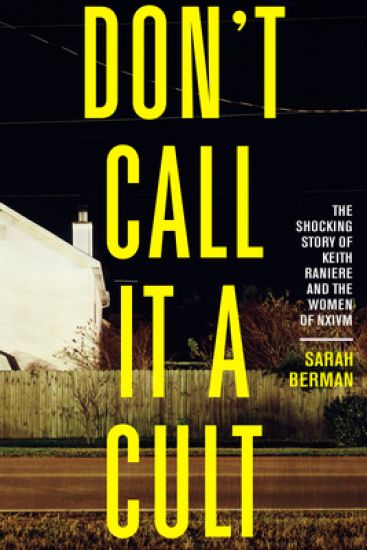
As seen in Season Two of the HBO docuseries THE VOW They draw you in with the promise of empowerment, self-discovery, women helping women. The more secretive those connections are, the more exclusive you feel. Little did you know, you just joined a cult. Sex trafficking. Self-help coaching. Forced labor. Mentorship. Multi-level marketing. Gaslighting. Investigative journalist Sarah Berman explores the shocking practices of NXIVM, a cult run by Keith Raniere and many enablers. Through the accounts of central NXIVM figures, Berman uncovers how dozens of women seeking creative coaching and networking opportunities instead were blackmailed, literally branded, near-starved, and enslaved. Don't Call It a Cult is a riveting account of NXIVM's rise to power, its ability to evade prosecution for decades, and the investigation that finally revealed its dark secrets to the world.
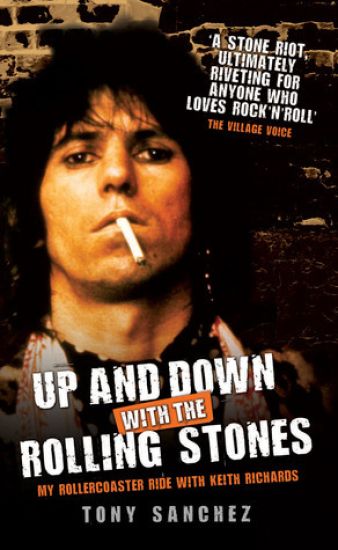
Tony Sanchez worked for Keith Richards for eight years buying drugs, running errands and orchestrating cheap thrills. He records unforgettable accounts of the Stones' perilous misadventures racing cars along the Cote d'Azur; murder at Altamont; nights with the Beatles at the Stones-owned nightclub Vesuvio; frantic flights to Switzerland for blood changes and the steady stream of women, including Anita Pallenberg, Marianne Faithfull and Bianca Jagger. Here are the Stones at their debauched peak cavorting around the world, smashing Bentleys, working black magic, getting raided, snorting coke and mainlining heroin. Sanchez tells the whole truth, sparing not even himself in the process with hard-hitting prose and candid photographs.
Studienarbeit aus dem Jahr 2010 im Fachbereich Germanistik - Neuere Deutsche Literatur, Note: "-," Johannes Gutenberg-Universit t Mainz (Deutsches Institut), Veranstaltung: Kommerz in der Literatur, Sprache: Deutsch, Abstract: 1. Einleitung Die folgende Arbeit besch ftigt sich mit dem Gegensatz, beziehungsweise dem Verh ltnis von Kunst und Kommerz in Frank Wedekinds "Der Marquis von Keith." Obwohl zwischen den Beiden ein offensichtlicher Gegensatz besteht, sind sie doch unmittelbarer miteinander verbunden. Die Beziehung w re allerdings recht schnell erkl rt, da die Kunst, wie sich schon vermuten l sst, nur T r und Tor f r einen horrenden Geldgewinn ffnen soll. Die Person der Figur des Marquis' und die Ziele, die dieser verfolgt, gilt es daher auch etwas n her zu betrachten, vor allem, da er eher die kommerzielle Seite vertritt. Was das St ck vor allem interessant macht, ist seine Authentizit t. So best tigen zum Beispiel Zeitgenossen Wedekinds, dass die Darstellung des "Feenpalastes" die Geschichte des Deutschen Theaters in M nchen widerspiegelt . Auch unsere heutige Gesellschaft ist von Kommerz gepr gt. Es wird niemand abstreiten k nnen, dass ein gro er Teil der Menschen nur auf den Gewinn bedacht ist. Eine schon kleinere Masse hat neben dem Ziel m glichst viel Profit zu erzielen, auch das Wohl Anderer im Sinn. Kunst ist auch in der heutigen Zeit ist auf Kommerz ausgelegt, wahrscheinlich noch mehr als damals. So wird sich heute kaum noch ein Maler oder ein S nger finden, der dieser T tigkeit aus reiner Leidenschaft nachgeht. Aus der Kunst wird Kommerz oder aus dem Gedanken an Kommerz wird Kunst, die dann wiederum zum Kommerz wird; es dreht sich so, dass man sich manchmal fragen muss, was zuerst war. Dass Geld eine ganz wesentliche Rolle spielt ist offensichtlich. Frank Wedekinds Werk "Der Marquis von Keith" spielt im 19. Jahrhundert. Kunst und Kommerz stehen sich gegen ber und dennoch sind die berg nge teilweise flie end. Glaubt man den Zeitgenossen, dann st
This work has been selected by scholars as being culturally important, and is part of the knowledge base of civilization as we know it. This work was reproduced from the original artifact, and remains as true to the original work as possible. Therefore, you will see the original copyright references, library stamps (as most of these works have been housed in our most important libraries around the world), and other notations in the work. This work is in the public domain in the United States of America, and possibly other nations. Within the United States, you may freely copy and distribute this work, as no entity (individual or corporate) has a copyright on the body of the work. As a reproduction of a historical artifact, this work may contain missing or blurred pages, poor pictures, errant marks, etc. Scholars believe, and we concur, that this work is important enough to be preserved, reproduced, and made generally available to the public. We appreciate your support of the preservation process, and thank you for being an important part of keeping this knowledge alive and relevant.
Father Brown is a fictional Roman Catholic priest and amateur sleuth created in the early 20th century by English novelist G. K. Chesterton. Father Brown is featured in a series of short stories where he solves mysteries and crimes using his intuition and keen understanding of human nature. The character was loosely based by Chesterton on Father John O'Connor (1870-1952), a parish priest in Bradford, who was involved in Chesterton's conversion to Catholicism in 1922.Chesterton portrays Father Brown as a short, stumpy Roman Catholic priest, with shapeless clothes, a large umbrella, and an uncanny insight into human evil. In "The Head of Caesar" he is "formerly priest of Cobhole in Essex, and now working in London". He makes his first appearance in the story "The Blue Cross" and continues to appear throughout five volumes of short stories, often assisted in his crime-solving by the reformed criminal M. Hercule Flambeau.
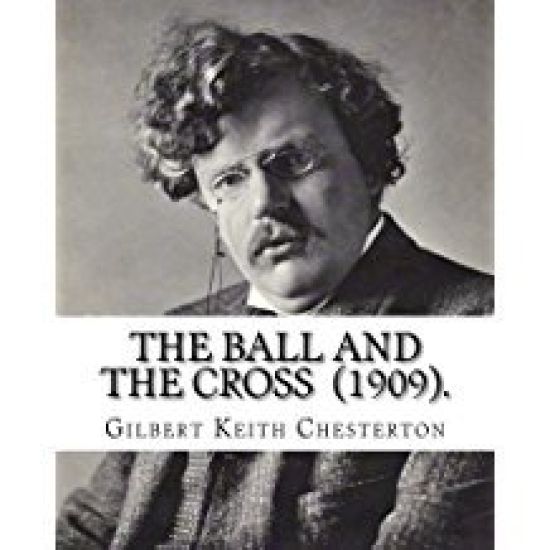
The Ball and the Cross is a novel by G. K. Chesterton. The title refers to a more worldly and rationalist worldview, represented by a ball or sphere, and the cross representing Christianity. The first chapters of the book were serialized from 1905 to 1906 with the completed work published in 1909. The novel's beginning involves debates about rationalism and religion between a Professor Lucifer and a monk named Michael. A part of this section was quoted in Pope John Paul I's Illustrissimi letter to G. K. Chesterton.Much of the rest of the book concerns the dueling, figurative and somewhat more literal, of a Jacobite Catholic named Maclan and an atheist Socialist named Turnbull.Lynette Hunter has argued that the novel is more sympathetic to Maclan, but does indicate Maclan is also presented as in some ways too extreme.Turnbull, as well, is presented in a sympathetic light: both duelists are ready to fight for and die for their antagonistic opinions and, in doing so, develop a certain partnership that evolves into a friendship. The real antagonist is the world outside, which desperately tries to prevent from happening a duel over "mere religion" (a subject both duelists judge of utmost importance). Gilbert Keith Chesterton, KC*SG (29 May 1874 - 14 June 1936), better known as G. K. Chesterton, was an English writer, poet, philosopher, dramatist, journalist, orator, lay theologian, biographer, and literary and art critic. Chesterton is often referred to as the "prince of paradox".Time magazine has observed of his writing style: "Whenever possible Chesterton made his points with popular sayings, proverbs, allegories-first carefully turning them inside out." Chesterton is well known for his fictional priest-detective Father Brown, and for his reasoned apologetics. Even some of those who disagree with him have recognised the wide appeal of such works as Orthodoxy and The Everlasting Man. Chesterton, as a political thinker, cast aspersions on both Progressivism and Conservatism, saying, "The whole modern world has divided itself into Conservatives and Progressives. The business of Progressives is to go on making mistakes. The business of the Conservatives is to prevent the mistakes from being corrected."Chesterton routinely referred to himself as an "orthodox" Christian, and came to identify this position more and more with Catholicism, eventually converting to Catholicism from High Church Anglicanism. George Bernard Shaw, Chesterton's "friendly enemy" according to Time, said of him, "He was a man of colossal genius."Biographers have identified him as a successor to such Victorian authors as Matthew Arnold, Thomas Carlyle, Cardinal John Henry Newman, and John Ruskin. Chesterton was born in Campden Hill in Kensington, London, the son of Marie Louise, n e Grosjean, and Edward Chesterton.He was baptised at the age of one month into the Church of England, though his family themselves were irregularly practising Unitarians.According to his autobiography, as a young man Chesterton became fascinated with the occult and, along with his brother Cecil, experimented with Ouija boards.Chesterton was educated at St Paul's School, then attended the Slade School of Art to become an illustrator. The Slade is a department of University College London, where Chesterton also took classes in literature, but did not complete a degree in either subject.
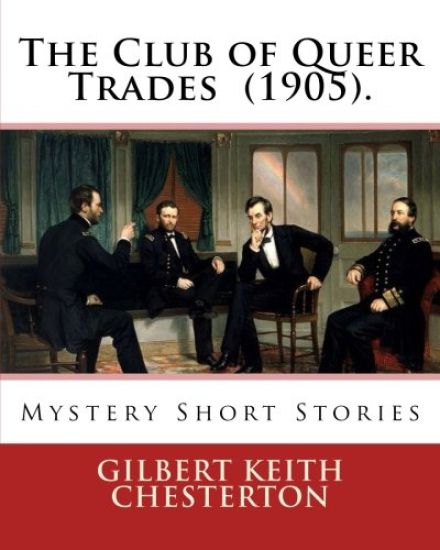
The Club of Queer Trades is a collection of stories by G. K. Chesterton first published in 1905.Each story in the collection is centered on a person who is making his living by some novel and extraordinary means (a "queer trade", using the word "queer" in the sense of "peculiar"). To gain admittance one must have invented a unique means of earning a living and the subsequent trade being the main source of income.... Gilbert Keith Chesterton, KC*SG (29 May 1874 - 14 June 1936), better known as G. K. Chesterton, was an English writer, poet, philosopher, dramatist, journalist, orator, lay theologian, biographer, and literary and art critic. Chesterton is often referred to as the "prince of paradox". Time magazine has observed of his writing style: "Whenever possible Chesterton made his points with popular sayings, proverbs, allegories-first carefully turning them inside out." Chesterton is well known for his fictional priest-detective Father Brown, and for his reasoned apologetics. Even some of those who disagree with him have recognised the wide appeal of such works as Orthodoxy and The Everlasting Man.Chesterton, as a political thinker, cast aspersions on both Progressivism and Conservatism, saying, "The whole modern world has divided itself into Conservatives and Progressives. The business of Progressives is to go on making mistakes. The business of the Conservatives is to prevent the mistakes from being corrected."Chesterton routinely referred to himself as an "orthodox" Christian, and came to identify this position more and more with Catholicism, eventually converting to Catholicism from High Church Anglicanism. George Bernard Shaw, Chesterton's "friendly enemy" according to Time, said of him, "He was a man of colossal genius."Biographers have identified him as a successor to such Victorian authors as Matthew Arnold, Thomas Carlyle, Cardinal John Henry Newman, and John Ruskin.