

Kirjahaku
Etsi kirjoja tekijän nimen, kirjan nimen tai ISBN:n perusteella.
1000 tulosta hakusanalla Lars Vinx

Turkic languages present particularly rich sources of data for the study of language contact, given the number and diversity of languages with which they have been in contact. Many common, false generalisations are laid bare and the methodology used in evaluating particular instances of language contact can also be used with profit by students of languages other than the Turkic.

Screaming for Change
Lars J. Kristiansen; Joseph R. Blaney; Philip J. Chidester; Brent K. Simonds
Lexington Books
2010
sidottu
Screaming for Change advances an understanding of punk rock by going beyond description of punk as a musical, political, social, and cultural genre of communication. Previous scholarship about punk rock has primarily dealt with those boundaries of genre. Previous scholars neglected to examine the ideology of punk across the decades and continents. That ideology, in a word, is deviance. Through Gramscian textual analysis, this book uncovers this ideology of deviance with some surprises along the way. Students and scholars of punk rock will value the book's attention to both well known and more esoteric punk artists. Punk is arguable the most studied 'subculture' to ever launch itself onto the larger social agenda as a possible counterbalance to the mainstream cultural hegemony. During the late 1970s, punk scenes sprouted up in large numbers all over the globe, and it appears that deep feelings of discontent towards the inherent alienation present in the capitalist system were the motivational seed that facilitated their growth. Unconvinced that the historical accounts have been successful in adequately describing and proficiently capturing the essence of punk, this study examines the phenomenon in slightly different terms. This study proposes that punk should be understood as a way of seeing the world, as a way of reasoning, or, essentially, as a philosophy on its own terms.

This is an account of a man's life on the streets with his dog Lizbeth. Lars Eighner recounts a life of poverty, physical stress and ever-present anxiety, as he and his dog make quixotic journeys on foot and thumb across the American desert.

This book offers an original examination of human cognition, arguing that cognitive skills are dispositional in nature. Opposing influential views in modern Anglo-American philosophy, Gundersen starts from the received premis that knowledge is analyzable in terms of belief, justification and truth, and goes on to clarify and improve on these ingredients' exact nature and internal association. Exploring a wide range of arguments offered by influential contributors in the field of modal epistemology, Gundersen argues that external conditions are secondary in developing and cultivating cognitive competence and that the fulcrum of the cognitive investigation is the fascinating interplay between and cultivation of internal cognitive powers.
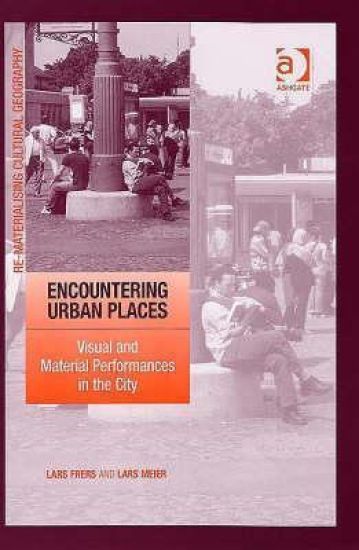
The aesthetics of urban life offer a curious quality, one that is both highly visible and hidden, both openly influencing and subtly imprinting. These aesthetics participate in the production of places; to the way they are built, to their resisting materiality, to their image in people's minds, to advertising and to the way people respond to the place. Exploring the encounter with the aesthetics, images and material design of urban life, this book offers analytic insights into contemporary cities. It shows how photography, maps and videos play a crucial role in bringing aesthetic dimensions into urban studies. This transdisciplinary approach draws on the full spectrum of the visual representation to tie the encounter with the realm of the visual directly and explicitly into the exploration of urban space.
In this ground-breaking book, the author proposes a new theory of state formation based upon a rethinking of the nexus war, state, and citizenship. He seeks to move beyond explanations provided by traditional approaches by discussing and presenting alternative state-society and state theories, arguing that a relational-processual understanding of the states has been neglected in existing literature. The book begins with a critical discussion of the concept of the state and society in social and political theory. The author suggests an alternative theoretical-methodological framework based upon German relational theory (such as Hegel, Clausewitz, Carl Schmitt, and, in particular Norbert Elias). Drawing upon the concepts of survival unit and figuration the book provides a political, historical and sociological comparative analysis of the relation between war, state, and citizenship in France, England and Germany from the Middle Ages to the mid-17th century, with emphasis on the 16th and 17th centuries. In addition, the book addresses two puzzles in social theory. First, the author addresses the question: why is the world divided into a multiple number of units? Will it remain like this or can we expect one unit – one world state – in the future? Second, the author looks into why and how this divided world is maintained: what makes the demarcation between states and how is this demarcation upheld? The issues discussed in the book are central to political and historical sociology and will be of interest to scholars and students working in both these fields, as well as to those working in political science and IR, social theory and history.
Presenting a realistic interpretation of quantum mechanics and, in particular, a realistic view of quantum waves, this book defends, with one exception, Schrodinger's views on quantum mechanics. Johansson goes on to defend the view that the collapse of a wave function during a measurement is a real physical collapse of a wave and argues that the collapse is a consequence of quantisation of interaction. Lastly Johansson argues for a revised principle of individuation in the quantum domain and that this principle enables a sort of explanation of non-local phenomena.
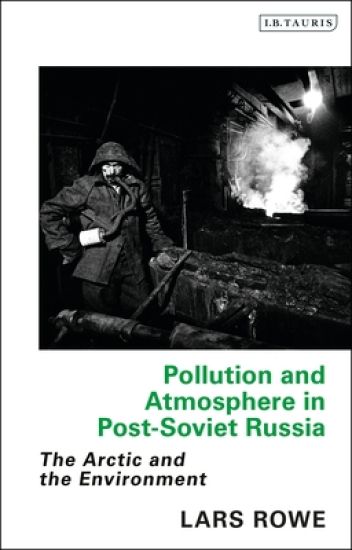
This study addresses the many initiatives to decrease industrial pollution emitting from the Pechenganikel plant in the northwestern corner of Russia during the final years of the Soviet Union, and examines the wider implications for the state of pollution control in the Arctic today. By examining the efforts of Soviet industry and government agencies, Finnish and Swedish officials, and Norwegian environmental authorities to curb industrial pollution in the region, this book offers an environmental history of the Arctic as well as a transnational, geopolitical history.
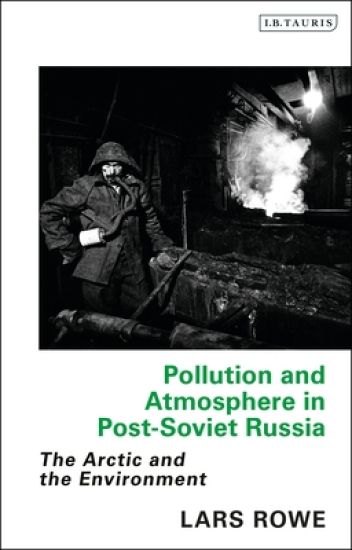
This study addresses the many initiatives to decrease industrial pollution emitting from the Pechenganikel plant in the northwestern corner of Russia during the final years of the Soviet Union, and examines the wider implications for the state of pollution control in the Arctic today. By examining the efforts of Soviet industry and government agencies, Finnish and Swedish officials, and Norwegian environmental authorities to curb industrial pollution in the region, this book offers an environmental history of the Arctic as well as a transnational, geopolitical history.
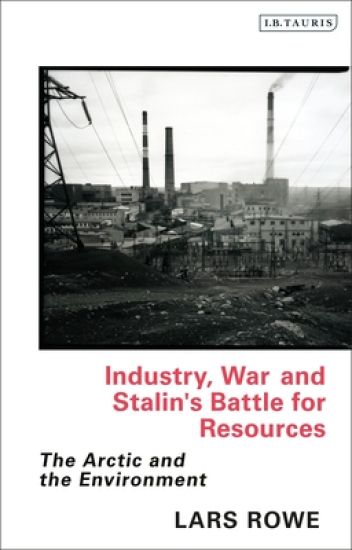
In this book the territory of Pechenga, located well above the Arctic circle between Russia, Finland and Norway, holds the key to understanding the geopolitical situation of the Arctic today. With specific focus on the local nickel industry of the region, Lars Rowe explores the interaction between commercial and state security concerns in the Soviet Union. Through the lens of this local industry a larger historical context is unravelled – the nature of Soviet-Finnish relations after the Russian Revolution, Soviet international relations strategies during the Second World War and the nature of the Stalinist economy in the early post-war years. By presenting this environmentally focused history of a small corner of the Arctic, Rowe offers the historical context needed to understand the current geopolitical climate of the Polar North.

How do archaeologists explore the various dimensions of religion? Lars Fogelin uses archaeological work at Thotlakonda in Southern India as his lens in a broader examination of Buddhist monastic life. He discovers the tension between the desired isolation of the monastery and the mutual engagement with neighbors in the Early Historic Period. He also sketches how religious architectural design and use of landscape helped to shaped these relationships. Drawing on historical accounts, religious documents, and inscriptions, as well as results of his systematic archaeological survey, Fogelin is able to shed new light on the ritual and material workings of Early Buddhism in this region, and shows how archaeology can contribute to our understanding of religious practice.

Collectible porcelain Christmas plates have been made in Denmark by Bing & Grondahl since 1895 and by Royal Copenhagen since 1908. These and their many other popular commemorative series, including Mothers' Day, Jubilee, and Childrens' Day plates, have been cherished by generations of people all over the world. This is the first book to bring all the plates together in one beautiful, organized reference. Over 1000 color photographs showcase every series created. Descriptions of every plate made include their English and Danish titles, date, designer, reference code numbers, and current value range. Collectors, dealers, and historians alike will find the book easy to use and fun to consult because it is concise, attractive, and complete.

Soryu, Hiryu, and Unryu-Class Aircraft Carriers
Lars Ahlberg; Hans Lengerer
Schiffer Publishing Ltd
2020
sidottu
This book covers the design and construction of the two well-known Soryu and Hiryu carriers, and the lesser-known ships of the Unryu class, and relies on original Japanese source material, including numerous photos, drawings, and specifications. How and why the Japanese designed and constructed the WWII-era, medium-sized Soryu, Hiryu, and Unryu-class aircraft carriers, and how they were operated, is covered in detail. The Imperial Japanese Navy planned the construction of 45 aircraft carriers from 1918 to 1943 and commissioned 25 of them between 1922 and 1944. These types were large, medium, and small aircraft carriers, with some converted from other warship classes, and escort aircraft carriers remodeled from passenger ships. The medium type presented here formed the majority, with a total of 18 planned: five were completed, three remained in various completion stages at the end of the Pacific War, and ten were eventually canceled.

The battleships of the Kongo class were the oldest, smallest, and fastest battleships in the Imperial Japanese Navy during WWII. Initially classified as battle cruisers, the lead ship in the class, Kongo, was built in England just prior to WWI. The remaining three ships in the class—Haruna, Kirishima, and Hiei—were all built and completed in Japan by 1915. All four ships were highly reconfigured in the 1920s, and they were reclassified as battleships in the 1930s. The four Kongo-class ships were the most active among the 12 WWII-era Japanese battleships and saw heavy combat throughout the war in such major campaigns as Pearl Harbor, Midway, Guadalcanal, and Leyte. All four ships were sunk by Allied forces by war’s end. This book features rare Japanese primary source material, including numerous photos, line schemes, and detailed charts.

A comprehensive look at World War II-era Fubuki class destroyers, giving readers an understanding of why and how the Imperial Japanese Navy took the lead in destroyer design The World War II–era destroyers of the Japanese Fubuki class were the first of a type sometimes referred to as "super destroyers." These destroyers were extremely large and heavily armed with guns and torpedoes. Ironically, the IJN was pushed to create heavier destroyers by the terms of the Washington Naval Treaty, which discouraged the construction of new capital ships. Particular emphasis was placed on ships that were important for the night battle preceding the "decisive battle." Thereby the stage was prepared for the Fubuki class. This book presents: The history of their design, construction, and combat historyOriginal Japanese war-era source material, including numerous diagrams and photos.The coauthors are recognized authorities in the study of the IJN in WWII The Fubuki class introduced a new standard for Japanese destroyers, a standard followed by almost all Japanese destroyers designed afterward.

The destroyers of the Akizuki "Autumn Moon" class were very different from the standard fleet type of Imperial Japanese Navy destroyers inaugurated with the Fubuki class. They were designed for the protection of the Imperial Japanese Navy’s carrier task forces, and in order to achieve this they carried a particularly powerful antiaircraft armament and had an extremely long radius of action. However, only 12 out of a planned number of 39 entered service, and they arrived too late to play a crucial role in the decisive carrier battles of World War II. Despite this, their history is of particular interest since the Akizuki class foreshadowed the postwar fleet escort. This is the history of their design and construction, and it relies heavily on Japanese source material and includes numerous photos and drawings.
The income velocity of money-an inverse measure of the demand for money balances-is the ratio of the money value of income to the average money stock that the public (excluding banks) holds in a given period. Why the magnitude of that ratio has changed over time is the subject of Michael D. Bordo and Lars Jonung's classic study, originally published as The Long-Run Behavior of the Velocity of Circulation. Supported by statistical data, econometric estimation techniques, and meticulous historical analysis, this work describes, in an international setting, how slow-moving economic, social, and political forces interact with the decisions households and firms make about how much money to hold.Annual time series of velocity for several countries from the late nineteenth century to the late twentieth century display a U-shaped pattern. Existing theories can explain each section of the velocity curve-the falling, flat, and rising parts-but the overall pattern is not consistent with any one theory. Here the authors put forth a comprehensive explanation for this behavior over time. Their theory is largely an extension of the approach of Knut Wicksell, the Swedish economist who stressed the role of substitution between monetary assets. This approach, which emphasizes institutional variables, is incorporated into the arguments for the traditional long-run money demand (velocity) function. Four types of empirical evidence strongly support the authors' theory: econometric studies of the long-run velocity function for several countries; a cross section study of approximately eighty countries in the postwar period; a case study of the Swedish monetization process in the fifty years before World War I; and an examination of the time series properties of velocity.Demand for Money suggests that institutional factors, as opposed to real income, play a greater role in velocity than previously thought. And these institutional factors have a major impact on monetary policy. This is a book that will prove of great value to economists, monetary strategists, and policymakers.

Ecosystems, Society, and Health
Lars K. Hallström; Nicholas P. Guehlstorf; Margot W. Parkes
McGill-Queen's University Press
2015
sidottu
The modern world has created complex systems that have interrelated concerns. Ecosystems, Society, and Health presents new perspectives on how the challenges relating to these concerns must be examined, not as disparate political narratives, but as dynamic transformational stories that demand integrative systems of research, analysis, practice, and action. Struggles over healthy watersheds, diseases associated with environmental change, and public health impacts of unsafe food exemplify the demand for integrated understanding and action. Contributors argue that traditional science, power politics, and linear ideals of public policy are inadequate to address sustainability, justice, safety, and responsibility. Drawing from a series of case studies that range from nursing, to watershed management, to environmental health and risk communication, this collection strikes an informed balance between practical lessons and a sophisticated theoretical context with which to interpret them. Demonstrating the diverse contextual understanding demanded by today's complex issues, Ecosystems, Society, and Health is a timely resource with guidance for practitioners, researchers, and educators.

Ecosystems, Society, and Health
Lars K. Hallström; Nicholas P. Guehlstorf; Margot W. Parkes
McGill-Queen's University Press
2015
nidottu
The modern world has created complex systems that have interrelated concerns. Ecosystems, Society, and Health presents new perspectives on how the challenges relating to these concerns must be examined, not as disparate political narratives, but as dynamic transformational stories that demand integrative systems of research, analysis, practice, and action. Struggles over healthy watersheds, diseases associated with environmental change, and public health impacts of unsafe food exemplify the demand for integrated understanding and action. Contributors argue that traditional science, power politics, and linear ideals of public policy are inadequate to address sustainability, justice, safety, and responsibility. Drawing from a series of case studies that range from nursing, to watershed management, to environmental health and risk communication, this collection strikes an informed balance between practical lessons and a sophisticated theoretical context with which to interpret them. Demonstrating the diverse contextual understanding demanded by today's complex issues, Ecosystems, Society, and Health is a timely resource with guidance for practitioners, researchers, and educators.