Kirjojen hintavertailu. Mukana 11 244 527 kirjaa ja 12 kauppaa.

Kirjahaku

Etsi kirjoja tekijän nimen, kirjan nimen tai ISBN:n perusteella.

1000 tulosta hakusanalla M. Raoul-Rochette

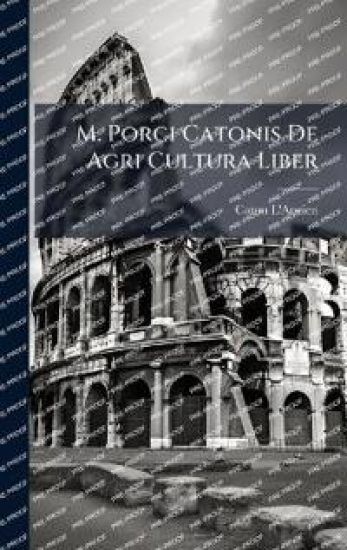
M. Porci Catonis De Agri Cultura Liber

M. Porci Catonis De Agri Cultura Liber

Caton L'Ancien

Hutson Street Press
2025
sidottu
M. Porci Catonis De Agri Cultura Liber, also known as De Re Rustica, is a foundational work on Roman agriculture written by Cato the Elder (Marcus Porcius Cato). This edition, published in 1897, includes a comprehensive index verborum compiled by R. Krumbiegel, enhancing its utility for scholars and students of Latin. Cato's treatise provides invaluable insights into the agricultural practices, economic considerations, and social values of the Roman Republic. The text covers a wide range of topics, from vineyard management and olive cultivation to animal husbandry and household administration. As one of the earliest surviving works of Latin prose, De Agri Cultura offers a unique glimpse into the practical and philosophical aspects of rural life in ancient Rome. This edition preserves the original Latin text, making it an essential resource for those interested in classical studies, agricultural history, and the Latin language. This work has been selected by scholars as being culturally important, and is part of the knowledge base of civilization as we know it. This work was reproduced from the original artifact, and remains as true to the original work as possible. Therefore, you will see the original copyright references, library stamps (as most of these works have been housed in our most important libraries around the world), and other notations in the work. This work is in the public domain in the United States of America, and possibly other nations. Within the United States, you may freely copy and distribute this work, as no entity (individual or corporate) has a copyright on the body of the work. As a reproduction of a historical artifact, this work may contain missing or blurred pages, poor pictures, errant marks, etc. Scholars believe, and we concur, that this work is important enough to be preserved, reproduced, and made generally available to the public. We appreciate your support of the preservation process, and thank you for being an important part of keeping this knowledge alive and relevant.
M. Fabii Quinctiliani De Institutione Oratoria Libri Duodecim. ...

M. Fabii Quinctiliani De Institutione Oratoria Libri Duodecim. ...

Edmund Gibson; Edmund Quintilian; Tribunus Marianus

Hutson Street Press
2025
sidottu
This is a meticulously edited edition of Marcus Fabius Quintilianus's "De Institutione Oratoria Libri Duodecim," a foundational text on rhetoric and education. Edited by Edmund Gibson, this edition draws upon three manuscripts and eight printed versions to provide an emended and variant reading of Quintilian's influential work. Included is a specimen of emendations and "Tribunus Marianus," a declamation appearing for the first time in print. Quintilian's twelve books cover the entire scope of rhetorical theory and practice, from the basic elements of grammar and style to the higher aims of eloquence and moral character. This edition offers invaluable insights into classical rhetoric and its enduring impact on Western thought and pedagogy. A crucial resource for scholars and students of classical literature, rhetoric, and the history of education. This work has been selected by scholars as being culturally important, and is part of the knowledge base of civilization as we know it. This work was reproduced from the original artifact, and remains as true to the original work as possible. Therefore, you will see the original copyright references, library stamps (as most of these works have been housed in our most important libraries around the world), and other notations in the work. This work is in the public domain in the United States of America, and possibly other nations. Within the United States, you may freely copy and distribute this work, as no entity (individual or corporate) has a copyright on the body of the work. As a reproduction of a historical artifact, this work may contain missing or blurred pages, poor pictures, errant marks, etc. Scholars believe, and we concur, that this work is important enough to be preserved, reproduced, and made generally available to the public. We appreciate your support of the preservation process, and thank you for being an important part of keeping this knowledge alive and relevant.
M. Porci Catonis De Agri Cultura Liber

M. Porci Catonis De Agri Cultura Liber

Caton L'Ancien

Hutson Street Press
2025
nidottu
M. Porci Catonis De Agri Cultura Liber, also known as De Re Rustica, is a foundational work on Roman agriculture written by Cato the Elder (Marcus Porcius Cato). This edition, published in 1897, includes a comprehensive index verborum compiled by R. Krumbiegel, enhancing its utility for scholars and students of Latin. Cato's treatise provides invaluable insights into the agricultural practices, economic considerations, and social values of the Roman Republic. The text covers a wide range of topics, from vineyard management and olive cultivation to animal husbandry and household administration. As one of the earliest surviving works of Latin prose, De Agri Cultura offers a unique glimpse into the practical and philosophical aspects of rural life in ancient Rome. This edition preserves the original Latin text, making it an essential resource for those interested in classical studies, agricultural history, and the Latin language. This work has been selected by scholars as being culturally important, and is part of the knowledge base of civilization as we know it. This work was reproduced from the original artifact, and remains as true to the original work as possible. Therefore, you will see the original copyright references, library stamps (as most of these works have been housed in our most important libraries around the world), and other notations in the work. This work is in the public domain in the United States of America, and possibly other nations. Within the United States, you may freely copy and distribute this work, as no entity (individual or corporate) has a copyright on the body of the work. As a reproduction of a historical artifact, this work may contain missing or blurred pages, poor pictures, errant marks, etc. Scholars believe, and we concur, that this work is important enough to be preserved, reproduced, and made generally available to the public. We appreciate your support of the preservation process, and thank you for being an important part of keeping this knowledge alive and relevant.
M. Tullii Ciceronis Orationes in Catilinam, Pro Murena, Flacco, Sulla, Archia Poeta, Plancio
This volume collects several of Marcus Tullius Cicero's most famous orations, delivered during a pivotal period of the Roman Republic. Included are the four speeches "In Catilinam," denouncing the conspiracy of Catiline; "Pro Murena," a defense of Lucius Licinius Murena against charges of electoral fraud; "Pro Flacco," defending Lucius Valerius Flaccus against accusations of extortion during his governorship of Asia; "Pro Sulla," a defense of Publius Cornelius Sulla accused of conspiracy; "Pro Archia Poeta," a defense of the poet Archias's Roman citizenship; and "Pro Plancio," a defense of Gnaeus Plancius against charges of electoral malpractice. These orations offer insight into Roman law, politics, and society, showcasing Cicero's mastery of rhetoric and his commitment to the Republic. As essential primary sources, these speeches remain valuable for students of classical history, Latin literature, and political theory. This work has been selected by scholars as being culturally important, and is part of the knowledge base of civilization as we know it. This work was reproduced from the original artifact, and remains as true to the original work as possible. Therefore, you will see the original copyright references, library stamps (as most of these works have been housed in our most important libraries around the world), and other notations in the work. This work is in the public domain in the United States of America, and possibly other nations. Within the United States, you may freely copy and distribute this work, as no entity (individual or corporate) has a copyright on the body of the work. As a reproduction of a historical artifact, this work may contain missing or blurred pages, poor pictures, errant marks, etc. Scholars believe, and we concur, that this work is important enough to be preserved, reproduced, and made generally available to the public. We appreciate your support of the preservation process, and thank you for being an important part of keeping this knowledge alive and relevant.
M. Valerii Probi in Vergilii Bvcolica Et Georgica Commentarivs
This is a scholarly edition of the commentary by M. Valerius Probus on Virgil's "Bucolics" and "Georgics." The text includes fragments of the Verona Scholia and the Virgil Questions of Afer. This volume offers valuable insights into the interpretation of Virgil's works during the Roman period, providing essential material for classical scholars and students of Latin literature. It represents a significant resource for understanding the nuances of Virgil's poetry and the critical traditions surrounding it. This edition is a must-have for any serious collection of classical texts. This work has been selected by scholars as being culturally important, and is part of the knowledge base of civilization as we know it. This work was reproduced from the original artifact, and remains as true to the original work as possible. Therefore, you will see the original copyright references, library stamps (as most of these works have been housed in our most important libraries around the world), and other notations in the work. This work is in the public domain in the United States of America, and possibly other nations. Within the United States, you may freely copy and distribute this work, as no entity (individual or corporate) has a copyright on the body of the work. As a reproduction of a historical artifact, this work may contain missing or blurred pages, poor pictures, errant marks, etc. Scholars believe, and we concur, that this work is important enough to be preserved, reproduced, and made generally available to the public. We appreciate your support of the preservation process, and thank you for being an important part of keeping this knowledge alive and relevant.