Dominoes is a full-colour, interactive readers series that offers students a fun reading experience while building their language skills. With integrated activities and on-page glossaries the new edition of the series makes reading motivating for learners. Each reader is carefully graded to ensure each student reads from the right level from the very beginning.
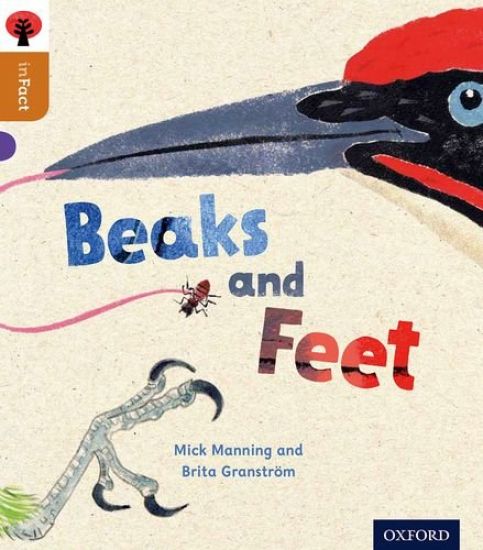
There are a lot of birds in Beaks and Feet. Can you guess who the beaks belong to? Then find out how beaks and feet help some animals to survive in their habitats. Oxford Reading Tree inFact is a non-fiction series that aims to engage children in reading for pleasure as powerfully as fiction does. The variety of topics means there are books to interest every child in this compelling series. The series is written by top children's authors and subject experts. The books are carefully levelled, making it easy to match every child to the right book.
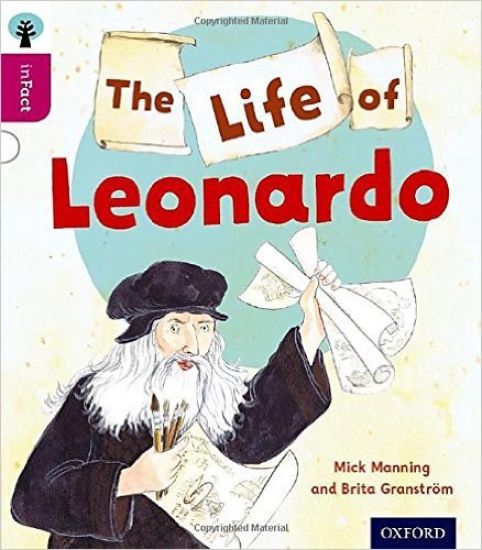
The Life of Leonardo is a biography of Leonardo da Vinci, one of the greatest artists in history. Find out about his paintings, his weird writing and some of his incredible inventions. Oxford Reading Tree inFact is a non-fiction series that aims to engage children in reading for pleasure as powerfully as fiction does. The variety of topics means there are books to interest every child in this compelling series. The series is written by top children's authors and subject experts. The books are carefully levelled, making it easy to match every child to the right book.
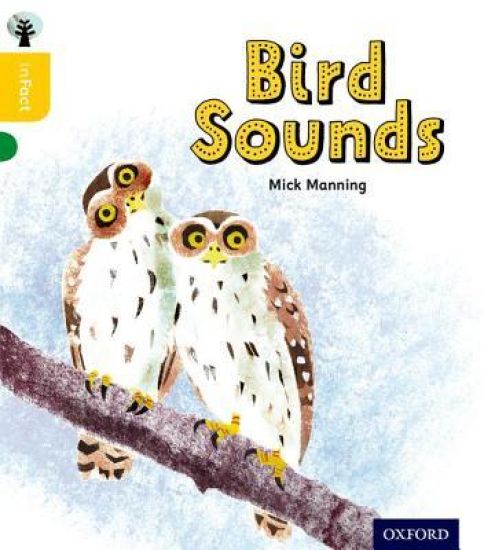
In this beautiful guide to birds and the sounds they make, readers will find falcons, kookaburras, yellowhammers and more, learning their calls and discovering facts about them. The birds are brought to life by stunning illustrations that make these creatures feel close enough to touch. Oxford Reading Tree inFact is a compelling non-fiction series that aims to engage children in reading for pleasure as powerfully as fiction does. The series includes 36 titles which are all phonically decodable, with some high-interest topic words to develop vocabulary and impart knowledge. The imaginative approach and variety of intriguing topics mean there are books to interest every child. The books are carefully levelled, making it easy to match every reader to the right book.
The Blackstone's Guide Series is a well established series of practical guides to the latest new legislation. The Guides all contain a full copy of the Act together with commentary on the effects, extent and scope of the legislation. The Guides are concise, accessible and clearly laid out, essential tools for those practising in the area. The Anti-Social Behaviour Act 2003 comes into force in stages from February 2004. It is a far-reaching Act, creating new powers for the courts, the police, and local authorities to combat a wide range of behaviour (from truancy to noise nuisance; graffiti to drug dealing; fly-tipping to firearms). It makes major amendments to a wide range of existing legislation (including the Housing Acts 1985, 1988 and 1996, the Environmental Protection Act 1990, the Public Order Act 1986, the Education Act 1996, the Crime and Disorder Act 1998, the Criminal Justice and Public Order Act 1994, the Firearms Act 1968 and the Police Reform Act 2002). Its impact in all these fields is significant. This Guide takes a practical and critical approach to the Act, providing full commentary and background information on its provisions. The Guide provides the full context for the many piecemeal and unconnected amendments made by the new provisions, including where necessary, details of the existing law and an overview of where the changes made by the Act will fit within the law as a whole. The Guide is structured clearly and logically, following the Parts of the Act, and is an indispensable reference aid for practitioners in any of the areas touched on by the Act, but particularly, in housing, environmental, education and criminal law.
Anti-social behaviour has been an extremely topical area of law for some years. However, despite the persistent focus on this subject, what may be termed the "law of anti-social behaviour" is still to be found scattered amongst a perplexing array of both criminal and civil statutes, and common law principles - some created for the purpose, others adapted to fit. This exciting new book builds on the authors' previous Blackstone's Guide on the subject, to define the boundaries and parameters of "anti-social behaviour law", and pull together the various offences, powers, and remedies into a single, coherent subject. Written in a clear and practical style, the book examines the appropriate practice and procedure in the criminal and civil courts, together with alternative forms of dispute resolution. The text is supported by a range of helpful court forms and precedents, flowcharts, and summaries, and the appendices include relevant non-statutory materials (such as central government guidance, codes of practice, and guides to best practice).
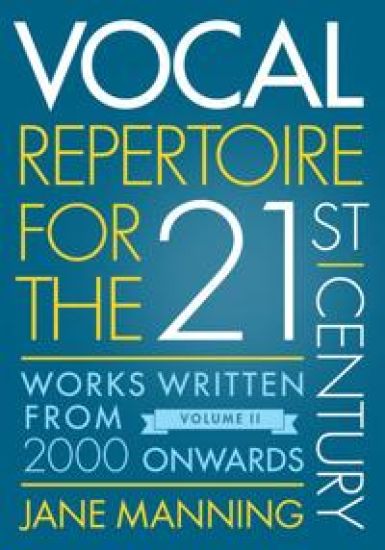
Described as the "life and soul of British contemporary music", Jane Manning is an internationally celebrated English concert and opera soprano. In this new follow-up to her highly regarded New Vocal Repertory, Volumes I and II, she provides a seasoned expert's guidance and insight into the vocal genre she calls home. Vocal Repertoire for the Twenty-First Century spans the late middle-20th century through the second decade of the 21st. Manning's comprehensive selection of contemporary art songs ranges from the avant-garde to the more easily accessible, including substantial song cycles, shorter encore pieces, and songs suitable for auditions and competitions. The two-volume guide presents expertly-informed selections tailored to particular voice types. Each of the 160 selections is accompanied by a highly detailed performance guide, music examples, levels of difficulty, and a brief encapsulation of vocal characteristics or challenges contained in the piece. A supplemental companion website provides composer biographies and an up-to-date list of recommended recordings. With a focus on younger composers in addition to prominent figures, Manning encourages singers to refresh and expand their recital repertoire into less familiar territory, and discover the rewards therein. Volume 2 features works written from 2000 onwards, including pieces from contemporary composers Mohammed Fairouz ("Annabel Lee"), Missy Mazzoli ("As Long as We Live"), Judith Weir ("The Voice of Desire"), and Raymond Yiu ("The Earth and Every Common Sight").
Described as the "life and soul of British contemporary music", Jane Manning is an internationally celebrated English concert and opera soprano. In this new follow-up to her highly regarded New Vocal Repertory, Volumes I and II, she provides a seasoned expert's guidance and insight into the vocal genre she calls home.Vocal Repertoire for the Twenty-First Century spans the late middle-20th century through the second decade of the 21st. Manning's comprehensive selection of contemporary art songs ranges from the avant-garde to the more easily accessible, including substantial song cycles, shorter encore pieces, and songs suitable for auditions and competitions. The two-volume guide presents expertly-informed selections tailored to particular voice types. Each of the 160 selections is accompanied by ahighly detailed performance guide, music examples, levels of difficulty, and a brief encapsulation of vocal characteristics or challenges contained in the piece. A supplemental companion website provides composer biographies and an up-to-date list of recommended recordings. With a focus on younger composersin addition to prominent figures, Manning encourages singers to refresh and expand their recital repertoire into less familiar territory, and discover the rewards therein.Volume 1 features works written before 2000, including pieces from such renowned composers as John Cage ("The Wonderful Widow of Eighteen Springs", "A Flower"), Andre Previn ("Five Songs"), and Igor Stravinsky ("The Owl and the Pussycat").
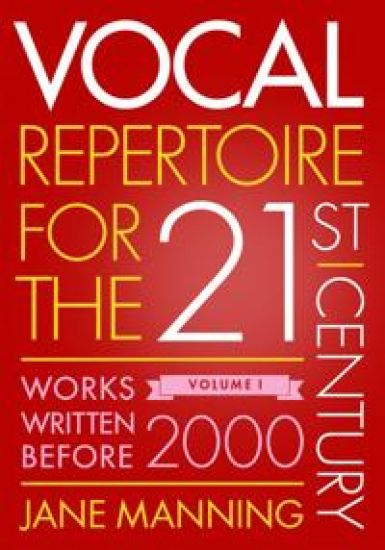
Described as the "life and soul of British contemporary music", Jane Manning is an internationally celebrated English concert and opera soprano. In this new follow-up to her highly regarded New Vocal Repertory, Volumes I and II, she provides a seasoned expert's guidance and insight into the vocal genre she calls home. Vocal Repertoire for the Twenty-First Century spans the late middle-20th century through the second decade of the 21st. Manning's comprehensive selection of contemporary art songs ranges from the avant-garde to the more easily accessible, including substantial song cycles, shorter encore pieces, and songs suitable for auditions and competitions. The two-volume guide presents expertly-informed selections tailored to particular voice types. Each of the 160 selections is accompanied by a highly detailed performance guide, music examples, levels of difficulty, and a brief encapsulation of vocal characteristics or challenges contained in the piece. A supplemental companion website provides composer biographies and an up-to-date list of recommended recordings. With a focus on younger composers in addition to prominent figures, Manning encourages singers to refresh and expand their recital repertoire into less familiar territory, and discover the rewards therein. Volume 1 features works written before 2000, including pieces from such renowned composers as John Cage ("The Wonderful Widow of Eighteen Springs", "A Flower"), André Previn ("Five Songs"), and Igor Stravinsky ("The Owl and the Pussycat").
In this new edition of the classic text on the history and evolution of electronic music, Peter Manning extends the definitive account of the medium from its birth to include key developments from the dawn of the 21st century to the present day.After explaining the antecedents of electronic music from the turn of the 20th century to the Second World War, Manning discusses the emergence of the early 'classical' studios of the 1950s, and the subsequent evolution of more advanced analogue technologies during the 1960s and '70s, leading in turn to the birth and development of the MIDI synthesizer. Attention then turns to the characteristics of the digital revolution, from the pioneering work of Max Mathews at Bell Telephone Laboratoriesin the 1950s to the wealth of resources available today, facilitated by the development of the personal computer and allied digital technologies. The scope and extent of the technical and creative developments that have taken place since the late 1990s are considered in an extended series of new andupdated chapters. These include topics such as the development of the digital audio workstation, laptop music, the Internet, and the emergence of new performance interfaces.Manning offers a critical perspective of the medium in terms of the philosophical and technical features that have shaped its growth. Emphasizing the functional characteristics of emerging technologies and their influence on the creative development of the medium, Manning covers key developments in both commercial and the non-commercial sectors to provide readers with the most comprehensive resource available on the evolution of this ever-expanding area of creativity.
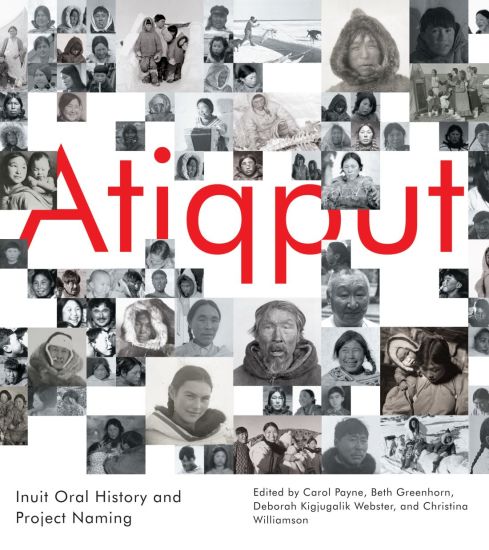
"Our names – Atiqput – are very meaningful. They are our identification. They are our Spirits. We are named after what's in the sky for strength, what’s in the water ... the land, body parts. Every name is attached to every part of our body and mind. Yes, every name is alive. Every name has a meaning. Much of our names have been misspelled and many of them have lost their meanings forever. Our Project Naming has been about identifying Inuit, who became nameless over the years, just "unidentified eskimos ..." With Project Naming, we have put Inuit meanings back in the pictures, back to life." Piita IrniqFor over two decades, Inuit collaborators living across Inuit Nunangat and in the South have returned names to hundreds of previously anonymous Inuit seen in historical photographs held by Library and Archives Canada as part of Project Naming. This innovative photo-based history research initiative was established by the Inuit school Nunavut Sivuniksavut and the national archive.Atiqput celebrates Inuit naming practices and through them honours Inuit culture, history, and storytelling. Narratives by Inuit elders, including Sally Kate Webster, Piita Irniq, Manitok Thompson, Ann Meekitjuk Hanson, and David Serkoak, form the heart of the book, as they reflect on naming traditions and the intergenerational conversations spurred by the photographic archive. Other contributions present scholarly insights and research projects that extend Project Naming’s methodology, interspersed with pictorial essays by the artist Barry Pottle and the filmmaker Asinnajaq.Through oral testimony and photography, Atiqput rewrites the historical record created by settler societies and challenges a legacy of colonial visualization.
Patrick Manning refuses to divide the African diaspora into the experiences of separate regions and nations. Instead, he follows the multiple routes that brought Africans and people of African descent into contact with one another and with Europe, Asia, and the Americas. In weaving these stories together, Manning shows how the waters of the Atlantic Ocean, the Mediterranean Sea, and the Indian Ocean fueled dynamic interactions among black communities and cultures and how these patterns resembled those of a number of connected diasporas concurrently taking shape across the globe. Manning begins in 1400 and traces five central themes: the connections that enabled Africans to mutually identify and hold together as a global community; discourses on race; changes in economic circumstance; the character of family life; and the evolution of popular culture. His approach reveals links among seemingly disparate worlds. In the mid-nineteenth century, for example, slavery came under attack in North America, South America, southern Africa, West Africa, the Ottoman Empire, and India, with former slaves rising to positions of political prominence. Yet at the beginning of the twentieth century, the near-elimination of slavery brought new forms of discrimination that removed almost all blacks from government for half a century. Manning underscores the profound influence that the African diaspora had on world history, demonstrating the inextricable link between black migration and the rise of modernity, especially in regards to the processes of industrialization and urbanization. A remarkably inclusive and far-reaching work, The African Diaspora proves that the advent of modernity cannot be imaginatively or comprehensively engaged without taking the African peoples and the African continent as a whole into account.
Patrick Manning refuses to divide the African diaspora into the experiences of separate regions and nations. Instead, he follows the multiple routes that brought Africans and people of African descent into contact with one another and with Europe, Asia, and the Americas. In weaving these stories together, Manning shows how the waters of the Atlantic Ocean, the Mediterranean Sea, and the Indian Ocean fueled dynamic interactions among black communities and cultures and how these patterns resembled those of a number of connected diasporas concurrently taking shape across the globe. Manning begins in 1400 and traces five central themes: the connections that enabled Africans to mutually identify and hold together as a global community; discourses on race; changes in economic circumstance; the character of family life; and the evolution of popular culture. His approach reveals links among seemingly disparate worlds. In the mid-nineteenth century, for example, slavery came under attack in North America, South America, southern Africa, West Africa, the Ottoman Empire, and India, with former slaves rising to positions of political prominence. Yet at the beginning of the twentieth century, the near-elimination of slavery brought new forms of discrimination that removed almost all blacks from government for half a century. Manning underscores the profound influence that the African diaspora had on world history, demonstrating the inextricable link between black migration and the rise of modernity, especially in regards to the processes of industrialization and urbanization. A remarkably inclusive and far-reaching work, The African Diaspora proves that the advent of modernity cannot be imaginatively or comprehensively engaged without taking the African peoples and the African continent as a whole into account.
Rediscover this magical story of a little girl and the dragon she finds in a cave in Cornwall, in this classic new edition.She heard a noise very like a loud sneeze, and a little puff of green smoke came out of the cave and floated away into the air.On holiday in Cornwall, while exploring along the coastline, Susan discovers something something quite different from anything she had ever seen before. It would be more polite to call him Someone rather than Something. Out of a cave comes a green scaly dragon, with yellow horns and a charming smile...
Rehbein is a fictional character yet he was involved in the turmoil of the Eastern Front which was not generally known to western historians, yet, he survived. North Africa, Yugoslavia, the Berlin underworld, Smolensk/Katyn, Warsaw, Breslau and Soviet captivity encapsulated Rehbein's criminal investigations 1941-45
A selection of thirty-six short stories from the journals of a time spent in Rhodesia, Zimbabwe and Australia. Call me a Rhodie, a Zimbo or an Aussie and you'll get the same person - someone who will sit around the fire with you, share his beers and have your back when times get tough. My political correctness may sometimes be found wanting, but it's balanced by an old-fashioned romanticism and much self-deprecation.
Statistical approaches to processing natural language text have become dominant in recent years. This foundational text is the first comprehensive introduction to statistical natural language processing (NLP) to appear. The book contains all the theory and algorithms needed for building NLP tools. It provides broad but rigorous coverage of mathematical and linguistic foundations, as well as detailed discussion of statistical methods, allowing students and researchers to construct their own implementations. The book covers collocation finding, word sense disambiguation, probabilistic parsing, information retrieval, and other applications.
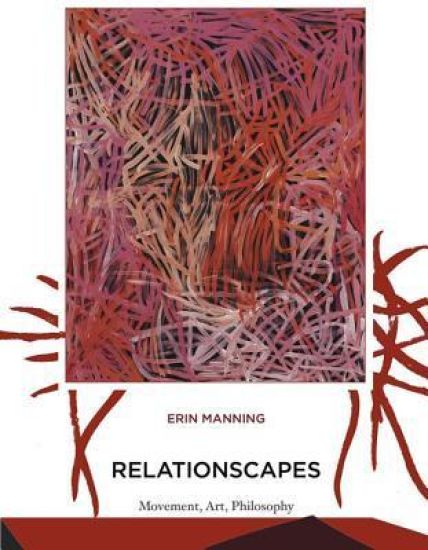
A new philosophy of movement that explores the active relation between sensation and thought through the prisms of dance, cinema, art, and new media.With Relationscapes, Erin Manning offers a new philosophy of movement challenging the idea that movement is simple displacement in space, knowable only in terms of the actual. Exploring the relation between sensation and thought through the prisms of dance, cinema, art, and new media, Manning argues for the intensity of movement. From this idea of intensity-the incipiency at the heart of movement-Manning develops the concept of preacceleration, which makes palpable how movement creates relational intervals out of which displacements take form.Discussing her theory of incipient movement in terms of dance and relational movement, Manning describes choreographic practices that work to develop with a body in movement rather than simply stabilizing that body into patterns of displacement. She examines the movement-images of Leni Riefenstahl, Etienne-Jules Marey, and Norman McLaren (drawing on Bergson's idea of duration), and explores the dot-paintings of contemporary Australian Aboriginal artists. Turning to language, Manning proposes a theory of prearticulation claiming that language's affective force depends on a concept of thought in motion.Relationscapes takes a "Whiteheadian perspective," recognizing Whitehead's importance and his influence on process philosophers of the late twentieth century-Deleuze and Guattari in particular. It will be of special interest to scholars in new media, philosophy, dance studies, film theory, and art history.
Manning examines issues of democratization and conflict resolution through the lens of the Mozambican experience from 1992-2000. Since the end of the Cold War, a formal democratization process has been at the center of virtually every negotiated peace agreement to end a civil conflict. Nearly a decade after the Rome peace accord put an end to 16 years of civil war, Mozambique stands out as one of the world's most unlikely postwar democratization success stories. What accounts for the durability of the postwar political settlement? What lessons does the Mozambican experience hold for other such cases? Relying on original research conducted in Mozambique between 1994 and 1999, Manning argues that the country's relatively successful postwar political settlement depends upon the ability of the system to accommodate conflicting notions of democratic and system legitimacy, through routine recourse to processes of sustained elite bargaining which supplement formal democratic institutions. In building her case, Manning provides a thorough and provocative analysis of the country's civil conflict, presents ground-breaking work on the transformation of the Renamo rebel group into a political party, and the separation of the Relimo party-state into its respecive components, and he presents a clear-eyed analysis of the lessons and limits of Mozambique's postwar success. Of particular interest to scholars, students, and policymakers involved with democratization, conflict resolution, and southern African politics.