This book is based on Conference on the Transformation of Socialism in the Soviet Union and China, and reveals a second feature of the conference: the candor of the presentations. It discusses the effects of the reforms on political processes and the development of socialism.
Incarcerated and Formerly Incarcerated Older Adults discusses two converging problems: the aging baby boomer generation and the large percentage of the American population in prison. This book focuses on the treatment, reentry, financial challenges, medical issues, and policy implications of the aging population in prison.
Blind, homosexual, Russian emigre speechwriter Nathan Kazakov has enough problems even before his left ear is obliterated by a bullet presumably meant for the Israeli prime minister. Determined to solve the mystery, Nathan begins exploring a web of conspiracies involving messianic orthodox settlers, Arab terrorists, and the Israeli secret service. Was the bullet intended for Nathan after all? or perhaps for the prime minister's son Gabriel, an archaeologist who shuns his father's politics? One trail leads to Leviticus, another beneath the Temple Mount. "Strange Fire" is "a stunning literary achievement" ("Miami Herald") fueled by Bukiet's singular imagination. A "Washington Post Book World" 2001 Rave, a "Chicago Tribune" Favorite Book of the Year, and a "Booklist" Editors' Choice. "Corrupt, violent, zigzagging atmosphere...a raucous vituperative attack on every kind of political hypocrisy." "Los Angeles Times Book Review""
The title of Melvin Jules Bukiet's latest collection hints at the deceitful nature of its multiple protagonists. An aspiring writer stalks Vladmir Nabokov across midtown Manhattan one afternoon in the summer of Watergate. A young co-ed's seduction of her elderly philosophy professor delivers her an A and him lasting happiness. Max, a liar and a voyeur, like any true artist, wanders the East Village taking photographs of murder victims. A famous Holocaust survivor with the big eyes and the big prize conducts an impromptu circumcision. Ranging from 1895 Prague to the site of a Central American rebellion to the home of a certain Seattle software magnate to the roof of an urban skyscraper, each of these outrageous (though occasionally tender) stories offers keen insight into human nature.
In Women After All, anthropologist Melvin Konner traces the arc of evolution to explain the relationships between women and men. Drawing on colourful examples from the natural world—the octopus, the black widow spider and coral reef fish, which can switch from male to female in a single reproductive career—he sheds light on our biologically different human identities and the poignant exceptions that challenge the male/female divide. We meet hunter-gatherers in Botswana whose culture gave women a prominent place, inventing the working mother and respecting women’s voices around the fire. History upset this balance as a dense world of war fostered extreme male dominance. But our species has been recovering over the past two centuries and an unstoppable move towards equality is afoot. It will not be the end of men but it will be the end of male supremacy and a better, wiser world for women and men alike.
Believers is a scientist’s answer to attacks on faith by some well-meaning scientists and philosophers—a firm rebuke of the “Four Horsemen”: Richard Dawkins, Daniel Dennett, Sam Harris and Christopher Hitchens. Melvin Konner, who was raised as an Orthodox Jew but has lived his adult life without such faith, explores the psychology, development, brain science, evolution and genetics of the religious impulses we experience. He views religious people with a sympathetic eye; his own upbringing, his apprenticeship in the trance dance religion of the African Bushmen and his friends in Christian, Buddhist, Hindu, Muslim and other faiths have all shaped his perspective. He concludes that religion does much good as well as undoubted harm and that for at least a large minority of humanity, the belief in things unseen neither can nor should go away.
Tar loves Gemma, but Gemma doesn't want to be tied down - not to anyone or anything. Gemma wants to fly. But no one can fly forever. One day, somehow, finally you have to come down. Commissioned and produced by Oxford Stage Company, Junk premiered at The Castle, Wellingborough, in January 1998 and went on to tour throughout the UK in 1998 and 1999."John Retallack's excellent adaptation of Melvin Burgess's controversial Carnegie Medal winning novel is splendidly unpatronising...a truly cautionary tale" (Independent)
It is widely believed that economic development in much of the world is not happening quickly enough. Indeed, the standard of living in some parts of the world has actually been declining. Many experts now doubt that the solution can be purely technical and economic; it must also be political and moral.This book brings together contributions from leading authorities, such as Joseph Stiglitz, Jean-Jacques Laffont and Daniel Hausman, on economics and political philosophy to survey current barriers to growth, including problems with policy and problems with concepts and thinking. Getting policies right, the contributors stress, is a complicated task in itself, but it also may not be enough; instead, people in both the developed and developing worlds may also need to reconsider basic and time-worn beliefs about facts, values, the measurement of data, rights, needs and the nature of government.Of interest to economics and policy makers, Development Dilemmas is a long-awaited addition to the debate over economics and political philosophy in the developing world.
Genome Duplication provides a comprehensive and readable overview of the underlying principles that govern genome duplication in all forms of life, from the simplest cell to the most complex multicellular organism. Using examples from the three domains of life - bacteria, archaea, and eukarya - Genome Duplication shows how all living organisms store their genome as DNA and how they all use the same evolutionary-conserved mechanism to duplicate it: semi-conservative DNA replication by the replication fork. The text shows how the replication fork determines where organisms begin genome duplication, how they produce a complete copy of their genome each time a cell divides, and how they link genome duplication to cell division. Genome Duplication explains how mistakes in genome duplication are associated with genetic disorders and cancer, and how understanding genome duplication, its regulation, and how the mechanisms differ between different forms of life, is critical to the understanding and treatment of human disease.
It is widely believed that economic development in much of the world is not happening quickly enough. Indeed, the standard of living in some parts of the world has actually been declining. Many experts now doubt that the solution can be purely technical and economic; it must also be political and moral.This book brings together contributions from leading authorities, such as Joseph Stiglitz, Jean-Jacques Laffont and Daniel Hausman, on economics and political philosophy to survey current barriers to growth, including problems with policy and problems with concepts and thinking. Getting policies right, the contributors stress, is a complicated task in itself, but it also may not be enough; instead, people in both the developed and developing worlds may also need to reconsider basic and time-worn beliefs about facts, values, the measurement of data, rights, needs and the nature of government.Of interest to economics and policy makers, Development Dilemmas is a long-awaited addition to the debate over economics and political philosophy in the developing world.
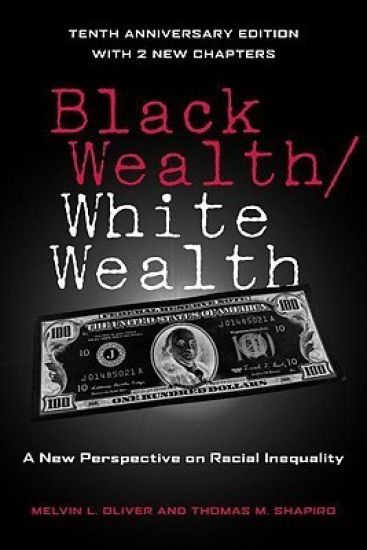
The award-winning Black Wealth / White Wealth offers a powerful portrait of racial inequality based on an analysis of private wealth. Melvin Oliver and Thomas Shapiro's groundbreaking research analyzes wealth - total assets and debts rather than income alone - to uncover deep and persistent racial inequality in America, and they show how public policies have failed to redress the problem.First published in 1995, Black Wealth / White Wealth is considered a classic exploration of race and inequality. It provided, for the first time, systematic empirical evidence that explained the racial inequality gap between blacks and whites. The Tenth Anniversary edition contains two entirely new and substantive chapters. These chapters look at the continuing issues of wealth and inequality in America and the new policies that have been launched in the past ten years. Some have been progressive while others only recreate inequality - for example the proposal to eliminate the estate tax.Compelling and also informative, Black Wealth / White Wealth is not just pioneering research. It is also a powerful counterpoint to arguments against affirmative action and a direct challenge to current social welfare policies that are tilted towards the wealthy.
The award-winning Black Wealth / White Wealth offers a powerful portrait of racial inequality based on an analysis of private wealth. Melvin Oliver and Thomas Shapiro's groundbreaking research analyzes wealth - total assets and debts rather than income alone - to uncover deep and persistent racial inequality in America, and they show how public policies have failed to redress the problem.First published in 1995, Black Wealth / White Wealth is considered a classic exploration of race and inequality. It provided, for the first time, systematic empirical evidence that explained the racial inequality gap between blacks and whites. The Tenth Anniversary edition contains two entirely new and substantive chapters. These chapters look at the continuing issues of wealth and inequality in America and the new policies that have been launched in the past ten years. Some have been progressive while others only recreate inequality - for example the proposal to eliminate the estate tax.Compelling and also informative, Black Wealth / White Wealth is not just pioneering research. It is also a powerful counterpoint to arguments against affirmative action and a direct challenge to current social welfare policies that are tilted towards the wealthy.
Billy Elliot's not like his Dad. He doesn't want to learn boxing. He's not cut out to be a miner. But when he stumbles across a ballet class and discovers he's a natural, he realises what he does want to do. This is Billy's gritty and determined struggle, at first in secret, but then with the wholehearted backing of his family, to dance his way to a different future.
There is no unified theory that can explain both voter choice and where choices come from. Hinich and Munger fill that gap with their model of political communication based on ideology. Rather than beginning with voters and diffuse, atomistic preferences, Hinich and Munger explore why large groups of voters share preference profiles, why they consider themselves "liberals" or "conservatives." The reasons, they argue, lie in the twin problems of communication and commitment that politicians face. Voters, overloaded with information, ignore specific platform positions. Parties and candidates therefore communicate through simple statements of goals, analogies, and by invoking political symbols. But politicians must also commit to pursuing the actions implied by these analogies and symbols. Commitment requires that ideologies be used consistently, particularly when it is not in the party's short-run interest.The model Hinich and Munger develop accounts for the choices of voters, the goals of politicians, and the interests of contributors. It is an important addition to political science and essential reading for all in that discipline."Hinich and Munger's study of ideology and the theory of political choice is a pioneering effort to integrate ideology into formal political theory. It is a major step in directing attention toward the way in which ideology influences the nature of political choices." --Douglass C. North". . . represents a significant contribution to the literature on elections, voting behavior, and social choice." --Policy Currents Melvin Hinich is Professor of Government, University of Texas. Michael C. Munger is Associate Professor of Political Science, University of North Carolina.
This advanced undergraduate- and graduate-level text by the 1988 Nobel Prize winner establishes the subject's mathematical background, reviews the principles of electrostatics, then introduces Einstein's special theory of relativity and applies it throughout the book in topics ranging from Gauss' theorem and Coulomb's law to electric and magnetic susceptibility.
Sociology and common sense both assume that there is an objective world that exists independently of the knower and that is accessible to competent perceivers. This assumption, and the idiomatic possibilities to which it gives rise, forms the basis of 'mundane reason'. As self-evident as mundane reason may appear, in this book the author shows that it is in fact historically emergent, culturally contingent and situationally constructed. Using close empirical observations from everyday settings in which people are concerned with 'what really happened' Pollner examines the practices of mundane reasoning in everyday life. He also analyses selected sociological texts and explores how mundane assumptions are used and sustained; how they affect conceptions of truth, mind, and reality; and how they may be brought within the purview of sociological analysis. The probing study will appeal widely to sociologists, social theorists, anthropologists, philosophers and psychologists, as well as to other readers concerned with understanding the social construction of the everyday world.
This volume makes available in an English translation the most significant part of Montesquieu's political, social and legal theory. About two-thirds of the volume has been translated from the Spirit of the Laws, not redone in English since the eighteenth century. That version was notoriously inadequate: Montesquieu's key terms were not rendered consistently; often his meaning was distorted by giving the nearest English eighteenth-century legal or institutional equivalent. Finally, English usage has changed so much that the eighteenth-century translation makes Montesquieu seem both quaint and obscure. This volume also includes substantial selections from the Persian Letters and the Considerations on the Causes of the Romans; Greatness and Decline. Although adequate translations of these works exist, it seemed advisable to maintain intellectual and stylistic consistency by providing English versions on the same principles as the Spirit of the Laws.
To 'analyse' means to break into components and understand. But new readers find modern mathematical theories of politics so inaccessible that analysis is difficult. Where does one start? Analytical Politics is an introduction to analytical theories of politics, explicitly designed both for the interested professional and students in political science. We cannot evaluate how well governments perform without some baseline for comparison: what should governments be doing? This book focuses on the role of the 'center' in politics, drawing from the classical political theories of Aristotle, Hobbes, Rousseau, and others. The main questions in Analytical Politics involve the existence and stability of the center; when does it exist? When should the center guide policy? How do alternative voting rules help in discovering the center? An understanding of the work reviewed here is essential for anyone who hopes to evaluate the performance or predict the actions of democratic governments.