Kirjojen hintavertailu. Mukana 11 627 670 kirjaa ja 12 kauppaa.

Kirjahaku

Etsi kirjoja tekijän nimen, kirjan nimen tai ISBN:n perusteella.

1000 tulosta hakusanalla Meta Lander

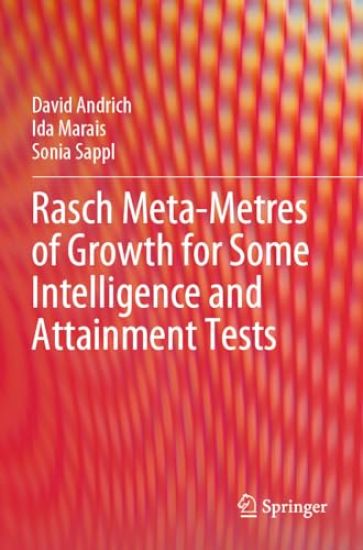
Rasch Meta-Metres of Growth for Some Intelligence and Attainment Tests

Rasch Meta-Metres of Growth for Some Intelligence and Attainment Tests

David Andrich; Ida Marais; Sonia Sappl

SPRINGER VERLAG, SINGAPORE
2024
nidottu
This book adapts Rasch’s approach for quantifying growth on physiological variables, where growth decelerates, to intellectual variables. To apply this approach, it is necessary to construct measurements in a constant unit over the relevant range of the variable. With such measurements, the book illustrates the approach to quantifying growth on six intellectual variables - two intelligences tests and two each of tests of proficiencies in reading comprehension and mathematics. The book discusses how it is not immediately obvious that deceleration on a quantitative scale should also hold for the growth in intellectual variables. It goes on to show that this is indeed the case with all six tests analysed and considers some implications of this feature for understanding intellectual development, in particular the centrality of the growth trajectory set in early life.

Website Meta Language

Website Meta Language

VDM Verlag Dr. Muller Aktiengesellschaft Co. KG
2010
nidottu
Observera att förlaget som ger ut denna produkt baserar innehållet i sina produkter på fria källor som Wikipedia. Boken är med stor sannolikhet endast ett utdrag ur dessa informationskällor, alltså inte en vanlig bok i den bemärkelsen.
Statistical Methods for Meta-Analysis

Statistical Methods for Meta-Analysis

Larry V. Hedges; Ingram Olkin

Academic Press Inc
1985
sidottu
The main purpose of this book is to address the statistical issues for integrating independent studies. There exist a number of papers and books that discuss the mechanics of collecting, coding, and preparing data for a meta-analysis , and we do not deal with these. Because this book concerns methodology, the content necessarily is statistical, and at times mathematical. In order to make the material accessible to a wider audience, we have not provided proofs in the text. Where proofs are given, they are placed as commentary at the end of a chapter. These can be omitted at the discretion of the reader. Throughout the book we describe computational procedures whenever required. Many computations can be completed on a hand calculator, whereas some require the use of a standard statistical package such as SAS, SPSS, or BMD. Readers with experience using a statistical package or who conduct analyses such as multiple regression or analysis of variance should be able to carry out the analyses described with the aid of a statistical package.
Systematic Reviews and Meta-Analysis

Systematic Reviews and Meta-Analysis

Julia H. Littell; Jacqueline Corcoran; Vijayan Pillai

Oxford University Press Inc
2008
nidottu
When used in tandem, systematic reviews and meta-analysis, two distinct but highly compatible approaches to research synthesis, form a powerful, scientific approach to analyzing previous studies. But to see their full potential, a social work researcher must be versed in the foundational processes underlying them. This pocket guide to Systematic Reviews and Meta-Analysis illuminates precisely that practical groundwork. In clear, step-by-step terms, the authors explain how to format topics, locate and screen studies, extract and assess data, pool effect sizes, determine bias, and interpret the results, showing readers how to combine reviewing and meta-analysis correctly and effectively. Each chapter contains vivid social work examples and concludes with a concise summary and notes on further reading, while the book's glossary and handy checklists and sample search and data extraction forms maximize the boo'ks usefulness. Highlighting the concepts necessary to understand, critique, and conduct research synthesis, this brief and highly readable introduction is a terrific resource for students and researchers alike.
Use of Meta-Analyses in Nutrition Research and Policy
The Food and Nutrition Board of the National Academies of Sciences, Engineering, and Medicine convened a virtual workshop series that gathered researchers, government officials, and other global leaders in nutrition research and policy. The event, sponsored by the U.S. Food and Drug Administration (FDA), carefully considered meta-analysis methodologies that could in turn be used to advance nutrition research, develop policy, and inform regulatory decision-making. Table of Contents Front Matter 1 Introduction 2 Planning of Systematic Reviews and Meta-Analyses 3 Exploring Best Practices of Conducting Meta-Analysis 4 Interpretation and Application of Systematic Reviews and Meta-Analysis to Evaluate the Totality of Evidence 5 Closing Remarks References Appendix A: Workshop Agendas Appendix B: Speaker and Moderator Biographies
Handbook of Meta-Analysis
Meta-analysis is the application of statistics to combine results from multiple studies and draw appropriate inferences. Its use and importance have exploded over the last 25 years as the need for a robust evidence base has become clear in many scientific areas, including medicine and health, social sciences, education, psychology, ecology, and economics.Recent years have seen an explosion of methods for handling complexities in meta-analysis, including explained and unexplained heterogeneity between studies, publication bias, and sparse data. At the same time, meta-analysis has been extended beyond simple two-group comparisons of continuous and binary outcomes to comparing and ranking the outcomes from multiple groups, to complex observational studies, to assessing heterogeneity of effects, and to survival and multivariate outcomes. Many of these methods are statistically complex and are tailored to specific types of data.Key featuresRigorous coverage of the full range of current statistical methodology used in meta-analysisComprehensive, coherent, and unified overview of the statistical foundations behind meta-analysisDetailed description of the primary methods for both univariate and multivariate dataComputer code to reproduce examples in chaptersThorough review of the literature with thousands of referencesApplications to specific types of biomedical and social science dataSupplementary website with code, data, sample chapters, and errataThis book is for a broad audience of graduate students, researchers, and practitioners interested in the theory and application of statistical methods for meta-analysis. It is written at the level of graduate courses in statistics, but will be of interest to and readable for quantitative scientists from a range of disciplines. The book can be used as a graduate level textbook, as a general reference for methods, or as an introduction to specialized topics using state-of-the art methods.
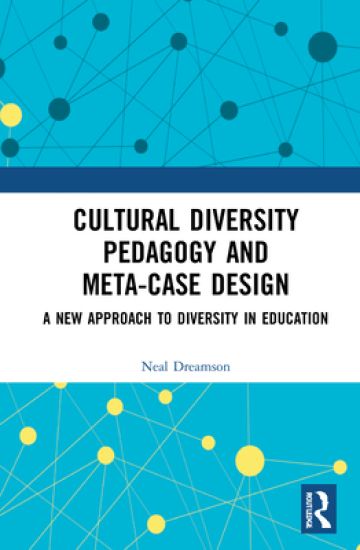
Cultural Diversity Pedagogy and Meta-Case Design
Responding to the growing need for educators to have a deeper understanding of cultural diversity, this book provides a theoretically-rich and empirically-sound analysis of diversity education, to develop a new cultural diversity pedagogy. The author deconstructs and navigates the complex field of diversity education, arguing for a more socially engaged approach, in which educators and researchers develop their perspectives on cultural diversity by examining their own assumptions, values, and beliefs. This is explored through a series of 10 case studies based in primary school settings demonstrating that teaching and learning environments are crucial to the success of cultural diversity.
Cultural Diversity Pedagogy and Meta-Case Design
Responding to the growing need for educators to have a deeper understanding of cultural diversity, this book provides a theoretically-rich and empirically-sound analysis of diversity education, to develop a new cultural diversity pedagogy. The author deconstructs and navigates the complex field of diversity education, arguing for a more socially engaged approach, in which educators and researchers develop their perspectives on cultural diversity by examining their own assumptions, values, and beliefs. This is explored through a series of 10 case studies based in primary school settings demonstrating that teaching and learning environments are crucial to the success of cultural diversity.
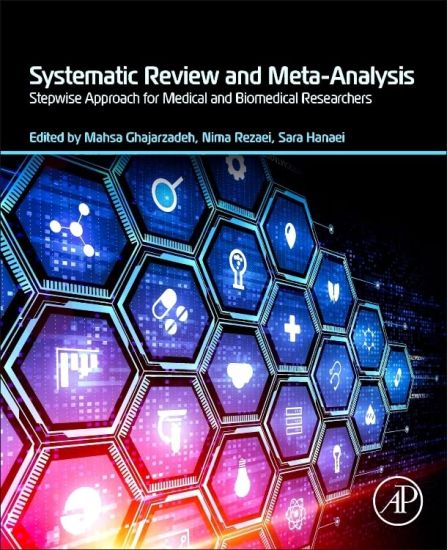
Systematic Review and Meta-Analysis

Systematic Review and Meta-Analysis

ELSEVIER SCIENCE PUBLISHING CO INC
2024
nidottu
Systematic Review and Meta-Analysis: Stepwise Approach for Medical and Biomedical Researchers presents a step-by-step approach to develop systematic reviews and meta-analysis for biomedical and medical research. Systematic reviews are the highest quality evidence in medical research, providing an answer to a specific question, and they can be developed in the form of comprehensive literature search, critical appraisal, and synthesis of the evidence. Systematic reviews and meta-analysis are key elements of evidence-based medicine by summarizing the results of previous studies with the use of specific and reliable methods. Initially, systematic review and meta-analysis were exclusive to clinical trials, however systematic reviews of observational and diagnostic studies have expanded, making it essential for members of the field to master those techniques. This practical reference is a valuable resource for biostaticians, researchers, students, and members of medical and biomedical fields who need to understand more about systematic reviews and meta-analysis in their research work.
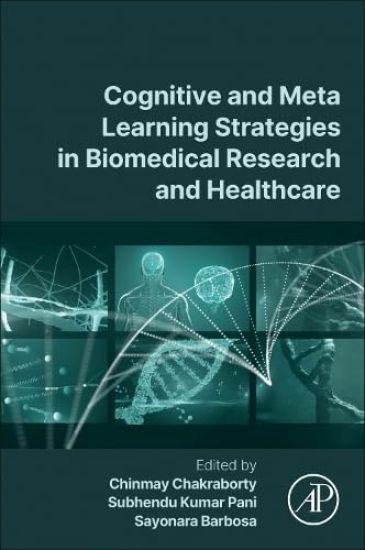
Cognitive and Meta Learning Strategies in Biomedical Research and Healthcare
Cognitive and Meta Learning Strategies in Biomedical Research Healthcare examines the dynamic intersection of cognitive science and meta-learning within the realm of biomedical research. The book addresses how to overcome the complexities of contemporary health challenges by harnessing the power of advanced learning methodologies, such as cognitive processes and meta learning
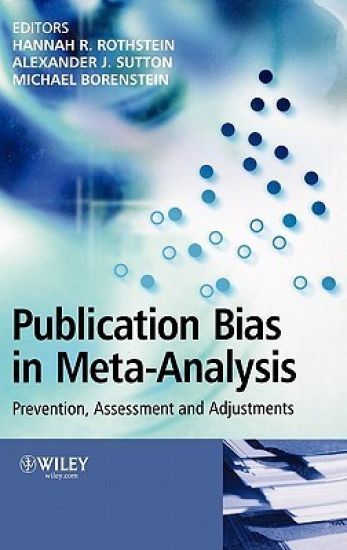
Publication Bias in Meta-Analysis
Publication bias is the tendency to decide to publish a study based on the results of the study, rather than on the basis of its theoretical or methodological quality. It can arise from selective publication of favorable results, or of statistically significant results. This threatens the validity of conclusions drawn from reviews of published scientific research. Meta-analysis is now used in numerous scientific disciplines, summarizing quantitative evidence from multiple studies. If the literature being synthesised has been affected by publication bias, this in turn biases the meta-analytic results, potentially producing overstated conclusions. Publication Bias in Meta-Analysis examines the different types of publication bias, and presents the methods for estimating and reducing publication bias, or eliminating it altogether. Written by leading experts, adopting a practical and multidisciplinary approach. Provides comprehensive coverage of the topic including: Different types of publication bias,Mechanisms that may induce them,Empirical evidence for their existence,Statistical methods to address them,Ways in which they can be avoided. Features worked examples and common data sets throughout.Explains and compares all available software used for analysing and reducing publication bias.Accompanied by a website featuring software, data sets and further material. Publication Bias in Meta-Analysis adopts an inter-disciplinary approach and will make an excellent reference volume for any researchers and graduate students who conduct systematic reviews or meta-analyses. University and medical libraries, as well as pharmaceutical companies and government regulatory agencies, will also find this invaluable.
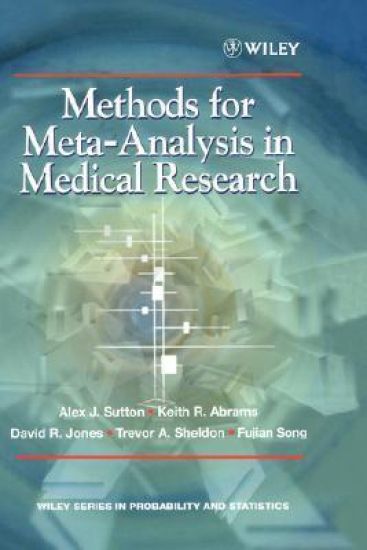
Methods for Meta-Analysis in Medical Research

Methods for Meta-Analysis in Medical Research

Alexander J. Sutton; Keith R. Abrams; David R Jones; Trevor A. Sheldon; Fujian Song

John Wiley Sons Inc
2000
sidottu
Meta-analysis provides a framework for combining the results of several clinical trials and drawing inferences about the effectiveness of medical treatments. The move towards evidence-based health care and practice is underpinned by the use of meta-analysis. Meta-analysis methods play a crucial role in health research and have been developed substantially over the last five years. * Provides a thorough criticism and an up-to-date survey of meta-analysis methods * Emphasises the practical approach, and illustrates the methods by numerous examples * Describes the use of Bayesian methods in meta-analysis * Includes discussion of appropriate software for each analysis * Includes numerous references to more advanced treatment of specialist topics * Refers to software code used in the examples available on the authors' Web site Practising statisticians, statistically minded clinicians and health research professionals will benefit greatly from the clear presentation and numerous examples. Medical researchers will grasp the basic principles of meta-analysis, and learn how to apply the various methods.
Handbook of Meta-analysis in Ecology and Evolution
Meta-analysis is a powerful statistical methodology for synthesizing research evidence across independent studies. This is the first comprehensive handbook of meta-analysis written specifically for ecologists and evolutionary biologists, and it provides an invaluable introduction for beginners as well as an up-to-date guide for experienced meta-analysts. The chapters, written by renowned experts, walk readers through every step of meta-analysis, from problem formulation to the presentation of the results. The handbook identifies both the advantages of using meta-analysis for research synthesis and the potential pitfalls and limitations of meta-analysis (including when it should not be used). Different approaches to carrying out a meta-analysis are described, and include moment and least-square, maximum likelihood, and Bayesian approaches, all illustrated using worked examples based on real biological datasets. This one-of-a-kind resource is uniquely tailored to the biological sciences, and will provide an invaluable text for practitioners from graduate students and senior scientists to policymakers in conservation and environmental management. * Walks you through every step of carrying out a meta-analysis in ecology and evolutionary biology, from problem formulation to result presentation * Brings together experts from a broad range of fields * Shows how to avoid, minimize, or resolve pitfalls such as missing data, publication bias, varying data quality, nonindependence of observations, and phylogenetic dependencies among species * Helps you choose the right software * Draws on numerous examples based on real biological datasets
Handbook of Meta-analysis in Ecology and Evolution
Meta-analysis is a powerful statistical methodology for synthesizing research evidence across independent studies. This is the first comprehensive handbook of meta-analysis written specifically for ecologists and evolutionary biologists, and it provides an invaluable introduction for beginners as well as an up-to-date guide for experienced meta-analysts. The chapters, written by renowned experts, walk readers through every step of meta-analysis, from problem formulation to the presentation of the results. The handbook identifies both the advantages of using meta-analysis for research synthesis and the potential pitfalls and limitations of meta-analysis (including when it should not be used). Different approaches to carrying out a meta-analysis are described, and include moment and least-square, maximum likelihood, and Bayesian approaches, all illustrated using worked examples based on real biological datasets. This one-of-a-kind resource is uniquely tailored to the biological sciences, and will provide an invaluable text for practitioners from graduate students and senior scientists to policymakers in conservation and environmental management. * Walks you through every step of carrying out a meta-analysis in ecology and evolutionary biology, from problem formulation to result presentation * Brings together experts from a broad range of fields * Shows how to avoid, minimize, or resolve pitfalls such as missing data, publication bias, varying data quality, nonindependence of observations, and phylogenetic dependencies among species * Helps you choose the right software * Draws on numerous examples based on real biological datasets