

Kirjahaku
Etsi kirjoja tekijän nimen, kirjan nimen tai ISBN:n perusteella.
1000 tulosta hakusanalla Nigel Botterill
This book will protect your audiences from the following disorders:· Death by PowerPoint· Tedium· Compulsive fidgeting· Losing-the-Will-to-Live SyndromeNearly all of us have to pitch or present our ideas, whether in a formal setting like a theatre, at a company conference, in a classroom or even selling a concept one-to-one to our boss. In Rock your Presentation, Nigel Barlow, a professional keynote speaker and creative coach to many of the world's most famous organisations, gives you inspiring insights and practical techniques to 'rock up' your presentation or speech. Many of these tips come from exploring what makes great music so moving and impactful, and are easy to apply to make your own talks more dynamic and memorable. Try changing your key for different emotional impact; come up with a stronger chorus and an exciting climax; create your speaker's rider; be a protest singer to unleash your passion; and learn when and how to go unplugged to touch your audience. Whether you want to create a whole new presentation or tune up a tired old one, Rock Your Presentation will give you plenty of fresh ideas.
Nearly all of us have to pitch or present our ideas, whether in a formal setting after lunch to a hundred jaded salespeople, in a lecture theatre or classroom, putting over our thoughts to a team of colleagues, or even selling a concept one-on-one to your boss.In all these situations we can choose between delivering a message that sounds like muzak, or one that wakes the listener up. Most presentations and pitches could benefit from being 'rocked up' - becoming more dynamic and memorable, in ways that arouse the passion of the audience. By applying the ideas in ROCK YOUR PRESENTATION you can deliver better, livelier and more emotionally engaging talks which leave audiences with the kind of high you get from being in a crowd at a great concert.Barlow applies the rock'n'roll metaphor throughout the book, turning what, to many, is a stressful subject into an exciting and fun exercise you can't wait to try out. So take the Van Halen approach to planning your presentation, deliver it like a hit song with a chorus and a bridge, play a few well-rehearsed power chords and set your audience ablaze.
A business book from Nigel Travis, the British-born Chairman and CEO of American multinational Dunkin Brands, owners of Dunkin Donuts and Baskin Robbins ice creams.
War and Peace: Fdr's Final Odyssey: D-Day to Yalta, 1943-1945
Nigel Hamilton
Mariner Books
2020
nidottu
The stirring climax to Nigel Hamilton's three-part saga of FDR at war--proof that he was the Second World War's key strategist, even on his deathbed "A first-class, lens-changing work." --James N. Mattis, former US secretary of defense Nigel Hamilton's celebrated trilogy culminates with a story of triumph and tragedy. Just as FDR was proven right by the D-day landings he had championed, so was he found to be mortally ill in the spring of 1944. He was the architect of a victorious peace that he would not live to witness. Using hitherto unpublished documents and interviews, Hamilton rewrites the famous account of World War II strategy given by Winston Churchill in his memoirs. Seventy-five years after the D-day landings we finally get to see, close-up and in dramatic detail, who was responsible for rescuing, and insisting upon, the great American-led invasion of France in June 1944, and why the invasion was led by Eisenhower. As FDR's D-day triumph turns to personal tragedy, we watch with heartbreaking compassion the course of the disease, and how, in the months left him as US commander in chief, the dying president attempted at Hawaii, Quebec, and Yalta to prepare the United Nations for an American-backed postwar world order. Now we know: even on his deathbed, FDR was the war's great visionary.

FDR at War Boxed Set: The Mantle of Command, Commander in Chief, and War and Peace
Nigel Hamilton
Mariner Books
2020
nidottu
The definitive three-volume history that FDR did not live to write: the story of World War II from his perspective, showing his mastery of strategy, his vision, and how he overcame resistance from Churchill and his own generals to set the course for victory. Mantle of Command, Commander in Chief, and War and Peace have been celebrated as "masterly" (The Wall Street Journal) In his deeply-researched, sweeping trilogy, Nigel Hamilton rewrites the history of FDR's role in World War II. First, Mantle of Command offers a radical new perspective on FDR's masterful--and underappreciated--personal charge of military direction following the disaster of Pearl Harbor. Then, in Commander in Chief, Hamilton spotlights the president's infamous clash with Churchill when he attempted to abandon Allied D-Day strategy. Finally, with War and Peace, Hamilton's celebrated trilogy culminates with a story of triumph and tragedy as FDR orchestrates D-Day, and, while gravely ill, travels from Hawai'i to Yalta, designing a victorious peace that he would not live to witness. Now we know: even on his deathbed, FDR was the war's great visionary.

A spiritual journey in poetry with the esoteric truths of life inside us all.
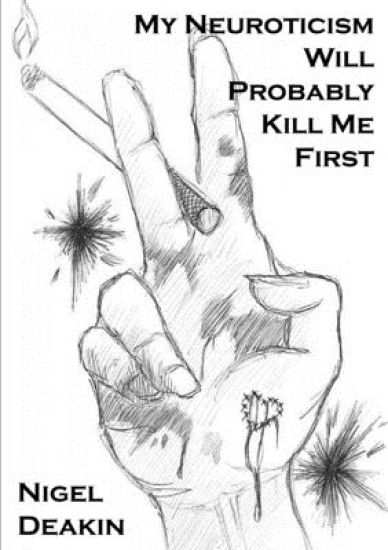
This is a collection of stories about a variety of subjects across a variety of genres ranging from fantasy to science fiction to self reflection. Fun, emotional, or at the very least interesting.
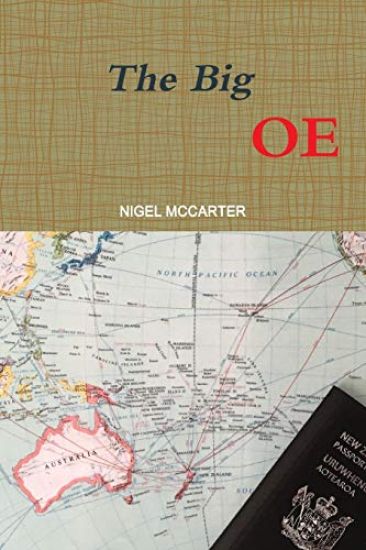
These days, it is difficult to believe that in the 1950s to 1980s, New Zealanders could travel to London, buy an old car or motorbike, and then drive or ride through Europe, the Middle East, Iraq, Iran, Afghanistan and Pakistan, most of the way back to Australia and New Zealand. These were the hey-days of the magic bus, and overland safaris in beaten-up old transit vans and trucks. Young New Zealanders have always had an incurable urge to travel and see the world, and chase the ghosts of their ancestors. The 'Big OE' has become part of New Zealand culture. The stories in this collection are snapshots of such travelers' experiences, about the cultural and environmental differences, adventure, in some cases daring, hardships, courage and determination, language, championship, humor, and having a good time. The stories span 65 years, but the emphasis is on the sixties and seventies. And they are all true. We hope you enjoy them.

This book is about a young wolf who loses his way home but gets help from a fox and they go on an adventure in the process. this is for anybody but mainly younger audiences. this is a fictional story.
Covering the elementary aspects of the physics of phases transitions and the renormalization group, this popular book is widely used both for core graduate statistical mechanics courses as well as for more specialized courses. Emphasizing understanding and clarity rather than technical manipulation, these lectures de-mystify the subject and show precisely "how things work." Goldenfeld keeps in mind a reader who wants to understand why things are done, what the results are, and what in principle can go wrong. The book reaches both experimentalists and theorists, students and even active researchers, and assumes only a prior knowledge of statistical mechanics at the introductory graduate level.Advanced, never-before-printed topics on the applications of renormalization group far from equilibrium and to partial differential equations add to the uniqueness of this book.

Most Western approaches to dreams are limited to a psychological paradigm. Building on Jung's work, which was heavily influenced by the transformative model of alchemy, a new multidimensional approach to the process of human transformation through dreams has been developed which recognises the interrelationship of the psychological and the spiritual, and works with the mirroring body in service of both. In the approach presented here, dreams are seen as a mixture of worldly impressions and expressions of our individual spirit, which is trying to speak to us through the metaphors and narrative of our dreams. In this way, the spiritual comes through the psychological dimension. Though it may seem to be a contradiction, our dreams hold the key to our 'awakening' and, by actively engaging with them we can unlock their potential for initiating and facilitating our own unfoldment. This book is about recognising this process when it occurs in dreams, and how to work with them in the service of our growth and self-realisation.
This book examines the phenomenon of modern memory as a reaction to total war, an aspiration to truth-seeking provoked by the independent forces of modern war and collective violence which is transnational, or postnational, in character. Using examples from prose and poetry, film and theatre, painting and photography, and music and the popular arts, the author traces a narrative path through the events of the twentieth century, defining the tradition of modern memory in terms of its essentially anti-militaristic, anti-war character, as expressed in the manner in which it represents recalled violence and atrocity. Through a series of thematic discussions of two world wars, the Shoah, urbicide and nuclear weapons, Postnational Memory explores the formation of transnational memory, drawing on examples from industrialized societies, with a focus on memory of real events and their reproduction in literature and the arts, often including personal recollections that link the self to the represented past. As such, by asking how the concept of modern memory is constructed through the victims of war and genocide, the book constitutes an alternative to national memories and hegemonic, militarist or ethnocentric histories. Surveying the emergence of new, transnational forms of remembering the past, it will appeal to students and scholars of sociology, memory studies and peace studies, as well as those working in disciplines such as modern and international history, cultural studies and military studies.
This book examines the phenomenon of modern memory as a reaction to total war, an aspiration to truth-seeking provoked by the independent forces of modern war and collective violence which is transnational, or postnational, in character. Using examples from prose and poetry, film and theatre, painting and photography, and music and the popular arts, the author traces a narrative path through the events of the twentieth century, defining the tradition of modern memory in terms of its essentially anti-militaristic, anti-war character, as expressed in the manner in which it represents recalled violence and atrocity. Through a series of thematic discussions of two world wars, the Shoah, urbicide and nuclear weapons, Postnational Memory explores the formation of transnational memory, drawing on examples from industrialized societies, with a focus on memory of real events and their reproduction in literature and the arts, often including personal recollections that link the self to the represented past. As such, by asking how the concept of modern memory is constructed through the victims of war and genocide, the book constitutes an alternative to national memories and hegemonic, militarist or ethnocentric histories. Surveying the emergence of new, transnational forms of remembering the past, it will appeal to students and scholars of sociology, memory studies and peace studies, as well as those working in disciplines such as modern and international history, cultural studies and military studies.

This book aims to provide an alternative perspective on the Western New Left (NL) as distinct from currently established right-wing and left-wing versions. It emphasizes the travails of the American Students for a Democratic Society (SDS).
The Western tradition has long held the view that while it is possible to know that God exists, it nevertheless remains impossible to know what God is. The ineffability of the monotheistic God extends to each of the Abrahamic faiths. In this volume, Tubbs considers Aristotle’s logic of mastery and questions the assumptions upon which God’s ineffability rests. Part I explores the tensions between the philosophical definition of the One as "thought thinking itself" (the Aristotelian concept of noesis noeseos) and the educational vocation of the individual as "know thyself" (gnothi seuton). Identifying vulnerabilities in the logic of mastery, Tubbs puts forth an original logic of education, which he calls modern metaphysics, or a logic of learning and education. Part II explores this new educational logic of the divine as a "logic of tears," as a "dreadful religious teacher," and as a way to cohere the three Abrahamic faiths in an educational concept of monotheism.

Focusing on the period between 1932 and 1968, this comprehensive study bridges the gap between recent political studies and available historiography, which generally conclude with the 1932 revolution. Dr. Brailey discusses the 1942 Japanese capture of Singapore that dragged a reluctant Thailand into World War II—a war Thai leaders believed was irrelevant to their national interests. He argues that this country, which had launched one of the East's earliest nationalist revolutions, had its political development reversed for a quarter century by the arrival of Japanese troops. Ironically, the Japanese presence in the region enabled most of Thailand's neighbors to promote their own development through decolonization. Dr. Brailey demonstrates that Thailand, once freed from post-war trauma, achieved a level of political freedom unsurpassed in Asia without seriously compromising its stability.

Focusing on the period between 1932 and 1968, this comprehensive study bridges the gap between recent political studies and available historiography, which generally conclude with the 1932 revolution. Dr. Brailey discusses the 1942 Japanese capture of Singapore that dragged a reluctant Thailand into World War II—a war Thai leaders believed was irrelevant to their national interests. He argues that this country, which had launched one of the East's earliest nationalist revolutions, had its political development reversed for a quarter century by the arrival of Japanese troops. Ironically, the Japanese presence in the region enabled most of Thailand's neighbors to promote their own development through decolonization. Dr. Brailey demonstrates that Thailand, once freed from post-war trauma, achieved a level of political freedom unsurpassed in Asia without seriously compromising its stability.

Applied Nonparametric Statistical Methods
Nigel Smeeton; Neil H. Spencer; Peter Sprent
TAYLOR FRANCIS LTD
2025
sidottu
Nonparametric statistical methods minimize the number of assumptions that need to be made about the distribution of data being analysed, unlike classical parametric methods. As such, they are an essential part of a statistician’s armoury, and this book is an essential resource in their application. Starting from the basics of statistics, it takes the reader through the main nonparametric approaches with an emphasis on carefully explained examples backed up by use of the R programming language.Key features of this fully revised and extended fifth edition include the following:An introductory chapter that provides a gentle introduction to the basics of statistics, including types of data, hypothesis testing, confidence intervals and ethical issuesAn R package containing functions that have been written for the examples in the text and the exercisesSummary bullet points at the end of each section to enable the reader to locate important principles quicklyA case study from medical research to demonstrate nonparametric approaches to the data analysisExamples fully integrated into the text, drawn from published research on contemporary issues, with more detail given in their explanationExtensive exercises along with complete solutions that allow the reader to test their understanding of the materialArticles used in the examples and exercises carefully chosen to enable readers to identify up-to-date literature in their field for research, publications and teaching materialNumerous historical references throughout the text, from which to explore the origins of nonparametric methodsApplied Nonparametric Statistical Methods, Fifth Edition, is a comprehensive course text in nonparametric techniques suitable for undergraduate students of mathematics and statistics. It assumes only basic previous experience of statistics, and with algebra kept to a minimum, it is also ideal for quantitative methods modules delivered to undergraduate or postgraduate students in science, business and health service training. It is an invaluable resource for researchers, medical practitioners, business managers, research and development staff, and others needing to interpret quantitative information. Suitable for self-directed learning in continuing professional development, it also acts as a handy accessible reference manual.

All life on Earth has the right to exist, but as we teeter on the verge of a sixth extinction this book discusses why biodiversity matters and why we should care if species go extinct.We are witnessing the largest and fastest rate of extinction in the history of the planet. While the concept of rights is a human one, all plants and animals strive to survive, and this book argues for their rights to continue doing so without being driven into premature extinction by human actions. Acknowledging and describing the practical reasons for conserving biodiversity, this book argues that these should not overshadow the compelling ethical reasons to care about the future of species other than our own. However, the issues are complex. What do we do when faced with an immediate ethical choice where biodiversity rights, animal rights, human rights, economic development and ecosystem survival all get mixed up together? There are seldom hard and fast answers, but thinking about and understanding a variety of points of view will help us make informed trade-offs. Drawing on his vast practical experience, the author presents insightful perspectives and real-world examples with the hope that this book will instigate a much-needed rethink about why and how we practise conservation.This book is essential reading for all those concerned with sustaining our planet, and all who inhabit it, in the face of climate breakdown, biodiversity loss and ecological collapse.