Kirjojen hintavertailu. Mukana 12 152 809 kirjaa ja 12 kauppaa.

Kirjahaku

Etsi kirjoja tekijän nimen, kirjan nimen tai ISBN:n perusteella.

1000 tulosta hakusanalla Pamela Cook

A History of the County of Essex

A History of the County of Essex

Pamela Studd

Early English Text Society
2000
sidottu
THIS volume is a second supplement to the Bibliography published in 1959. It lists printed books, pamphlets and sale catalogues located in public libraries, local newspapers and periodicals and articles published in a range of journals. It is mostly concerned with material published since the compilation of the previous volumes in 1959 and 1987, but it also includes earlier material which has since come to light. For the first time printed Acts of Parliamenthave been included. Like the Bibliography of 1959 and the Bibliography Supplement of 1987, it is divided into three parts: works on the county generally, on biography and family history, and on individual places and regions.
The Laws of Hammurabi

The Laws of Hammurabi

Pamela Barmash

Oxford University Press Inc
2020
sidottu
Among the best-known and most esteemed people known from antiquity is the Babylonian king Hammurabi. His fame and reputation are due to the collection of laws written under his patronage. This book offers an innovative interpretation of the Laws of Hammurabi. Ancient scribes would demonstrate their legal flair by composing statutes on a set of traditional cases, articulating what they deemed just and fair. The scribe of the Laws of Hammurabi advanced beyond earlier scribes in composing statutes that manifest systematization and implicit legal principles, and inserted the Laws of Hammurabi into the form of a royal inscription, shrewdly reshaping the genre. This tradition of scribal improvisation on a set of traditional cases continued outside of Mesopotamia. It influenced biblical law and the law of the Hittite empire significantly. The Laws of Hammurabi was also witness to the start of another stream of intellectual tradition. It became the subject of formal commentaries, marking a profound cultural shift. Scribes related to it in ways that diverged from prior attitudes; it became an object of study and of commentary, a genre that names itself as dependent on another text. The famous Laws of Hammurabi is here given the extensive attention it continues to merit.
For God and Liberty

For God and Liberty

Pamela Voekel

OXFORD UNIVERSITY PRESS INC
2022
sidottu
The Age of Revolution has traditionally been understood as an era of secularization, giving the transition from monarchy to independent republics through democratic movements a genealogy that assumes hostility to Catholicism. By centering the story on Spanish and Latin American actors, Pamela Voekel argues that at the heart of this nineteenth-century transformation in Spanish America was a transatlantic Catholic civil war. Voekel demonstrates Reform Catholicism's significance to the thought and action of the rebel literati who led decolonization efforts in Mexico and Central America, showing how each side of this religious divide operated from within a self-conscious intercontinental network of like-minded Catholics. For its central protagonists, the era's crisis of sovereignty provided a political stage for a religious struggle. Drawing on ecclesiastical archives, pamphlets, sermons, and tracts, For God and Liberty reveals how the violent struggles of decolonization and the period before and after Independence are more legible in light of the fault lines within the Church.
For God and Liberty

For God and Liberty

Pamela Voekel

OXFORD UNIVERSITY PRESS INC
2022
nidottu
The Age of Revolution has traditionally been understood as an era of secularization, giving the transition from monarchy to independent republics through democratic movements a genealogy that assumes hostility to Catholicism. By centering the story on Spanish and Latin American actors, Pamela Voekel argues that at the heart of this nineteenth-century transformation in Spanish America was a transatlantic Catholic civil war. Voekel demonstrates Reform Catholicism's significance to the thought and action of the rebel literati who led decolonization efforts in Mexico and Central America, showing how each side of this religious divide operated from within a self-conscious intercontinental network of like-minded Catholics. For its central protagonists, the era's crisis of sovereignty provided a political stage for a religious struggle. Drawing on ecclesiastical archives, pamphlets, sermons, and tracts, For God and Liberty reveals how the violent struggles of decolonization and the period before and after Independence are more legible in light of the fault lines within the Church.
Art Matters

Art Matters

Pamela Gordon

OXFORD UNIVERSITY PRESS INC
2023
nidottu
Make your Art Appreciation course as inspiring as the rich world of art that it covers. Art Matters enables students to experience art actively and meaningfully, weaving together innovative pedagogy and compelling stories about a wide assortment of artworks and artists to show students that art is everywhere, art is vibrant, and art matters. Art Matters presents a contemporary approach to art appreciation, offering a compelling narrative, a wide range of works created by numerous artists from around the world, and an active and meaningful learning experience. Through stories, examples, thoughtful pedagogy, and in-depth discussions of process and history, Art Matters motivates students to experience art actively and meaningfully. By asking questions and exposing students to different viewpoints and ideas, the author gives them the tools to speak, write, think critically, and form conclusions about what they see in familiar and unfamiliar works. Important updates to the second edition include: Two new thought-provoking "How Art Matters" stories on the graphic design for the 2020 U.S. Census and Faith Ringgold's For the Women's House "Practice Art Matters" activities that now build in complexity throughout each chapter, enabling students to develop progressively more sophisticated skills A reconceptualized Chapter 2 that introduces how to understand art Nearly 100 new artworks - including an Asmat shield, Harley-Davidson motorcycle, and works by Marie-Guillemine Benoist and Kader Attia - that add to the large variety of objects and artists
Environmental Justice

Environmental Justice

Pamela Hill

OXFORD UNIVERSITY PRESS INC
2026
nidottu
Environmental justice is a relatively recent concept in the larger context of environmental protection. It has become a focus of US and European Union environmental policy, UN actions, and the activities of many nongovernmental environmental organizations. Environmental justice is an evolving idea representing many points of view. It encompasses not only traditional environmental issues like clean air and clean water, but also social issues such as employment, nutrition, and access to health care. Environmental justice communities, compared to others, likely do not enjoy tree canopy and parks, but they are more likely to suffer pollution from nearby factories. The development of environmental justice tracks our growing understanding of racism and wealth disparity, and our understanding of inequality between the global north and the global south. Environmental justice recognizes that environmental benefits and burdens have not been distributed fairly, and that the people making decisions often do not include those most directly affected: people of color, Indigenous populations, low-income communities, and those who are underserved and disenfranchised for other reasons such as age, gender, or disability. Environmental Justice: A Very Short Introduction defines the term, identifies specific environmental justice populations, examines root causes of the issues, including racism, capitalism, and colonialism, and traces the history of the environmental justice movement and governmental responses to it.
White Screens, Black Dance

White Screens, Black Dance

Pamela Krayenbuhl

OXFORD UNIVERSITY PRESS INC
2025
sidottu
White Screens, Black Dance analyzes the film and television dances of male screen stars in the United States during the mid-twentieth century. Unpacking the complex physical and visual codes performed by four case studies--the Nicholas Brothers, Gene Kelly, Elvis Presley, and Sammy Davis, Jr.--it argues that each employs Black (Africanist) dance and movement vocabularies in distinct ways, all using them to construct shifting models of masculinity over the course of their careers. In so doing, this book theorizes a practice of appropriation called blackbodying, whereby non-Black performers use Black dance and movement styles without using blackface makeup. Applying methodologies from both film and media studies and dance studies, it offers an interdisciplinary reading of these men's star texts and their screen-dances throughout the midcentury period. To best understand the nuances of their performances, White Screens, Black Dance considers not only the ever-changing, often ambiguous and contradictory signifiers of racial and gender identity from the 1940s-1960s, but also the ways that class, and the differing industrial and visual environments of Hollywood film vs. broadcast television, further shape how all five men danced their masculinities for the camera(s). It ultimately reveals how these resultant midcentury masculinities have continued to influence danced masculinity ever since.
White Screens, Black Dance

White Screens, Black Dance

Pamela Krayenbuhl

OXFORD UNIVERSITY PRESS INC
2025
nidottu
White Screens, Black Dance analyzes the film and television dances of male screen stars in the United States during the mid-twentieth century. Unpacking the complex physical and visual codes performed by four case studies--the Nicholas Brothers, Gene Kelly, Elvis Presley, and Sammy Davis, Jr.--it argues that each employs Black (Africanist) dance and movement vocabularies in distinct ways, all using them to construct shifting models of masculinity over the course of their careers. In so doing, this book theorizes a practice of appropriation called blackbodying, whereby non-Black performers use Black dance and movement styles without using blackface makeup. Applying methodologies from both film and media studies and dance studies, it offers an interdisciplinary reading of these men's star texts and their screen-dances throughout the midcentury period. To best understand the nuances of their performances, White Screens, Black Dance considers not only the ever-changing, often ambiguous and contradictory signifiers of racial and gender identity from the 1940s-1960s, but also the ways that class, and the differing industrial and visual environments of Hollywood film vs. broadcast television, further shape how all five men danced their masculinities for the camera(s). It ultimately reveals how these resultant midcentury masculinities have continued to influence danced masculinity ever since.
The Godwinian Novel

The Godwinian Novel

Pamela Clemit

Clarendon Press
1993
sidottu
The Godwinian Novel is a pioneering analysis of the school of fiction inaugurated by William Godwin, and developed in the works of his principal followers, Charles Brockden Brown and Mary Wollstonecraft Shelley. In the first study of these authors as a historically specific group, Pamela Clemit argues for a greater unity between Godwin's fictional techniques and his radical political philosophy than has been perceived. Her analysis of the works of Brown and Mary Shelley, moreover, reveals how these writers modified, reshaped, and redefined Godwin's distinctive themes and techniques in response to shifting ideological pressures in the post-revolutionary period. Examining prose ficiton in a period traditionally seen as dominated by poetry, Clemit stresses the necessity for a revised view of British Romanticism. Uncovering the links between Godwin's fictional analysis of sujective experience and his progressive political philosophy, The Godwinian Novel paves the way for a reappraisal of the apparently quietistic and introspective concerns of other writers of the period.
The Diva's Gift to the Shakespearean Stage

The Diva's Gift to the Shakespearean Stage

Pamela Allen Brown

Oxford University Press
2021
sidottu
The Diva's Gift traces the far-reaching impact of the first female stars on the playwrights and players of the all-male stage. When Shakespeare entered the scene, women had been acting in Italian troupes for two decades, traveling in Italy and beyond and performing in all genres, including tragedy. The ambitious actress reinvented the innamorata, making her more charismatic and autonomous, thrilling audiences with her skills. Despite fervent attacks, some actresses became the first international stars, winning royal and noble patrons and literary admirers in France and Spain. After Elizabeth and her court caught wind of their success in Paris, Italian troupes with actresses crossed the Channel to perform. The Italians' repeat visits and growing fame posed a radical challenge to English professionals just as they were building their first paying theaters. Some writers treated the actress as a whorish threat to their stage, which had long minimized female roles. Others saw a vital new model full of promise. Lyly, Marlowe, and Kyd endowed innamorata parts with hot-blooded, racialized passions, but made them self-aware agents, not counters traded between men. Shakespeare, Jonson, Webster and others followed, ringing changes on the new type in comedy, tragedy, and romance. Like the comici they recycled actress-linked theatergrams and star scenes, such as cross-dressing, the mad scene, and the sung lament. In this way, the diva's prodigious virtuosity and stardom altered the horizons of playmaking even on the womanless stage. Capitalizing on the talents of boy players, the best playwrights created bold new roles endowed with her alien glamour, such as Lyly's Sapho and Pandora, Marlowe's Dido, Kyd's Bel-Imperia, Webster's Vittoria, and Shakespeare's Beatrice, Viola, Portia, Juliet, and Ophelia. Cleopatra is not alone in her superb theatricality and dazzling strangeness. As this book demonstrates, the diva's gifts mark them all.
The Radheshyam Ramayan in Text and Performance

The Radheshyam Ramayan in Text and Performance

Pamela Lothspeich

Oxford University Press
2025
sidottu
The Radheshyam Ramayan in Text and Performance delves into the heart of early 20th-century India, where a remarkable poet from Bareilly reimagined the timeless epic of the Ramayan. This biography chronicles the life of Pandit Radheshyam Kathavachak, a brahmin poet and singer-storyteller whose modern rendition of the Ramayan resonated with the masses and secured his place in the lineage of revered Ramayan poets like Valmiki and Tulsidas. Drawing inspiration from Tulsidas's Ramcaritmanas and navigating the socio-political landscape of Gandhi's India, Kathavachak's 'Radheshyam Ramayan' emerged as a beacon of 'epic modernity.' Initially penned in a blend of Hindi-Urdu, his work underwent significant revisions, reflecting his evolving perspective and the changing times. Through extensive ethnographic research, this book offers an intimate look at Kathavachak's journey, his creative process, and the cultural milieu that influenced his storied career. It also provides a window into the world of Ramlila performances, showcasing how Kathavachak's epic swiftly transitioned from text to stage, captivating audiences across northern India. "Rediscovering the Ramayan" is not just a biography; it's an exploration of a man who transcended the constraints of his era to leave an indelible mark on the literary and performance arts as a celebrated Vaishnav poet-singer.
Tomorrow's Table

Tomorrow's Table

Pamela C. Ronald; Raoul W. Adamchak

Oxford University Press Inc
2018
nidottu
"Tomorrow's Table" argues that a judicious blend of two important strands of agriculture--genetic engineering and organic farming--is key to helping feed the world's growing population in an ecologically balanced manner. Pamela Ronald, a geneticist, and her husband, Raoul Adamchak, an organic farmer, take the reader inside their lives for roughly a year, allowing us to look over their shoulders so that we can see what geneticists and organic farmers actually do. Readers see the problems that farmers face, trying to provide larger yields without resorting to expensive or environmentally hazardous chemicals, a problem that will loom larger and larger as the century progresses. They learn how organic farmers and geneticists address these problems. The book is for consumers, farmers, and policy decision makers who want to make food choices and policy that will support ecologically responsible farming practices, and for anyone who wants accurate information about organic farming, genetic engineering, and their potential impacts on human health and the environment. The first edition was published in hardcover in 2008 and in paperback in 2009. This second edition reflects the many and varied changes the fields of farming and genetic engineering have seen since 2009. It includes a new preface and three new chapters-one on politics and food-related protests such as the Marin county anti-vaccine movement and the subsequent outbreak of whooping cough, one on farming and food security, and one containing various recipes. Existing chapters on the tools of genetic engineering, organic vs. conventional foods, the tools of organic agriculture, and food labeling and legislature have all been updated.
Icons and Iconoclasm in Japanese Buddhism

Icons and Iconoclasm in Japanese Buddhism

Pamela D. Winfield

Oxford University Press Inc
2013
sidottu
Pamela D. Winfield offers a fascinating juxtaposition and comparison of the thoughts of two pre-modern Japanese Buddhist masters on the role of imagery in the enlightenment experience. Kukai (774-835) believed that real and imagined forms were indispensable to his new esoteric Mikkyo method for ''becoming a Buddha in this very body'' (sokushin jobutsu), yet he deconstructed the significance of such imagery in his poetic and doctrinal works. Conversely, Dogen (1200-1253) believed that ''just sitting'' in Zen meditation without any visual props or mental elaborations could lead one to realize that ''this very mind is Buddha'' (sokushin zebutsu), but he too privileged select Zen icons as worthy of veneration. In considering the nuanced views of Kukai and Dogen, Icons and Iconoclasm in Japanese Buddhism updates previous comparisons of their oeuvres and engages their texts and images together for the first time in two decades. Winfield liberates them from sectarian scholarship, which has long pigeon-holed them into iconographic/ritual vs. philological/philosophical categories, and restores the historical symbiosis between religious thought and artistic expression that was lost in the nineteenth-century disciplinary distinction between religious studies and art history. Winfield breaks new methodological ground by proposing space and time as organizing principles for analyzing both meditative experience as well as visual/material culture and presents a wider vision of how Japanese Buddhists themselves understood the role of imagery before, during, and after awakening.
Icons and Iconoclasm in Japanese Buddhism

Icons and Iconoclasm in Japanese Buddhism

Pamela D. Winfield

Oxford University Press Inc
2013
nidottu
Pamela D. Winfield offers a fascinating juxtaposition and comparison of the thoughts of two pre-modern Japanese Buddhist masters on the role of imagery in the enlightenment experience. Kukai (774-835) believed that real and imagined forms were indispensable to his new esoteric Mikkyo method for ''becoming a Buddha in this very body'' (sokushin jobutsu), yet he deconstructed the significance of such imagery in his poetic and doctrinal works. Conversely, Dogen (1200-1253) believed that ''just sitting'' in Zen meditation without any visual props or mental elaborations could lead one to realize that ''this very mind is Buddha'' (sokushin zebutsu), but he too privileged select Zen icons as worthy of veneration. In considering the nuanced views of Kukai and Dogen, Icons and Iconoclasm in Japanese Buddhism updates previous comparisons of their oeuvres and engages their texts and images together for the first time in two decades. Winfield liberates them from sectarian scholarship, which has long pigeon-holed them into iconographic/ritual vs. philological/philosophical categories, and restores the historical symbiosis between religious thought and artistic expression that was lost in the nineteenth-century disciplinary distinction between religious studies and art history. Winfield breaks new methodological ground by proposing space and time as organizing principles for analyzing both meditative experience as well as visual/material culture and presents a wider vision of how Japanese Buddhists themselves understood the role of imagery before, during, and after awakening.
Criminal Circumstance

Criminal Circumstance

Pamela Wilcox; Kenneth Land; Scott A. Hunt

AldineTransaction
2002
sidottu
The main objective of this book is to propose an alternative criminal opportunity theory. The authors build upon social control and routine activities to develop a dynamic, multi-contextual criminal opportunity theory. Emphasizing the importance of contextual explanations of criminal acts, they propose two levels of analysis: individual and environmental. At each level, the theory pivots on three broad organizing constructs--offenders motivated to commit criminal acts, targets such as persons or property suitable as objects of criminal acts, and the presence or absence of individuals or other defensive mechanisms capable of serving as guardians against criminal acts. Crime is profoundly real, possessing qualities that make its occurrence and prevention pressing and persistent matters for individuals and societies. Theory, in contrast, is seen as highly abstract and removed from the seriousness of "real life." Theory almost seems to be a peculiar sport of an academic class. The practically minded, even some academic criminologists, are often perplexed by the seeming obsession some scholars have with theory, which, after all, is nothing more than an explanation of facts. The practically minded, seeing a compelling need to identify the crucial factors that could be used to predict and prevent crime, wonder why anyone would invest precious time and energy into speculating about the abstract, underlying details of why crime occurs when and where it does.The authors contend that every intervention, prevention, and policy is based on some theoretical explanation of the causes of human behavior. The improvement of interventions, preventions, and policies is thus directly related to the improvement of theoretical understandings of the abstract, underlying details of the causes of crime. The development of explanations of events, when properly done, is a crucial component to understanding and possibly improving the "real world." This work does just that.
Criminal Circumstance

Criminal Circumstance

Pamela Wilcox; Kenneth Land; Scott A. Hunt

AldineTransaction
2002
nidottu
The main objective of this book is to propose an alternative criminal opportunity theory. The authors build upon social control and routine activities to develop a dynamic, multi-contextual criminal opportunity theory. Emphasizing the importance of contextual explanations of criminal acts, they propose two levels of analysis: individual and environmental. At each level, the theory pivots on three broad organizing constructs--offenders motivated to commit criminal acts, targets such as persons or property suitable as objects of criminal acts, and the presence or absence of individuals or other defensive mechanisms capable of serving as guardians against criminal acts. Crime is profoundly real, possessing qualities that make its occurrence and prevention pressing and persistent matters for individuals and societies. Theory, in contrast, is seen as highly abstract and removed from the seriousness of "real life." Theory almost seems to be a peculiar sport of an academic class. The practically minded, even some academic criminologists, are often perplexed by the seeming obsession some scholars have with theory, which, after all, is nothing more than an explanation of facts. The practically minded, seeing a compelling need to identify the crucial factors that could be used to predict and prevent crime, wonder why anyone would invest precious time and energy into speculating about the abstract, underlying details of why crime occurs when and where it does.The authors contend that every intervention, prevention, and policy is based on some theoretical explanation of the causes of human behavior. The improvement of interventions, preventions, and policies is thus directly related to the improvement of theoretical understandings of the abstract, underlying details of the causes of crime. The development of explanations of events, when properly done, is a crucial component to understanding and possibly improving the "real world." This work does just that.
Designing and Implementing Mathematics Instruction for Students with Diverse Learning Needs
This exciting new book integrates the explicit teaching practices that have proven effective for students with disabilities with the NCTM math standards that dominant current mathematics practices in the United States . In Part 1 of the book, teachers learn the fundamentals of mathematics assessment and instructional design for conceptual, declarative knowledge, procedural, and problem-solving lessons. In Part 2, the detailed scope and sequence charts, along with instructional guidelines keyed to the objectives, provide teachers with specific guidelines for assessment and design. The curriculum-based assessment chapter (Ch. 2) helps teachers group students for instruction, place in curriculum, monitor performance, and make data based decisions. Content coverage of all five NCTM content standards provides teachers the support needed to access the general education curriculum and help their students meet annual yearly progress expectations (Chapters 7 — 15). Detailed scope and sequence charts provide a valuable resource for assessing, planning,and designing instruction (Chapters 7-15). Instructional design discussion includes four domains: concepts, declarative knowledge, problem solving, and procedural knowledge. When teachers understand the function of the instruction, their effectiveness and efficiency are enhanced (Chapters 3-15). Integration of explicit teaching practices with NCTM approach helps teachers maintain practices that work for students with diverse needs while integrating reformed-based mathematics practices (in Chapters 1, 7-15). Detailed guidelines, including scripted lessons, on HOW to design and deliver effective instruction. These sample lessons illustrate how to apply the explicit teaching sequence to various content areas and provide examples for preservice and inservice teachers to use when developing their own lessons.
Mothers on the Move

Mothers on the Move

Pamela Feldman-Savelsberg

University of Chicago Press
2016
sidottu
The massive scale and complexity of international migration today tends to obscure the nuanced ways migrant families seek a sense of belonging. In this book, Pamela Feldman-Savelsberg takes readers back and forth between Cameroon and Germany to explore how migrant mothers through the careful and at times difficult management of relationships juggle belonging in multiple places at once: their new country, their old country, and the diasporic community that bridges them. Feldman-Savelsberg introduces readers to several Cameroonian mothers, each with her own unique history, concerns, and voice. Through scenes of their lives at a hometown association's year-end party, a celebration for a new baby, a visit to the Foreigners' Office, and many others as well as the stories they tell one another, Feldman-Savelsberg enlivens our thinking about migrants' lives and the networks and repertoires that they draw on to find stability and, ultimately, belonging. Placing women's individual voices within international social contexts, this book unveils new, intimate links between the geographical and the generational as they intersect in the dreams, frustrations, uncertainties, and resolve of strong women holding families together across continents.
Mothers on the Move

Mothers on the Move

Pamela Feldman-Savelsberg

University of Chicago Press
2016
nidottu
The massive scale and complexity of international migration today tends to obscure the nuanced ways migrant families seek a sense of belonging. In this book, Pamela Feldman-Savelsberg takes readers back and forth between Cameroon and Germany to explore how migrant mothers through the careful and at times difficult management of relationships juggle belonging in multiple places at once: their new country, their old country, and the diasporic community that bridges them. Feldman-Savelsberg introduces readers to several Cameroonian mothers, each with her own unique history, concerns, and voice. Through scenes of their lives at a hometown association's year-end party, a celebration for a new baby, a visit to the Foreigners' Office, and many others as well as the stories they tell one another, Feldman-Savelsberg enlivens our thinking about migrants' lives and the networks and repertoires that they draw on to find stability and, ultimately, belonging. Placing women's individual voices within international social contexts, this book unveils new, intimate links between the geographical and the generational as they intersect in the dreams, frustrations, uncertainties, and resolve of strong women holding families together across continents.
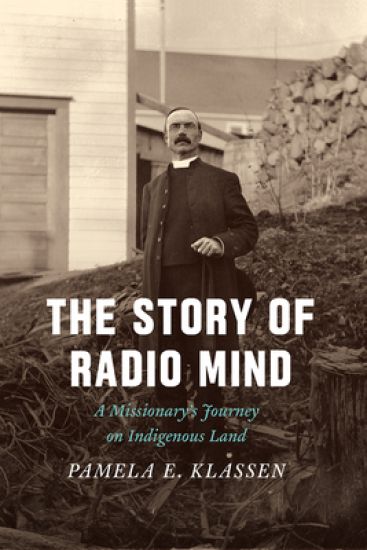
The Story of Radio Mind

The Story of Radio Mind

Pamela E. Klassen

University of Chicago Press
2018
sidottu
At the dawn of the radio age in the 1920s, a settler-mystic living on northwest coast of British Columbia invented radio mind: Frederick Du Vernet—Anglican archbishop and self-declared scientist—announced a psychic channel by which minds could telepathically communicate across distance. Retelling Du Vernet’s imaginative experiment, Pamela Klassen shows us how agents of colonialism built metaphysical traditions on land they claimed to have conquered. Following Du Vernet’s journey westward from Toronto to Ojibwe territory and across the young nation of Canada, Pamela Klassen examines how contests over the mediation of stories—via photography, maps, printing presses, and radio—lucidly reveal the spiritual work of colonial settlement. A city builder who bargained away Indigenous land to make way for the railroad, Du Vernet knew that he lived on the territory of Ts’msyen, Nisga’a, and Haida nations who had never ceded their land to the onrush of Canadian settlers. He condemned the devastating effects on Indigenous families of the residential schools run by his church while still serving that church. Testifying to the power of radio mind with evidence from the apostle Paul and the philosopher Henri Bergson, Du Vernet found a way to explain the world that he, his church and his country made. Expanding approaches to religion and media studies to ask how sovereignty is made through stories, Klassen shows how the spiritual invention of colonial nations takes place at the same time that Indigenous peoples—including Indigenous Christians—resist colonial dispossession through stories and spirits of their own.