Kirjojen hintavertailu. Mukana 11 717 486 kirjaa ja 12 kauppaa.

Kirjahaku

Etsi kirjoja tekijän nimen, kirjan nimen tai ISBN:n perusteella.

1000 tulosta hakusanalla Pascal Mercier

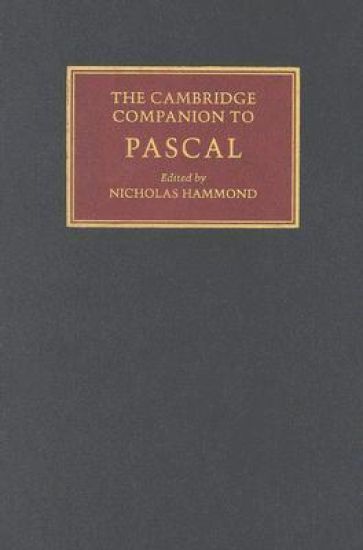
The Cambridge Companion to Pascal

The Cambridge Companion to Pascal

Cambridge University Press
2003
sidottu
Each volume of this series of companions to major philosophers contains specially commissioned essays by an international team of scholars, together with a substantial bibliography, and will serve as a reference work for students and nonspecialists. One aim of the series is to dispel the intimidation such readers often feel when faced with the work of a difficult and challenging thinker. Blaise Pascal (1623–62) occupies a position of pivotal importance in many domains: philosophy, mathematics, physics, religious polemics and apologetics. In this volume a team of leading scholars presents the full range of Pascal's achievement and surveys the intellectual background of his thought and the reception of his work. New readers and nonspecialists will find this the most convenient and accessible guide to Pascal currently available. Advanced students and specialists will find a conspectus of recent developments in the interpretation of Pascal.
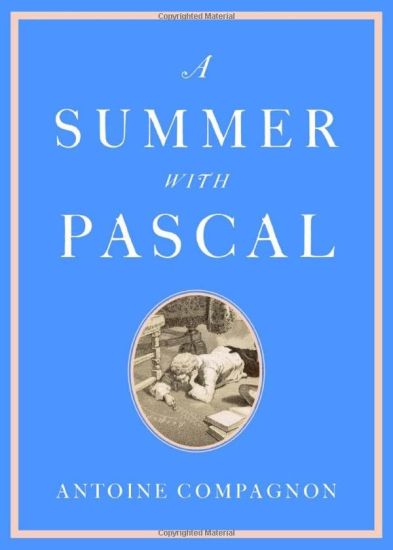
A Summer with Pascal

A Summer with Pascal

Antoine Compagnon

HARVARD UNIVERSITY PRESS
2024
sidottu
From an eminent scholar, a spirited introduction to one of the great polymaths in the history of Europe.Blaise Pascal (1623–1662) is best known in the English-speaking world for his contributions to mathematics and physics, with both a triangle and a law in fluid mechanics named after him. Meanwhile, the classic film My Night at Maud’s popularized Pascal’s wager, an invitation to faith that has inspired generations of theologians. Despite the immensity of his reputation, few read him outside French schools. In A Summer with Pascal, celebrated literary critic Antoine Compagnon opens our minds to a figure somehow both towering and ignored.Compagnon provides a bird’s-eye view of Pascal’s life and significance, making this volume an ideal introduction. Still, scholars and neophytes alike will profit greatly from his masterful readings of the Pensées—a cornerstone of Western philosophy—and the Provincial Letters, in which Pascal advanced wry theological critiques of his contemporaries. The concise, taut chapters build upon one another, easing into writings often thought to be forbidding and dour. With Compagnon as our guide, these works are not just accessible but enchanting.A Summer with Pascal brings the early modern thinker to life in the present. In an age of profound existential doubt and assaults on truth and reason, in which religion and science are so often crudely opposed, Pascal’s sophisticated commitment to both challenges us to meet the world with true intellectual vigor.
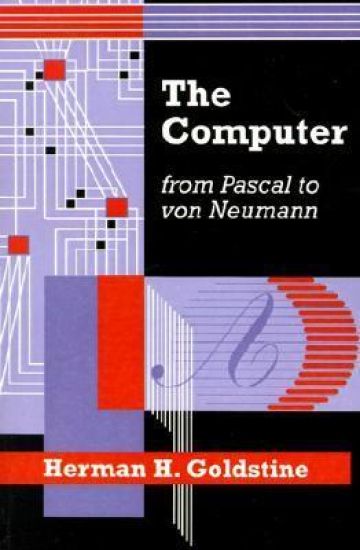
The Computer from Pascal to von Neumann

The Computer from Pascal to von Neumann

Herman H. Goldstine

Princeton University Press
1980
pokkari
In 1942, Lt. Herman H. Goldstine, a former mathematics professor, was stationed at the Moore School of Electrical Engineering at the University of Pennsylvania. It was there that he assisted in the creation of the ENIAC, the first electronic digital computer. The ENIAC was operational in 1945, but plans for a new computer were already underway. The principal source of ideas for the new computer was John von Neumann, who became Goldstine's chief collaborator. Together they developed EDVAC, successor to ENIAC. After World War II, at the Institute for Advanced Study, they built what was to become the prototype of the present-day computer. Herman Goldstine writes as both historian and scientist in this first examination of the development of computing machinery, from the seventeenth century through the early 1950s. His personal involvement lends a special authenticity to his narrative, as he sprinkles anecdotes and stories liberally through his text.
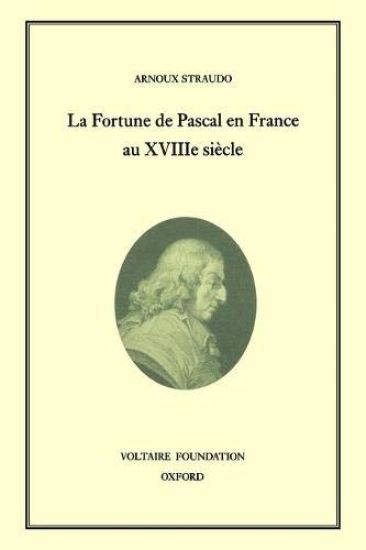
La Fortune de Pascal en France au XVIII? Siècle

La Fortune de Pascal en France au XVIII? Siècle

Arnoux Straudo

Voltaire Foundation
1997
sidottu
Avant la parution des Lettres philosophiques de Voltaire, chaque grande famille intellectuelle examine la production pascalienne selon une perspective traditionelle. Après la XXV Lettre, où s’affrontent deux morales, deux épistémologies, deux conceptions de Dieu, le regard sur Pascal perd de son unité. Certes, parmi les écrivains des Lumières, l’anthropologie pascalienne est condamnée: la valorisation de l’amour propre, la croyance en l’idée de nature, le souci, le souci de bienfaisance, l’esprit de tolérance, le concept d’utilité, la foi dans le progrès et l’éfficacité de l’action politique s’opposent au tragique pascalien. Mais certains auteurs , tel Vauvenargues, sont sensibles à l’esthétique de Pascal, tandis que d’autres, comme d’Alembert, vantent ses mérites scientifiques. Le paradoxe de la fortune pascalienne est surtout entretenu, dans le parti des Lumières, par l’orientation sceptique donnée aux fragments sur la coutume ou sur le désenchantement du monde. Conséquence du progrès de l’esprit ‘philosophique’, les apologistes, chez qui le sens du péché s’est atténué, défendent avec tiédeur Pascal, en oubliant progressivement la dimension théologique des Pensées et en orientant ce livre vers une interprétation profane: les preuves historiques tendent à passer au second plan. L’apologie traditionnelle reconnaît un rôle social au christianisme, parallèlement au concept d’utilité et de progrès qui imprègnent les consciences religieuses. Dans ce contexte, peu favorable á une bonne compréhension de la théologie pascalienne, les jésuites atténuent leurs critiques envers l’auteur des Provinciales, tandis que les jansénistes, à l’exemple de Louis Racine, se révèlent des disciples infidèles: les preuves métaphysiques, naturelles ou morales ne s’inscrivent pas dans la filiation pascalienne. Les défenseurs de la religion chrétienne restent étrangers au message pascalien.Condorcet, premier éditeur des Pensées depuis Port-Royal, opère une fracture saisissante entre le moraliste et l’apologiste jusqu’à enrôler Pascal dans le camps des athées. La fin du XVIIIe siècle est marquée par le renouveau d’une sensibilité religieuse, mais celle-ci reste éloignée de la thématique pascalienne. Seule la littérature, avec l’éloge de la mélancolie, la fascination pour la subjectivité, la reconnaissance du fragment, offre l’amorce d’une transformation du regard sur Pascal. En conclusion, il semble que l’auteur du dix-septième siècle ne soit compris ni par les philosophes ni par les apologistes, dont l’horizon intellectuelle est paradoxalement réuni par les critères de raison ou d’utilité. Leur rapport à l’oeuvre pascalienne ne se lit que sous la forme d’une stratégie des ‘morceaux choisis’. Ce sujet a aussi souligné l’intérêt d’un débat toujours recommencé: le XX résonne encore de l’affrontement entre le doute et l’optimisme, entre une interrogation sur les valeurs et la foi dans le progrès, entre la dénonciation de la perte des sens et le pari sur l’histoire. Le dialogue entre l’humanisme et l’anti-humanisme est de tous les siècles.
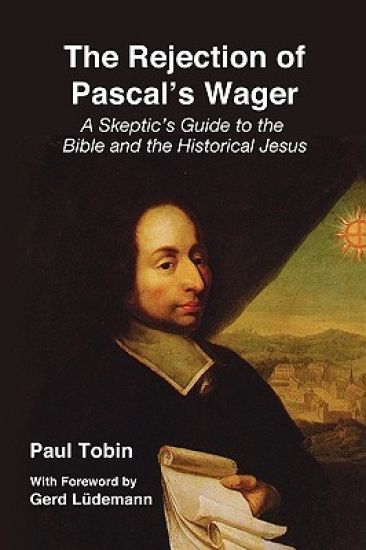
The Rejection of Pascal's Wager

The Rejection of Pascal's Wager

Paul Tobin

New Generation Publishing
2009
pokkari
Armed with the results of critical historical research and a mind free from the shackles of dogma, Paul Tobin dissects the Bible and the historical Jesus in a way only a sceptic can. Tobin shows the bible, with its numerous contradictions, historical errors and scientific inaccuracies, cannot be considered inerrant. He guides us through the intricacies of modern archaeology and comparative mythology, showing us that the much told stories in the Bible - Adam and Eve, Noah and Moses - are myths, invented by the ancient Hebrews under the influence of Babylonian beliefs. He demonstrates that the gospels, far from being eye-witness accounts, were written by authors unknown to us and were composed many decades after Jesus' death. He reveals that the stories regarding Jesus in the gospels are a combination of historical memory, legendary development and mythical fabrication.With the field of biblical scholarship increasingly packed with evangelicals - where the results of "research" are always in line with traditional church teachings - this book fills an important gap in the literature on Christianity and the Bible.
Unofficial Pedro Pascal Book and Crochet Kit

Unofficial Pedro Pascal Book and Crochet Kit

Kati Gálusz

Quarto Publishing Group USA Inc
2026
muu
Create a Pedro Pascal amigurumi doll! With this unique kit, you get all the materials and instructions you need to stitch Pedro in one of his classic looks. An inspiring actor and advocate, it’s no wonder Pedro Pascal is having his Hollywood moment. And you can get in on the fun with the Unofficial Pedro Pascal Book and Crochet Kit! Start with crochet basics, including techniques and illustrated stitches, then follow along step by step to create Pedro, from his stylish clothes to his signature glasses. Plus, enjoy interesting biographical tidbits along the way. The kit includes: 32-page, photo-illustrated instruction book 4 colors of yarn Thread Crochet hook Yarn needle Safety eyes Fiberfill stuffing Grab this all-in-one kit for a fellow Pedro enthusiast or gift it to yourself and enjoy the crochet process!
"Infini Rien" – Pascal`s Wager and the Human Paradox

"Infini Rien" – Pascal`s Wager and the Human Paradox

Leslie Armour

Southern Illinois University Press
1993
nidottu
The wager fragment in Blaise Pascal’s Penseés opens with the phrase "infini rien"—"infinite nothing"—which is meant to describe the human condition. Pascal was responding to what was, even in the seventeenth century, becoming a pressing human problem: we seem to be able to know much about the world but less about ourselves.The traditional European view of human beings as creatures made in the image of God and potentially capable of a mystical union with God was increasingly confounded by the difficulty of finding God in nature. Despite his own scientific work, however, Pascal argued that if one does not know whether or not God exists, one should bet that he does: if one is right the rewards are infinitely good and, if one is wrong, what one has lost is, by comparison, utterly trivial.The argument behind this wager is one of the most celebrated—and disputed—in the history of philosophy. It has been seen in terms of the calculus of probabilities, as a piece of religious apologetic, as an event in the religious and psychological life of Pascal himself, and as an event in the life of the Jansenist movement and its various expressions at Port-Royal.In this book, Leslie Armour explores the underlying logic of ideas brought to the surface by the intersection of two philosophical lines of thought. He shows that Pascal had come to philosophy by way of two particular strands of Platonism, one strongly mystical, associated with the founder of the French Oratorian order, Pierre de Bérulle, and the other the Augustinian Platonism associated with Duvergier de Hauranne and Cornelius Jansen. At the same time Pascal was engaged in an internal struggle with skepticism. While he agreed that it is difficult to find God in physical nature, he disagreed with the claim that we know nothing of nature. The problem is that the human being is both infinite and nothing.Thus, Armour locates Pascal’s wager within the confluence of a vital neo-Platonism and an intellectually powerful skepticism. He concludes that even today, "If we must act and cannot know enough, we must bet.
Why Read Pascal?

Why Read Pascal?

Paul J. Griffiths

The Catholic University of America Press
2021
nidottu
Blaise Pascal (1623-1662) is known in the English-speaking world principally for the wager (an argument that it is rational to do what will affect belief in God and irrational not to), and, more generally, for the Pensées, a collection of philosophical and theological fragments of unusual emotional and intellectual intensity collected and published after his death. He thought and wrote, however, about much more than this: mathematics; physics; grace, freedom, and predestination; the nature of the church; the Christian life; what it is to write and read; the order of things; the nature and purpose of human life; and more. He was among the polymaths of the seventeenth century, and among the principal apologists of his time for the Catholic faith, against both its Protestant opponents and its secular critics.Why Read Pascal? engages all the major topics of Pascal's theological and philosophical writing. It provides discussion of Pascal's literary style, his linked understandings of knowledge and of the various orders of things, his anthropology (with special attention to his presentation of affliction, death, and boredom), his politics, and his understanding of the relation between Christianity and Judaism. Pascal emerges as a literary stylist of a high order, a witty and polemical writer (never have the Jesuits been more thoroughly eviscerated), and, perhaps above all else, as someone concerned to show to Christianity's cultured despisers that the fabric of their own lives implies the truth of Christianity if only they can be brought to look at what their lives are like.Why Read Pascal? is the first book in English in a generation to engage all the principal themes in Pascal's theology and philosophy. The book takes Pascal seriously as an interlocutor and as a contributor of continuing relevance to Catholic thought; but it also offers criticisms of some among the positions he takes, showing, in doing so, how lively his writing remains for us now.
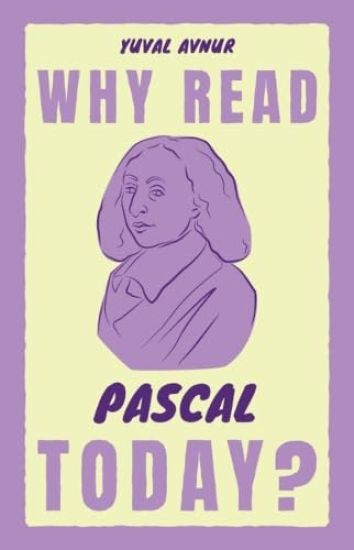
Why Read Pascal Today?

Why Read Pascal Today?

Yuval Avnur

Cambridge University Press
2026
pokkari
Blaise Pascal (1623–1662) made important contributions to mathematics, the theory of probability, and several scientific fields, was one of the inventors of the first mathematical calculator, and was also a deeply religious thinker who grappled with issues concerning the existence of God, the possibility of human salvation, and the sinfulness of human life. His famous Wager is often discussed, but there is much else of interest and relevance in his thought which remains undiscovered. This book provides an accessible yet detailed account of Pascal's philosophy and how it applies to important issues facing all of us today, as well as novel interpretations of Pascal's ideas. It will stimulate and challenge anyone who is interested in the role of the heart in rationality, human nature, our relation to reality and our individual and collective purpose, and the underexplored thoughts of one of history's greatest geniuses.
Why Read Pascal Today?

Why Read Pascal Today?

Yuval Avnur

Cambridge University Press
2026
sidottu
Blaise Pascal (1623–1662) made important contributions to mathematics, the theory of probability, and several scientific fields, was one of the inventors of the first mathematical calculator, and was also a deeply religious thinker who grappled with issues concerning the existence of God, the possibility of human salvation, and the sinfulness of human life. His famous Wager is often discussed, but there is much else of interest and relevance in his thought which remains undiscovered. This book provides an accessible yet detailed account of Pascal's philosophy and how it applies to important issues facing all of us today, as well as novel interpretations of Pascal's ideas. It will stimulate and challenge anyone who is interested in the role of the heart in rationality, human nature, our relation to reality and our individual and collective purpose, and the underexplored thoughts of one of history's greatest geniuses.
L'apologetique De Pascal: Etude Critique. --

L'apologetique De Pascal: Etude Critique. --

Roger Etienne 1896- Lacombe

Hassell Street Press
2021
nidottu
This work has been selected by scholars as being culturally important and is part of the knowledge base of civilization as we know it.This work is in the public domain in the United States of America, and possibly other nations. Within the United States, you may freely copy and distribute this work, as no entity (individual or corporate) has a copyright on the body of the work.Scholars believe, and we concur, that this work is important enough to be preserved, reproduced, and made generally available to the public. To ensure a quality reading experience, this work has been proofread and republished using a format that seamlessly blends the original graphical elements with text in an easy-to-read typeface.We appreciate your support of the preservation process, and thank you for being an important part of keeping this knowledge alive and relevant.
The Clue to Pascal

The Clue to Pascal

Émile 1894-1981 Cailliet

Hassell Street Press
2021
sidottu
This work has been selected by scholars as being culturally important and is part of the knowledge base of civilization as we know it.This work is in the public domain in the United States of America, and possibly other nations. Within the United States, you may freely copy and distribute this work, as no entity (individual or corporate) has a copyright on the body of the work.Scholars believe, and we concur, that this work is important enough to be preserved, reproduced, and made generally available to the public. To ensure a quality reading experience, this work has been proofread and republished using a format that seamlessly blends the original graphical elements with text in an easy-to-read typeface.We appreciate your support of the preservation process, and thank you for being an important part of keeping this knowledge alive and relevant.