Kirjojen hintavertailu. Mukana 11 699 587 kirjaa ja 12 kauppaa.

Kirjahaku

Etsi kirjoja tekijän nimen, kirjan nimen tai ISBN:n perusteella.

1000 tulosta hakusanalla Patrick Doherty

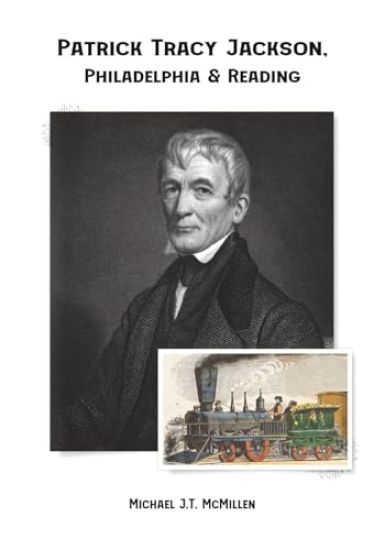
Patrick Tracy Jackson, Philadelphia & Reading

Patrick Tracy Jackson, Philadelphia & Reading

Michael J T McMillen

River Stone Publishing Group
2025
pokkari
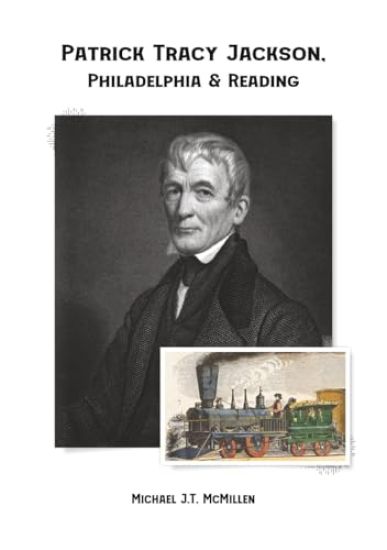
After the Panic of 1837, the Locks & Canals machine shop had little work; it was to be sold or converted to a twist mill. The L&C treasurer, Patrick Tracy Jackson, strove to keep the shop busy pending sale or conversion. An 1841 plea to Jackson from Elihu Chauncey, president of the Philadelphia & Reading railroad, seemed salvation. Despite incomplete infrastructure, the P&R would begin operating in 1842. It urgently needed coal cars and locomotives to carry anthracite from Pennsylvania fields to Philadelphia. But its financial situation was dire, its debt in default, its assets being seized by sheriffs. It struggled to borrow. Its bridges suffered arson; its trains were derailed. Statutory completion deadlines loomed. Despite the risks, L&C built P&R cars and engines.There were conditions to award of the teased building contracts. Chauncey wanted L&C to make loans to the P&R. L&C had no interest in lending. Jackson sought P&R equity enabling participation in two infant industries: railroads and coal. Chauncey concocted a surreptitious scheme to acquire P&R stock from the Bank of the United States for sale to L&C, thereby diminishing the bank's power over the P&R.Nine months later, the P&R and L&C entered into the 1842 Running Gear Contract for running gear for wood jimmies. Developing a financial structure for the locomotives transaction consumed a year: the Engines Contract for locomotives and coal cars was signed in 1843. For the contracts, Jackson developed unique financial structures to protect L&C, as builder and financier, while allowing P&R use of the equipment for revenue generation. How could L&C sell equipment to, and ensure receipt and retention of payments from, an insolvent railroad (the P&R) that had not yet, or had only recently, commenced operations, during a severe economic depression or other adverse financial circumstances?The transaction went badly. Neither Jackson nor the P&R anticipated new iron coal cars or Baldwin's flexible beam truck: they rendered small L&C engines inadequate. Builders of large engines were paid; L&C received little. Payment defaults were continuous (for years), diminishing L&C's ability to sell the machine shop.This is a story of desperation, debt, and default: of balancing on the brink of bankruptcy. Jackson began with payment admonitions, eventually including favonian, then whetted, threats of resort to legal remedies. L&C acquired P&R stock and bonds and aligned with P&R stockholders and bond holders. His focus expanded beyond the equipment debt to the P&R's financial health, especially elimination of floating debt. In 1845, L&C and P&R bond holders initiated one of the first audits of managerial custodianship in U.S. corporate history. A Pennsylvania law was enacted allowing bond holders voting rights on a parity with stockholders.When further efforts at suasion and blandishment failed, Jackson sought legal advice from the eminent Philadelphia lawyer Horace Binney. Binney and Jackson developed an elegant four-step plan to take control of the trusts and debt under the Rolling Stock Contracts and neutralize the P&R. The plan derived from contract terms, threats of legal remedies (including personal liability for trustees), and extra-legal mechanisms. Within two months, L&C took control of the remedies relating to the P&R debt from the trustees, neutralized the P&R, and forced a P&R financial restructuring. Its value enhanced, L&C rid itself of the P&R debt. But more was needed.
Patrick Tracy Jackson, Philadelphia & Reading

Patrick Tracy Jackson, Philadelphia & Reading

Michael J T McMillen

River Stone Publishing Group
2025
sidottu
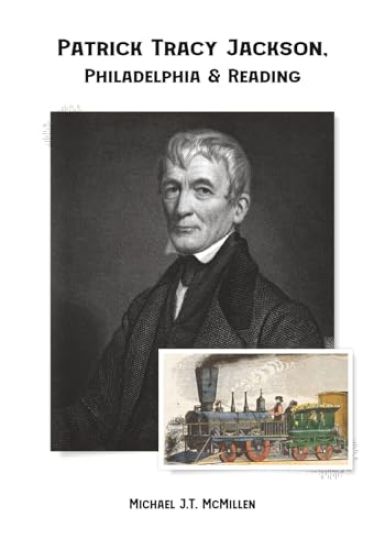
After the Panic of 1837, the Locks & Canals machine shop had little work; it was to be sold or converted to a twist mill. The L&C treasurer, Patrick Tracy Jackson, strove to keep the shop busy pending sale or conversion. An 1841 plea to Jackson from Elihu Chauncey, president of the Philadelphia & Reading railroad, seemed salvation. Despite incomplete infrastructure, the P&R would begin operating in 1842. It urgently needed coal cars and locomotives to carry anthracite from Pennsylvania fields to Philadelphia. But its financial situation was dire, its debt in default, its assets being seized by sheriffs. It struggled to borrow. Its bridges suffered arson; its trains were derailed. Statutory completion deadlines loomed. Despite the risks, L&C built P&R cars and engines.There were conditions to award of the teased building contracts. Chauncey wanted L&C to make loans to the P&R. L&C had no interest in lending. Jackson sought P&R equity enabling participation in two infant industries: railroads and coal. Chauncey concocted a surreptitious scheme to acquire P&R stock from the Bank of the United States for sale to L&C, thereby diminishing the bank's power over the P&R.Nine months later, the P&R and L&C entered into the 1842 Running Gear Contract for running gear for wood jimmies. Developing a financial structure for the locomotives transaction consumed a year: the Engines Contract for locomotives and coal cars was signed in 1843. For the contracts, Jackson developed unique financial structures to protect L&C, as builder and financier, while allowing P&R use of the equipment for revenue generation. How could L&C sell equipment to, and ensure receipt and retention of payments from, an insolvent railroad (the P&R) that had not yet, or had only recently, commenced operations, during a severe economic depression or other adverse financial circumstances?The transaction went badly. Neither Jackson nor the P&R anticipated new iron coal cars or Baldwin's flexible beam truck: they rendered small L&C engines inadequate. Builders of large engines were paid; L&C received little. Payment defaults were continuous (for years), diminishing L&C's ability to sell the machine shop.This is a story of desperation, debt, and default: of balancing on the brink of bankruptcy. Jackson began with payment admonitions, eventually including favonian, then whetted, threats of resort to legal remedies. L&C acquired P&R stock and bonds and aligned with P&R stockholders and bond holders. His focus expanded beyond the equipment debt to the P&R's financial health, especially elimination of floating debt. In 1845, L&C and P&R bond holders initiated one of the first audits of managerial custodianship in U.S. corporate history. A Pennsylvania law was enacted allowing bond holders voting rights on a parity with stockholders.When further efforts at suasion and blandishment failed, Jackson sought legal advice from the eminent Philadelphia lawyer Horace Binney. Binney and Jackson developed an elegant four-step plan to take control of the trusts and debt under the Rolling Stock Contracts and neutralize the P&R. The plan derived from contract terms, threats of legal remedies (including personal liability for trustees), and extra-legal mechanisms. Within two months, L&C took control of the remedies relating to the P&R debt from the trustees, neutralized the P&R, and forced a P&R financial restructuring. Its value enhanced, L&C rid itself of the P&R debt. But more was needed.
Patrick Tracy Jackson, Philadelphia & Reading

Patrick Tracy Jackson, Philadelphia & Reading

Michael J T McMillen

River Stone Publishing Group
2025
pokkari
After the Panic of 1837, the Locks & Canals machine shop had little work; it was to be sold or converted to a twist mill. The L&C treasurer, Patrick Tracy Jackson, strove to keep the shop busy pending sale or conversion. An 1841 plea to Jackson from Elihu Chauncey, president of the Philadelphia & Reading railroad, seemed salvation. Despite incomplete infrastructure, the P&R would begin operating in 1842. It urgently needed coal cars and locomotives to carry anthracite from Pennsylvania fields to Philadelphia. But its financial situation was dire, its debt in default, its assets being seized by sheriffs. It struggled to borrow. Its bridges suffered arson; its trains were derailed. Statutory completion deadlines loomed. Despite the risks, L&C built P&R cars and engines.There were conditions to award of the teased building contracts. Chauncey wanted L&C to make loans to the P&R. L&C had no interest in lending. Jackson sought P&R equity enabling participation in two infant industries: railroads and coal. Chauncey concocted a surreptitious scheme to acquire P&R stock from the Bank of the United States for sale to L&C, thereby diminishing the bank's power over the P&R.Nine months later, the P&R and L&C entered into the 1842 Running Gear Contract for running gear for wood jimmies. Developing a financial structure for the locomotives transaction consumed a year: the Engines Contract for locomotives and coal cars was signed in 1843. For the contracts, Jackson developed unique financial structures to protect L&C, as builder and financier, while allowing P&R use of the equipment for revenue generation. How could L&C sell equipment to, and ensure receipt and retention of payments from, an insolvent railroad (the P&R) that had not yet, or had only recently, commenced operations, during a severe economic depression or other adverse financial circumstances?The transaction went badly. Neither Jackson nor the P&R anticipated new iron coal cars or Baldwin's flexible beam truck: they rendered small L&C engines inadequate. Builders of large engines were paid; L&C received little. Payment defaults were continuous (for years), diminishing L&C's ability to sell the machine shop.This is a story of desperation, debt, and default: of balancing on the brink of bankruptcy. Jackson began with payment admonitions, eventually including favonian, then whetted, threats of resort to legal remedies. L&C acquired P&R stock and bonds and aligned with P&R stockholders and bond holders. His focus expanded beyond the equipment debt to the P&R's financial health, especially elimination of floating debt. In 1845, L&C and P&R bond holders initiated one of the first audits of managerial custodianship in U.S. corporate history. A Pennsylvania law was enacted allowing bond holders voting rights on a parity with stockholders.When further efforts at suasion and blandishment failed, Jackson sought legal advice from the eminent Philadelphia lawyer Horace Binney. Binney and Jackson developed an elegant four-step plan to take control of the trusts and debt under the Rolling Stock Contracts and neutralize the P&R. The plan derived from contract terms, threats of legal remedies (including personal liability for trustees), and extra-legal mechanisms. Within two months, L&C took control of the remedies relating to the P&R debt from the trustees, neutralized the P&R, and forced a P&R financial restructuring. Its value enhanced, L&C rid itself of the P&R debt. But more was needed.
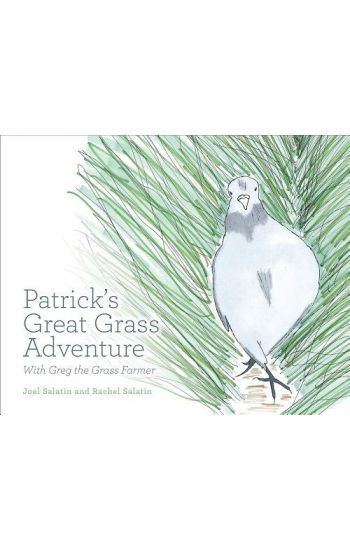
Patrick’s Great Grass Adventure

Patrick’s Great Grass Adventure

Joel Salatin; Rachel Salatin

Polyface, Incorporated
2017
nidottu
In his first children's book, farmer-author Joel Salatin and his daughter Rachel team up on a whimsical tale about a pigeon, a farmer, and grass. This beautifully illustrated edu-tainment book introduces 4-7 year-olds to Greg the grass farmer through the eyes of Patrick Pigeon. What better way to discover ecology-enhancing grass farming than from an aerial view? Grass as crop, insect haven, and diversity blanket comes to life as Patrick Pigeon watches and reports on Greg the grass farmer's activities. Discovering a real farm from a real farmer through captivating explanation and illustration brings a local grass farm to life.
Patrick Mahomes: Superstar Quarterback: Superstar Quarterback
Find your seat and get ready to cheer as short, engaging text matched with oversized images lead young readers into the story of Patrick Mahomes. They will learn about where he got his start, some of his most notable moments in the NFL, and how he gives back to the community and people who support him. Aligned to Common Core Standards and correlated to state standards. Big Buddy Books is an imprint of Abdo Publishing, a division of ABDO.
Patrick White's Fiction

Patrick White's Fiction

William Walsh

TAYLOR FRANCIS LTD
2026
sidottu
Originally published in 1977, this study is both a sympathetic insight into the Nobel Prize winning author Patrick White and his work and also a guidebook and map to one of the most complicated and significant bodies of work in 20th century literature. Along with creative energy the qualities of largeness and uninhibited confidence are present in all White’s major works and in particular the group which includes The Tree of Man, Voss, Riders in the Chariot, The Solid Mandala, The Vivisector, The Eye of the Storm and A Fringe of Leaves. The use of language bears the indelible stamp of the writer’s personality and domination of the material to the extent of ignoring many common formalities of language and syntax and making frequent and prolonged use of metaphor to sustain and enrich the narrative. These very strengths ensure that White will never be an easy writer, making this invaluable book essential for the student.
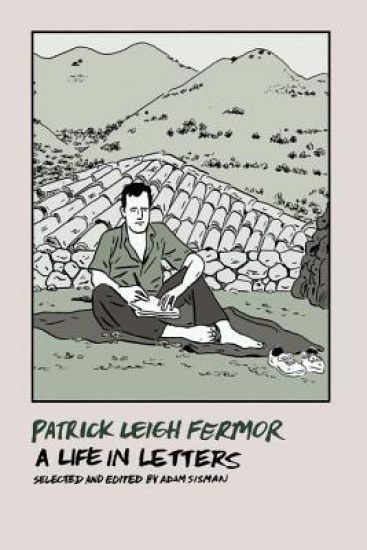
Patrick Leigh Fermor: A Life in Letters

Patrick Leigh Fermor: A Life in Letters

Patrick Leigh Fermor

New York Review of Books
2017
nidottu
The first extensive collection of letters written by war hero and travel writing legend Patrick Leigh Fermor. Handsome, spirited, and erudite, Patrick Leigh Fermor was a war hero and one of the greatest travel writers of his generation. He was also a wonderful friend. The letters in this collection span almost seventy years, the first written ten days before Paddy's twenty-fifth birthday, the last when he was ninety-four, and the correspondents include Deborah Devonshire, Nancy Mitford, Lawrence Durrell, Diana Cooper, and his lifelong companion, Joan Rayner. The letters exhibit many of Fermor's most engaging characteristics: his lust for life, his unending curiosity, his lyrical descriptive powers, his love of language, his exuberance, and his tendency to get into scrapes--particularly when drinking and, quite separately, driving. Here are plenty of extraordinary stories: the hunt for Byron's slippers in one of the remotest regions of Greece; an ignominious dismissal from Somerset Maugham's Villa Mauresque; and hiding behind a bush to dub Dirk Bogarde into Greek during the shooting of Ill Met by Moonlight. The letters radiate warmth and gaiety; many are enhanced with witty illustrations and comic verse, while others contain riddles and puns. Every one of them entertains.
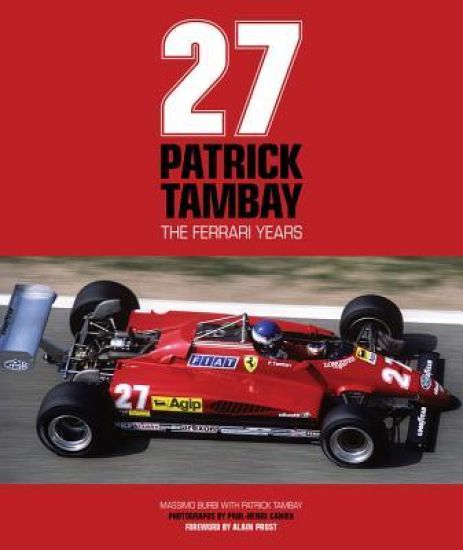
Patrick Tambay - The Ferrari Years

Patrick Tambay - The Ferrari Years

Patrick Tambay; Massimo Burbi

Evro Publishing
2016
sidottu
This is the emotional story of Patrick Tambay's rollercoaster Formula 1 ride with Ferrari. The saga began in 1982 with the tragedy of his friend and fellow driver Gilles Villeneuve's death in the Belgian Grand Prix at Zolder and then unfolded as Tambay took Villeneuve's place in car number 27, achieved race victories and, as the 1983 season developed, fought for the World Championship. Told in 27 chapters, this is a tale not only of Formula 1 in those colourful years but also a rare and revealing account of life inside Maranello in the twilight of the Enzo Ferrari era, supported by magnificent photographs by Paul-Henri Cahier.HighlightsBritish GP, 1982: at Brands Hatch Tambay's second race for Ferrari brings his first-ever podium finish, in his 55th Formula 1 start.German GP, 1982: after team-mate Didier Pironi's career-ending crash during practice at Hockenheim, Tambay lifts his sombre Ferrari team with his first Formula 1 win.Italian GP, 1982: in front of Ferrari's emotional home crowd at Monza, Tambay finishes second, with the great Mario Andretti, his team-mate for this one race, behind him in third place.San Marino GP, 1983: Tambay delivers exactly what the Scuderia's fans desire - victory at Imola for the number 27 Ferrari 12 months after Gilles's last race. South African GP, 1983: Tambay's farewell race for Ferrari sees him on pole position (his sixth front-row start in seven races), but a mechanical failure denies him any chance of a final victory.
Patrick A.

Patrick A.

Elisabeth Blanc

Editions L'Harmattan
2026
pokkari
Pourquoi prouve-t-on un jour ce besoin d' crire ? Vouloir laisser une trace de soi, vouloir transmettre un savoir, des connaissances, une passion. Vouloir r gler ses comptes avec les siens, avec les autres, avec la vie. Suffit-il d' crire pour tre crivain ? Ces questions, je me les pose depuis longtemps. Patrick A., un patient que j'ai suivi depuis plus de trente ans m'a laiss un tr s grand nombre de notes comme il les nommait. Je voudrais essayer de montrer quel point cela a t vital pour lui, et pourtant comment les qualifier ? La question reste ouverte, et j'ai voulu tenter une comparaison avec un c l bre crivain schizophr ne. Un crivain, un auteur, un r dacteur ? D'o s'autorisent-ils ? Et qu'en est-il du lecteur ? A qui s'adressent ces crits ? Je vous les transmets.