Kirjojen hintavertailu. Mukana 12 016 292 kirjaa ja 12 kauppaa.

Kirjahaku

Etsi kirjoja tekijän nimen, kirjan nimen tai ISBN:n perusteella.

1000 tulosta hakusanalla Randall Calhoun

Jews and Christians

Jews and Christians

Randall M. Falk; Walter Harrelson

Abingdon Press
1990
pokkari
This eye-opening dialogue between a rabbi and a Christian scholar challenges Jews and Christians to examine their misconceptions and prejudices about each other's faith. Here, a Christian and a Jew stand on common ground. Rather than simply interpreting their own respective heritages, each seeks to present his own insights into the other's religious community. Topics discussed include Scripture, God, Jesus, the Holocaust, election, covenant, and mission. Jews and Christians is a living dialogue of faith designed to foster mutual understanding and respect between the two religions.
Lending Credibility

Lending Credibility

Randall W. Stone

Princeton University Press
2002
pokkari
With the end of the Cold War, the International Monetary Fund emerged as the most powerful international institution in history. But how much influence can the IMF exert over fiercely contested issues in domestic politics that affect the lives of millions? In Lending Credibility, Randall Stone develops the first systematic approach to answering this question. Deploying an arsenal of methods from a range of social sciences rarely combined, he mounts a forceful challenge to conventional wisdom. Focusing on the former Soviet bloc, Stone finds that the IMF is neither as powerful as some critics fear, nor as weak as others believe, but that the answer hinges on the complex factor of how much credibility it can muster from country to country. Stone begins by building a formal, game-theoretic model of lending credibility, which he then subjects to sophisticated quantitative testing on original data from twenty-six countries over the 1990s. Next come detailed, interview-based case studies on negotiations between the IMF and Russia, Ukraine, Poland, and Bulgaria. Stone asserts that the IMF has exerted startling influence over economic policy in smaller countries, such as Poland and Bulgaria. However, where U.S. foreign policy interests come more heavily into play, as in Russia, the IMF cannot credibly commit to enforcing the loans-for-policy contract. This erodes its ability to facilitate enduring market reforms. Stone's context is the postcommunist transition in Europe and Asia, but his findings carry implications for IMF activities the world over.
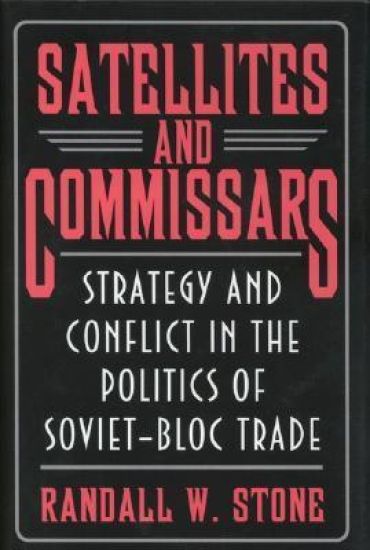
Satellites and Commissars

Satellites and Commissars

Randall W. Stone

Princeton University Press
2002
pokkari
Why did the Soviet Union squander the political leverage afforded by its trade subsidy to Eastern Europe? Why did Soviet officials fail to bargain with resolve, to link subsidies to salient political issues, to make credible commitments, and to monitor the satellites' policies? Using an unprecedented array of formerly secret documents housed in archives in Moscow, Warsaw, and Prague, as well as interviews with former Communist officials across Eastern Europe, Randall Stone answers these questions and others that have long vexed Western political scientists. Stone argues that trade politics revolved around the incentives created by distorted prices. The East European satellites profited by trading on the margin between prices on the Western market and those in the Soviet bloc. The Soviet Union made numerous attempts to reduce its implicit trade subsidy and increase the efficiency of the bloc, but the satellites managed consistently to outmaneuver Soviet negotiators. Stone demonstrates how the East Europeans artfully resisted Soviet objectives. Stone draws upon recent developments in bargaining and principal-agent theory, arguing that the incentives created by domestic institutions weakened Soviet bargaining strategies. In effect, he suggests, perverse incentive structures in the Soviet economy were exported into Soviet foreign policy. Furthermore, Stone argues, incentives to smother information were so deeply entrenched that they frustrated numerous attempts to reform Soviet institutions.
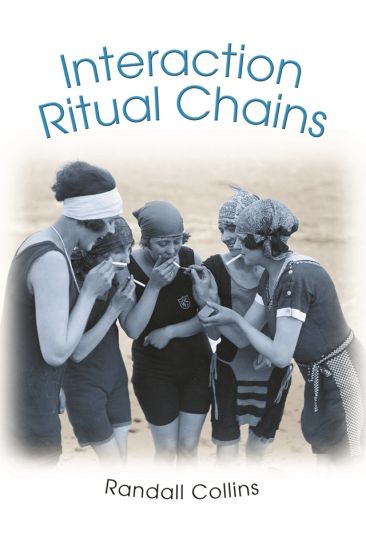
Interaction Ritual Chains

Interaction Ritual Chains

Randall Collins

Princeton University Press
2005
pokkari
Sex, smoking, and social stratification are three very different social phenomena. And yet, argues sociologist Randall Collins, they and much else in our social lives are driven by a common force: interaction rituals. Interaction Ritual Chains is a major work of sociological theory that attempts to develop a "radical microsociology." It proposes that successful rituals create symbols of group membership and pump up individuals with emotional energy, while failed rituals drain emotional energy. Each person flows from situation to situation, drawn to those interactions where their cultural capital gives them the best emotional energy payoff. Thinking, too, can be explained by the internalization of conversations within the flow of situations; individual selves are thoroughly and continually social, constructed from the outside in. The first half of Interaction Ritual Chains is based on the classic analyses of Durkheim, Mead, and Goffman and draws on micro-sociological research on conversation, bodily rhythms, emotions, and intellectual creativity. The second half discusses how such activities as sex, smoking, and social stratification are shaped by interaction ritual chains. For example, the book addresses the emotional and symbolic nature of sexual exchanges of all sorts--from hand-holding to masturbation to sexual relationships with prostitutes--while describing the interaction rituals they involve. This book will appeal not only to psychologists, sociologists, and anthropologists, but to those in fields as diverse as human sexuality, religious studies, and literary theory.
Unanswered Threats

Unanswered Threats

Randall L. Schweller

Princeton University Press
2008
pokkari
Why have states throughout history regularly underestimated dangers to their survival? Why have some states been able to mobilize their material resources effectively to balance against threats, while others have not been able to do so? The phenomenon of "underbalancing" is a common but woefully underexamined behavior in international politics. Underbalancing occurs when states fail to recognize dangerous threats, choose not to react to them, or respond in paltry and imprudent ways. It is a response that directly contradicts the core prediction of structural realism's balance-of-power theory--that states motivated to survive as autonomous entities are coherent actors that, when confronted by dangerous threats, act to restore the disrupted balance by creating alliances or increasing their military capabilities, or, in some cases, a combination of both. Consistent with the new wave of neoclassical realist research, Unanswered Threats offers a theory of underbalancing based on four domestic-level variables--elite consensus, elite cohesion, social cohesion, and regime/government vulnerability--that channel, mediate, and redirect policy responses to external pressures and incentives. The theory yields five causal schemes for underbalancing behavior, which are tested against the cases of interwar Britain and France, France from 1877 to 1913, and the War of the Triple Alliance (1864-1870) that pitted tiny Paraguay against Brazil, Argentina, and Uruguay. Randall Schweller concludes that those most likely to underbalance are incoherent, fragmented states whose elites are constrained by political considerations.
Violence

Violence

Randall Collins

Princeton University Press
2009
pokkari
In the popular misconception fostered by blockbuster action movies and best-selling thrillers--not to mention conventional explanations by social scientists--violence is easy under certain conditions, like poverty, racial or ideological hatreds, or family pathologies. Randall Collins challenges this view in Violence, arguing that violent confrontation goes against human physiological hardwiring. It is the exception, not the rule--regardless of the underlying conditions or motivations. Collins gives a comprehensive explanation of violence and its dynamics, drawing upon video footage, cutting-edge forensics, and ethnography to examine violent situations up close as they actually happen--and his conclusions will surprise you. Violence comes neither easily nor automatically. Antagonists are by nature tense and fearful, and their confrontational anxieties put up a powerful emotional barrier against violence. Collins guides readers into the very real and disturbing worlds of human discord--from domestic abuse and schoolyard bullying to muggings, violent sports, and armed conflicts. He reveals how the fog of war pervades all violent encounters, limiting people mostly to bluster and bluff, and making violence, when it does occur, largely incompetent, often injuring someone other than its intended target. Collins shows how violence can be triggered only when pathways around this emotional barrier are presented. He explains why violence typically comes in the form of atrocities against the weak, ritualized exhibitions before audiences, or clandestine acts of terrorism and murder--and why a small number of individuals are competent at violence. Violence overturns standard views about the root causes of violence and offers solutions for confronting it in the future.
Dental Practice Strategy Guide

Dental Practice Strategy Guide

Randall M Lafrom

Randall M. Lafrom
2018
pokkari
This book takes you through a journey from dental school graduation to retirement. It discusses all the numerous options available from solo practice to associating to group practice models. It offers valuable insights and strategies to consider for all stages of your career. It is the missing manual from dental school full of great ideas and things to think about when deciding what's next in your journey to having a satisfying career. Specific sections include developing your LEADERSHIP SKILLS, your TEAM BUILDING SKILLS and your MARKETING SKILLS. This book will help you identify over 28 critical factors before purchasing a practice, and 29 questions you should ask before hiring or becoming an associate. The final section discusses pre-retirement strategies to maximizing your biggest asset.
Islands of Faith

Islands of Faith

Randall R Ripplinger; Linda Lee Ripplinger

Islands of Faith
2018
pokkari
Islands of Faith will engage the reader in a never-before written collection about the peoples of New Zealand. The volume opens the doors of faithful Kiwis - from Omamari, near the country's northern tip, to Slope Point, the nearest landmass to Antarctica. Authors Randall and Linda Ripplinger invite you into the homes, hearts, and lives of 31 New Zealand families, and they will leave you with wonder at how so many are making so much of life despite their trials.
Reading the Map: Lessons in the Book of Genesis (Volume I)
"The journey of one thousand miles begins, even before the first step is taken, with a good map." If the Bible contains direction for a "life map", Genesis contains foundational principles of navigating life according to God's principles. Reading the Map: Lessons in Genesis (Volume I) offers nine studies that help a Christian student of the Word understand and apply principles in Genesis 1-10. They are suitable for either personal study or adult Bible fellowship studies.
Reading the Map: Lessons in Genesis (Volume II)

Reading the Map: Lessons in Genesis (Volume II)

Randall D. Smith

Gcbi Publications
2014
nidottu
Faith is the ability to see life through "God glasses". Biblically speaking it is the choice to look at life through the lens of God's Word - the Bible. Probably no other person in the Bible is such an exemplar of the concept of a "faith walk" as Abraham, the father of the Hebrew people. His life journey is what the section of Genesis 11-25 is chiefly about - and these lessons follow the course through those chapters of Genesis. In lessons 10-25 of the series, we will see the "faith exchange" defined, and follow Abraham through his life "searching for a city whose architect and builder was God." (Hebrews 11:10).