Kirjahaku
Etsi kirjoja tekijän nimen, kirjan nimen tai ISBN:n perusteella.
1000 tulosta hakusanalla Roger Kaye Scopes
Thirty-five papers from a variety of technical and intellectual journals trace fifty years of distinguished service to psychoanalysis, sociology, politics and anthropology.
When Roger started to tell Robin and Grandad his story he admitted that he had problems with reading, so he could never read labels on food or other important notices. That was alright until he left his home in Lapland to go travelling and the trouble started. Roger tells Robin of all the problems he got into through not being able to read well, and what he did to put it right! The Diaries of Robin’s Toys is a 10 book series which teaches children moral lessons through the magic of toys that come to life! Readers aged 5+ and fans of the Tom Gates series will love getting to know Robin’s world.
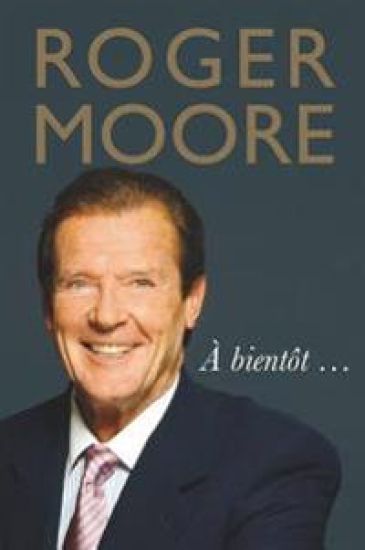
In this warm and engaging book, the late, great Sir Roger Moore reflects on life and ageing.Delivered, along with his own hand-drawn sketches, to his publisher shortly before he passed away, in À Bientôt, Roger looks back on his life – and gives it his trademark sideways glance, too. Nostalgic, funny, charming and, most importantly, very human, his reflections on age and ageing encompass all aspects of this universal experience, from reminiscences on childhood and ‘what might have been’; keeping abreast of the ever-changing times; senior moments, memory and getting to grips with technology; the joys – and frustrations – of travel; work and play. Along with these he tells of the intense happiness – and some equally intense sadnesses – of family life.Featuring his own sketches throughout, this book sees Roger at his most open and forthright. The true stories and situations he shares in this warm and intimate book reveal a ‘Bond Unbound’, the human being inside the action-adventure character that made him so famous the world over. Always upbeat and – as ever – endearingly self-effacing and unpretentious, in À bientôt he shares the joys he experienced every day along with the tiny triumphs that life brings to us all at the most unexpected times.
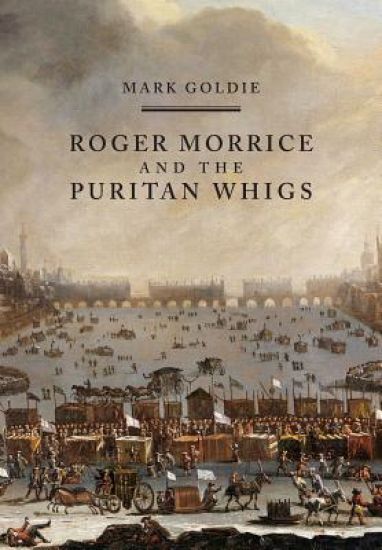
Mark Goldie's authoritative and highly readable introduction to the political and religious landscape of Britain during the turbulent era of later Stuart rule. An exceptionally significant monograph, and without doubt one of the most important to appear in the field of Restoration history in the last twenty years. Mark Goldie has done more than anyone else to illuminate the political and religious assumptions of late seventeenth-century Englishmen.' Dr Grant Tapsell, University of Oxford. Roger Morrice and the Puritan Whigs explains a movement, illuminates the world of its emblematic representative, and explores one of the most remarkable documents of the seventeenth century. Morrice's Entring Book was supremely well-informed, passionately committed, and relentlessly opinionated. Chronicling the years 1677 to 1691, nearly a million words in length, it is the fullest surviving record of the tumultuous final years of the Stuart regime, from the Popish Plot and Exclusion Crisis to the Glorious Revolution. Morrice was a Puritan clergyman turned confidential reporter for leading Whig politicians, a barometer of opinion, for whom reliable information was vital for public action. Just twenty years after Pepys's Diary, the Entring Book depicts a darker England, gripped by a new crisis of 'popery and arbitrary government'. Mark Goldie's deeply considered book examines the fortunes of Puritanism in the later Stuart age. It offers a story of disillusion and diminuendo, ofstruggles for survival in the face of intolerance, and of self-understanding among those who hoped to transform England through 'Godly rule'. Yet the book also tells a countervailing story of revitalized and transformed Puritanism. Puritans worked through parliament, the royal court, and the households of gentry, merchants, lawyers, and clergy. Setting out to galvanize civil society, they mobilized public opinion, organized electorates, and deployedthe arts of journalism, influence, and persuasion. This book has been adapted, with a new substantial introduction and updated bibliography, from the first volume of the Entring Book of Roger Morrice. Mark Goldie is Professor of Intellectual History at the University of Cambridge and a Fellow of Churchill College.
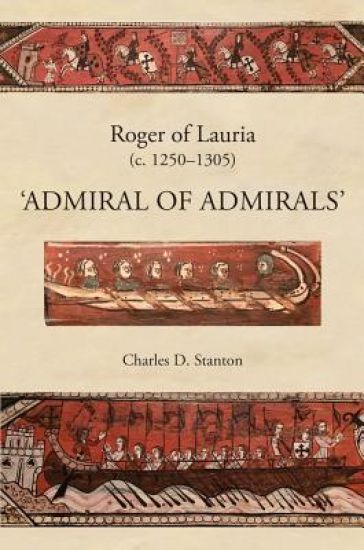
An account of the naval commander Roger of Lauria and his command of warfare at sea. Just before Vespers on 30 March 1282 at the Church of the Holy Spirit on the outskirts of Palermo, a drunken soldier of the occupying French forces of Charles of Anjou accosted a young Sicilian noblewoman. It sparked a bloody conflagration, the so-called War of the Sicilian Vespers, that would ultimately involve every part of the Mediterranean. The struggle for the coveted throne of Sicily eventually enmeshed all the great powers of medieval Europe - thepope, the Byzantine Emperor and the kings of France, England and Aragon. Because the core of the Kingdom of Sicily was a wealthy, strategic island dominating the centre of the Mediterranean, the battles were fought mostly at sea.And in war at sea, a single figure proved pre-eminent: Roger of Lauria - Aragon's "Admiral of Admirals". In the course of some twenty years of naval combat, he orchestrated decisive victories in six pitched battles and numerous limited actions, never once suffering a defeat: a feat never equalled - not even by the legendary Lord Horatio Nelson. Drawing from multiple Sicilian and Catalan sources as well as Angevin and Aragonese registers, this chronological narrative details the tactics and strategy Lauria employed to become the most successful galley fleet commander of the Middle Ages, while highlighting a crucial conflict at a pivotal point in European history, long overshadowed by the Hundred Years War. CHARLES D. STANTON is a retired US naval officer and airline pilot; he gained his PhD at the University of Cambridge.
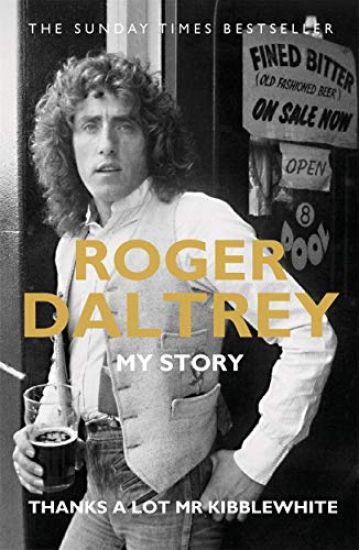
Roger Daltrey: Thanks a lot Mr Kibblewhite, The Sunday Times Bestseller
Roger Daltrey
BLINK Publishing
2019
nidottu
'Before the sixties, you were a child and then you were a man. You went to school and then you went to work. That changed. Our generation changed it.'Roger Daltrey is the voice of a generation, and this is his story.This is the story of his tempestuous school days and his expulsion, age 15, thanks to his authoritarian headmaster, Mr Kibblewhite. That could have been where the story ended, as the life of a factory worker beckoned, but then came rock and roll. Making his first guitar from factory off-cuts, Roger formed a band that would become The Who, one of the biggest bands on the planet.This is the story of My Generation, Tommy and Quadrophenia, of smashed guitars, exploding drums, cars in swimming pools, fights, arrests and redecorated hotel rooms, but also how all those post-war kids redefined the rules of youth.This is not just a hilarious and frank account of more than 50 wild years on the road, it is the definitive story of The Who and of the sweeping revolution that was British rock 'n' roll.

Roger Fry, Clive Bell and American Modernism
David Maddock
Peter Lang International Academic Publishers
2020
nidottu
When the Bloomsbury critics Roger Fry and Clive Bell introduced an aesthetically conservative English public to recent Parisian avant-garde painting, they explained its disconcerting imagery by way of a late nineteenth-century metaphysical tradition which had long intrigued musicians and Symbolist writers on the European continent. The Post-Impressionist aesthetic they devised advocated a direct response to the formal ingenuity of the work of art without recourse to prior knowledge and emphasized the significance of visionary genius, albeit to the detriment of narrative acuity and technical accomplishment, values hitherto upheld by the Edwardian art establishment. The provocation was calculated, the author suggests, and its domestic ramifications were predictable: the reaction of an Anglo-conformist public in New York, on the other hand, was anything but. Recreating an Anglo-American dialogue inspired by Fry and Bell, and framed within a period encompassing Fry’s Manet and the Post-Impressionists exhibition in 1910 and Alfred Barr Jr’s Cubism and Abstract Art exhibition in 1936, the author demonstrates how key components of Bloomsbury’s aesthetic bypassed a pre-existent modernist practice in New York and were instead taken up by an urban intelligentsia which adapted them to the requirements of an increasingly professionalized institutional practice during the 1920s.
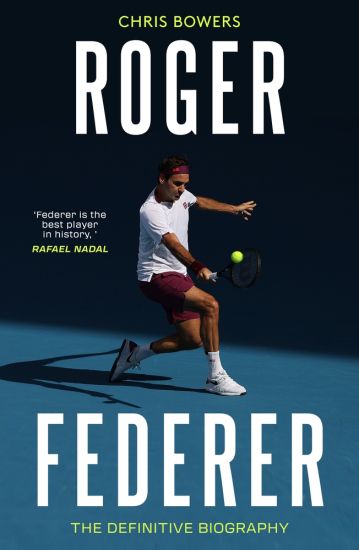
Roger Federer is not only one of the greatest tennis players ever to pick up a racket - if not the greatest - but he is one of the global icons of our time. Characterised by a mixture of passion and calmness, a fierce competitor with a regal bearing, he is both an athlete and an ambassador, a street fighter and a statesman. But who is he really? And what are the experiences and influences that have shaped him into the world figure he is today?This acclaimed biography, first published in 2006 and now fully updated in its ninth edition, traces Federer's life and career, from his first tentative swings with a racket to legendary status. The vastly experienced writer, broadcaster and tennis historian Chris Bowers talked exclusively to many of the people who helped shape the young Roger Federer, and together with his own experiences following Federer's career from his junior title at Wimbledon at age sixteen to his twentieth major title nineteen years later, he presents an affectionate and analytical portrait of one of the great names of modern-day sport. His book has enough information to satisfy the most voracious Federer fan, and enough talking points to keep an argument going until the small hours. In its portrait of Roger Federer - the man, the player, the icon - this masterly biography brings the player's story up to date, while also examining his place in tennis and sporting history.

Roger, the invisible dog, is an imaginary friend created by the author for his grandchildren and great-grandchildren. In reality, Roger is the child's conscience. Roger teaches them many things they will need to know growing up. He talks to them, giving them advice about what to do and how to behave as they transition from childhood to adolescence.The book contains 40 short stories intended for children in pre-school, Kindergarten, and 1st through 4th grades.

The Garden, the Wilderness, and the Wall: A Brief and Clear Abridgment of Roger Williams' Bloody Tenet of Persecution for Cause of Conscience
Roger Williams; Thomas Jefferson
Independently Published
2018
nidottu
Roger Williams' "The Bloody Tenet for the Cause of Persecution of Conscience" is perhaps the single most important document in American history pertaining to the Establishment Clause of the First Amendment: "Congress shall make no law respecting an establishment of religion, or prohibiting the free exercise thereof." Dr. Brunson has excerpted the seminal ideas from Williams' massive book and updated Williams' 17th-century language to be accessible to all readers interested in early American history, especially those interested in the relationship between church and state. Any student of history or government, or any teacher, from the university to high-school level, will find this summary and new translation valuable to an understanding of the dynamic tensions between European and British traditionalists who brought their theocratic ideas to the New World, versus colonial separatists and deists who longed for a new "nation under God" where citizens of different faiths could coexist peaceably without the dictates or interference of the secular state. The book also includes three other important documents: a key passage from Roger Williams' letter to John Cotton in which Williams coins the phrase "wall of separation," and two of Jefferson's most important writings on the relationship between church and state, his "Letter to the Danbury Baptists" and "The Virginia Statute of Religious Freedom."

Roger Broders 2025 Square Wall Calendar
Red Robin Publishing Ltd.
2024
nidottu
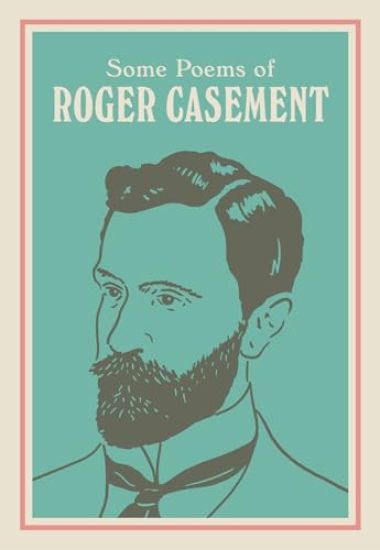
Originally published in 1918 by the Talbot Press in Dublin, two years after his execution by the British Government for his involvement in the 1916 Easter Rising, Some Poems of Roger Casement has long been a collector’s item. In life and in death, Roger Casement appears to contain many contradictions: decorated British diplomat, Irish Protestant and martyred Irish nationalist. He was a humanitarian, essayist and sometime poet, a public gentleman and a private lover. Over the years, Roger Casement’s ghost has been the subject of endless controversies, co-opted into both the queer liberation movement in Ireland and the Republican movement. Predator or saviour, traitor or hero, maligned martyr or gay icon? The question depends on who you ask, and what aspects of Casement’s life they choose to hold in focus, or to dismiss as a lie. —SEÁN HEWITT Includes a specially commissioned introduction by Seán Hewitt as well as the original 1918 introduction, written by Casement’s cousin, Gertrude Parry.
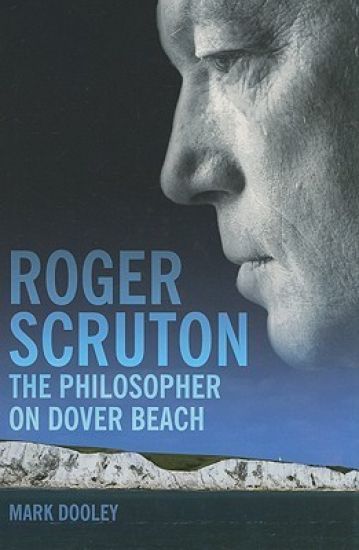
Roger Scruton: The Philosopher on Dover Beach
Mark Dooley
Continuum International Publishing Group Ltd.
2009
sidottu
This book presents an intriguing portrait of Roger Scruton and his philosophy. Roger Scruton is one of the outstanding British philosophers of the post-war years. Why then is he at best ignored and at worst reviled? Part of the reason is that he is an unapologetic conservative in the tradition of Edmund Burke. That conservative instinct was sharpened during the Paris riots of 1968. From that point on Scruton set himself the task of stridently opposing what he has since termed 'the culture or repudiation'. In so doing he targeted liberals in the tradition of Russell and Mill, existentialists like Sartre and post modernists in the fashion of Foucault.Here is a brilliant description of Scruton's life and work and a careful analysis of his central ideas. Scruton defends an Hegelian and Burkean view of human nature, one founded on allegiance to the State as the guarantor of tangible freedom. He thus opposes any and all variations of the social contract theory, liberal or existential individualism or philosophical theories of the 'authentic' self in isolation from its kind. In recent years his conservative notion of the nation state has been used to reflect upon and criticise the European Union, the United Nations and the idea that the Middle East can be reformed along Western democratic lines.Scruton, argues the author of this book, is the one British intellectual who has courageously rowed against the tide of liberal conviction and has arrived at political conclusions the truth of which is becoming more and more obvious. This book argues conclusively that Roger Scruton is a prophet for our times.
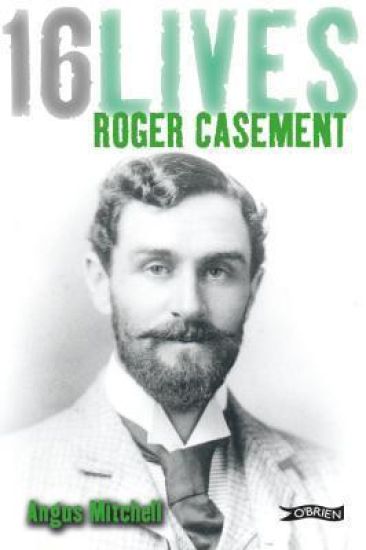
A fascinating examination of the extraordinary life of Roger Casement, executed as part of the 1916 rising, fighting the empire that had previously knighted him. Roger Casement was a British consul for two decades. However, his investigation into atrocities in the Congo led Casement to anti-Imperialist views. Ultimately, this led him to side with the Irish Republican movement, leading up to the 1916 rising. Arrested by the British for gun trafficking, he was incarcerated in the Tower of London and then placed in the dock at the Royal Courts of Justice in an internationally-publicised state trial for high treason. He was hanged in Pentonville prison on the 3 August—two years to the day after Britain’s declaration of war in 1914.
Comprises two of Roger Bacon's works 'De multiplicatione specierum' and 'Dc speculis comburentibus'. Original Latin text with matching English translation.
Roger Casement in Death: Or Haunting the Free State
William Mc Cormack
University College Dublin Press
2002
sidottu
Roger Casement, the retired British consular official tried for treason and executed for securing German rifles to help the 1916 Rising in Ireland, has been a focus of controversy since the 1930s, with specific reference to the so-called Black diaries allegedly forged by British intelligence in c.1916. Forensic tests on the diaries commissioned by a committee chaired by W.J. McCormack have now shown that the diaries were written by Casement. This work is centred on W.J. Maloney, whose 1936 book, "The Forged Casement Diaries", brought the topic to the attention of the Irish public, and was part of an Irish-American campaign to influence the domestic politics of the Irish Free State. The book raises questions about intelligence work, archival engineering, IRA unofficial action, Nazi propaganda and new light is shed on major figures such as Eamon de Valera and W.B. Yeats, as well as on a cast of colourful bit players.
Roger Casement in Death: Or Haunting the Free State
William Mc Cormack
University College Dublin Press
2002
nidottu
Roger Casement, the retired British consular official tried for treason and executed for securing German rifles to help the 1916 Rising in Ireland, has been a focus of controversy since the 1930s, with specific reference to the so-called Black diaries allegedly forged by British intelligence in c.1916. Forensic tests on the diaries commissioned by a committee chaired by W.J. McCormack have now shown that the diaries were written by Casement. This work is centred on W.J. Maloney, whose 1936 book, "The Forged Casement Diaries", brought the topic to the attention of the Irish public, and was part of an Irish-American campaign to influence the domestic politics of the Irish Free State. The book raises questions about intelligence work, archival engineering, IRA unofficial action, Nazi propaganda and new light is shed on major figures such as Eamon de Valera and W.B. Yeats, as well as on a cast of colourful bit players.
This is the first full-length study devoted to Roger Laporte, whose lifelong exploration of the stakes of writing has produced a body of work on the borderline of literature and philosophy. Charting the development of Laporte's writing in relation to the work of Heidegger, Levinas, Blanchot and Derrida, this study offers both a comprehensive reading of Laporte's oeuvre and a new perspective on an important strand of recent thinking about literature. In particular, it is claimed here that the imperfect reflexivity of Laporte's 'Ophic' texts effects a singular opening to reading, and that in doing so it illuminates the ethical dimension of literature which has been the subject of much recent discussion.