Kirjojen hintavertailu. Mukana 12 423 074 kirjaa ja 12 kauppaa.

Kirjahaku

Etsi kirjoja tekijän nimen, kirjan nimen tai ISBN:n perusteella.

1000 tulosta hakusanalla Rupert Brooke

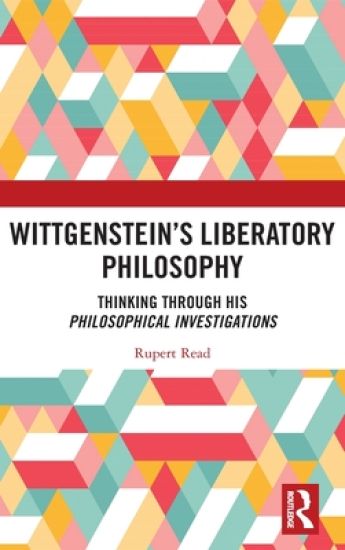
Wittgenstein’s Liberatory Philosophy
In this book, Rupert Read offers the first outline of a resolute reading, following the highly influential New Wittgenstein ‘school’, of the Philosophical Investigations. He argues that the key to understanding Wittgenstein’s later philosophy is to understand its liberatory purport. Read contends that a resolute reading coincides in its fundaments with what, building on ideas in the later Gordon Baker, he calls a liberatory reading. Liberatory philosophy is philosophy that can liberate the user from compulsive (and destructive) patterns of thought, freeing one for possibilities that were previously obscured. Such liberation is our prime goal in philosophy. This book consists in a sequential reading, along these lines, of what Read considers the most important and controversial passages in the Philosophical Investigations: 1, 16, 43, 95 & 116 & 122, 130–3, 149–151, 186, 198–201, 217, and 284–6. Read claims that this liberatory conception is simultaneously an ethical conception. The PI should be considered a work of ethics in that its central concern becomes our relation with others. Wittgensteinian liberations challenge widespread assumptions about how we allegedly are independent of and separate from others. Wittgenstein’s Liberatory Philosophy will be of interest to scholars and advanced students working on Wittgenstein, and to scholars of the political philosophy of liberation and the ethics of relation.
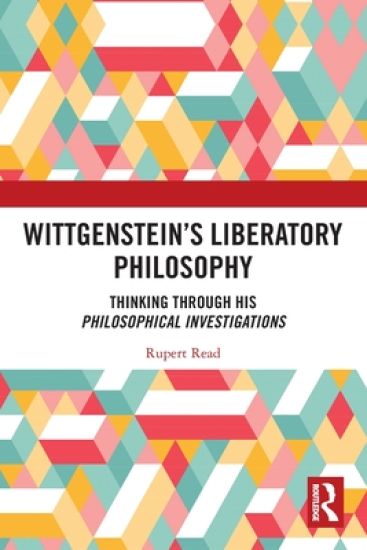
Wittgenstein’s Liberatory Philosophy

Wittgenstein’s Liberatory Philosophy

Rupert Read

TAYLOR FRANCIS LTD
2022
nidottu
In this book, Rupert Read offers the first outline of a resolute reading, following the highly influential New Wittgenstein ‘school’, of the Philosophical Investigations. He argues that the key to understanding Wittgenstein’s later philosophy is to understand its liberatory purport. Read contends that a resolute reading coincides in its fundaments with what, building on ideas in the later Gordon Baker, he calls a liberatory reading. Liberatory philosophy is philosophy that can liberate the user from compulsive (and destructive) patterns of thought, freeing one for possibilities that were previously obscured. Such liberation is our prime goal in philosophy. This book consists in a sequential reading, along these lines, of what Read considers the most important and controversial passages in the Philosophical Investigations: 1, 16, 43, 95 & 116 & 122, 130–3, 149–151, 186, 198–201, 217, and 284–6. Read claims that this liberatory conception is simultaneously an ethical conception. The PI should be considered a work of ethics in that its central concern becomes our relation with others. Wittgensteinian liberations challenge widespread assumptions about how we allegedly are independent of and separate from others. Wittgenstein’s Liberatory Philosophy will be of interest to scholars and advanced students working on Wittgenstein, and to scholars of the political philosophy of liberation and the ethics of relation.
International Legal English

International Legal English

Rupert Haigh

Routledge
2020
nidottu
English is the dominant language of international business relations, and a good working knowledge of the language is essential for today’s legal or business professional.This book provides a highly practical approach to the use of English in commercial legal contexts, and covers crucial law terminology and legal concepts. Written with the needs of both students and practitioners in mind, this book is particularly suitable for readers whose first language is not English but need to use English on a regular basis in legal contexts.The book covers both written and verbal legal communication in typical legal situations in a straightforward manner. In addition to chapters on the grammar and punctuation utilised in legal writing, the book features sections on contract-drafting and the language used in negotiations, meetings and telephone conversations. It features a companion website which contains exercises covering the majority of the topics covered in the book’s chapters.This edition thoroughly revises and expands the content of the companion website and contains updated examples, more detailed explanations of problematic areas and an expanded section on writing law essays.
Emotional Motives in International Relations
The study of emotions in International Relations is gaining wide-spread attention. Within the "emotional turn" in IR the emotion of rage however has not been given sufficient attention, instead being used as short-hand for irrationality and excess.Rage is arguably one of the oldest and most destructive emotions in human affairs. This book offers an innovative approach that seeks to split rage into its traditional manifestation of aggression and violence, and into a less visible, passive manifestation of Nietzschean Ressentiment. This model facilitates a comprehensive understanding of revisionist motivation, from the violence of ISIS to the oppositionism of Putin’s Russia. The aim is to illustrate how a lack of violence can belie vengeful impulses and a silent rage, and how acts of violence, regardless of brutality, are often framed as a type of justice and "moral imperative" in the mind of the aggressor. This book raises serious questions and concerns about legitimacy and order in global affairs, and offers a firm theoretical basis for the exploration of present day conflicts.
Texas

Texas

Rupert N. Richardson; Cary D. Wintz; Angela Boswell; Adrian Anderson; Ernest Wallace

Routledge
2021
nidottu
Now in its 11th edition, Texas: The Lone Star State offers a balanced, scholarly overview of the second largest state in the United States, spanning from prehistory to the twenty-first century.Organized chronologically, this comprehensive survey introduces undergraduates to the varied history of Texas with an accessible narrative and over 100 illustrations and maps. This new edition broadens the discussion of postwar social and political dynamics within the state, including the development of key industries and changing demographics. Other new features include: New maps reflecting county by county results for the most recent presidential elections Expanded discussions on immigration and border security The effects of the COVID-19 pandemic in Texas and a look to the future Updated bibliographies to reflect the most recent scholarshipThis textbook is essential reading for students of American history.
Texas

Texas

Rupert N. Richardson; Cary D. Wintz; Angela Boswell; Adrian Anderson; Ernest Wallace

Routledge
2021
sidottu
Now in its 11th edition, Texas: The Lone Star State offers a balanced, scholarly overview of the second largest state in the United States, spanning from prehistory to the twenty-first century.Organized chronologically, this comprehensive survey introduces undergraduates to the varied history of Texas with an accessible narrative and over 100 illustrations and maps. This new edition broadens the discussion of postwar social and political dynamics within the state, including the development of key industries and changing demographics. Other new features include: New maps reflecting county by county results for the most recent presidential elections Expanded discussions on immigration and border security The effects of the COVID-19 pandemic in Texas and a look to the future Updated bibliographies to reflect the most recent scholarshipThis textbook is essential reading for students of American history.
International Legal English

International Legal English

Rupert Haigh

Routledge
2020
sidottu
English is the dominant language of international business relations, and a good working knowledge of the language is essential for today’s legal or business professional.This book provides a highly practical approach to the use of English in commercial legal contexts, and covers crucial law terminology and legal concepts. Written with the needs of both students and practitioners in mind, this book is particularly suitable for readers whose first language is not English but need to use English on a regular basis in legal contexts.The book covers both written and verbal legal communication in typical legal situations in a straightforward manner. In addition to chapters on the grammar and punctuation utilised in legal writing, the book features sections on contract-drafting and the language used in negotiations, meetings and telephone conversations. It features a companion website which contains exercises covering the majority of the topics covered in the book’s chapters.This edition thoroughly revises and expands the content of the companion website and contains updated examples, more detailed explanations of problematic areas and an expanded section on writing law essays.
Saratoga

Saratoga

Rupert Furneaux

Routledge
2021
sidottu
The Grand Strategy, the imaginative plan to divide the rebellious American colonies, ended in disaster. On October 17, 1777, General Sir John Burgoyne, alone, unaided and stranded in the American wilderness, capitulated with his army at Saratoga in upper New York State. It was the ‘turning point’ of the Revolution, which culminated four years later in the British surrender at Yorktown. Creasy wrote of Saratoga: ‘Nor can any military event be said to have exercised more important influence upon the future fortunes of mankind…’Who blundered? For nearly two centuries, Lord George Germain, the ‘maladroit’ minister, has been blamed, together with the Commander-in-Chief, Sir William Howe; but Burgoyne, ‘Gentleman Johnny’ as his affectionate troops called him, has largely escaped criticism.Only in the late 1960s had a full assessment become possible, by the publication of all the correspondence that passed between these men. Originally published in 1971, from his study of these letters, and by his visit to the campaign area, author Rupert Furneaux questions this long accepted view.The British disaster resulted, he says, not because anyone particularly blundered, or from any ‘pigeon-holed’ despatch, but rather because no one bargained that thousands of ordinary American citizens would rally to bar Burgoyne’s path. Experienced frontier-fighters and skilled marksmen, they mowed down the closely-ranked Redcoats and the German mercenaries, who had all been trained for European battles. Saratoga heralded a new age of warfare, which Europeans took another hundred years to learn. It was also far more than a British defeat; it was an American victory, the decisive battle whereby they won the right to run their own lives without interference from Europe – and with incalculable consequences.
Saratoga

Saratoga

Rupert Furneaux

TAYLOR FRANCIS LTD
2023
nidottu
The Grand Strategy, the imaginative plan to divide the rebellious American colonies, ended in disaster. On October 17, 1777, General Sir John Burgoyne, alone, unaided and stranded in the American wilderness, capitulated with his army at Saratoga in upper New York State. It was the ‘turning point’ of the Revolution, which culminated four years later in the British surrender at Yorktown. Creasy wrote of Saratoga: ‘Nor can any military event be said to have exercised more important influence upon the future fortunes of mankind…’Who blundered? For nearly two centuries, Lord George Germain, the ‘maladroit’ minister, has been blamed, together with the Commander-in-Chief, Sir William Howe; but Burgoyne, ‘Gentleman Johnny’ as his affectionate troops called him, has largely escaped criticism.Only in the late 1960s had a full assessment become possible, by the publication of all the correspondence that passed between these men. Originally published in 1971, from his study of these letters, and by his visit to the campaign area, author Rupert Furneaux questions this long accepted view.The British disaster resulted, he says, not because anyone particularly blundered, or from any ‘pigeon-holed’ despatch, but rather because no one bargained that thousands of ordinary American citizens would rally to bar Burgoyne’s path. Experienced frontier-fighters and skilled marksmen, they mowed down the closely-ranked Redcoats and the German mercenaries, who had all been trained for European battles. Saratoga heralded a new age of warfare, which Europeans took another hundred years to learn. It was also far more than a British defeat; it was an American victory, the decisive battle whereby they won the right to run their own lives without interference from Europe – and with incalculable consequences.
A Film-Philosophy of Ecology and Enlightenment
Inspired by the philosophy of Wittgenstein and his idea that the purpose of real philosophical thinking is not to discover something new, but to show in a strikingly different light what is already there, this book provides philosophical readings of a number of ‘arthouse’ and Hollywood films. Each chapter contains a discussion of two films—one explored in greater detail and the other analyzed as a minor key which reveals the possibility for the book's ideas to be applied across different films, registers, and genres. The readings are not only interpretive, but they offer a way of thinking and feeling about, with, and through films which is genuinely transformative. Rupert Read’s main contention is that certain films can bring about a change in how we see the world. He advocates an ecological approach to film-philosophy analysis, arguing that film can re-shape the viewer’s relationship to the environment and other living beings. The transformative 'wake-up call' of these films is enlightenment in its true sense. The result is a book that ambitiously aims to change, though film, how we think of ourselves and our place in the world, at a time when such change is more needed than ever before.
How to Get a Good Job After 50 (2nd edition)
These days, many people are looking to stay in the workforce longer and are seeking satisfying, fulfilling jobs. How to Get a Good Job After 50 is a step-by-step guide to taking control of your career with expertise and confidence. With age comes experience, reliability and practised skills, and this book explains how to market these qualities to prospective employers in clear, practical chapters. Covering all aspects of the job search, this is a tried and tested recipe for career success
Hello, Darling, Are You Working?

Hello, Darling, Are You Working?

Rupert Everett

It Books
1994
nidottu
British actor Rupert Everett charmed his way into moviegoers' affections with his scene-stealing performance in "My Best Friend's Wedding." Everett is also the gifted writer of this scathingly funny novel of a down-and-out actor's zany misadventures amid a wildly colorful menagerie of madcap trendsetters.Fame is a fleeting thing, as ex-soap opera star Rhys Waveral discovers. When he loses all his money in the stock market and no new acting jobs are forthcoming, eviction from his elegant hotel suite looms large. Stripped of all his assets, Rhys realizes he has only one thing left to sell: himself. And a pair of jet-setting dowagers couldn't be more thrilled. From staid English country houses to flamboyant Parisian nightclubs and an outrageous costume ball in Tangiers, Rupert Everett spins a raucous and irresistible modern farce.
Dialogic Education and Technology

Dialogic Education and Technology

Rupert Wegerif

Springer-Verlag New York Inc.
2007
sidottu
Dialogic Education and Technology is about using new technology to draw people into the kind of dialogues which take them beyond themselves into learning, thinking and creativity. The program of research reported in this book reveals key characteristics of learning dialogues and demonstrates ways in which computers and networks can deepen, enrich and expand such dialogues. A dialogic perspective is developed drawing upon recent work in communications theory, psychology, computer science and philosophy. This perspective foregrounds the creative space opened up by authentic dialogues. Whereas studies of computer-supported collaborative learning have tended to see dialogue as a means to the end of knowledge construction the dialogic perspective taken by this book sees dialogue as an end in itself - in fact moving learners into the space of dialogue is described as the core aim of education. The central argument of the book is that there is a convergence between this dialogic perspective in education and the affordances of new information and communications technology. A genuinely dialogic perspective is relatively new to the field of educational technology and there is a considerable amount of interest in this topic amongst researchers who wish to see what extra insights, if any, a dialogical approach can offer them. "This is an exciting book that synthesizes, clarifies and extends mounting discussions of dialogical thinking related to computer-supported education [...]. It is not only a delightful personal statement, but provokes thought on central issues of CSCL and enters into challenging dialog with the relevant alternative approaches. As a result of reading this book, I am convinced that we urgently need to open new online spaces for people to understandingly interact with different perspectives and creatively generate new insight and respect for difference." -Gerry StahlExecutive Editor of the International Journal of Computer Supported Collaborative Learning This book offers a set of lenses which give deep insight into education and the use of technologies for learning. The moves between empirical studies, theoretical reflections and discussion of the design of learning environments make the book very thought provoking. Ideas are not just treated as ideas but they become transformed into principles for design. Wegerif is convincing that the use of technology for the creation, maintaining and development of dialogical spaces has the potential for transforming and expanding educational experiences in a way which offers a needed vision of learning for the future. -Sten LudvigsenDirector of the InterMedia Centre for design, communication and learning University of Oslo
Cross: Statutory Interpretation

Cross: Statutory Interpretation

Rupert Cross; John Bell; George Engle

LexisNexis UK
1995
nidottu
Completely up-to-date, this new edition provides a comprehensive analysis of the contemporary approach of English courts to the interpretation of statutes. This edition also explores the increasing importance of developments in European law, both in EC law and its implementation in domestic law and the impact of the European Convention on Human Rights.
Development Geography

Development Geography

Rupert Hodder

Routledge
2000
sidottu
Development Geography is an informative and vibrant introductory level text, with a wealth of contrasting case-studies and illustrations. Written to stimulate critical thought and discussion about development, it does not assume any clear-cut distinction between 'developed' and 'developing' parts of the world. Case-studies highlight the problems and possible solutions at local, national and international scales. These include:* food production in Senegal* Disney in China* Hurricane Mitch in Honduras* corruption in Bulgaria* further studies from Russia, Bangladesh and Vietnam.Development Geography is the fifth book to be published in the popular modular text series Routledge Contemporary Human Geography.