Kirjojen hintavertailu. Mukana 12 390 323 kirjaa ja 12 kauppaa.

Kirjahaku

Etsi kirjoja tekijän nimen, kirjan nimen tai ISBN:n perusteella.

1000 tulosta hakusanalla S. Field

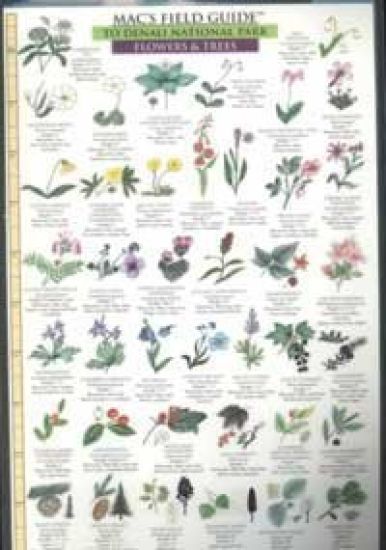
Mac's Field Guides: Denali National Park

Mac's Field Guides: Denali National Park

Craig MacGowan

MOUNTAINEERS BOOKS
2000
muu
* Durable, inexpensive, fun to use nature identification guide * Great for families, hikers, and park visitors * Created by a high-school science teacher This field guide for Denali National Park includes both common and scientific names, plus information on size and habitat. Stick it in your pack or car for quick reference. This is a tough, color nature guide that is lightweight and inexpensive. No matter the weather or terrain, Mac's Field Guides are the perfect wildlife identification tool for the amateur naturalist, covering a wide variety of subjects and regions in North America. More than 1 million Mac's Guides have been sold
Mac's Field Guides: Midwest Garden Bugs

Mac's Field Guides: Midwest Garden Bugs

Craig MacGowan

MOUNTAINEERS BOOKS
2000
muu
* Durable, inexpensive, fun to use nature identification guide * Great for vegetable and flower gardeners * Created by a high-school science teacher This field guide to Midwest garden bugs shows "good bugs" on one side and "bad bugs" on the other, illustrated in color. The tough laminated card holds up to use in the garden and is easy to wash clean. Don't kill the good bugs Keep your Mac's Field Guide near your garden tools to help identify the bugs that help you maintain a healthy attractive garden. More than 1 million Mac's Guides have been sold
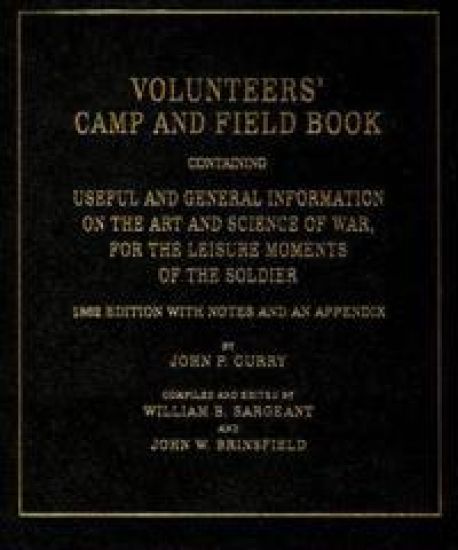
The Volunteer's Camp and Field Book
This is the field manual for Civil War soldiers. When the Civil War began in 1861, thousands of volunteers rallied to the colors to defend their families, their homes, and the Union or the Confederacy, as they chose. Comparatively few of these patriotic young men were trained veterans of military campaigns or graduates of a military academy. Before hundreds of regiments marched off to war, John Penn Curry, a veteran of Indian campaigns in the West and a former US Navy officer, wrote a practical handbook for soldiers to help them survive the hardships of life in the field. Curry's handbook was published twice, once in New York in 1861 and again in Richmond in 1862 and was used by both Union and Confederate soldiers lucky enough to find a copy. After the war, Curry's handbook passed into obscurity. In 2006 a rare, original copy of the 1862 edition surfaced in Florida. After 144 years, Curry's ""Volunteers' Camp and Field Book"" can provide a glimpse into basic training before the bloodiest conflict in American history. Curry's handbook is fascinating for its practical approach to problems. Snakebite, for example, should be treated by drinking whiskey to excess since there was sure to be whiskey in camp. Even with ill-fitting shoes, soap rubbed on wool socks can prevent blisters on the march. Civil War historians and reenactors alike will find much in Curry's handbook to illumine the everyday lives of Billy Yank and Johnny Reb.
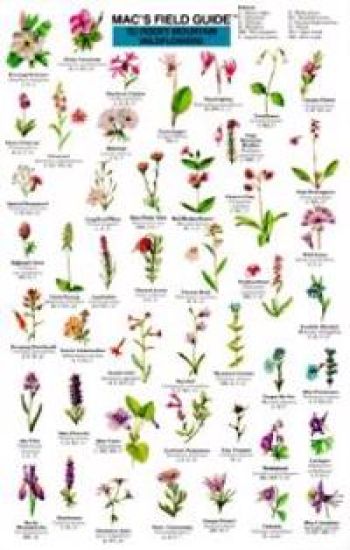
Mac's Field Guides: Rocky Mountain Wildflowers

Mac's Field Guides: Rocky Mountain Wildflowers

Craig MacGowan

MOUNTAINEERS BOOKS
1992
nidottu
* Durable, inexpensive, fun to use nature identification guide * Great for families, hikers, and campers * Created by a high-school science teacher This field guide for Rocky Mountain wildflowers is easy to toss in the car or slip into your pack. They are tough and waterproof. No matter the weather or terrain, Mac's Field Guides are the perfect wildlife identification tool for the amateur naturalist, covering a wide variety of subjects and regions in North America. More than 1 million Mac's Guides have been sold
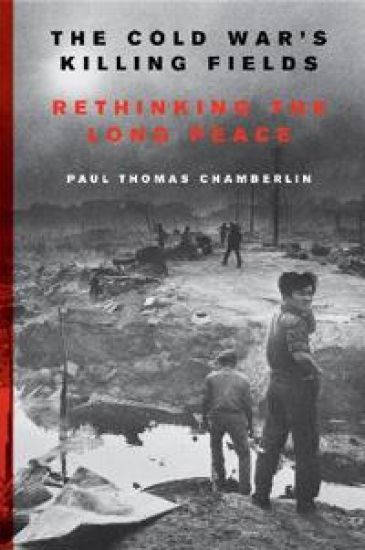
The Cold War's Killing Fields

The Cold War's Killing Fields

Paul Thomas Chamberlin

HarperPaperbacks
2019
nidottu
A brilliant young historian offers a vital, comprehensive international military history of the Cold War in which he views the decade-long superpower struggles as one of the three great conflicts of the twentieth century alongside the two World Wars, and reveals how bloody the "Long Peace" actually was.In this sweeping, deeply researched book, Paul Thomas Chamberlin boldly argues that the Cold War, long viewed as a mostly peaceful, if tense, diplomatic standoff between democracy and communism, was actually a part of a vast, deadly conflict that killed millions on battlegrounds across the postcolonial world. For half a century, as an uneasy peace hung over Europe, ferocious proxy wars raged in the Cold War’s killing fields, resulting in more than fourteen million dead—victims who remain largely forgotten and all but lost to history.A superb work of scholarship illustrated with four maps, The Cold War’s Killing Fields is the first global military history of this superpower conflict and the first full accounting of its devastating impact. More than previous armed conflicts, the wars of the post-1945 era ravaged civilians across vast stretches of territory, from Korea and Vietnam to Bangladesh and Afghanistan to Iraq and Lebanon. Chamberlin provides an understanding of this sweeping history from the ground up and offers a moving portrait of human suffering, capturing the voices of those who experienced the brutal warfare.Chamberlin reframes this era in global history and explores in detail the numerous battles fought to prevent nuclear war, bolster the strategic hegemony of the U.S. and the U.S.S.R., and determine the fate of societies throughout the Third World.
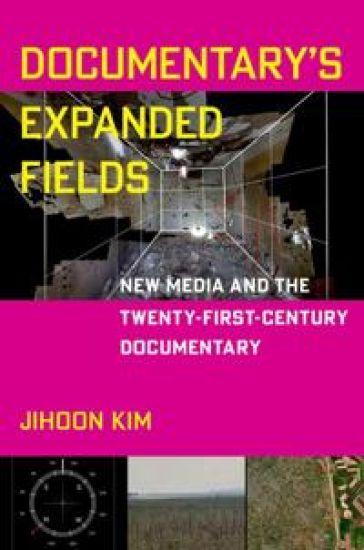
Documentary's Expanded Fields

Documentary's Expanded Fields

Jihoon Kim

OXFORD UNIVERSITY PRESS INC
2022
sidottu
Documentary's Expanded Fields: New Media and the Twenty-First-Century Documentary offers a theoretical mapping of contemporary non-standard documentary practices enabled by the proliferation of new digital imaging, lightweight and non-operator digital cameras, multiscreen and interactive interfaces, and web 2.0 platforms. These emergent practices encompass digital data visualizations, digital films that experiment with the deliberate manipulation of photographic records, documentaries based on drone cameras, GoPros, and virtual reality (VR) interfaces, documentary installations in the gallery, interactive documentary (i-doc), citizens' vernacular online videos that document scenes of the protests such as the Arab Spring, the Hong Kong Protests, and the Black Lives Matter Movements, and new activist films, videos, and archiving projects that respond to those political upheavals. Building on the interdisciplinary framework of documentary studies, digital media studies, and contemporary art criticism, Jihoon Kim investigates the ways in which these practices both challenge and update the aesthetic, epistemological, political, and ethical assumptions of traditional film-based documentary. Providing a diverse range of case studies that classify and examine these practices, the book argues that the new media technologies and the experiential platforms outside the movie theater, such as the gallery, the world wide web, and social media services, expand five horizons of documentary cinema: image, vision, dispositif, archive, and activism. This reconfiguration of these five horizons demonstrates that documentary cinema in the age of new media and platforms, which Kim labels as the 'twenty-first-century documentary,' dynamically changes its boundaries while also exploring new experiences of reality and history in times of the contemporary crises across the globe, including the COVID-19 pandemic.
Documentary's Expanded Fields

Documentary's Expanded Fields

Jihoon Kim

OXFORD UNIVERSITY PRESS INC
2022
nidottu
Documentary's Expanded Fields: New Media and the Twenty-First-Century Documentary offers a theoretical mapping of contemporary non-standard documentary practices enabled by the proliferation of new digital imaging, lightweight and non-operator digital cameras, multiscreen and interactive interfaces, and web 2.0 platforms. These emergent practices encompass digital data visualizations, digital films that experiment with the deliberate manipulation of photographic records, documentaries based on drone cameras, GoPros, and virtual reality (VR) interfaces, documentary installations in the gallery, interactive documentary (i-doc), citizens' vernacular online videos that document scenes of the protests such as the Arab Spring, the Hong Kong Protests, and the Black Lives Matter Movements, and new activist films, videos, and archiving projects that respond to those political upheavals. Building on the interdisciplinary framework of documentary studies, digital media studies, and contemporary art criticism, Jihoon Kim investigates the ways in which these practices both challenge and update the aesthetic, epistemological, political, and ethical assumptions of traditional film-based documentary. Providing a diverse range of case studies that classify and examine these practices, the book argues that the new media technologies and the experiential platforms outside the movie theater, such as the gallery, the world wide web, and social media services, expand five horizons of documentary cinema: image, vision, dispositif, archive, and activism. This reconfiguration of these five horizons demonstrates that documentary cinema in the age of new media and platforms, which Kim labels as the 'twenty-first-century documentary,' dynamically changes its boundaries while also exploring new experiences of reality and history in times of the contemporary crises across the globe, including the COVID-19 pandemic.
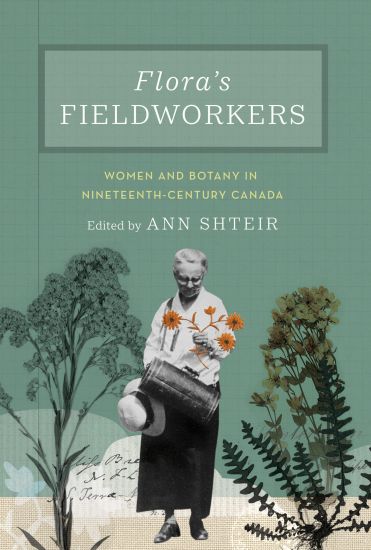
Flora's Fieldworkers

Flora's Fieldworkers

Suzanne Zeller

MCGILL-QUEEN'S UNIVERSITY PRESS
2022
sidottu
When Catharine Parr Traill came to Upper Canada in 1832 as a settler from England, she brought along with her ties to British botanical culture. Nonetheless, when she arrived she encountered a new natural landscape and, like other women chronicled in this book, set out to advance the botanical knowledge of the time from the Canadian field.Flora’s Fieldworkers employs biography, botanical data, herbaria specimens, archival sources, letters, institutional records, book history, and abundant artwork to reconstruct the ways in which women studied and understood plants in the nineteenth century. It features figures ranging from elite women involved in imperial botanical projects in British North America to settler-colonial women in Ontario and Australia – most of whom were scarcely visible in the historical record – who were active in “plant work” as collectors, writers, artists, craft workers, teachers, and organizers. Understood as an appropriate pastime for genteel ladies, botany offered women pathways to scientific education, financial autonomy, and self-expression. The call for more diverse voices in the present must look to the past as well. Bringing botany to historians and historians to botany, Flora’s Fieldworkers gathers compelling material about women in colonial and imperial Canada and Australia to take a new look at how we came to know what we know about plants.
Yucatán's fields

Yucatán's fields

Rashid Dossett

Lulu.com
2020
nidottu
The stagnating economy of Yucatan was briefly revived by the export to the United States. Several Spaniards moved to the Kingdom due to its booming economy. A mestizo woman, Huelva, was removed from her home due to the construction of a road that required the demolishment of her home village. It was only after she moved to Merida, that she realised that her loss was actually a blessing in disguise.
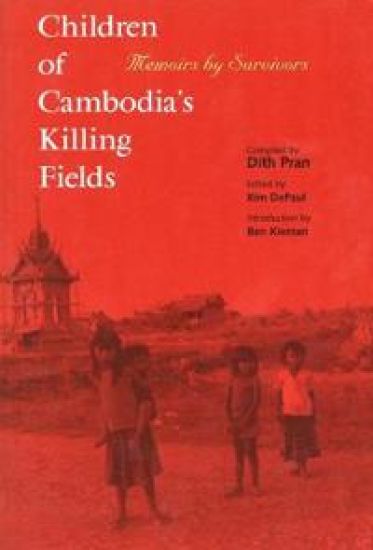
Children of Cambodia's Killing Fields

Children of Cambodia's Killing Fields

Dith Pran

Yale University Press
1999
pokkari
"Childhood testimonies by survivors of the Khmer Rouge genocide in Cambodia. . . . Compelling."—Kirkus Reviews"Underscores with great poignancy the horror of the Pol Pot period."—Nancy J. Smith-Hefner, Journal of Asian StudiesThis extraordinary book contains eyewitness accounts of life in Cambodia during Pol Pot's genocidal Khmer Rouge regime from 1975 to 1979, accounts written by survivors who were children at the time. The book has been put together by Dith Pran, whose own experiences in Cambodia were so graphically portrayed in the film The Killing Fields. The testimonies related here bear poignant witness to the slaughter the Khmer Rouge inflicted on the Cambodian people. The contributors—most of them now in the United States and pictured in photographs that accompany their stories—report on life in Democratic Kampuchea as seen through children's eyes. They speak of their bewilderment and pain as Khmer Rouge cadres tore their families apart, subjected them to harsh brainwashing, drove them from their homes to work in forced-labor camps, and executed captives in front of them. Their stories tell of suffering and the loss of innocence, the struggle to survive against all odds, and the ultimate triumph of the human spirit.
The Performance Consultant's Fieldbook

The Performance Consultant's Fieldbook

Judith Hale

Jossey-Bass Inc.,U.S.
2006
nidottu
The Performance Consultant’s Fieldbook will help trainers, training managers, and internal and external consultants working in partnership with clients to identify barriers to performance, explore a suite of solutions, and work collaboratively to get new procedures, technology, behaviors, and ideas adopted. Step-by-step, the book details the techniques you need to conduct performance interventions and offers a customizable collection of worksheets, flowcharts, planning guides, and job aids. It provides practical guidance and proven tools to help analyze an organizational environment, diagnose performance problems, identify barriers to performance, select appropriate interventions, and measure intervention success.
To the Pike's Peak Gold Fields, 1859

To the Pike's Peak Gold Fields, 1859

LeRoy R. Hafen

Bison Books
2004
pokkari
Danger, hardship, and isolation could not turn back the tide of men and women who thirsted for yellow metal. The Pike's Peak gold rush of 1859 attracted as many gold seekers as the more famous California gold rush of the previous decade. In this volume, noted western historian LeRoy R. Hafen has collected invaluable Pike's Peak gold rush diaries chronicling the struggles, dreams, and heartaches of those who traveled the overland routes to untold riches. The diarists who came along the Arkansas and Platte Rivers and along trails from Texas, Missouri, Kansas, and Illinois created records of the landscapes and peoples they encountered as they journeyed. In the words of these single-minded adventurers, larger-than-life characters mingle with the awesome, terrible beauty of the Great Plains and the sparse comforts of the old Middle West. The Pike's Peak gold rushers provide firsthand accounts of the dangers and rewards of overland travel, as they sought ephemeral fortunes in the Rocky Mountain West.
Theodore Roethke's Far Fields

Theodore Roethke's Far Fields

Peter Balakian

Louisiana State University Press
1999
nidottu
In this critical study of Theodore Roethke's poetry, Peter Balakian treats the evolution of the poet's work from his first book, Open House (1941), to his last, The Far Field (1964). Balakian argues that Roethke was among the most innovative poets of his time and that The Lost Son and Other Poems (1948) brought America to a new frontier in the contemporary era. Balakian maintains that Roethke combined and furthered major traditions in English and American poetry -- the formal poetics and meditative sensibility of British metaphysical and Romantic poetry, the American visionary tradition, and the innovations of modernism. The early chapters of the book explore Roethke's intellectual, religious, and psychological development and his development as a poet. Balakian discusses the influence of William Carlos Williams on Roethke's work and claims that the relationship between the two poets provided Roethke with a sense of the American grain. Later chapters treat the shift from self-absorption to union with otherness that marks Roethke's love poems, exploring the poet's development of mysticism and a poetic persona and examining the influences of Eliot and Whitman on his work. Balakian also discusses the metaphysical language necessary for Roethke's late poems and follows Roethke's spiritual progress as he prophetically faces his final work. In presenting the evolution of Roethke's career, Balakian offers fresh and original readings of the poetry. He avoids any monolithic approach to the body of Roethke's work, employing instead various approaches to Roethke's stages of poetic evolution. Balakian makes use of the psychology of C.G. Jung and Erich Neumann, the writings of the mystics, the aesthetics of William Carlos Williams, and the myth of the American frontier. With a literary historian's concern for Roethke's place in history and a critic's eye for the sources and structures of poetry, Balakian studies the resonances of language and the inner life of this poet's craft. Theodore Roethke's Far Fields places Roethke firmly in literary and intellectual history and asserts his place as a major poet.
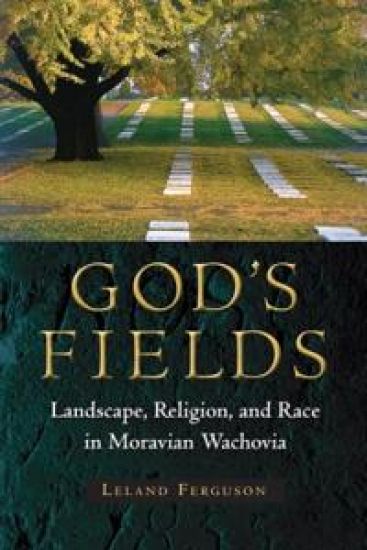
God's Fields

God's Fields

Leland Ferguson; Paul Shackel

University Press of Florida
2013
nidottu
"Provides a fascinating and nuanced study of the transformations in religious and social ideals among Moravians as they worked to implement their aspirations in the harsh realities of a North Carolina landscape shaped by racism. Ferguson reveals the intersecting dynamics of religious aspirations, sectarian prejudices, conflicting designs across cultural landscapes, paradoxical divergences of religious ideals and social realities, and the life stories of African Americans working to navigate such contested terrain."--Christopher C. Fennell, author of Crossroads and Cosmologies"A fascinating examination of the tension of race relations in the antebellum South. God's Fields unfolds like a murder mystery and is hard to put down."--Christopher E. Hendricks, author of The Backcountry Towns of Colonial VirginiaThe Moravian community of Salem, North Carolina, was founded in 1766, and the town--the hub of nearly 100,000 piedmont acres purchased thirteen years before and named "Wachovia"--quickly became the focal point for the church's colonial presence in the South. While the brethren preached the unity of all humans under God, a careful analysis of the birth and growth of their Salem settlement reveals that the group gradually embraced the institutions of slavery and racial segregation in opposition to their religious beliefs. Although Salem's still-active community includes one of the oldest African American congregations in the nation, the evidence contained in God's Fields reveals that during much of the twentieth century, the church's segregationist past was intentionally concealed. Leland Ferguson's work reconstructing this "secret history" through years of archaeological fieldwork was part of a historical preservation program that helped convince the Moravian Church in North America to formally apologize in 2006 for its participation in slavery and clear a way for racial reconciliation.