
Kirjahaku
Etsi kirjoja tekijän nimen, kirjan nimen tai ISBN:n perusteella.
1000 tulosta hakusanalla Shay Lynam




""How To Raise And Train An Afghan"" by Shay, Sunny is a comprehensive guidebook that provides step-by-step instructions on how to raise and train an Afghan Hound. The book covers all aspects of Afghan Hound care, from selecting a puppy to grooming, feeding, and training. It includes detailed information on the breed's history, temperament, and characteristics, as well as tips on how to socialize and exercise your Afghan Hound. The book also provides guidance on how to train your Afghan Hound in obedience, agility, and other activities. With clear, concise language and helpful illustrations, ""How To Raise And Train An Afghan"" is an essential resource for anyone interested in owning and caring for an Afghan Hound.This scarce antiquarian book is a facsimile reprint of the old original and may contain some imperfections such as library marks and notations. Because we believe this work is culturally important, we have made it available as part of our commitment for protecting, preserving, and promoting the world's literature in affordable, high quality, modern editions, that are true to their original work.

The worst day of my life was April 25, 2008, but the events that led up to that day began much earlier.
People all over the world dance traditional and popular dances that have been staged for purposes of representing specific national and ethnic groups. Anthony Shay suggests these staged dance productions be called “ethno identity dances”, especially to replace the term “folk dance,” which Shay suggests should refer to the traditional dances found in village settings as an organic part of village and tribal life. Shay investigates the many motives that impel people to dance in these staged productions: dancing for sex or dancing sexy dances, dancing for fun and recreation, dancing for profit - such as dancing for tourists - dancing for the nation or to demonstrate ethnic pride. In this study Shay also examines belly dance, Zorba Dancing in Greek nightclubs and restaurants, Tango, Hula, Irish step dancing, and Ukrainian dancing.
Having lost a wager on a rugby match, Gareth Lynn is obliged to tell his English friend, Matt Allcott, a tale in the tradition of an ancient Bard. Using the Welsh legend of Ceridwen, Gwion Bach, and the Cauldron of Inspiration as a framework, the wily Gareth unfolds an epic saga set in late 6th century Europe. The grisly murder of a senior Arian Christian clergyman fuels suspicion and mistrust amongst the disparate factions inhabiting the beleaguered City of Rome. As more deaths follow, a seething undercurrent of political and religious machinations spreads across the former western Roman Provinces, ensnaring pious Catholics, outraged Arians, incensed Langobards, determined Goths, ambitious Franks, arrogant Byzantines, desperate Britanni, bemused Avars, inscrutable Hebrews, stoic Angles and irascible Saxons. As the first major instalment of the tale ends, the Englishman and his wife Sarah, are left with a distinct impression that there is far more to their affable friend than meets the eye.

Middle High German Verbs presents an in-depth look at Middle High German (MHG) verbs, with tables of the most common verbs, fully conjugated. MHG was the language of the great literary works of the Middle Ages in the German speaking world, including Iwein, Parzival, Tristan, Minnelieder, Nibelungenlied, and Gudrun. The reader using only a dictionary will have a difficult task figuring out what the proper infinitive form of a given verb instance might be. This book provides a comprehensive reference for MHG verbs to help you read and translate the great works of the period. The book presents an in-depth look at the makeup of MHG verbs, including grammatical concepts, in easy to understand language. It presents 340 of the most common verbs that exhibit some type of irregularity; each verb has its own page with translations, principle parts, and full conjugation for all appropriate numbers, persons, tenses, and moods. This book will be an important addition to your German linguistic and literature references.

The terrorist destruction of the World Trade Center on September 11, 2001 was the climax of a course plotted by Osama Bin Laden to bring about his apocalyptic vision of a decisive clash between the Western and Moslem worlds. This timely volume details the organizational workings and belief system of Bin Laden's brutal campaign. The authors explore the background and objectives of the attacks, the elaborate planning that went into them, and the process of their practical execution.In addition to its factual account, The Globalization of Terror makes a significant contribution to scholarly and theoretical research dealing with international terror. The book offers a unique analysis of the Afghan "alumni," who had previously fought the Soviets in the 1980s, within the overall tapestry related to modern international terror. The authors detail how their activities evolved from a movement of national self-defense to the militant worldview identified with radical Islam. The book reveals, as well, the organizational structure so carefully erected by Bin Laden and his associates, in order to realize the vision of a worldwide Islamic Caliphate in practical terms. The book is intended to work as a set of guidelines for newcomers to the world of international terrorism including anti-terror task forces, heads of security companies as well as professionals in the field.The importance of The Globalization of Terror lies in its clear presentation and precise analysis regarding the dimensions of the danger international terror poses to the free world, and in its recommendations for the necessary strategy to prevent the recurrence of acts of large-scale terror.

The disintegration of Yugoslavia in the early 1990s ended the Yugoslavian Federation, which for nearly fifty years had succeeded in preserving a delicate coexistence among the ethnic, religious, and national components contained within it. Following this, the Balkans became a violent arena of confrontation due to these warring factions. Islamic Terror and the Balkans describes and analyzes the growth of radical Islam in the Balkans from its inception during the years of World War II to the present.Shay's account shows how the Bosnian War between the Muslims and the Serbs provided the historical opportunity for radical Islam to penetrate the Balkans, at a time when the Muslim world, headed by Iran and the various Islamic terror organizations, including Al-Qaida, came to the aid of the Muslims in Bosnia. In the framework of the mobilization of these entities in aiding the Muslim side in the conflict, the operational and organizational infrastructure of Iranian intelligence and the Revolutionary Guards was established, as well as those operated by other Islamic terror organizations.When war in Bosnia ended, terrorist infrastructures remained in the Balkans and served as a basis for these entities' intervention in the confrontation that developed in the Balkans in the late-1990s, specifically in Kosovo and Macedonia. Today, the Balkans serve as a forefront on European soil for Islamic terror organizations, which exploits this area to promote their activities in Western Europe, Russia, and other focal points worldwide. Shay's analysis of terror activity in the aftermath of the September 11 attacks and exposure of terror cells throughout the world, and particularly in Europe, attest to the increasing involvement of the "Balkan alumni" and of the terrorist infrastructure from this area in creating global terror activity.

Since 1991 Somalia has been defined as a failing state, one that lacks an effective central government. The vacuum of power in Somalia, in turn, enabled Al Qaida and other radical Islamic organizations to find allies and refuge in there. Shay's account shows how the presence of radical Islamic entities in the area, alongside local problems and conflicts, has turned Somalia into a focal point in the global war against terror. On June 5, 2006, the Islamic Courts Union (ICU) declared victory in its struggle against the Alliance for the Restoration of Peace and Counter Terrorism (ARPCT), a coalition of U.S. backed warlords. Shortly after their victory announcement, the ICU implemented a Taliban-style radical Islamic rule. The rule of the ICU was brief. In December 2006 they were defeated by a coalition of the Transitional Federal Government (TFG) and Ethiopian forces.In spite of the ICU's defeat, internal conflict in Somalia between the ICU and the interim government of Somalia (TFG), backed by Ethiopia, is still far from concluded. Shay shows how the internal conflict may spill over into other nations, creating a larger regional theater of Jihad. He also provides some ideas on how to prevent the foundation of a new radical Islamic state that could become a haven of the Islamic terror in the Horn of Africa. This volume is instructive in demonstrating the consequences of destabilization. It will be of interest to foreign policy analysts, regional specialists, and strategists in the war against terror.
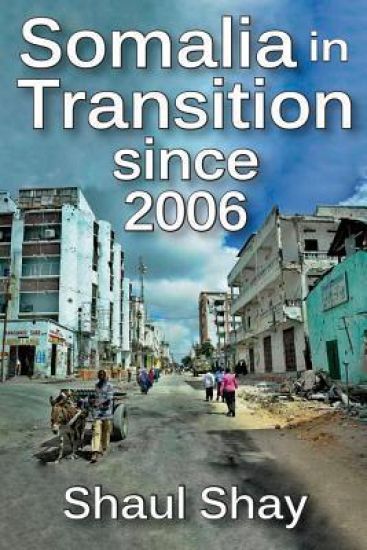
This book picks up where its predecessor, Somalia between Jihad and Restoration, left off, examining international efforts to stabilize war-torn Somalia. It analyzes major political events in Somalia in the years since 2006, examining opportunities for restoration of the country based on the United Nations-backed plan known as the "Roadmap for the End of the Transition," improved security conditions, and international economics and financial support.The author notes that the time of transition may be over, according to the timetable of the United Nations, but it is clear that the work of transformation is just beginning. In considering whether political and social chaos in Somalia is ending, Shay sees two possible futures. One possibility is the establishment of a reform government that unifies Somali society; another is continued strife that accelerates Somalia's descent into the endless violence of a failed state.Shay believes the international approach to Somalia requires a thorough reassessment. He argues it has been limited to two Western priorities—terrorism and piracy—while largely ignoring domestic issues of critical concern to Somalis. As a result, many Somalis have come to view those participating in the international effort as a foreign occupation.


The Maiden: A Story For My Young Countrywomen (1855)
Timothy Shay Arthur
KESSINGER PUBLISHING, LLC
2008
sidottu