Kirjojen hintavertailu. Mukana 12 221 926 kirjaa ja 12 kauppaa.

Kirjahaku

Etsi kirjoja tekijän nimen, kirjan nimen tai ISBN:n perusteella.

1000 tulosta hakusanalla Stephanie Perry Moore

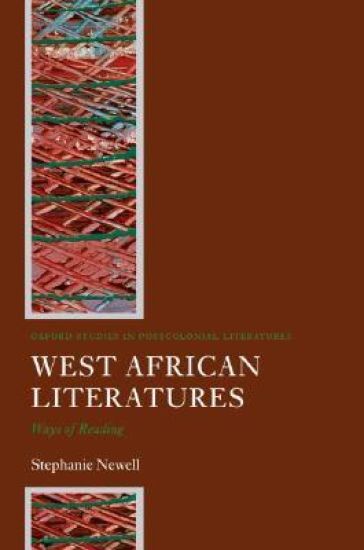
West African Literatures

West African Literatures

Stephanie Newell

Oxford University Press
2006
nidottu
The Oxford Studies in Postcolonial Literatures series (general editor: Elleke Boehmer) offers stimulating and accessible introductions to definitive topics and key genres and regions within the rapidly diversifying field of postcolonial literary studies in English. This study of West African literatures interweaves the analysis of fiction, drama, and poetry with an exploration of the broader political, cultural, and intellectual contexts within which West African writers work. Anglophone literatures form the central focus of the book, with comparative comments on vernacular literature, francophone writing and oral literatures, and detailed discussion of selected francophone texts in translation (e.g., Senghor, Tadjo, Beyala, Bâ, Sembene). Moving from a discussion of nationalist and anti-colonial writing in the period before independence, towards the more experimental writings of contemporary authors such as Véronique Tadjo (Ivory Coast), Syl Cheney-Coker (Sierra Leone), and Kojo Laing (Ghana), the book constantly relates texts to the social and political history of West Africa. Canonical, internationally well-known writers such as Chinua Achebe and Wole Soyinka are positioned in relation to the literary cultures and debates which surrounded them when they first produced their seminal texts; the discussions and disagreements which have grown up around their work in subsequent decades are also considered. The work of new and lesser-known writers is also considered, including Niyi Osundare (Nigeria) and Kofi Anyidoho (Ghana). In order to convey a sense of the rich and complex societies that are clustered beneath the umbrella-term 'postcolonial', emphasis is placed on West Africa's diverse oral and popular cultures, and the ways in which local intellectuals and readers have responded to the most prominent authors through the aesthetic frameworks generated by these forms.
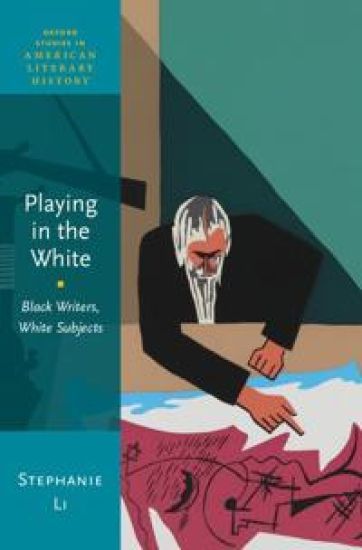
Playing in the White

Playing in the White

Stephanie Li

Oxford University Press Inc
2015
sidottu
The postwar period witnessed an outpouring of white life novels, that is texts by African American writers focused almost exclusively on white characters. Almost every major mid-twentieth century black writer, including Zora Neale Hurston, Richard Wright, Ann Petry and James Baldwin, published one of these anomalous texts. Controversial since their publication in the 1940s and 50s, these novels have since fallen into obscurity given the challenges they pose to traditional conceptions of the African American literary canon. Playing in the White: Black Writers, White Subjects aims to bring these neglected novels back into conversations about the nature of African American literature and the unique expectations imposed upon black texts. In a series of nuanced readings, Li demonstrates how postwar black novelists were at the forefront of what is now commonly understood as whiteness studies. Novels like Hurston's Seraph on the Suwanee and Wright's Savage Holiday, once read as abdications of the political imperative of African American literature, are revisited with an awareness of how whiteness signifies in multivalent ways that critique America's abiding racial hierarchies. These novels explore how this particular racial construction is freighted with social power and narrative meaning. Whiteness repeatedly figures in these texts as a set of expectations that are nearly impossible to fulfill. By describing characters who continually fail at whiteness, white life novels ask readers to reassess what race means for all Americans. Along with its close analysis of key white life novels, Playing in the White also provides important historical context to understand how these texts represented the hopes and anxieties of a newly integrated nation.
Clare's Lyric

Clare's Lyric

Stephanie Kuduk Weiner

Oxford University Press
2014
sidottu
This book considers the lyric poems written by John Clare and three twentieth-century poets--Arthur Symons, Edmund Blunden, and John Ashbery--who turned to him at pivotal moments in their own development. These writers crafted a distinctive mode of lyric, 'Clare's lyric', that emphatically grounds its truth claims in mimetic accuracy. For these writers, accurate representation involves not only words that name objects, describe scenes, and create images pointing to a shared reality but also patterns of sound, the syntactic organization of lines, and the shapes of whole poems and collections of poems. Their works masterfully investigate how poetic language and form can refer to the world, word by word, line by line, and poem by poem. Written in a lively and accessible style, Clare's Lyric sheds light on a richly diverse body of poems and on enduring questions about how literature represents reality. Weiner's attentive close readings bring the writings of Clare, Symons, Blunden, and Ashbery to life by revealing precisely how they captured a vital, arresting, and complex world in their poems. Their unique approach to lyric is traced from Clare's poems about birdsong, his sonnets, and his later poems of loss and absence to Symons's efforts to make 'amends to nature' Blunden's vivid depictions of a European and English countryside scarred by the First World War, and Ashbery's unbounded and bountiful landscapes. This inventive study refines our understanding of the aesthetic of Romanticism, the genre of lyric, and the practice of literary representation, and it makes a compelling case for the ongoing importance of poems about nature and social life.
Living Oil

Living Oil

Stephanie LeMenager

Oxford University Press Inc
2014
sidottu
Living Oil is a work of environmental cultural studies that engages with a wide spectrum of cultural forms, from museum exhibits and oil industry tours to poetry, documentary film, fiction, still photography, novels and memoirs. The book's unique focus is the aesthetic, sensory and emotional legacies of petroleum, from its rise to the preeminent modern fossil fuel during World War I through the current era of so-called Tough Oil. LeMenager conceives Tough Oil as a bid for continuity with the charismatic lifestyles of the American twentieth century that carries distinct and extreme external costs. She explores the uncomfortable, mixed feelings produced by oil's omnipresence in cultural artifacts such as books, films, hamburgers, and Aspirin tablets. The book makes a strong argument for the region as a vital intellectual frame for the study of fossil fuels, because at the regional level we can better recognize the material effects of petroleum on the day-to-day lives of humans and other, non-human lives. Varied forms of art, too, localize the material impacts of petro-culture. The fluid mobility of oil carries the book outside the United States, for instance to Alberta and Nigeria, emphasizing how both international and domestic resource regions have been mined to produce the idealized modern cultures of the so-called American Century.
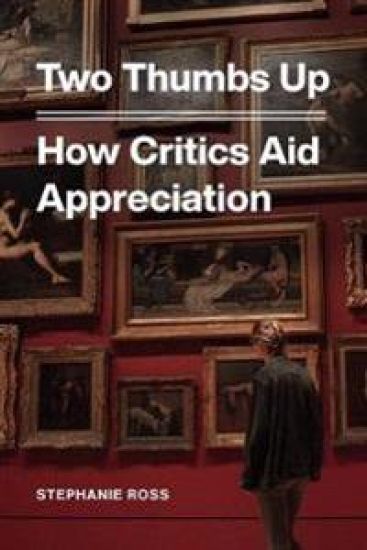
Two Thumbs Up

Two Thumbs Up

Stephanie Ross

University of Chicago Press
2020
sidottu
Far from an elite practice reserved for the highly educated, criticism is all around us. We turn to the Yelp reviewers to decide what restaurants are best, to Rotten Tomatoes to guide our movie choices, and to a host of voices on social media for critiques of political candidates, beach resorts, and everything in between. Yet even amid this ever-expanding sea of opinions, professional critics still hold considerable power in guiding how we make aesthetic judgements. Philosophers and lovers of art continue to grapple with questions that have fascinated them for centuries: How should we engage with works of art? What might enhance such encounters? Should some people's views be privileged? Who should count as a critic? And do critics actually help us appreciate art? In Two Thumbs Up, philosopher Stephanie Ross tackles these questions, revealing the ways that critics influence our decisions, and why that's a good thing. Starting from David Hume's conception of ideal critics, Ross refines his position and makes the case that review-based journalistic or consumer reporting criticism proves the best model for helping us find and appreciate quality. She addresses and critiques several other positions and, in the process, she demonstrates how aesthetic and philosophical concerns permeate our lives, choices, and culture. Ultimately, whether we're searching for the right wine or the best concert, Ross encourages us all to find and follow critics whose taste we share.
Wondrous Curiosities

Wondrous Curiosities

Stephanie Moser

University of Chicago Press
2012
nidottu
When the British Museum opened its doors more than two centuries ago, scores of visitors waited eagerly outside for a first glimpse of ancient relics from Egypt, Greece, and Rome. Even today, in this age of satellite television and high-speed Internet access, museums maintain their unique allure, continuing to play a vital role in connecting us with little-known terrains and the deep mysteries of our historical past. That's because, as Stephanie Moser argues in "Wondrous Curiosities", museum displays don't just transmit knowledge - they actually create it. Based on her exploration of the British Museum's world-famous collection of Egyptian antiquities, this pioneering study reveals the powerful role of museums in shaping our understanding of science, culture, and history. Drawing on guidebooks and archival documents, Moser demonstrates that this British exhibition of ancient Egyptian artifacts was central to the way we came to define the remarkable society that produced them.
What Gardens Mean

What Gardens Mean

Stephanie Ross

University of Chicago Press
2001
nidottu
Are gardens works of art? What is involved in creating a garden? How are gardens experienced by those who stroll through them? In What Gardens Mean, Stephanie Ross draws on philosophy as well as the histories of art, gardens, culture, and ideas to explore the magical lure of gardens. Paying special attention to the amazing landscape gardens of eighteenth-century England, she situates gardening among the other fine arts, documenting the complex messages gardens can convey and tracing various connections between gardens and the art of painting.What Gardens Mean offers a distinctive blend of historical and contemporary material, ranging from extensive accounts of famous eighteenth-century gardens to incisive connections with present-day philosophical debates. And while Ross examines aesthetic writings from the seventeenth and eighteenth centuries, including Joseph Addison's Spectator essays on the pleasures of imagination, the book's opening chapter surveys more recent theories about the nature and boundaries of art. She also considers gardens on their own terms, following changes in garden style, analyzing the phenomenal experience of viewing or strolling through a garden, and challenging the claim that the art of gardening is now a dead one.Showing that an artistic lineage can be traced from gardens in the Age of Satire to current environmental installations, this book is a sophisticated account of the myriad pleasures that gardens offer and a testimony to their enduring sensory and cognitive appeal. Beautifully illustrated and elegantly written, What Gardens Mean will delight all those interested in the history of gardens and the aesthetic and philosophical issues that they invite.
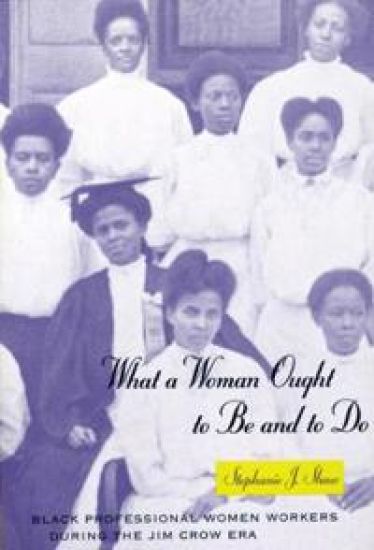
What a Woman Ought to Be and to Do

What a Woman Ought to Be and to Do

Stephanie J. Shaw

University of Chicago Press
1996
sidottu
This work explores the inner world of American black professional women during the Jim Crow era. It is a story of struggle and empowerment, of the strength of a group of women who worked against daunting odds to improve the world for themselves and their people. Shaw has done research into the lives of social workers, librarians, nurses and teachers from the 1870s through the 1950s. The women tell, in their own words, about their families, their values and their expectations. Shaw explains the forces and factors that made them exceptional and of the choices and commitments that made them leaders in their communities. This book explores a world in which African-American families, communities and schools worked to encourage the self-confidence, individual initiative and social responsibility of girls. Shaw shows how, in a society that denied black women full professional status, these girls embraced and in turn defined an ideal of "socially responsible individualism" that balanced private and public sphere responsibilities. A collective portrait of character shaped in the toughest circumstances, this book aims to provide more than a study of the socialization of these women as children and the organization of their work as adults. It also provides a study of leadership - of how African American communities gave their daughters the power to succeed in and change a hostile world.
What a Woman Ought to Be and to Do

What a Woman Ought to Be and to Do

Stephanie J. Shaw

University of Chicago Press
1996
nidottu
This work explores the inner world of American Black professional women during the Jim Crow era. It is a story of struggle and empowerment, of the strength of a group of women who worked against daunting odds to improve the world for themselves and their people. Shaw has done research into the lives of social workers, librarians, nurses and teachers from the 1870s through the 1950s. The women tell, in their own words, about their families, their values and their expectations. Shaw explains the forces and factors that made them exceptional and of the choices and commitments that made them leaders in their communities. This book explores a world in which African-American families, communities and schools worked to encourage the self-confidence, individual initiative and social responsibility of girls. Shaw shows how, in a society that denied black women full professional status, these girls embraced and in turn defined an ideal of "socially responsible individualism" that balanced private and public sphere responsibilities. A collective portrait of character shaped in the toughest circumstances, this book aims to provide more than a study of the socialization of these women as children and the organization of their work as adults. It also provides a study of leadership - of how African American communities gave their daughters the power to succeed in and change a hostile world.
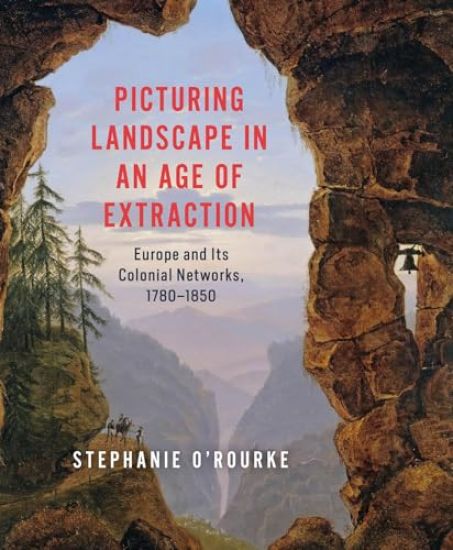
Picturing Landscape in an Age of Extraction

Picturing Landscape in an Age of Extraction

Stephanie O'Rourke

THE UNIVERSITY OF CHICAGO PRESS
2025
sidottu
O’Rourke argues that artistic representations played a pivotal role in shaping how people thought about the natural world during the Industrial Revolution. In the late eighteenth and early nineteenth centuries, European artists confronted the emergence of a new way of thinking about and treating the Earth and its resources. Centered on extraction, this new paradigm was characterized by large-scale efforts to transform and monetize the physical environment across the globe. With this book, Stephanie O’Rourke considers such practices, looking at what was at stake in visual representations of the natural world during the first decades of Europe’s industrial revolutions. O’Rourke argues that key developments in the European landscape painting tradition were profoundly shaped by industries including mining and timber harvesting, as well as by interlinked ideas about race, climate, and waste. Focusing on developments in Britain, France, Germany, and across Europe’s colonial networks, she explores how artworks and technical illustrations portrayed landscapes in ways that promoted—or pushed against—the logic of resource extraction.
rushes from the river disappointment

rushes from the river disappointment

stephanie roberts

McGill-Queen's University Press
2020
nidottu
"those of us who've seen miracles know how to ask. / if you've asked, do you love me, i almost certainly / don't love you." This meditative, musically attentive collection explores the confounding nature of intimate relationships. stephanie roberts's poetic expression is often irreverent, unapologetic, and infused with humour that can take surprisingly grave turns. rushes from the river disappointment traverses city, country, and fantasy using nature as artery through the emotional landscape. As they wrestle to come to terms with the effects of uncertainty and grief on hope and belief, these diverse field notes are interspersed with the fabulous: a polar bear and owl engage in flirtation, a time traveller appears on a lake, an erotic scene takes place on a train, and we confront "people capable of eating popcorn at the movie of your agony." roberts's language is dense with images and sometimes acrobatic. In poems that affirm love and desire as treasures fought for more than just felt, rushes from the river disappointment turns an unblinking gaze on the failures of courage that distance us from love.
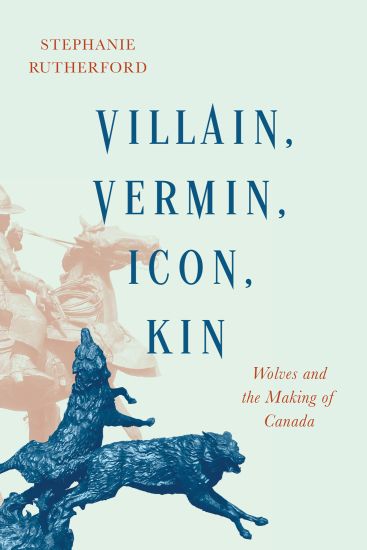
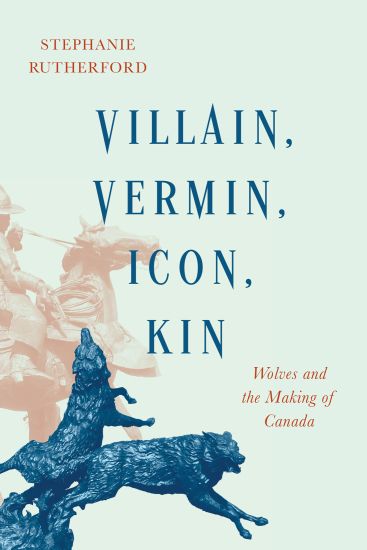
Villain, Vermin, Icon, Kin

Villain, Vermin, Icon, Kin

Stephanie Rutherford

MCGILL-QUEEN'S UNIVERSITY PRESS
2022
sidottu
A wolf’s howl is felt in the body. Frightening and compelling, incomprehensible or entirely knowable, it is a sound that may be heard as threat or invitation but leaves no listener unaffected.Toothsome fiends, interfering pests, or creatures wild and free, wolves have been at the heart of Canada’s national story since long before Confederation. Villain, Vermin, Icon, Kin contends that the role in which wolves have been cast – monster or hero – has changed dramatically through time. Exploring the social history of wolves in Canada, Stephanie Rutherford weaves an innovative tapestry from the varied threads of historical and contemporary texts, ideas, and practices in human-wolf relations, from provincial bounties to Farley Mowat’s iconic Never Cry Wolf. These examples reveal that Canada was made, in part, through relationships with nonhuman animals. Wolves have always captured the human imagination. In sketching out the connections people have had with wolves at different times, Villain, Vermin, Icon, Kin offers a model for more ethical ways of interacting with animals in the face of a global biodiversity crisis.
Villain, Vermin, Icon, Kin

Villain, Vermin, Icon, Kin

Stephanie Rutherford

MCGILL-QUEEN'S UNIVERSITY PRESS
2022
nidottu
A wolf’s howl is felt in the body. Frightening and compelling, incomprehensible or entirely knowable, it is a sound that may be heard as threat or invitation but leaves no listener unaffected.Toothsome fiends, interfering pests, or creatures wild and free, wolves have been at the heart of Canada’s national story since long before Confederation. Villain, Vermin, Icon, Kin contends that the role in which wolves have been cast – monster or hero – has changed dramatically through time. Exploring the social history of wolves in Canada, Stephanie Rutherford weaves an innovative tapestry from the varied threads of historical and contemporary texts, ideas, and practices in human-wolf relations, from provincial bounties to Farley Mowat’s iconic Never Cry Wolf. These examples reveal that Canada was made, in part, through relationships with nonhuman animals. Wolves have always captured the human imagination. In sketching out the connections people have had with wolves at different times, Villain, Vermin, Icon, Kin offers a model for more ethical ways of interacting with animals in the face of a global biodiversity crisis.
Just One Rain Away

Just One Rain Away

Stephanie C. Kane

MCGILL-QUEEN'S UNIVERSITY PRESS
2022
sidottu
Not long ago it seemed flood control experts were close to mastering the unruly flows funnelling toward Hudson Bay and the Prairie city of Winnipeg. But as more intense and out-of-synch flood events occur, wary cities like Winnipeg continue to depend on systems and specifications that will soon be out of date. Rivers have impulses that defy many of the basic human assumptions underpinning otherwise sophisticated technologies. This is the river-city expression of climate change.In Just One Rain Away Stephanie Kane shows how geoscience, engineering, and law converge to affect flood control in Winnipeg. She questions technicalities produced and maintained in tandem with settler folkways at the expense of the plural legal cultures of Indigenous nations. The dynamics of this experimental ethnography feel familiar yet strange: here, many of the starring actors are not human. Ice and water – materializing as bodies, elements, and digital signals – act with diatoms, diversions, sensors, sandbags, and satellites, looping theories about glacial erratics and feminist science studies into scenes from neighbourhood parks, conferences, survey maps, plays, archival photos, a novel, an emergency press conference, LiDAR images, and a lab experiment in a bathtub. Through storytelling and environmental analytics, Just One Rain Away provides a starting point for cross-cultural discussions about how expert knowledge and practice should inform egalitarian decision-making about flood control and, more broadly, decolonize current ways of thinking, being, and becoming with rivers.
Just One Rain Away

Just One Rain Away

Stephanie C. Kane

MCGILL-QUEEN'S UNIVERSITY PRESS
2022
nidottu
Not long ago it seemed flood control experts were close to mastering the unruly flows funnelling toward Hudson Bay and the Prairie city of Winnipeg. But as more intense and out-of-synch flood events occur, wary cities like Winnipeg continue to depend on systems and specifications that will soon be out of date. Rivers have impulses that defy many of the basic human assumptions underpinning otherwise sophisticated technologies. This is the river-city expression of climate change.In Just One Rain Away Stephanie Kane shows how geoscience, engineering, and law converge to affect flood control in Winnipeg. She questions technicalities produced and maintained in tandem with settler folkways at the expense of the plural legal cultures of Indigenous nations. The dynamics of this experimental ethnography feel familiar yet strange: here, many of the starring actors are not human. Ice and water – materializing as bodies, elements, and digital signals – act with diatoms, diversions, sensors, sandbags, and satellites, looping theories about glacial erratics and feminist science studies into scenes from neighbourhood parks, conferences, survey maps, plays, archival photos, a novel, an emergency press conference, LiDAR images, and a lab experiment in a bathtub. Through storytelling and environmental analytics, Just One Rain Away provides a starting point for cross-cultural discussions about how expert knowledge and practice should inform egalitarian decision-making about flood control and, more broadly, decolonize current ways of thinking, being, and becoming with rivers.
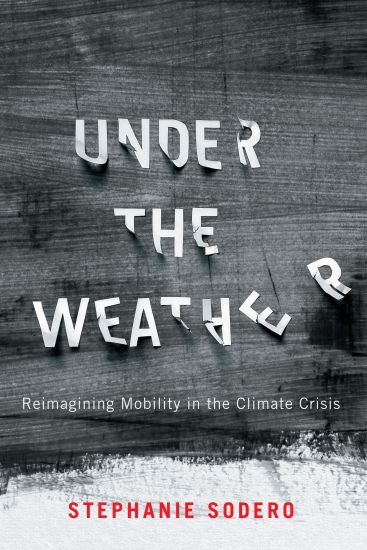
Under the Weather

Under the Weather

Stephanie Sodero

MCGILL-QUEEN'S UNIVERSITY PRESS
2022
sidottu
Humans and human mobility, including driving and flying, are entangled with the climate emergency. Fossil-fuelled mobility worsens severe weather, and in turn, severe weather disrupts human mobility. A shift to zero-emission vehicles is critical but insufficient to repair the damage or prepare communities for the coming disruptions severe weather will bring. In Under the Weather Stephanie Sodero explores the intersection between human mobility and severe weather. Anchored in two Atlantic Canadian hurricane case studies, Hurricane Juan in Mi'kma'ki/Nova Scotia in 2003 and Hurricane Igor in Ktaqmkuk/Newfoundland in 2010, the book contributes to contemporary cultural and policy discussions by offering five practical recommendations – revolutionize mobility, prioritize vital mobility of medical goods and services, embrace ecological mobilities, rebrand redundancy, and think flexibly – for how mobility can be reimagined to work with, rather than against, the climate in ways that also benefit the health, education, and economy of local communities. This ecological approach to mobilities sheds light on extreme mobility dependency and the impact of mobility disruptions on the ground in Canadian communities.Focusing on the entangled relationship between human mobility and the climate, Under the Weather examines how communities can transform their relationship with mobility to enable greater resilience.
Under the Weather

Under the Weather

Stephanie Sodero

MCGILL-QUEEN'S UNIVERSITY PRESS
2022
nidottu
Humans and human mobility, including driving and flying, are entangled with the climate emergency. Fossil-fuelled mobility worsens severe weather, and in turn, severe weather disrupts human mobility. A shift to zero-emission vehicles is critical but insufficient to repair the damage or prepare communities for the coming disruptions severe weather will bring. In Under the Weather Stephanie Sodero explores the intersection between human mobility and severe weather. Anchored in two Atlantic Canadian hurricane case studies, Hurricane Juan in Mi'kma'ki/Nova Scotia in 2003 and Hurricane Igor in Ktaqmkuk/Newfoundland in 2010, the book contributes to contemporary cultural and policy discussions by offering five practical recommendations – revolutionize mobility, prioritize vital mobility of medical goods and services, embrace ecological mobilities, rebrand redundancy, and think flexibly – for how mobility can be reimagined to work with, rather than against, the climate in ways that also benefit the health, education, and economy of local communities. This ecological approach to mobilities sheds light on extreme mobility dependency and the impact of mobility disruptions on the ground in Canadian communities.Focusing on the entangled relationship between human mobility and the climate, Under the Weather examines how communities can transform their relationship with mobility to enable greater resilience.
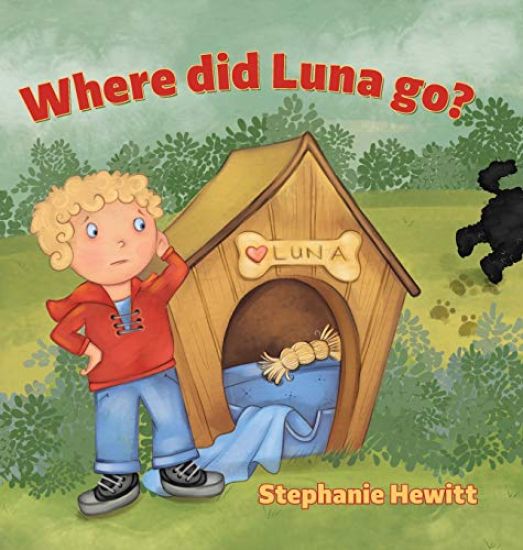
Where did Luna go?

Where did Luna go?

Stephanie Hewitt

Tellwell Talent
2020
sidottu
Luna is a cheeky and playful big black dog with lots of curly-wurly hair who likes to explore and play. One day, Luna gets a little bit stuck somewhere . . .\Where did Luna go?Come and explore with Luketo help find Luna.