Kirjojen hintavertailu. Mukana 12 016 292 kirjaa ja 12 kauppaa.

Kirjahaku

Etsi kirjoja tekijän nimen, kirjan nimen tai ISBN:n perusteella.

1000 tulosta hakusanalla Stephen Drake

A Treatise on Ventilators. Wherein an Account is Given of the Happy Effects of the Several Trials That Have Been Made of Them, ... Part Second. By Stephen Hales,
The 18th century was a wealth of knowledge, exploration and rapidly growing technology and expanding record-keeping made possible by advances in the printing press. In its determination to preserve the century of revolution, Gale initiated a revolution of its own: digitization of epic proportions to preserve these invaluable works in the largest archive of its kind. Now for the first time these high-quality digital copies of original 18th century manuscripts are available in print, making them highly accessible to libraries, undergraduate students, and independent scholars.Medical theory and practice of the 1700s developed rapidly, as is evidenced by the extensive collection, which includes descriptions of diseases, their conditions, and treatments. Books on science and technology, agriculture, military technology, natural philosophy, even cookbooks, are all contained here.++++The below data was compiled from various identification fields in the bibliographic record of this title. This data is provided as an additional tool in helping to insure edition identification: ++++British LibraryT100918A continuation of the author's 'Description of ventilators', 1743. With an index. At foot of p.1: 'Vol.II.'. Paragraphs numbered 237-731.London: printed for Richard Manby, 1758. 2],346, 4]p., plates; 8
An Inquiry Into the Reasons for and Against Inclosing Open-fields. By Stephen Addington. The Second Edition
The 18th century was a wealth of knowledge, exploration and rapidly growing technology and expanding record-keeping made possible by advances in the printing press. In its determination to preserve the century of revolution, Gale initiated a revolution of its own: digitization of epic proportions to preserve these invaluable works in the largest archive of its kind. Now for the first time these high-quality digital copies of original 18th century manuscripts are available in print, making them highly accessible to libraries, undergraduate students, and independent scholars.Medical theory and practice of the 1700s developed rapidly, as is evidenced by the extensive collection, which includes descriptions of diseases, their conditions, and treatments. Books on science and technology, agriculture, military technology, natural philosophy, even cookbooks, are all contained here.++++The below data was compiled from various identification fields in the bibliographic record of this title. This data is provided as an additional tool in helping to insure edition identification: ++++British LibraryT142750Coventry: printed for the author, at Harborough, by J. W. Piercy; and sold by J. Buckland, and G. Robinson, 1772. iv,60p.; 8
An Attempt to Translate and Explain the Difficult Passages in the Song of Deborah, With the Assistance of Kennicott's Collations, Rossi's Versions, and Critical Conjecture. By the Rev. Stephen Weston,
The 18th century was a wealth of knowledge, exploration and rapidly growing technology and expanding record-keeping made possible by advances in the printing press. In its determination to preserve the century of revolution, Gale initiated a revolution of its own: digitization of epic proportions to preserve these invaluable works in the largest archive of its kind. Now for the first time these high-quality digital copies of original 18th century manuscripts are available in print, making them highly accessible to libraries, undergraduate students, and independent scholars.Western literary study flows out of eighteenth-century works by Alexander Pope, Daniel Defoe, Henry Fielding, Frances Burney, Denis Diderot, Johann Gottfried Herder, Johann Wolfgang von Goethe, and others. Experience the birth of the modern novel, or compare the development of language using dictionaries and grammar discourses. ++++The below data was compiled from various identification fields in the bibliographic record of this title. This data is provided as an additional tool in helping to insure edition identification: ++++British LibraryT080372The separately-paginated notes begin on a verso.Exeter: printed and sold by Payne and Son, Faulder, Edwards, and Thorn, 1788. 2], iv,5,15p.; 4
A Description of a Pulverizing Mill, Lately Invented for the use of Apothecaries, to Supply the Place of the Pestle and Mortar. By Stephen Hemsted,
The 18th century was a wealth of knowledge, exploration and rapidly growing technology and expanding record-keeping made possible by advances in the printing press. In its determination to preserve the century of revolution, Gale initiated a revolution of its own: digitization of epic proportions to preserve these invaluable works in the largest archive of its kind. Now for the first time these high-quality digital copies of original 18th century manuscripts are available in print, making them highly accessible to libraries, undergraduate students, and independent scholars.Medical theory and practice of the 1700s developed rapidly, as is evidenced by the extensive collection, which includes descriptions of diseases, their conditions, and treatments. Books on science and technology, agriculture, military technology, natural philosophy, even cookbooks, are all contained here.++++The below data was compiled from various identification fields in the bibliographic record of this title. This data is provided as an additional tool in helping to insure edition identification: ++++British LibraryT105426London: printed for J. Bew, 1777. 2],26p., plate; 8
An Universal System of Water and Water-works, Philosophical and Practical. In Four Books. Faithfully Digested, From the Most Approv'd Writers on This Subject, by Stephen Switzer. ... In two Volumes. of 2; Volume 1
The 18th century was a wealth of knowledge, exploration and rapidly growing technology and expanding record-keeping made possible by advances in the printing press. In its determination to preserve the century of revolution, Gale initiated a revolution of its own: digitization of epic proportions to preserve these invaluable works in the largest archive of its kind. Now for the first time these high-quality digital copies of original 18th century manuscripts are available in print, making them highly accessible to libraries, undergraduate students, and independent scholars.Medical theory and practice of the 1700s developed rapidly, as is evidenced by the extensive collection, which includes descriptions of diseases, their conditions, and treatments. Books on science and technology, agriculture, military technology, natural philosophy, even cookbooks, are all contained here.++++The below data was compiled from various identification fields in the bibliographic record of this title. This data is provided as an additional tool in helping to insure edition identification: ++++British LibraryT117429A reissue of: 'An introduction to a general system of hydrostaticks and hydraulicks and hydraulicks', 1729, with a cancel titlepage. With ten pages of 'Notes on Book II. Chap 10', signed A, after p.274; otherwise pagination and register are continuous.London: printed for Thomas Cox, 1734. 2v.( 6], xxxii, 4],274,10,275-413, 15]p.), plates; 4
An Universal System of Water and Water-works, Philosophical and Practical. In Four Books. Faithfully Digested, From the Most Approv'd Writers on This Subject, by Stephen Switzer. ... In two Volumes. of 2; Volume 2
The 18th century was a wealth of knowledge, exploration and rapidly growing technology and expanding record-keeping made possible by advances in the printing press. In its determination to preserve the century of revolution, Gale initiated a revolution of its own: digitization of epic proportions to preserve these invaluable works in the largest archive of its kind. Now for the first time these high-quality digital copies of original 18th century manuscripts are available in print, making them highly accessible to libraries, undergraduate students, and independent scholars.Medical theory and practice of the 1700s developed rapidly, as is evidenced by the extensive collection, which includes descriptions of diseases, their conditions, and treatments. Books on science and technology, agriculture, military technology, natural philosophy, even cookbooks, are all contained here.++++The below data was compiled from various identification fields in the bibliographic record of this title. This data is provided as an additional tool in helping to insure edition identification: ++++British LibraryT117429A reissue of: 'An introduction to a general system of hydrostaticks and hydraulicks and hydraulicks', 1729, with a cancel titlepage. With ten pages of 'Notes on Book II. Chap 10', signed A, after p.274; otherwise pagination and register are continuous.London: printed for Thomas Cox, 1734. 2v.( 6], xxxii, 4],274,10,275-413, 15]p.), plates; 4
Discourses Upon the Existence and Attributes of God, Abridged from the Writings of the Late Learned and Venerable Stephen Charnock, B.D. by the Rev. Griffith Williams,
The 18th century was a wealth of knowledge, exploration and rapidly growing technology and expanding record-keeping made possible by advances in the printing press. In its determination to preserve the century of revolution, Gale initiated a revolution of its own: digitization of epic proportions to preserve these invaluable works in the largest archive of its kind. Now for the first time these high-quality digital copies of original 18th century manuscripts are available in print, making them highly accessible to libraries, undergraduate students, and independent scholars.The Age of Enlightenment profoundly enriched religious and philosophical understanding and continues to influence present-day thinking. Works collected here include masterpieces by David Hume, Immanuel Kant, and Jean-Jacques Rousseau, as well as religious sermons and moral debates on the issues of the day, such as the slave trade. The Age of Reason saw conflict between Protestantism and Catholicism transformed into one between faith and logic -- a debate that continues in the twenty-first century.++++The below data was compiled from various identification fields in the bibliographic record of this title. This data is provided as an additional tool in helping to insure edition identification: ++++British LibraryT073779London: printed for the editor, by W. Smith; and sold by J. Mathews; W. Button; J. Murgatroyd; and L. Rowe, 1797. viii, 2],559, 1]p.; 8
Collateral Bee-boxes, or, a new, Easy, and Advantageous Method of Managing Bees. In Which Part of the Honey is Taken Away, in an Easy and Pleasant Manner, ... By Stephen White, ... The Second Edition
The 18th century was a wealth of knowledge, exploration and rapidly growing technology and expanding record-keeping made possible by advances in the printing press. In its determination to preserve the century of revolution, Gale initiated a revolution of its own: digitization of epic proportions to preserve these invaluable works in the largest archive of its kind. Now for the first time these high-quality digital copies of original 18th century manuscripts are available in print, making them highly accessible to libraries, undergraduate students, and independent scholars.Medical theory and practice of the 1700s developed rapidly, as is evidenced by the extensive collection, which includes descriptions of diseases, their conditions, and treatments. Books on science and technology, agriculture, military technology, natural philosophy, even cookbooks, are all contained here.++++The below data was compiled from various identification fields in the bibliographic record of this title. This data is provided as an additional tool in helping to insure edition identification: ++++British LibraryT026139Pages 57-63 are misnumbered 61-67.London: printed for L. Davis and C. Reymers, 1759. 2],67 i.e.63], 1]p.plate; 8
An Introduction to a General System of Hydrostaticks and Hydraulicks, Philosophical and Practical. ... In two Volumes. By Stephen Switzer. of 2; Volume 1
The 18th century was a wealth of knowledge, exploration and rapidly growing technology and expanding record-keeping made possible by advances in the printing press. In its determination to preserve the century of revolution, Gale initiated a revolution of its own: digitization of epic proportions to preserve these invaluable works in the largest archive of its kind. Now for the first time these high-quality digital copies of original 18th century manuscripts are available in print, making them highly accessible to libraries, undergraduate students, and independent scholars.Medical theory and practice of the 1700s developed rapidly, as is evidenced by the extensive collection, which includes descriptions of diseases, their conditions, and treatments. Books on science and technology, agriculture, military technology, natural philosophy, even cookbooks, are all contained here.++++The below data was compiled from various identification fields in the bibliographic record of this title. This data is provided as an additional tool in helping to insure edition identification: ++++British LibraryT060644The pagination continues from vol.1 to vol.2, but is irregular.London: printed for T. Astley, S. Austen; and L. Gilliver, 1729. 2v., plates: ill.; 4
An Introduction to a General System of Hydrostaticks and Hydraulicks, Philosophical and Practical. ... In two Volumes. By Stephen Switzer. of 2; Volume 2
The 18th century was a wealth of knowledge, exploration and rapidly growing technology and expanding record-keeping made possible by advances in the printing press. In its determination to preserve the century of revolution, Gale initiated a revolution of its own: digitization of epic proportions to preserve these invaluable works in the largest archive of its kind. Now for the first time these high-quality digital copies of original 18th century manuscripts are available in print, making them highly accessible to libraries, undergraduate students, and independent scholars.Medical theory and practice of the 1700s developed rapidly, as is evidenced by the extensive collection, which includes descriptions of diseases, their conditions, and treatments. Books on science and technology, agriculture, military technology, natural philosophy, even cookbooks, are all contained here.++++The below data was compiled from various identification fields in the bibliographic record of this title. This data is provided as an additional tool in helping to insure edition identification: ++++British LibraryT060644The pagination continues from vol.1 to vol.2, but is irregular.London: printed for T. Astley, S. Austen; and L. Gilliver, 1729. 2v., plates: ill.; 4
The Practical Fruit-gardener. Being the Best and Newest Method of Raising, Planting, and Pruning all Sorts of Fruit-trees, ... By Stephen Switzer. Revised and Recommended by the Revd. Mr. Laurence and Mr. Bradley. Adorn'd With Proper Plans
The 18th century was a wealth of knowledge, exploration and rapidly growing technology and expanding record-keeping made possible by advances in the printing press. In its determination to preserve the century of revolution, Gale initiated a revolution of its own: digitization of epic proportions to preserve these invaluable works in the largest archive of its kind. Now for the first time these high-quality digital copies of original 18th century manuscripts are available in print, making them highly accessible to libraries, undergraduate students, and independent scholars.Medical theory and practice of the 1700s developed rapidly, as is evidenced by the extensive collection, which includes descriptions of diseases, their conditions, and treatments. Books on science and technology, agriculture, military technology, natural philosophy, even cookbooks, are all contained here.++++The below data was compiled from various identification fields in the bibliographic record of this title. This data is provided as an additional tool in helping to insure edition identification: ++++British LibraryT059739P.323 misnumbered 333.London: printed for Tho. Woodward, 1724. 28],333 i.e.323], 17]p., plates; 8
Poems on Several Occasions. By Stephen Duck

Poems on Several Occasions. By Stephen Duck

Stephen Duck

Gale Ecco, Print Editions
2018
sidottu
The 18th century was a wealth of knowledge, exploration and rapidly growing technology and expanding record-keeping made possible by advances in the printing press. In its determination to preserve the century of revolution, Gale initiated a revolution of its own: digitization of epic proportions to preserve these invaluable works in the largest archive of its kind. Now for the first time these high-quality digital copies of original 18th century manuscripts are available in print, making them highly accessible to libraries, undergraduate students, and independent scholars.Western literary study flows out of eighteenth-century works by Alexander Pope, Daniel Defoe, Henry Fielding, Frances Burney, Denis Diderot, Johann Gottfried Herder, Johann Wolfgang von Goethe, and others. Experience the birth of the modern novel, or compare the development of language using dictionaries and grammar discourses. ++++The below data was compiled from various identification fields in the bibliographic record of this title. This data is provided as an additional tool in helping to insure edition identification: ++++Bodleian Library (Oxford)T148832London: printed for W. Bickerton, 1736. xxxix, 1],312p.; 8
The Practical Fruit-gardener. Being the Newest and Best Method of Raising, Planting, and Pruning, all Sorts of Fruit-trees, ... By Stephen Switzer. The Second Edition. To Which are Added, Three new Plans, and Other Large Additions
The 18th century was a wealth of knowledge, exploration and rapidly growing technology and expanding record-keeping made possible by advances in the printing press. In its determination to preserve the century of revolution, Gale initiated a revolution of its own: digitization of epic proportions to preserve these invaluable works in the largest archive of its kind. Now for the first time these high-quality digital copies of original 18th century manuscripts are available in print, making them highly accessible to libraries, undergraduate students, and independent scholars.Medical theory and practice of the 1700s developed rapidly, as is evidenced by the extensive collection, which includes descriptions of diseases, their conditions, and treatments. Books on science and technology, agriculture, military technology, natural philosophy, even cookbooks, are all contained here.++++The below data was compiled from various identification fields in the bibliographic record of this title. This data is provided as an additional tool in helping to insure edition identification: ++++British LibraryT129369With a half-title. A reissue of the 1731 edition, with a new titlepage and the addition of a half-title. P.240 misnumbered 140.London: printed for Joseph Johnson, 1763. 32],363, 13]p., plates; 8
Scripture Truths Demonstrated, in Thirty-two Sermons, or Declarations of Stephen Crisp, Late of Colchester, in Essex, Deceased. Carefully Taken in Characters or Short-hand
The 18th century was a wealth of knowledge, exploration and rapidly growing technology and expanding record-keeping made possible by advances in the printing press. In its determination to preserve the century of revolution, Gale initiated a revolution of its own: digitization of epic proportions to preserve these invaluable works in the largest archive of its kind. Now for the first time these high-quality digital copies of original 18th century manuscripts are available in print, making them highly accessible to libraries, undergraduate students, and independent scholars.The Age of Enlightenment profoundly enriched religious and philosophical understanding and continues to influence present-day thinking. Works collected here include masterpieces by David Hume, Immanuel Kant, and Jean-Jacques Rousseau, as well as religious sermons and moral debates on the issues of the day, such as the slave trade. The Age of Reason saw conflict between Protestantism and Catholicism transformed into one between faith and logic -- a debate that continues in the twenty-first century.++++The below data was compiled from various identification fields in the bibliographic record of this title. This data is provided as an additional tool in helping to insure edition identification: ++++British LibraryW029092Philadelphia: Printed and sold by Joseph James, in Chesnut-Street, between Front and Second-Streets, MDCCLXXXVII. 1787]. 385, 1] p.; 8
Stephen Paddock

Stephen Paddock

Jon Stevens

Lulu.com
2017
pokkari
He was rich, he was smart, and he had no apparent motive. This is the story of the Stephen Paddock, the man who is believed to have committed the Las Vegas Massacre: the worst mass shooting by a single person in American history. In this book we'll explore the circumstances leading up to the crime, the location, the shooter's preparations, his arsenal, and his possible motive. Then we'll discuss the casualties, the aftermath and some of the theories surrounding the massacre and the man behind it.
Stephen Hawking

Stephen Hawking

Anita Croy

Raintree
2021
nidottu
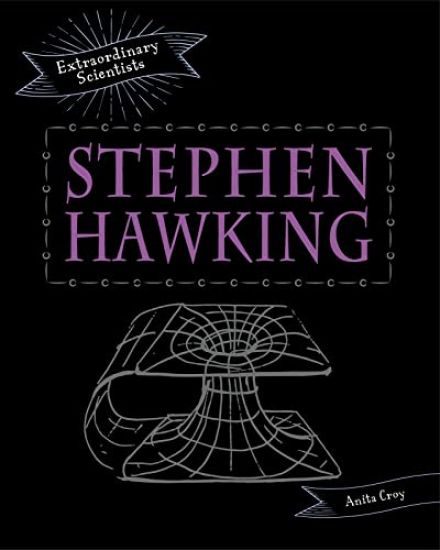
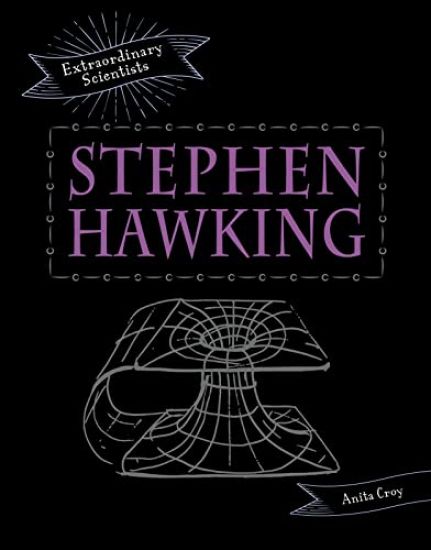
Stephen Hawking's discoveries include the idea that black holes give off radiation, or energy, and can eventually shrink and vanish. He was also the first person to explain the universe's origins using quantum physics, or the behaviour of tiny atoms and particles, combined with Albert Einstein's General Theory of Relativity, which explains how gravity, space, and time are related to each other. This book looks at Hawking's life and work, and shows how his discoveries both influenced society and contributed to the work of other scientists working in the field of physics.
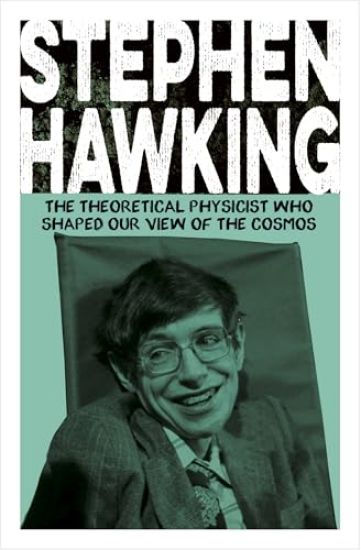
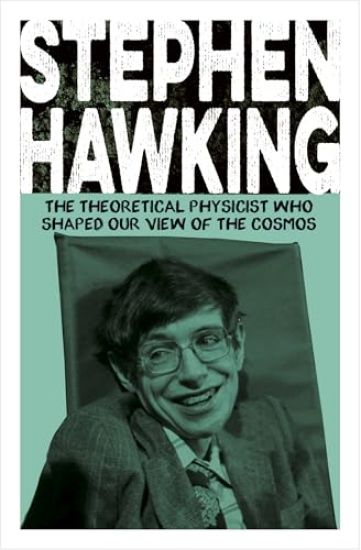
Stephen Hawking: The Theoretical Physicist Who Shaped Our View of the Cosmos
Explore the life and scientific legacy of Stephen Hawking - the brilliant theoretical physicist who changed the way we look at time and space. Stephen Hawking's contributions to physics and cosmology literally changed our understanding of the universe. He not only lit up the academic world but punched through the barrier between academics and the general public, offering high-level scientific answers to the greatest human questions. This captivating biography introduces his life and greatest scientific contributions, with accessible explanations on his theories surrounding general relativity, quantum mechanics, the science of black holes, and his pursuit of the 'Theory of Everything'. It also explores his diagnosis of motor neurone disease and the age of 21 and how he overcame these limitations to become one of the greatest scientific communicators in the modern world. With black and white photographs throughout, this biography is gives wonderful insight into Hawking's extraordinary achievements and how his attitude to life and work were the true driver of his success. ABOUT THE SERIES: The Sirius Biographies brings together entertaining biographies of leading figures within world of science, business, technology and beyond, tracing their lives, legacy and the pioneering ideas that made them world-famous.
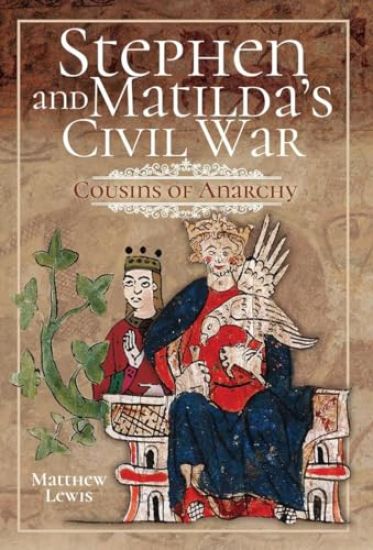
Stephen and Matilda's Civil War

Stephen and Matilda's Civil War

Matthew Lewis

PEN SWORD BOOKS LTD
2024
nidottu
The Anarchy was the first civil war in post-Conquest England, enduring throughout the reign of King Stephen between 1135 and 1154\. It ultimately brought about the end of the Norman dynasty and the birth of the mighty Plantagenet kings. When Henry I died having lost his only legitimate son in a shipwreck, he had caused all of his barons to swear to recognize his daughter Matilda, widow of the Holy Roman Emperor, as his heir and remarried her to Geoffrey, Count of Anjou. When she was slow to move to England on her father’s death, Henry’s favourite nephew Stephen of Blois rushed to have himself crowned, much as Henry himself had done on the death of his brother William Rufus. Supported by his brother Henry, Bishop of Winchester, Stephen made a promising start, but Matilda would not give up her birthright and tried to hold the English barons to their oaths. The result was more than a decade of civil war that saw England split apart. Empress Matilda is often remembered as aloof and high-handed, Stephen as ineffective and indecisive. By following both sides of the dispute and seeking to understand their actions and motivations, Matthew Lewis aims to reach a more rounded understanding of this crucial period of English history and asks to what extent there really was anarchy. 'A thoroughly researched yet accessible account of the civil war of the twelfth century; Matthew Lewis takes an even-handed approach to his two protagonists while rightly questioning how ‘anarchic’ the Anarchy really was. The result is an informative, pacy and compelling read about an exciting period of English history' - Catherine Hanley, author of Matilda: Empress, Queen, Warrior (Yale University Press, 2019).