

Kirjahaku
Etsi kirjoja tekijän nimen, kirjan nimen tai ISBN:n perusteella.
1000 tulosta hakusanalla Stephen G Perry
OPANOWANIE NATURALNEGO PRZETWARZANIA Z G¿¿BOKIE UCZENIE SI¿
Suganya A.; Vimal Kumar Stephen K.; Baghia Laxmi R.
Wydawnictwo Nasza Wiedza
2025
nidottu

R. G. Collingwood: A Research Companion
James Connelly; Peter Johnson; Stephen Leach
Bloomsbury Academic USA
2014
sidottu
R. G. Collingwood is an important 20th-century historian, archaeologist and philosopher whose works are the subject of continued interest, analysis and study. There is an unquestionable need to support this research activity with the provision of a reference guide which is fully up-to-date, informed and authoritative. The Companion therefore lists all primary and secondary material relevant to the study of Collingwood in all his fields of expertise - historical theory, philosophy and archaeology. It also provides a guide to archive material relevant to his life, together with sources and locations. The resulting volume is an essential companion to the understanding of the life and thought of R. G. Collingwood.

R. G. Collingwood: A Research Companion
James Connelly; Peter Johnson; Stephen Leach
Bloomsbury Academic
2016
nidottu
R. G. Collingwood is an important 20th-century historian, archaeologist and philosopher whose works are the subject of continued interest, analysis and study. There is an unquestionable need to support this research activity with the provision of a reference guide which is fully up-to-date, informed and authoritative. The Companion therefore lists all primary and secondary material relevant to the study of Collingwood in all his fields of expertise - historical theory, philosophy and archaeology. It also provides a guide to archive material relevant to his life, together with sources and locations. The resulting volume is an essential companion to the understanding of the life and thought of R. G. Collingwood.

Sherlock Holmes: Adventures in the Realms of H.G. Wells Volume 1
M. M. Elmendorf; Emma Tonkin; Stephen Herczeg
Createspace Independent Publishing Platform
2017
nidottu
The World's Greatest Detective in the Realms of the Master of Science Fiction Imagine Holmes trying to solve the case of an invisible man attacking London - matching wits with a traveler from out of time - tracking down a human/feline hybrid - using his deductive skills to help fight Martian and lunar invaders These are just some of the stories included in Sherlock Holmes: Adventures in the Realms of H.G. Wells. This one-of-a-kind two volume anthology features traditional Sherlock Holmes stories blended with one or more tales from H.G. Wells including: - The War of the Worlds - The Island of Dr. Moreau - The First Men in the Moon - The Time Machine - The Invisible Man - The New Accelerator - The Man Who Could Work Miracles - The Country of the Blind - And many more Authors include Andrew Lane (Young Sherlock Holmes), Daniel D. Victor (The Further Adventures of Sherlock Holmes: The Seventh Bullet), Derrick Belanger (Sherlock Holmes, The Adventure of the Peculiar Provenance), Benjamin Langley, Michael Wells, David Friend (The MX Book of New Sherlock Holmes Stories), William Campbell Powell (Expiration Day), John Linwood Grant (Occult Detective Quarterly), Megan M. Elmendorf, Steve Herczeg, Derek Nason, Michael Siverling (Midnight Investigations), Jaap Boekestein (Mystery Weekly Magazine), Richard Paolinelli (Escaping Infinity), GC Rosenquist (Sherlock Holmes and the Pearl of Death), Steve Poling (The Aristotelian), Katie Magnusson (The Adventures of Watts and Sherlock), Rohit Sawant (Down With the Fallen: A Post-Apocalyptic Horror Anthology), Emma Tonkin (Universal Enigma Anthology), and C. Edward Davis (The Voyage of the Lunar Schooner). Featuring forewords by Mark Levy, BSI in Volume 1 and Neil Cole (Adventures in Science Fiction: Sci-Fi Museum) in Volume 2.
NEWSPAPER READING HABITS AND ATTITUDE IN THE ICT ENVIRONMENT
Stephen. G
Lap Lambert Academic Publishing
2022
nidottu

Since it first appeared in 1971, Rise to Globalism has sold hundreds of thousands of copies. The ninth edition of this classic survey, now updated through the administration of George W. Bush, offers a concise and informative overview of the evolution of American foreign policy from 1938 to the present, focusing on such pivotal events as World War II, the Cuban Missile Crisis, Vietnam, and 9/11. Examining everything from the Iran-Contra scandal to the rise of international terrorism, the authors analyze-in light of the enormous global power of the United States-how American economic aggressiveness, racism, and fear of Communism have shaped the nation's evolving foreign policy.

Social Scientists, Policy, and the State
Stephen Brooks; Alain G. Gagnon
Praeger Publishers Inc
1990
sidottu
This collection of original essays focuses on the relationship of social scientists to the state and public policy in the industrialized democracies. The comparative approach of this book provides the basis for broader generalization about the linkages between social science and social scientist and the modern state and political power. Social Scientists, Policy, and the State brings fresh analysis to specific issues that are important to a more general understanding of these linkages.Part I examines the ways in which social scientists participate in the policy-making process. Part II looks at the uses made of ideas generated by social scientific research and at variations within and relations between the critical and expert roles of the social scientist. Part III discusses the factors that have contributed to change in the relationship of social scientists to power and to the state. This section also includes a detailed discussion about the cultural and structural conditions that facilitate or block the political influence of social scientists. This book should have equal appeal to teachers and researchers in the fields of comparative politics, policy making, and the sociology of knowledge.
The Political Influence of Ideas
Stephen Brooks; Alain G. Gagnon
Praeger Publishers Inc
1994
sidottu
This collection explores the various dimensions of social scientists' participation in policy-making, with special emphasis on their roles within policy communities and their relationship to the state. Several of the chapters examine the role of research institutes and think tanks within policy communities in the United States, Canada, and Eastern Europe. This book will appeal to readers interested in the sociology of knowledge and the policy-making process, particularly political scientists and sociologists.
Mendelian Randomization: Methods For Causal Inference Using Genetic Variants provides thorough coverage of the methods and practical elements of Mendelian randomization analysis. It brings together diverse aspects of Mendelian randomization from the fields of epidemiology, statistics, genetics, and bioinformatics.Through multiple examples, the first part of the book introduces the reader to the concept of Mendelian randomization, showing how to perform simple Mendelian randomization investigations and interpret the results. The second part of the book addresses specific methodological issues relevant to the practice of Mendelian randomization, including robust methods, weak instruments, multivariable methods, and power calculations. The authors present the theoretical aspects of these issues in an easy-to-understand way by using non-technical language. The last part of the book examines the potential for Mendelian randomization in the future, exploring both methodological and applied developments.FeaturesOffers first-hand, in-depth guidance on Mendelian randomization from leaders in the fieldMakes the diverse aspects of Mendelian randomization understandable to newcomersIllustrates technical details using data from applied analysesDiscusses possible future directions for research involving Mendelian randomizationSoftware code is provided in the relevant chapters and is also available at the supplementary websiteThis book gives epidemiologists, statisticians, geneticists, and bioinformaticians the foundation to understand how to use genetic variants as instrumental variables in observational data.New in Second Edition: The second edition of the book has been substantially re-written to reduce the amount of technical content, and emphasize practical consequences of theoretical issues. Extensive material on the use of two-sample Mendelian randomization and publicly-available summarized data has been added. The book now includes several real-world examples that show how Mendelian randomization can be used to address questions of disease aetiology, target validation, and drug development
This book, originally published in 1987, argues that economics and psychology both claim to study human behaviour, but historically they have had very little to do with each other. Previous efforts at integration tended to take the form of bringing in psychology to reform economics or vice versa. The authors believe this approach is unfruitful. Instead, they take the view that many kinds of behaviour have both economic and psychological aspects and can be studied by both economic and psychological methods. Economic psychology is the body of knowledge that results from such interdisciplinary investigation. Throughout the authors employ both psychological and economic theories, emphasising how each matches up to the observed facts rather than pitting one against the other. Drawing on the strengths of economics and psychology, The Individual in the Economy presents interesting analyses of important human behaviours, which will surprise and inform psychologists, economists, their students and motivated general readers.
The Internet and Democratic Citizenship
Stephen Coleman; Jay G. Blumler
Cambridge University Press
2009
pokkari
Relations between the public and holders of political authority are in a period of transformative flux. On the one side, new expectations and meanings of citizenship are being entertained and occasionally acted upon. On the other, an inexorable impoverishment of mainstream political communication is taking place. This book argues that the Internet has the potential to improve public communications and enrich democracy, a project that requires imaginative policy-making. This argument is developed through three stages: first exploring the theoretical foundations for renewing democratic citizenship, then examining practical case studies of e-democracy, and finally, reviewing the limitations of recent policies designed to promote e-democracy and setting out a radical, but practical proposal for an online civic commons: a trusted public space where the dispersed energies, self-articulations and aspirations of citizens can be rehearsed, in public, within a process of ongoing feedback to the various levels and centers of governance: local, national and transnational.
The Internet and Democratic Citizenship
Stephen Coleman; Jay G. Blumler
Cambridge University Press
2009
sidottu
Relations between the public and holders of political authority are in a period of transformative flux. On the one side, new expectations and meanings of citizenship are being entertained and occasionally acted upon. On the other, an inexorable impoverishment of mainstream political communication is taking place. This book argues that the Internet has the potential to improve public communications and enrich democracy, a project that requires imaginative policy-making. This argument is developed through three stages: first exploring the theoretical foundations for renewing democratic citizenship, then examining practical case studies of e-democracy, and finally, reviewing the limitations of recent policies designed to promote e-democracy and setting out a radical, but practical proposal for an online civic commons: a trusted public space where the dispersed energies, self-articulations and aspirations of citizens can be rehearsed, in public, within a process of ongoing feedback to the various levels and centers of governance: local, national and transnational.
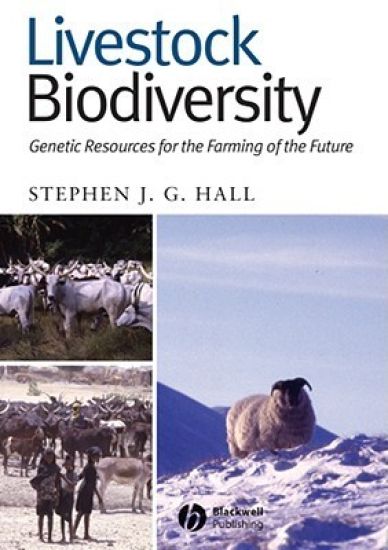
Livestock biodiversity is integral to our culture, history, environment, economy and, most importantly, our future. Thousands of livestock breeds, from relatively small genetic pools, have evolved over time to suit particular environments and farming systems. This is both the result of natural processes and of human needs for specialized livestock – as our knowledge of genetics continues to increase we achieve a greater understanding of how this biodiversity evolved. This book offers a detailed and comprehensive overview of livestock biodiversity. It explores the history behind it, shows how livestock biodiversity can be utilized as animal genetic resources through breed development and by crossbreeding, examines the state of world livestock biodiversity today, and emphasizes the importance of conserving and developing the biodiversity of livestock. Special consideration is given to: • How livestock biodiversity arose and is maintained in relation to human society • How it can be used in sustainable agricultural development • How it can be conserved for the benefit of present and future generations • Why conservation biologists, as well as agriculturists, should be involved in its protection
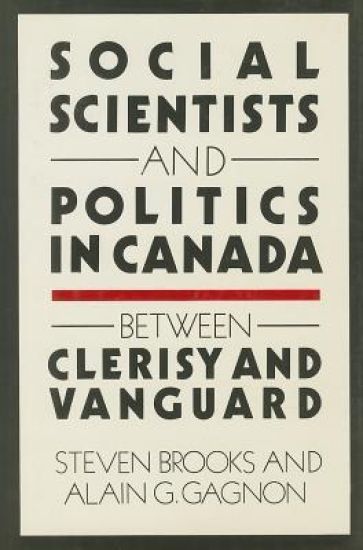
Social Scientists and Politics in Canada
Stephen Brooks; Alain-G Gagnon
McGill-Queen's University Press
1988
sidottu
Social scientists have played many roles in Canadian politics since the Second World War. Stephen Brooks and Alain Gagnon examine the forms and extent of social scientists' involvement in the political process, their relationship to the state, and the complexities of their class position. The unique development of the social sciences in Quebec and their relationship to Quebec nationalism are examined and distinctions between development in this community and in the predominantly anglophone community of the rest of Canada are contrasted.

Mendelian Randomization: Methods For Causal Inference Using Genetic Variants provides thorough coverage of the methods and practical elements of Mendelian randomization analysis. It brings together diverse aspects of Mendelian randomization from the fields of epidemiology, statistics, genetics, and bioinformatics.Through multiple examples, the first part of the book introduces the reader to the concept of Mendelian randomization, showing how to perform simple Mendelian randomization investigations and interpret the results. The second part of the book addresses specific methodological issues relevant to the practice of Mendelian randomization, including robust methods, weak instruments, multivariable methods, and power calculations. The authors present the theoretical aspects of these issues in an easy-to-understand way by using non-technical language. The last part of the book examines the potential for Mendelian randomization in the future, exploring both methodological and applied developments.FeaturesOffers first-hand, in-depth guidance on Mendelian randomization from leaders in the fieldMakes the diverse aspects of Mendelian randomization understandable to newcomersIllustrates technical details using data from applied analysesDiscusses possible future directions for research involving Mendelian randomizationSoftware code is provided in the relevant chapters and is also available at the supplementary websiteThis book gives epidemiologists, statisticians, geneticists, and bioinformaticians the foundation to understand how to use genetic variants as instrumental variables in observational data.New in Second Edition: The second edition of the book has been substantially re-written to reduce the amount of technical content, and emphasize practical consequences of theoretical issues. Extensive material on the use of two-sample Mendelian randomization and publicly-available summarized data has been added. The book now includes several real-world examples that show how Mendelian randomization can be used to address questions of disease aetiology, target validation, and drug development

Renaissance Leadership and The Renaissance Way
Stephen Murgatroyd; Donald G Simpson
Lulu.com
2024
pokkari
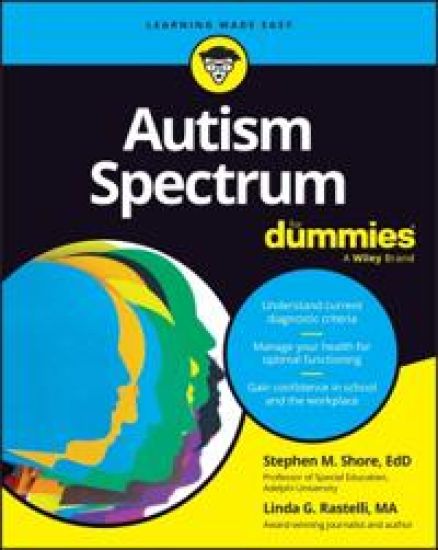
Helpful, up-to-date information for people with autism, parents, educators, and HR professionals Autism affects more than 75 million people worldwide. Autism Spectrum For Dummies explores this neurodevelopmental condition and the various levels of support needs for autistic diagnoses. Great for adults with autism and caregivers of children on the spectrum, this book is your guide to the symptoms of autism, current diagnostic criteria, treatment and medication options, and how to find support in your community. This new edition also includes information for adults with autism entering higher education and the workforce, highlighting the importance of inclusivity and helping you advocate for your needs. Learn how autism is diagnosed and how to spot the symptoms Get a plain English breakdown of the most common research findings Find useful advice for living and thriving with autism Autism Spectrum For Dummies is the perfect guide for navigating autism at any age. It's also a useful tool for those who work closely with people on the autism spectrum, whether in school or the workplace.
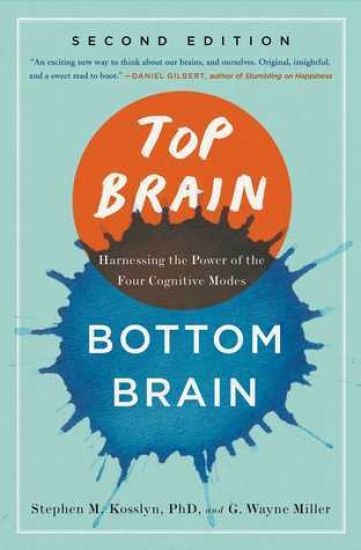
One of the world's leading neuroscientists teams up with an accomplished writer to debunk the popular left-brain/right-brain theory and offer an exciting new way of thinking about our minds.For the past fifty years, popular culture has led us to believe in the left-brain vs. right-brain theory of personality types. Right-brain people, we've been told, are artistic, intuitive, and thoughtful, while left-brain people tend to be more analytical, logical, and objective. It would be an illuminating theory if it did not have one major drawback: It is simply not supported by science. Dr. Stephen M. Kosslyn, who Steven Pinker calls "one of the world's great cognitive neuroscientists," explains with cowriter G. Wayne Miller an exciting new theory of the brain. Presenting extensive research in an inviting and accessible way, Kosslyn and Miller describe how the human brain uses patterns of thought that can be identified and understood through four modes of thinking: Mover, Perceiver, Stimulator, and Adaptor. Once you've identified your usual mode of thought, the practical applications are limitless, from how you work with others when you conduct business, to your personal relationships, to your voyage of self-discovery. The second edition of Top Brain, Bottom Brain includes expanded practical applications and highlights how readers can harness the theory to succeed in their own lives.
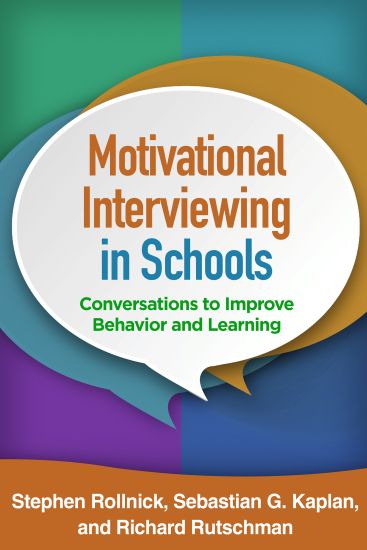
Motivational Interviewing in Schools
Stephen Rollnick; Sebastian G. Kaplan; Richard Rutschman
Guilford Press
2016
nidottu
The first teacher's guide to the proven counseling approach known as motivational interviewing (MI), this pragmatic book shows how to use everyday interactions with students as powerful opportunities for change. MI comprises skills and strategies that can make brief conversations about any kind of behavioral, academic, or peer-related challenge more effective. Extensive sample dialogues bring to life the "dos and don'ts" of talking to K-12 students (and their parents) in ways that promote self-directed problem solving and personal growth. The authors include the distinguished codeveloper of MI plus two former classroom teachers. User-friendly features include learning exercises and reflection questions; additional helpful resources are available at the companion website. Written for teachers, the book will be recommended and/or used in teacher workshops by school psychologists, counselors, and social workers. This book is in the Applications of Motivational Interviewing series, edited by Stephen Rollnick, William R. Miller, and Theresa B. Moyers.