Kirjojen hintavertailu. Mukana 11 238 394 kirjaa ja 12 kauppaa.

Kirjahaku

Etsi kirjoja tekijän nimen, kirjan nimen tai ISBN:n perusteella.

1000 tulosta hakusanalla Thomas Witherow

Thomas Aquinas: Disputed Questions on the Virtues

Thomas Aquinas: Disputed Questions on the Virtues

Aquinas Thomas

Cambridge University Press
2005
pokkari
The great medieval philosopher Thomas Aquinas (1224/6-1274) was Dominican regent master in theology at the University of Paris, where he presided over a series of questions - academic debates - on ethical topics. This volume offers translations of disputed questions on the nature of virtues in general, the fundamental or 'cardinal' virtues of practical wisdom, justice, courage, and temperateness, the divinely bestowed virtues of hope and charity, and the practical question of how, when and why one should rebuke a 'brother' for wrongdoing. The introduction explains how Aquinas's theory of virtue fits into his ethics as a whole, and it illuminates Aquinas's views by explaining the institutional and intellectual context in which these disputed questions were debated.
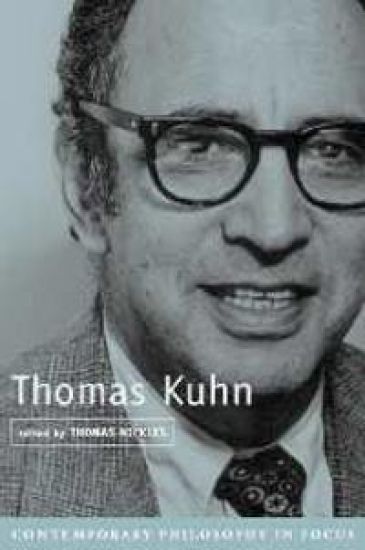
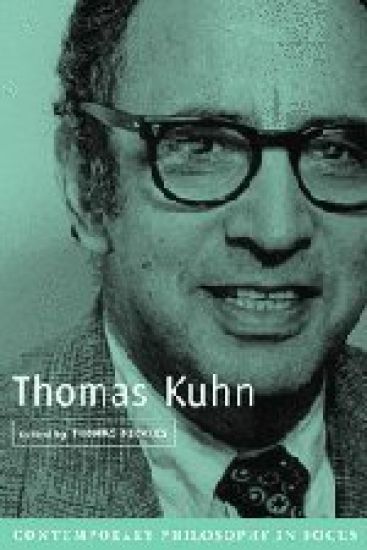
Thomas Kuhn

Thomas Kuhn

Cambridge University Press
2002
sidottu
Contemporary Philosophy in Focus offers a series of introductory volumes to many of the dominant philosophical thinkers of the current age. Thomas Kuhn (1922–1996), the author of The Structure of Scientific Revolutions, is probably the best-known and most influential historian and philosopher of science of the last 25 years, and has become something of a cultural icon. His concepts of paradigm, paradigm change and incommensurability have changed the way we think about science. This volume offers an introduction to Kuhn’s life and work and then considers the implications of Kuhn’s work for philosophy, cognitive psychology, social studies of science and feminism. The volume is more than a retrospective on Kuhn, exploring future developments of cognitive and information services along Kuhnian lines. Outside of philosophy the volume will be of particular interest to professionals and students in cognitive science, history of science, science studies and cultural studies.
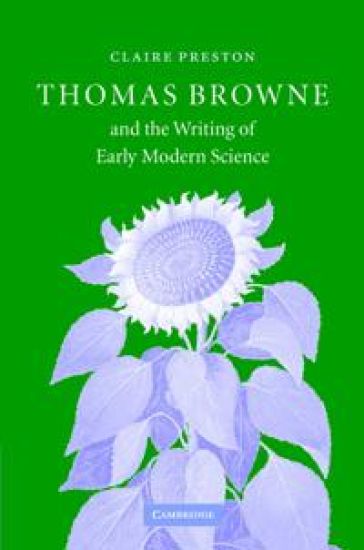
Thomas Browne and the Writing of Early Modern Science

Thomas Browne and the Writing of Early Modern Science

Claire Preston

Cambridge University Press
2005
sidottu
Claire Preston argues that Thomas Browne’s work can be fully understood only within the range of disciplines and practices associated with natural philosophy and early modern empiricism. Early modern methods of cataloguing, collecting, experimentation and observation, organised his writing on many subjects from medicine and botany to archaeology and antiquarianism. Browne framed philosophical concerns in the terms of civil behaviour, with collaborative networks of intellectual exchange, investigative selflessness, courtesy, modesty, and ultimately the generosity of the natural world itself all characterising the return to ‘innocent’ knowledge, which, for Browne, is the proper end of human enquiry. In this major new evaluation of Browne’s oeuvre, Preston examines how the developing essay form, the discourse of scientific experiment, and above all Bacon's model of intellectual progress and cooperation determined the unique character of Browne’s contributions to early modern literature, science and philosophy.
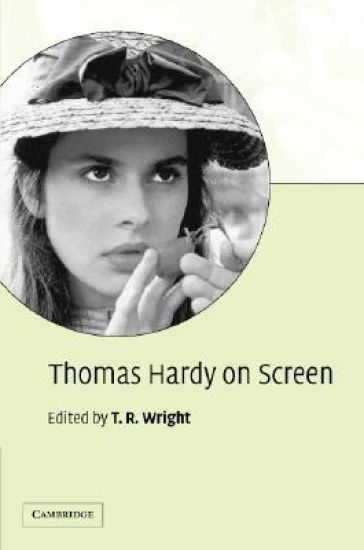
Thomas Hardy on Screen

Thomas Hardy on Screen

Cambridge University Press
2006
sidottu
The novels of Thomas Hardy have often been regarded as cinematic in their scope and power, and they have inspired some of the most absorbing adaptations of fiction for the big screen. This collection of essays by prominent international Hardy scholars explores both successful and unsuccessful attempts to transfer Hardy's novels to the screen. It provides a fascinating illustrated history of the interpretation and recreation of Hardy's work, from the silent era to television. The essays highlight the challenging nature of Hardy's work, which finds its most powerful reflection in films by controversial directors such as Roman Polanski and Michael Winterbottom. Adaptations on screen have revived Hardy's reputation for new generations of readers, and have reinforced the continuing relevance of his works. This collection offers a stimulating starting-point both for the study of Hardy's novels as films, and of the ways in which cinema and television adaptations illuminate the novels.
Thomas Paine and the Literature of Revolution

Thomas Paine and the Literature of Revolution

Edward Larkin

Cambridge University Press
2005
sidottu
Although the impact of works such as Common Sense and The Rights of Man has led historians to study Thomas Paine's role in the American Revolution and political scientists to evaluate his contributions to political theory, scholars have tacitly agreed not to treat him as a literary figure. This book not only redresses this omission, but also demonstrates that Paine's literary sensibility is particularly evident in the very texts that confirmed his importance as a theorist. And yet, because of this association with the 'masses', Paine is often dismissed as a mere propagandist. Thomas Paine and the Literature of Revolution recovers Paine as a transatlantic popular intellectual who would translate the major political theories of the eighteenth century into a language that was accessible and appealing to ordinary citizens on both sides of the Atlantic.
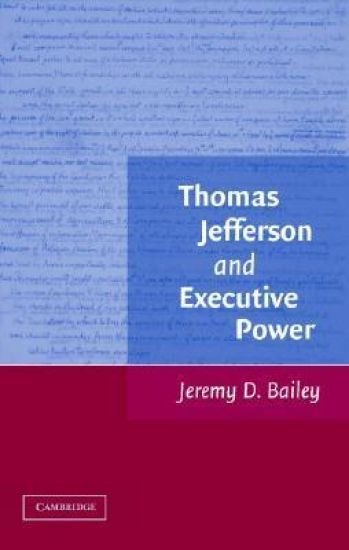
Thomas Jefferson and Executive Power

Thomas Jefferson and Executive Power

Jeremy D. Bailey

Cambridge University Press
2007
sidottu
By revisiting Thomas Jefferson's understanding of executive power this book offers a new understanding of the origins of presidential power. Before Jefferson was elected president, he arrived at a way to resolve the tension between constitutionalism and executive power. Because his solution would preserve a strict interpretation of the Constitution as well as transform the precedents left by his Federalist predecessors, it provided an alternative to Alexander Hamilton's understanding of executive power. In fact, a more thorough account of Jefferson's political career suggests that Jefferson envisioned an executive that was powerful, or 'energetic', because it would be more explicitly attached to the majority will. Jefferson's Revolution of 1800, often portrayed as a reversal of the strong presidency, was itself premised on energy in the executive and was part of Jefferson's project to enable the Constitution to survive and even flourish in a world governed by necessity.
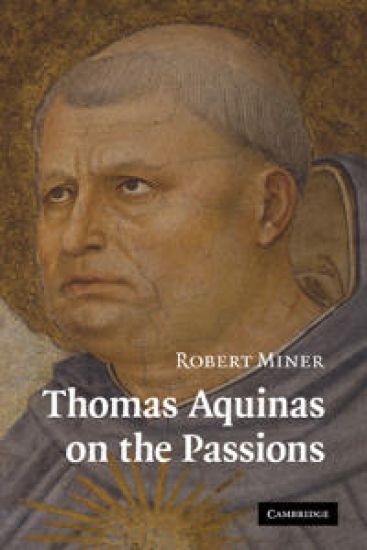
Thomas Aquinas on the Passions

Thomas Aquinas on the Passions

Robert Miner

Cambridge University Press
2009
sidottu
The Summa Theologiae is Thomas Aquinas' undisputed masterwork, and it includes his thoughts on the elemental forces in human life. Feelings such as love, hatred, pleasure, pain, hope and despair were described by Aquinas as 'passions', representing the different ways in which happiness could be affected. But what causes the passions? What impact do they have on the person who suffers them? Can they be shaped and reshaped in order to better promote human flourishing? The aim of this book is to provide a better understanding of Aquinas' account of the passions. It identifies the Aristotelian influences that lie at the heart of the Summa Theologiae, and it enters into a dialogue with contemporary thinking about the nature of emotion. The study argues that Aquinas' work is still important today, and shows why for Aquinas both the understanding and attainment of happiness requires prolonged reflection on the passions.
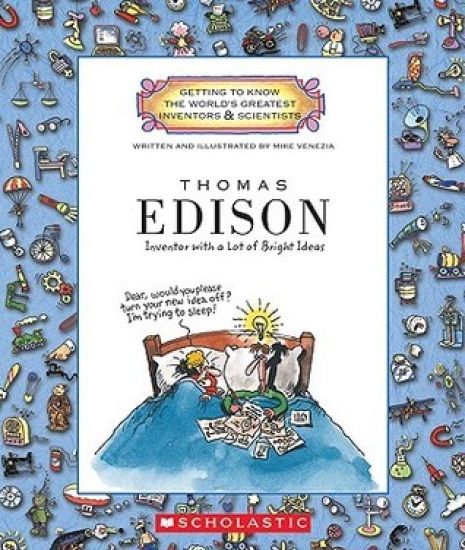
Thomas Edison (Getting to Know the World's Greatest Inventors & Scientists)
Meet renowned inventor Thomas Edison Getting to Know the World's Greatest Inventors and Scientists series combines a delightful mix of full-color historical reproductions, photos, and hilarious cartoon-style illustrations that bring to life the work and contributions of renowned scientists and inventors, combining poignant anecdotes with important factual information for readers (Ages 8-9).This book presents the life and accomplishments of the scientist who was responsible for more than one thousand inventions, including the electric light bulb, the phonograph, and the first movie camera.