Kirjojen hintavertailu. Mukana 11 244 527 kirjaa ja 12 kauppaa.

Kirjahaku

Etsi kirjoja tekijän nimen, kirjan nimen tai ISBN:n perusteella.

1000 tulosta hakusanalla W. Hall-patch

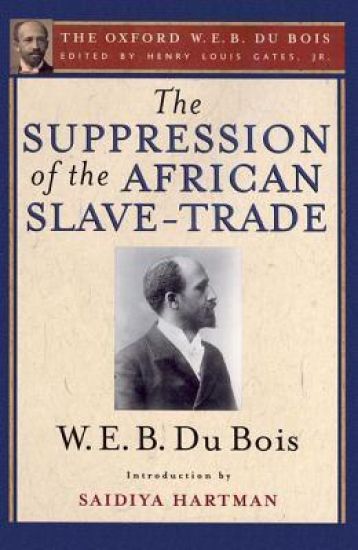
The Suppression of the African Slave-Trade to the United States of America (The Oxford W. E. B. Du Bois)
W. E. B. Du Bois was a public intellectual, sociologist, and activist on behalf of the African American community. He profoundly shaped black political culture in the United States through his founding role in the NAACP, as well as internationally through the Pan-African movement. DuBois's sociological and historical research on African-American communities and culture broke ground in many areas, including the history of the post-Civil War Reconstruction period. Du Bois was also a prolific author of novels, autobiographical accounts, innumerable editorials and journalistic pieces, and several works of history. The Suppression of the African Slave Trade to the United States of America, 1638-1870, W. E. B. Du Bois's groundbreaking monograph, recounts the moral failures and missed opportunities of the American Revolution and the consequences of compromising with slavery. As Du Bois's first published work and doctoral dissertation, Suppression lays the groundwork for his early commitment to the study of the African American experience. At the time of its publication in 1896, Du Bois's monograph was at the forefront of developments in historiography, embodying a new, empirical approach to history. Suppression is integral to understanding Du Bois's early theories and his evolution into a leading scholar and activist. With a series introduction by editor Henry Louis Gates, Jr., and an introduction by Saidiya Hartman, this edition is essential for anyone interested in African American history.
Black Reconstruction in America (The Oxford W. E. B. Du Bois)

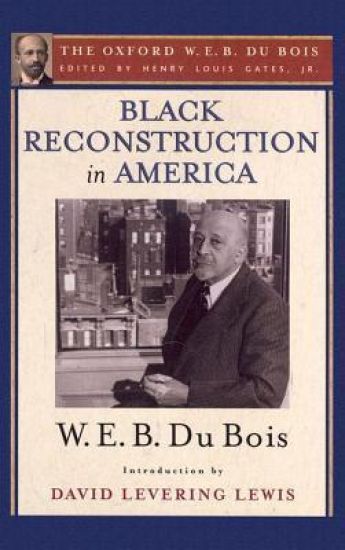
Black Reconstruction in America (The Oxford W. E. B. Du Bois)

W. E. B. Du Bois; David Levering Lewis

Oxford University Press Inc
2014
nidottu
W. E. B. Du Bois was a public intellectual, sociologist, and activist on behalf of the African American community. He profoundly shaped black political culture in the United States through his founding role in the NAACP, as well as internationally through the Pan-African movement. Du Bois's sociological and historical research on African-American communities and culture broke ground in many areas, including the history of the post-Civil War Reconstruction period. Du Bois was also a prolific author of novels, autobiographical accounts, innumerable editorials and journalistic pieces, and several works of history. Black Reconstruction in America tells and interprets the story of the twenty years of Reconstruction from the point of view of newly liberated African Americans. Though lambasted by critics at the time of its publication in 1935, Black Reconstruction has only grown in historical and literary importance. In the 1960s it joined the canon of the most influential revisionist historical works. Its greatest achievement is weaving a credible, lyrical historical narrative of the hostile and politically fraught years of 1860-1880 with a powerful critical analysis of the harmful effects of democracy, including Jim Crow laws and other injustices. With a series introduction by editor Henry Louis Gates, Jr., and an introduction by David Levering Lewis, this edition is essential for anyone interested in African American history.
Africa, Its Geography, People and Products and Africa-Its Place in Modern History (The Oxford W. E. B. Du Bois)
W. E. B. Du Bois was a public intellectual, sociologist, and activist on behalf of the African American community. He profoundly shaped black political culture in the United States through his founding role in the NAACP, as well as internationally through the Pan-African movement. Du Bois's sociological and historical research on African-American communities and culture broke ground in many areas, including the history of the post-Civil War Reconstruction period. Du Bois was also a prolific author of novels, autobiographical accounts, innumerable editorials and journalistic pieces, and several works of history. Written in very accessible prose, these two booklets, originally published in 1930, allowed W. E. B. Du Bois to reach a wide audience with an interest in Africa. What is so incredible about the two Africa booklets is their lasting relevance and value to the study of Africa today. Coupling Du Bois's breadth of scholarship with his passion for the subjects, the analyses in these booklets are integral to the study of Africa. Many of his arguments foreshadowed the issues and debates regarding Africa in the twentieth century. Expertly synthesized in an introduction by Emmanuel Akyeampong, this edition of the two Africa booklets is essential for anyone interested in African history.
Dusk of Dawn (The Oxford W. E. B. Du Bois)

Dusk of Dawn (The Oxford W. E. B. Du Bois)

W. E. B. Du Bois; Kwame Anthony Appiah

Oxford University Press Inc
2014
nidottu
W. E. B. Du Bois was a public intellectual, sociologist, and activist on behalf of the African American community. He profoundly shaped black political culture in the United States through his founding role in the NAACP, as well as internationally through the Pan-African movement. Du Bois's sociological and historical research on African-American communities and culture broke ground in many areas, including the history of the post-Civil War Reconstruction period. Du Bois was also a prolific author of novels, autobiographical accounts, innumerable editorials and journalistic pieces, and several works of history. Dusk of Dawn, published in 1940, is an explosive autobiography of the foremost African American scholar of his time. Du Bois writes movingly of his own life, using personal experience to elucidate the systemic problem of race. He reflects on his childhood, his education, and his intellectual life, including the formation of the NAACP. Though his views eventually got him expelled from the association, Du Bois continues to develop his thoughts on separate black economic and social institutions in Dusk of Dawn. Readers will find energetic essays within these pages, including insight into his developing Pan-African consciousness. With a series introduction by editor Henry Louis Gates, Jr., and an introduction by Kwame Anthony Appiah, this edition is essential for anyone interested in African American history.
The World and Africa and Color and Democracy (The Oxford W. E. B. Du Bois)

The World and Africa and Color and Democracy (The Oxford W. E. B. Du Bois)

W. E. B. Du Bois; Mahmood Mamdani; Gerald Horne

Oxford University Press Inc
2014
nidottu
W. E. B. Du Bois was a public intellectual, sociologist, and activist on behalf of the African American community. He profoundly shaped black political culture in the United States through his founding role in the NAACP, as well as internationally through the Pan-African movement. Du Bois's sociological and historical research on African-American communities and culture broke ground in many areas, including the history of the post-Civil War Reconstruction period. Du Bois was also a prolific author of novels, autobiographical accounts, innumerable editorials and journalistic pieces, and several works of history. Collected in one volume for the first time, The World and Africa and Color and Democracy are two of W E. B. Du Bois's most powerful essays on race. He explores how to tell the story of those left out of recorded history, the evils of colonialism worldwide, and Africa's and African's contributions to, and neglect from, world history. More than six decades after W. E. B. Du Bois wrote The World and Africa and Color and Democracy, they remain worthy guides for the twenty-first century. With a series introduction by editor Henry Louis Gates, Jr., and two introductions by top African scholars, this edition is essential for anyone interested in world history.
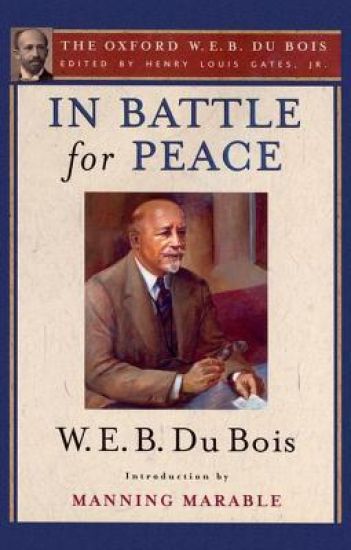
In Battle for Peace (The Oxford W. E. B. Du Bois)

In Battle for Peace (The Oxford W. E. B. Du Bois)

W. E. B. Du Bois; Manning Marable

Oxford University Press Inc
2014
nidottu
W. E. B. Du Bois was a public intellectual, sociologist, and activist on behalf of the African American community. He profoundly shaped black political culture in the United States through his founding role in the NAACP, as well as internationally through the Pan-African movement. Du Bois's sociological and historical research on African-American communities and culture broke ground in many areas, including the history of the post-Civil War Reconstruction period. Du Bois was also a prolific author of novels, autobiographical accounts, innumerable editorials and journalistic pieces, and several works of history. One of the most neglected and obscure books by W. E. B. Du Bois, In Battle for Peace frankly documents Du Bois's experiences following his attempts to mobilize Americans against the emerging conflict between the United States and the Soviet Union. A victim of McCarthyism, Du Bois endured a humiliating trial-he was later acquitted-and faced political persecution for over a decade. Part autobiography and part political statement, In Battle for Peace remains today a powerful analysis of race in America. With a series introduction by editor Henry Louis Gates, Jr., and an introduction by Manning Marable, this edition is essential for anyone interested in African American history.
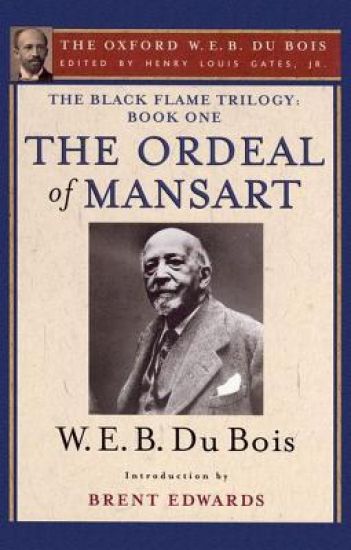
The Ordeal of Mansart (The Oxford W. E. B. Du Bois)

The Ordeal of Mansart (The Oxford W. E. B. Du Bois)

W. E. B. Du Bois; Brent Hayes Edwards

Oxford University Press Inc
2014
nidottu
W. E. B. Du Bois was a public intellectual, sociologist, and activist on behalf of the African American community. He profoundly shaped black political culture in the United States through his founding role in the NAACP, as well as internationally through the Pan-African movement. Du Bois's sociological and historical research on African-American communities and culture broke ground in many areas, including the history of the post-Civil War Reconstruction period. Du Bois was also a prolific author of novels, autobiographical accounts, innumerable editorials and journalistic pieces, and several works of history. Du Bois called his epic Black Flame trilogy a fiction of interpretation. It acts as a representative biography of African American history by following one man, Manuel Mansart, from his birth in 1876 until his death. The Black Flame attempts to use this historical fiction of interpretation to recast and revisit the African American experience. Readers will appreciate The Black Flame trilogy as a clear articulation of Du Bois's perspective at the end of his life. The first book in this profound trilogy, The Ordeal of Mansart, chronicles Mansart's early life during the time of Reconstruction through his involvement in black education in Atlanta. Written with lyrical, vivid prose and with accurate historical context, The Ordeal of Mansart offers readers a peek into African American life and struggle through the lens of Mansart's humble life. With a series introduction by editor Henry Louis Gates, Jr., and an introduction by Brent Hayes Edwards, this edition is essential for anyone interested in African American literature.
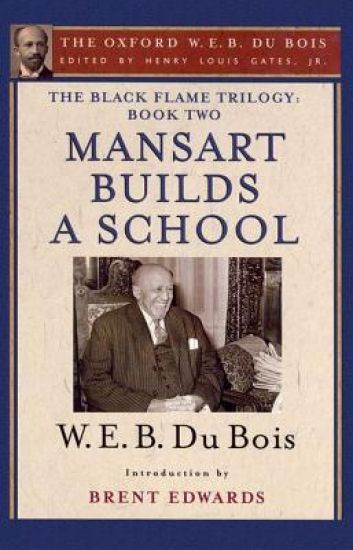
The Black Flame Trilogy: Book Two, Mansart Builds a School(The Oxford W. E. B. Du Bois)

The Black Flame Trilogy: Book Two, Mansart Builds a School(The Oxford W. E. B. Du Bois)

W. E. B. Du Bois; Brent Hayes Edwards

Oxford University Press Inc
2014
nidottu
W. E. B. Du Bois was a public intellectual, sociologist, and activist on behalf of the African American community. He profoundly shaped black political culture in the United States through his founding role in the NAACP, as well as internationally through the Pan-African movement. Du Bois's sociological and historical research on African-American communities and culture broke ground in many areas, including the history of the post-Civil War Reconstruction period. Du Bois was also a prolific author of novels, autobiographical accounts, innumerable editorials and journalistic pieces, and several works of history. Du Bois called his epic Black Flame trilogy a fiction of interpretation. It acts as a representative biography of African American history by following one man, Manuel Mansart, from his birth in 1876 until his death. The Black Flame attempts to use this historical fiction of interpretation to recast and revisit the African American experience. Readers will appreciate The Black Flame trilogy as a clear articulation of Du Bois's perspective at the end of his life. The second book in this profound trilogy, Mansart Builds a School, opens with Mansart's election to superintendent of Negro schools in Atlanta and follows him as he ascends to the position of president of Georgia State A&M College. The book provides a damning portrait of the state of education for African Americans in the south. Building upon the drama and intrigue of The Ordeal of Mansart in Du Bois's signature lyrical style, Mansart Builds a School delves into the realities of the ordinary southern black experience of the early twentieth century. With a series introduction by editor Henry Louis Gates, Jr., and an introduction by Brent Hayes Edwards, this edition is essential for anyone interested in African American literature.
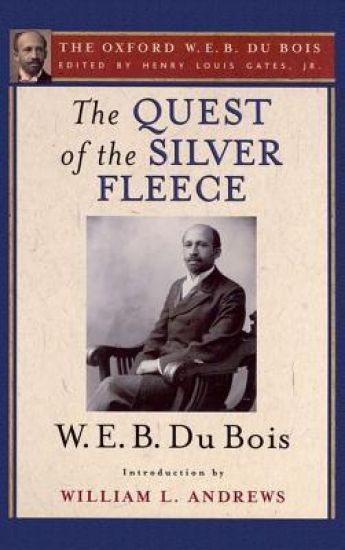
The Quest of the Silver Fleece (The Oxford W. E. B. Du Bois)

The Quest of the Silver Fleece (The Oxford W. E. B. Du Bois)

W. E. B. Du Bois; William L. Andrews

Oxford University Press Inc
2014
nidottu
W. E. B. Du Bois was a public intellectual, sociologist, and activist on behalf of the African American community. He profoundly shaped black political culture in the United States through his founding role in the NAACP, as well as internationally through the Pan-African movement. Du Bois's sociological and historical research on African-American communities and culture broke ground in many areas, including the history of the post-Civil War Reconstruction period. Du Bois was also a prolific author of novels, autobiographical accounts, innumerable editorials and journalistic pieces, and several works of history. Arguably a contender for the Great American Novel, The Quest of the Silver Fleece is W. E. B. Du Bois's powerful first novel about Zora, a determined, strong Southern black woman who seeks to transcend race and social class in the late nineteenth century. Following the same path of the Greek myth after which it was named, Du Bois's novel confronts not only economic and political circumstances, but also racial and social issues of the time. Over a century after its original publication, we return to The Quest again and again for its political boldness about sexual, gender, and economic institutions. Zora, a breakthrough in the portrayal of black women, stands as a model of courage in a volatile moment in history. The novel portrays not only a story of economics but also of love, gender, and race. With a series introduction by editor Henry Louis Gates, Jr., and an introduction by William L. Andrews, this edition is essential for anyone interested in African American history.
The Autobiography of W. E. B. Du Bois (The Oxford W. E. B. Du Bois)

The Autobiography of W. E. B. Du Bois (The Oxford W. E. B. Du Bois)

W. E. B. Du Bois; Werner Sollors

Oxford University Press Inc
2014
nidottu
W. E. B. Du Bois was a public intellectual, sociologist, and activist on behalf of the African American community. He profoundly shaped black political culture in the United States through his founding role in the NAACP, as well as internationally through the Pan-African movement. Du Bois's sociological and historical research on African-American communities and culture broke ground in many areas, including the history of the post-Civil War Reconstruction period. Du Bois was also a prolific author of novels, autobiographical accounts, innumerable editorials and journalistic pieces, and several works of history. Published posthumously in 1968, The Autobiography of W. E. B. Du Bois is his last and most complete autobiography. Covering his life over almost a century of living in America, it's the closest thing we have to a true autobiography of this important scholar and activist. The book, broken up into three parts, delves into the 90-year-old Du Bois's thoughts on everything from his relationship with sex to his storied association with the NAACP to his political persecution during the Cold War years to his many travels abroad. As Du Bois writes, he takes the reader on a journey to "view my life as frankly and fully as I can." With a series introduction by editor Henry Louis Gates, Jr., and an introduction by Werner Sollors, this edition is essential for anyone interested in African American history.
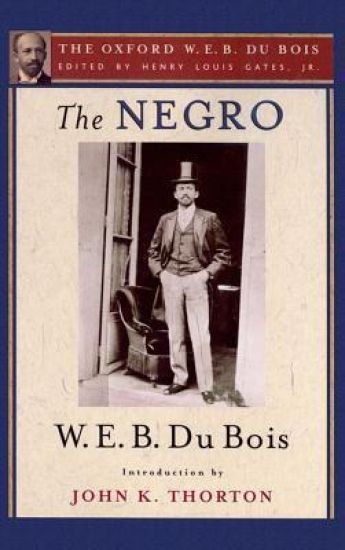
The Negro (The Oxford W. E. B. Du Bois)

The Negro (The Oxford W. E. B. Du Bois)

W. E. B. Du Bois; John K. Thorton

Oxford University Press Inc
2014
nidottu
W. E. B. Du Bois was a public intellectual, sociologist, and activist on behalf of the African American community. He profoundly shaped black political culture in the United States through his founding role in the NAACP, as well as internationally through the Pan-African movement. Du Bois's sociological and historical research on African-American communities and culture broke ground in many areas, including the history of the post-Civil War Reconstruction period. Du Bois was also a prolific author of novels, autobiographical accounts, innumerable editorials and journalistic pieces, and several works of history. Intended as an accessible, up-to-date introduction to African American history by its 1915 publisher, The Negro was much more to W. E. B. Du Bois. The chance to write on African American History for a wide audience became his chance to write a manifesto on African history worldwide. Du Bois focuses on the continent of Africa, giving justice to its oft-neglected positive history. Drawing on anthropological and linguistic literature of the time, Du Bois captures a succinct portrait of African and African American history ready for any reader no matter their prior knowledge. His argument enters the narrative fully, revealing his quest for the vindication of black history. With a series introduction by editor Henry Louis Gates, Jr., and an introduction by John K. Thornton, this edition is essential for anyone interested in African American history.
Darkwater (The Oxford W. E. B. Du Bois)

Darkwater (The Oxford W. E. B. Du Bois)

W. E. B. Du Bois; Evelyn Brooks Higginbotham

Oxford University Press Inc
2014
nidottu
W. E. B. Du Bois was a public intellectual, sociologist, and activist on behalf of the African American community. He profoundly shaped black political culture in the United States through his founding role in the NAACP, as well as internationally through the Pan-African movement. Du Bois's sociological and historical research on African-American communities and culture broke ground in many areas, including the history of the post-Civil War Reconstruction period. Du Bois was also a prolific author of novels, autobiographical accounts, innumerable editorials and journalistic pieces, and several works of history. Considered a sequel to Du Bois's wildly popular The Souls of Black Folks, Darkwater revisits many of the same themes with a more militant edge, even revising previously published essays and poems to include in this newer volume. Published in 1920, Darkwater focuses on the political climate following World War I. In ten carefully crafted chapters, Du Bois explores the important issues of that period- labor, capital, politics, gender, education, and international relations-in tandem with an overarching theme of race. Blending lyrical autobiography with political thoughts and even poetry, Du Bois makes a powerful, forceful argument regarding race and the color line. With a series introduction by editor Henry Louis Gates, Jr., and an introduction by Evelyn Brooks Higginbotham, this edition is essential for anyone interested in African American history.
The Black Flame Trilogy: Book Three, Worlds of Color (The Oxford W. E. B. Du Bois)

The Black Flame Trilogy: Book Three, Worlds of Color (The Oxford W. E. B. Du Bois)

W. E. B. Du Bois; Brent Hayes Edwards

Oxford University Press Inc
2014
nidottu
W. E. B. Du Bois was a public intellectual, sociologist, and activist on behalf of the African American community. He profoundly shaped black political culture in the United States through his founding role in the NAACP, as well as internationally through the Pan-African movement. Du Bois's sociological and historical research on African-American communities and culture broke ground in many areas, including the history of the post-Civil War Reconstruction period. Du Bois was also a prolific author of novels, autobiographical accounts, innumerable editorials and journalistic pieces, and several works of history. Du Bois called his epic Black Flame trilogy a fiction of interpretation. It acts as a representative biography of African American history by following one man, Manuel Mansart, from his birth in 1876 until his death. The Black Flame attempts to use this historical fiction of interpretation to recast and revisit the African American experience. Readers will appreciate The Black Flame trilogy as a clear articulation of Du Bois's perspective at the end of his life. The last book in this profound trilogy, Worlds of Color, opens when Mansart is sixty and a successful and established college president. Packed with political intrigue, romance, and social commentary, the book provides a dark, cynical view of the world and its relationship to the "Black Flame," or the potential of black civilization. Building upon the drama of the previous two books, Worlds of Color delves into a more sinister, bleak, and doubtful future. With a series introduction by editor Henry Louis Gates, Jr., and an introduction by Brent Hayes Edwards, this edition is essential for anyone interested in African American literature.
Dark Princess (The Oxford W. E. B. Du Bois)

Dark Princess (The Oxford W. E. B. Du Bois)

W. E. B. Du Bois; Homi Bhabha

Oxford University Press Inc
2014
nidottu
W. E. B. Du Bois was a public intellectual, sociologist, and activist on behalf of the African American community. He profoundly shaped black political culture in the United States through his founding role in the NAACP, as well as internationally through the Pan-African movement. Du Bois's sociological and historical research on African-American communities and culture broke ground in many areas, including the history of the post-Civil War Reconstruction period. Du Bois was also a prolific author of novels, autobiographical accounts, innumerable editorials and journalistic pieces, and several works of history. The Dark Princess is a story of magical love and radical politics, a romance facing obstacles in a white-dominated world. Du Bois's allegorical tale follows Mathew Townes from his political disillusionment to his association with a powerful and seductive revolutionary leader, Kautilya, the princess of the Tibetan Kingdom of Bwodpur. With Dark Princess, Du Bois explores the color line from a fantastical angle while inserting his signature sociological style. With a series introduction by editor Henry Louis Gates, Jr., and an introduction by Homi Bhahba, this edition is essential for anyone interested in African American history.
The Gift of Black Folk (The Oxford W. E. B. Du Bois)

The Gift of Black Folk (The Oxford W. E. B. Du Bois)

W. E. B. Du Bois; Glenda Carpio

Oxford University Press Inc
2014
nidottu
W. E. B. Du Bois was a public intellectual, sociologist, and activist on behalf of the African American community. He profoundly shaped black political culture in the United States through his founding role in the NAACP, as well as internationally through the Pan-African movement. Du Bois's sociological and historical research on African-American communities and culture broke ground in many areas, including the history of the post-Civil War Reconstruction period. Du Bois was also a prolific author of novels, autobiographical accounts, innumerable editorials and journalistic pieces, and several works of history. Published in 1924 in response to growing racial tensions, W. E. B. Du Bois's The Gift of Black Folk explores the contributions African Americans have made to American society, detailing the importance of racial diversity to the United States. Writing for a general audience, Du Bois employs a sweeping scope for his argument, covering the European discovery of America to the twentieth century. In doing so he works to prove that through African Americans' struggle for freedom and equality, they have most fully realized the goal of democracy. With a series introduction by editor Henry Louis Gates, Jr., and an introduction by Glenda Carpio, this edition is essential for anyone interested in African American history.
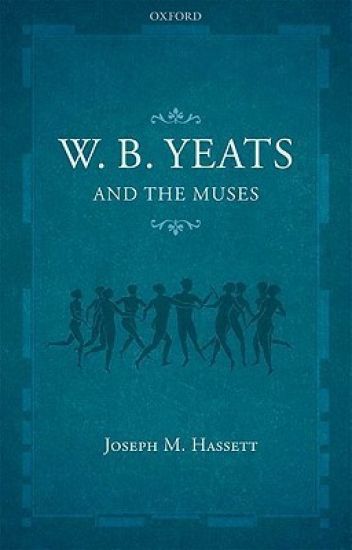
W.B. Yeats and the Muses

W.B. Yeats and the Muses

Joseph M. Hassett

Oxford University Press
2010
sidottu
W.B. Yeats and the Muses explores how nine fascinating women inspired much of W.B. Yeats's poetry. These women are particularly important because Yeats perceived them in terms of beliefs about poetic inspiration akin to the Greek notion that a great poet is inspired and possessed by the feminine voices of the Muses. Influenced by the Pre-Raphaelite idea of woman as 'romantic and mysterious, still the priestess of her shrine', Yeats found his Muses in living women. His extraordinarily long and fruitful poetic career was fuelled by passionate relationships with women to and about whom he wrote some of his most compelling poetry. The book summarizes the different Muse traditions that were congenial to Yeats and shows how his perception of these women as Muses underlies his poetry. Newly available letters and manuscripts are used to explore the creative process and interpret the poems. Because Yeats believed that lyric poetry 'is no rootless flower, but the speech of a man,' exploring the relationship between poem and Muse brings new coherence to the poetry, illuminates the process of its creation, and unlocks the 'second beauty' to which Yeats referred when he claimed that 'works of lyric genius, when the circumstances of their origin is known, gain a second a beauty, passing as it were out of literature and becoming life.' As life emerges from the literature, the Muses are shown to be vibrant, multi-faceted personalities who shatter the idea of the Muse as a passive stereotype and take their proper place as begetters of timeless poetry.
W.B. Yeats, the Abbey Theatre, Censorship, and the Irish State
W.B. Yeats, the Abbey Theatre, Censorship, and the Irish State: Adding the Half-pence to the Pence utilizes new source material to reconstruct the current understanding of the relationship between the productions of the Abbey Theatre and the politics of the Irish state. This study begins in 1916, at the start of the Irish Revolution and in the midst of the theatre's financial crisis, and it ends with the death of the Abbey Theatre's last surviving founder, W.B. Yeats. To date, histories of the Abbey Theatre have repeated Yeats's assertion that there was no censorship of the theatre in Ireland. However, this study incorporates financial records, government correspondence, Dáil debates, and minutes from the Abbey's directors' meetings to produce surprising conclusions: censorship of the theatre did occur, but it occurred internally rather than by external means. Yeats and his fellow directors privately self-censored plays when there was potential for financial gain, such as in the Abbey's campaign for a state-sponsored reconstruction scheme - the details of which have never been explored prior to this study. Any attempts by the state to directly interfere in the theatre's programme were unsuccessful but were manipulated by the press-savvy Yeats in order to create profitable controversies. Despite Yeats's vocal campaign against censorship, his organisation of the Irish Academy of Letters, and his famous speeches from the Abbey stage decrying the censorship of the 'mob', he was willing to sacrifice the freedom of the artist when he foresaw an opportunity to ensure the longevity of his theatrical enterprise.
W. E. B. DuBois on Sociology and the Black Community

W. E. B. DuBois on Sociology and the Black Community

W. E. B. DuBois

University of Chicago Press
1995
nidottu
Historian, journalist, educator, and civil rights advocate W.E.B. Du Bois was perhaps most accomplished as a sociologist of race relations and of the black community in the United States. This volume collects his sociological writings from 1898 to 1910. The 18 selections include five on Du Bois's conception of sociology and sociological research, especially as a tool in the struggle for racial justice; excerpts from studies of black communities in the South and the North, including "The Philadelphia Negro"; writings on black culture and social life, with a selection from "The Negro American Family"; and later works on race relations in the United States and elsewhere after World War II. This section includes a powerful 50th-anniversary reassessment of his classic 1901 article in the Atlantic in which he predicted that "the problem of the 20th century is the problem of the color line."
W IS FOR TPB

W IS FOR TPB

GRAFTON SUE

Pan Books Ltd
2013
nidottu
Two dead bodies changed the course of my life that fall. One of them I knew and the other I'd never laid eyes on until I saw him in the morgue. The first was a local PI of suspect reputation. He'd been gunned down near the beach at Santa Teresa. It looked like a robbery gone bad. The other was on the beach six weeks later. He'd been sleeping rough. Probably homeless. No identification. A slip of paper with Private Investigator Kinsey Millhone's name and number was in his pants pocket. The coroner asked her to come to the morgue to see if she could ID him. Two seemingly unrelated deaths, one a murder, the other apparently of natural causes. But as Kinsey digs deeper into the mystery of the John Doe, some very strange links begin to emerge. And before long at least one aspect is solved as Kinsey finds the key to his identity ...In this multilayered tale, the surfaces seem clear, but the underpinnings are full of betrayals, misunderstandings, and outright murderous fraud. And Kinsey, through no fault of her own, is thoroughly compromised ...