The roots of American jurisprudence in English common law are generally recognized. This provocative volume examines how English legal forms and principles have been transformed and shaped by a people who cherished the Anglo-American legal connection but were determined to alter the law to suit particular political, social, and economic circumstances. The authors, writing from a variety of perspectives, explore the nexus between social forces and the nexus between social forces and the relatively autonomous legal system. They describe how the details of society and social organization (such as collective values, political culture, and ideology) interact with the ideas and structures of law to shape legal forms, habits, practices, and outcomes. Through their studies of the notion of sanctuary, the development of fencing law on the Great Plains, the shaping of the American law of treason, the British origins of the Texas workers' compensation system, the Americanization of Blackstone, and the meaning of common law in the United States, these scholars not only show the ongoing historical influence of English law and legal history after the American Revolution but also demonstrate the current vitality of comparative legal history as a discipline.
By: William R. Cocke III, Pub. 1940, Reprinted 2020, 224 pages, 7" x 10" Soft Cover, Index, ISBN #0-89308-287-2. Here is a book that any researcher "MUST" have if he or she is researching in this "BURNED" county. Hanover County was created in 1721 from New Kent County and in turn the western portion of Hanover County was carved off to give way to Louisa County in 1742. Over 250 families are mentioned at some length in this book. There are 147 Wills or abstracts contained therein, many of them brought to light for the first time after painstaking research by the author. In the treatment and presentation of these "Notes", which are abstracts of bills & petitions, deeds, power of Attorney, administrators accounts, depositions, receipts and letters mentioning approximately 7,000 individuals. The objective was to extract every detail of genealogical, biographical and historical importance and to arrange when convenient alphabetically in relation to families, and chronologically as regards to genealogy. References are made to the title or style of the suit, year of institution, and ended file number.
The centerpiece of this Good Friday worship service is the monologue, "The Ghost of Judas." Designed to be presented by the pastor or any layperson who can speak with a sense of drama, the monologue places Judas Iscariot at center stage on the day Christ died. His reflections on his own behavior, his remorse, and his deep sense of regret and self-examination lead the worshiping congregation to search their own souls, an appropriate activity on this most profound of all Christian days. The monologue is sermon length. If not available in local hymnals, suggested hymns may be replaced by others more appropriate. William Grimbol is an ordained Lutheran pastor married to an ordained Presbyterian pastor. They live in Sag Harbor, New York, where Mrs. Grimbol serves a parish and William is currently pursuing a career in creative writing.
First published in 1987. This book is the fourth in a series of research monographs reporting the results of a continuing study that deals with the perception of form in two- and three-dimensional space.
This volume consists of two of the oldest texts of Kievan Rus': the Izbornik of 1076 and Grigorij the Philosopher's Homilies on All the Days of the Week. The Izbornik is the earliest extant witness to the reception and subsequent transformation of Eastern Orthodox moral instruction that resulted from the transmission to Rus' of Bulgarian Slavic translations from the Greek. The Homilies of Grigorij the Philosopher, translated for the first time into any modern language, is the earliest dated and localized Slavic text (Kiev, ca. 1062). These rhetorically artistic and sophisticated homilies provide a unique picture of an early Kievan preacher and of the moral needs of his Rus' audience. The Edificatory Prose of Kievan Rus' is an indispensable volume for all students of Slavia Orthodoxa in the eleventh century.
The papers in this volume clearly demonstrate the importance of investigating organic residues to elucidate crucial aspects of ancient life such as agriculture, trade, ritual practice. Much of the information presented here could only have been derived using scientific techniques of analysis.
In 1973, researchers from the University of Michigan conducted a survey in the Loboi area, north of Lake Bogoria (Lake Hannington) in west Kenya, north of Nairobi. The goal of the project was to record archaeological remains in the area. In 1965, Mary Leakey had noted the presence of stone tools and faunal remains in Loboi, and her son Richard Leakey, director of the National Museums of Kenya, suggested the area should be further studied. In addition to the intensive survey, the researchers excavated seven small test units at five sites and recovered archaeological materials.
This report is integral and pivotal to the entire Tikal publications series. Produced in six separate casebound volumes (3 of text, 2 of illustrations, a map box for oversize plans and sections), this monumental study looks at the very hub of Tikal. Tikal Report 14 is a tribute to its author, William R. Coe, who not only was able to salvage Tikal from the jungle but meticulously recorded all the resulting data in detailed plans, sections, drawings, and photographs, as well as the written word. This is an integrated site report of unprecedented size and scope. Tikal Report 14 will be of vital interest to field archaeologists and historians studying aspects of Mesoamerican culture.
This book is a compilation of select papers and comments presented during the North American Conference on the Status of Indian Gaming, held in 1989 in Reno, Nevada, shortly after the passage of the Indian Gaming Regulatory Act (IGRA). It also includes the complete texts of the Supreme Court's Cabazon decision (1987), IGRA (1988), and the 1999 California (Davis) Compact. In the fifteen years since the passage of the IGRA, Indian gaming, especially casino gaming, has spread significantly. A total of 330 Indian gaming facilities were in operation in 28 states in 2002, generating about $14.5 billion in gross gaming revenues. This represented about 35% of all casino revenues and about 20% of all legal commerical gaming revenues in the United States for that year. Indian gaming is the fastest growing sector of legal gaming in the country. The story that has unfolded around Indian gaming has been dramatic, controversial, and diverse. Fundamental issues such as Indian sovereignty, defining what is a gaming device, and the relationships of tribal governments to state and federal government have been revisted time and again. Various Supreme Court rulings have clouded public policy issues surrounding Indian gaming. Congress has still not revisited the 1988 Act, in spite of the Act's perceived weaknesses and shortcomings. Indian Gaming & the Law offers a snapshot of the attitudes, projections, predictions, fears, and assessments that prevailed in the early discussions of what Indian gaming might do for and to tribes. Distributed for the Institute for the Study of Gambling.
When we decided to join forces to embark on the venture of writing this book, we had both for some time been following the peer-reviewed literature concerning prostate problems and in particular had done a fair amount of research into prostate cancer. Bill Ware had closely studied and followed developments in the diagnosis and conventional treatment of this disease, and Hans Larsen had researched alternative methods for prevention and treatment. We both had read numerous books on cancer and prostate cancer in particular and had, somewhat surprisingly, reached the conclusion that no one book covered the entire spectrum of problems. Some books written for the lay audience were excellent in explaining conventional treatment methods, others were quite comprehensive in their discussion of herbs and supplements that might prevent cancer, but none, it seemed, really provided the whole gamut of information necessary for a man who wants to take charge of his own health and, along with his physician, make reasoned decisions regarding diagnostic options and possible treatments of prostate problems. Prostatitis and benign prostate enlargement (BPH), although affecting millions of men, did not seem to be covered very well, perhaps because conventional treatment, certainly in the case of prostatitis, is often less than satisfactory. So our mission was clear, to write a book that covered the three major prostate problems - prostatitis, BPH and cancer - from etiology to therapy, including both alternative and conventional measures of prevention and treatment. The intended audience includes laymen who want to be thoroughly informed and health-care professionals involved in primary care. We also agreed that all statements made in the book would be backed up with references to peer-reviewed medical journals. This was no small task, but you are now holding the result in your hands - over 400 pages of information documented with over 1200 references, plus appendices providing additional useful information and resources. If you have prostate problems now, the book provides a comprehensive discussion of your options and offers the opportunity to acquire the background knowledge necessary to understand the diagnosis, prognosis, and possible treatments along with the associated complications and side effects. This knowledge should enable a man to engage in a truly informed interaction with the physician or physicians involved in providing advice and treatment. Given that many of the decisions faced by a man with prostate problems are far from clear-cut, especially in the case of cancer, and that he is frequently given a choice among options, this knowledge turns out to be vital. On the other hand, if you are one of the lucky ones not yet experiencing prostate problems, our book "The Prostate and Its Problems" may help you avoid them in the future.John B. Gustavson, Boulder, CO, USA "Great to have this wonderful book about the prostate problems BACK IN PRINT It has served me and many of my friends over a decade. Larsen and Ware explain in good, understandable language what most men face with age, even starting in their forties. First, so-called Benign Prostate Hyperplasia, nothing "benign" about that Later, the scary rise in your PSA number and what it may mean and what it may not indicate. If that leads to biopsies and if we are out of luck, this tome explains the multitude of possible "next steps". Tough life-changing decisions have to be made, and my original copy (having been in many of my friends' sweaty hands) bears proof of diligent reading. This book is a must for the maturing male consumer, and it also helps you explain to your wife what you are going through, whether it ends with surgery or less invasive procedures. I recommend it highly. I Have Been There "
Most books on happiness emphasize what you have to do or get in order to be happy. But happiness is a state of mind inside, and not a state of affairs in the world. Your happiness is a reflection of your mind's ability to experience happiness. Your mind's ability to experience happiness is determined by your thoughts and beliefs. If your core beliefs are incompatible with the experience of perfect happiness, then all the stuff and all the techniques in the world will not bring you what you want. The Happy Mind offers an alternative way of thinking based on seven simple principles. This new way of thinking enables you to undo the limits and distortions of your current way of thinking, and thus allows your mind to experience deep and lasting happiness. Your happy state of mind is the single most effective tool for discovering your true desires, and realizing and manifesting them. And your own happy and peaceful state of mind is also the most healing gift you can offer to another.
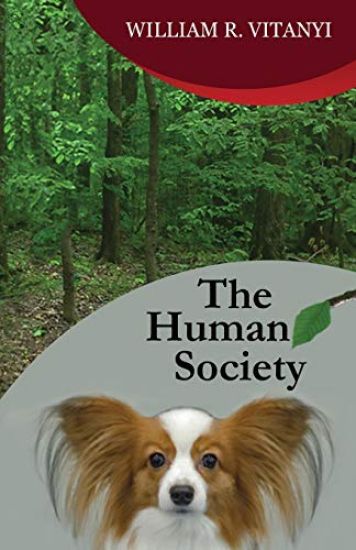
A very smart show dog misreads a sign, and now he wants to become human. He embarks on a perilous journey to find the Human Society, where he believes dogs go to become human. Along the way he learns much about canine and human realities, and the reader gains insight into the canine-human relationship.