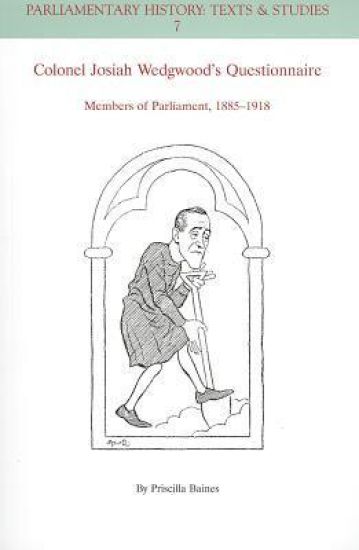
This book provides unique insights into the parliamentary experiences of MPs by using questionnaires completed by all those who had been elected to the House of Commons from 1885-1918. Analyses and summarises the questionnaire created by Josiah Wedgwood MP, the main initiator of the History of Parliament projectIncludes the surprisingly truthful and informative answers about their subjects’ political and parliamentary careersAlso contains Wedgwood’s often sharply observed biographies (reproduced in an appendix), and provides fascinating insights into a crucial period for the House of Commons
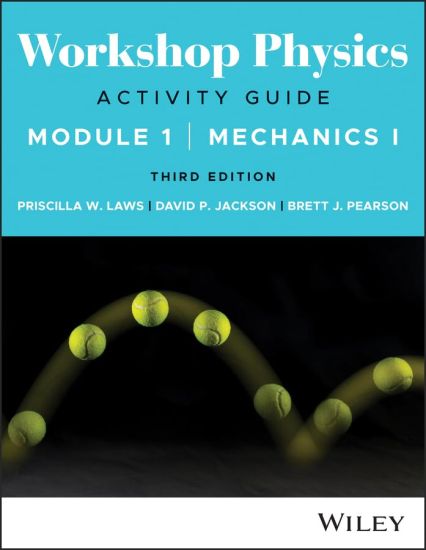
The Workshop Physics Activity Guide is a set of student workbooks designed to serve as the foundation for a two-semester calculus-based introductory physics course. It consists of four Modules, with a total of 28 units, that interweave text materials with activities that include prediction, qualitative observation, explanation, equation derivation, mathematical modeling, quantitative experiments, and problem solving. The modules help students understand the basis of knowledge in physics as interplay between observations, experiments, definitions, and mathematical theory. The inquiry-based activities in the modules give students the opportunity to work collaboratively to solve problems, while thinking critically to make predictions and observations. Students use a powerful set of computer tools to record, display, and analyze data, as well as to develop mathematical models of physical phenomena. The design of many of the activities is based on the outcomes of physics education research. Module 1 Unit 1 Our Place in the UniverseUnit 2 Measurement and UncertaintyUnit 3 Introduction to One-Dimensional MotionUnit 4 Motion with Constant AccelerationUnit 5 Force, Mass, and Motion in One DimensionUnit 6 Gravity and Projectile MotionUnit 7 Applications of Newton's Laws
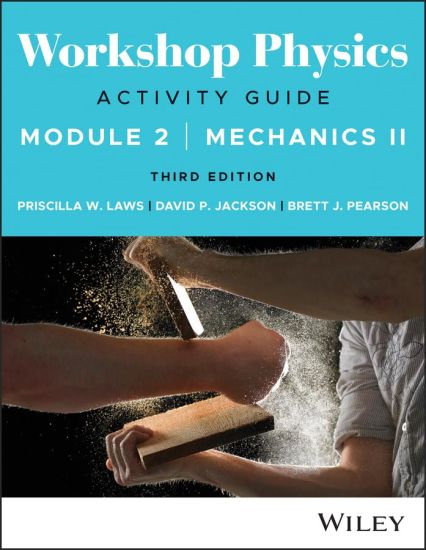
The Workshop Physics Activity Guide is a set of student workbooks designed to serve as the foundation for a two-semester calculus-based introductory physics course. It consists of four Modules, with a total of 28 units, that interweave text materials with activities that include prediction, qualitative observation, explanation, equation derivation, mathematical modeling, quantitative experiments, and problem solving. The modules help students understand the basis of knowledge in physics as interplay between observations, experiments, definitions, and mathematical theory. The inquiry-based activities in the modules give students the opportunity to work collaboratively to solve problems, while thinking critically to make predictions and observations. Students use a powerful set of computer tools to record, display, and analyze data, as well as to develop mathematical models of physical phenomena. The design of many of the activities is based on the outcomes of physics education research. Module 2 Unit 8 Momentum and Collisions in One DimensionUnit 9 Momentum and Collisions in Two DimensionsUnit 10 Work and EnergyUnit 11 Energy ConservationUnit 12 Rotational MotionUnit 13 Rotational Momentum and its Relation to TorqueUnit 14 Simple Harmonic MotionUnit 15 Oscillations, Determinism, and Chaos
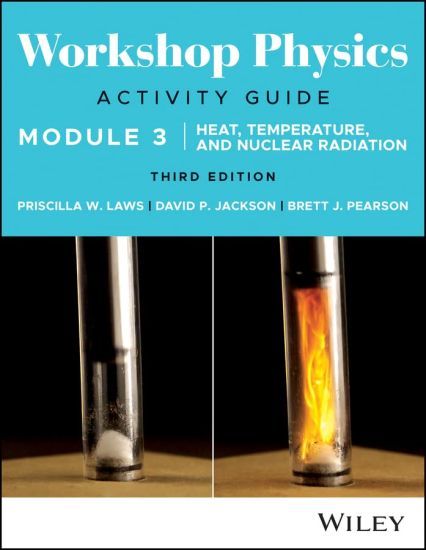
The Workshop Physics Activity Guide is a set of student workbooks designed to serve as the foundation for a two-semester calculus-based introductory physics course. It consists of four Modules, with a total of 28 units, that interweave text materials with activities that include prediction, qualitative observation, explanation, equation derivation, mathematical modeling, quantitative experiments, and problem solving. The modules help students understand the basis of knowledge in physics as interplay between observations, experiments, definitions, and mathematical theory. The inquiry-based activities in the modules give students the opportunity to work collaboratively to solve problems, while thinking critically to make predictions and observations. Students use a powerful set of computer tools to record, display, and analyze data, as well as to develop mathematical models of physical phenomena. The design of many of the activities is based on the outcomes of physics education research. Module 3 Unit 16 Heat and TemperatureUnit 17 Principles of ThermodynamicsUnit 18 Thermodynamics Processes and Heat EnginesUnit 28 Radioactivity and Radon
The Workshop Physics Activity Guide is a set of student workbooks designed to serve as the foundation for a two-semester calculus-based introductory physics course. It consists of four Modules, with a total of 28 units, that interweave text materials with activities that include prediction, qualitative observation, explanation, equation derivation, mathematical modeling, quantitative experiments, and problem solving. The modules help students understand the basis of knowledge in physics as interplay between observations, experiments, definitions, and mathematical theory. The inquiry-based activities in the modules give students the opportunity to work collaboratively to solve problems, while thinking critically to make predictions and observations. Students use a powerful set of computer tools to record, display, and analyze data, as well as to develop mathematical models of physical phenomena. The design of many of the activities is based on the outcomes of physics education research. Module 4 Unit 19 Electric Forces and FieldsUnit 20 Electric Flux and Gauss' LawUnit 21 Electric PotentialUnit 22 Introduction to Electric CircuitsUnit 23 Circuit AnalysisUnit 24 Capacitors and RC CircuitsUnit 25 ElectronicsUnit 26 Magnets and Magnetic FieldsUnit 27 Electricity and Magnetism
Discovering the Spirit of Ubuntu Leadership introduces a new leadership model which takes into account the history, culture and economic environment of African women leaders to understand, discover, observe and share their personal leadership experiences.
This timely and much needed text book presents an innovative, theoretically based approach that helps students, practitioners and researchers alike orientate their view and sensibilities in a rapidly evolving modern world. Traditional social work approaches are often ill-equipped to take into account the emerging social change which has resulted from technological change, globalisation and mobilities, as well as environmental change. By bringing sociological social work perspectives to contemporary practice, it draws on concepts from a range of disciplines in recognition that we are collective thinkers and actors and that our ideas are shaped by what we read and build upon.Whether taking a social work theory module or preparing for placement, this sociological perspective provides a crucial foundation for practice and puts the ‘social’ back in to ‘social work’.
This textbook equips social work students with the tools to develop a social work identity. It provides a critical examination of the knowledge base of social work – from human growth and development to social work research – and explores how a practitioner’s own values, principles and experience combine to shape their social work identity and practice alongside this.Linked to a range of core modules on pre-qualifying social work programmes but written also for those practitioners committed to nurturing their own social work identities, this is a must have text from one of social work's most up-and-coming authors that brings together all areas of the classroom and practice curriculum to make learning a novel, creative and interactive process.
A nation's heritage is one of the most potent forces for generating tourism: the Tower of London is the greatest 'visitor attraction' in Britain. But it is pushed into insignificance by comparison with the visitors travelling to Disneyland, Epcot and the other entertainment complexes in the USA; and it will be dwarfed by Euro-Disneyland east of Paris. So how should heritage attractions respond: should they find their own specific audiences and resources? This book, written by a leading hertage specialist, is essential reading for all those concerned both with heritage and leisure managment. International in scope, it examines successfgul examples of heritage management for tourism, and equally some failures. It aims to lay some useful ground rules which should underpin all heritage developments designed to attract tourism on a major scale.
Along with basic practical reasons, our practices concerning food and drink are driven by context and environment, belief and convention, aspiration and desire to display - in short, by culture. Similarly, culture guides how tourism is used and operates. This book examines food and drink tourism, as it is now and is likely to develop, through a cultural 'lens'. It asks: what is food and drink tourism, and why have food and drink provisions and information points become tourist destinations in their own right, rather than remaining among a number of tourism features and components? While it offers a range of international examples, the main focus is on food and drink tourism in the UK. What with the current diversification of tourism in rural areas, the increased popularity of this type of tourism in the UK, the series of BSE, vCJD and foot and mouth crises in British food production, and the cultural and ethnic fusion in British towns and cities, it makes a particularly rich place in which to explore this subject. The author concludes that the future of food and drink tourism lies in diversity and distinctiveness. In an era of globalisation, there is a particular desire to enjoy varied, rather than mono-cultural ambiance and experience. She also notes that there is an immediacy of gratification in food and drink consumption which has become a general requirement of contemporary society.
Expanding from her path-breaking work in Unspeakable Truths, Priscilla Hayner focuses on a new challenge in The Peacemaker’s Paradox: the age-old problem of negotiating peace after a war of atrocities. Drawing on her first-hand involvement in peace processes and interviews from the frontlines of peace talks, the author recounts many heretofore-untold stories of how justice has been negotiated, with great difficulty, and what this tells us for the future. Those with the most power to stop a war are the least likely to submit to justice for their crimes, but the demand for justice only grows louder. She also asks how the intervention of an international tribunal, such as the International Criminal Court, changes how a war is fought and the possibility of brokering peace. The Peacemaker’s Paradox looks far and wide, from Gaddafi’s Libya to the FARC talks in Colombia, to provide an unparalleled exploration of these thorniest of issues.A combination of interview-based reporting and political analysis, The Peacemaker’s Paradox brings clarity to a field fraught with both legal and practical difficulties.
Expanding from her path-breaking work in Unspeakable Truths, Priscilla Hayner focuses on a new challenge in The Peacemaker’s Paradox: the age-old problem of negotiating peace after a war of atrocities. Drawing on her first-hand involvement in peace processes and interviews from the frontlines of peace talks, the author recounts many heretofore-untold stories of how justice has been negotiated, with great difficulty, and what this tells us for the future. Those with the most power to stop a war are the least likely to submit to justice for their crimes, but the demand for justice only grows louder. She also asks how the intervention of an international tribunal, such as the International Criminal Court, changes how a war is fought and the possibility of brokering peace. The Peacemaker’s Paradox looks far and wide, from Gaddafi’s Libya to the FARC talks in Colombia, to provide an unparalleled exploration of these thorniest of issues.A combination of interview-based reporting and political analysis, The Peacemaker’s Paradox brings clarity to a field fraught with both legal and practical difficulties.
Our global food system is undergoing rapid change. Since the global food crisis of 2007-2008, a range of new issues have come to public attention, such as land grabbing, food prices volatility, agrofuels and climate change. Peasant social movements are trying to respond to these challenges by organizing from the local to the global to demand food sovereignty. As the transnational agrarian movement La Via Campesina celebrates its 20th anniversary, this book takes stock of the movement’s achievements and reflects on challenges for the future. It provides an in-depth analysis of the movement’s vision and strategies, and shows how it has contributed not only to the emergence of an alternative development paradigm but also of an alternative conception of human rights. The book assesses efforts to achieve the international recognition of new human rights for peasants at the international level, namely the 'right to food sovereignty' and 'peasants’ rights'. It explores why La Via Campesina was successful in mobilizing a human rights discourse in its struggle against neoliberalism, and also the limitations and potential pitfalls of using the human rights framework. The book shows that, to inject subversive potential in their rights-based claims rural social activists developed an alternative conception of rights, that is more plural, less statist, less individualistic, and more multi-cultural than dominant conceptions of human rights. Further, they deployed a combination of institutional (from above) and extrainstitutional (from below) strategies to demand new rights and reinforce grassroots mobilization through rights.
Our global food system is undergoing rapid change. Since the global food crisis of 2007-2008, a range of new issues have come to public attention, such as land grabbing, food prices volatility, agrofuels and climate change. Peasant social movements are trying to respond to these challenges by organizing from the local to the global to demand food sovereignty. As the transnational agrarian movement La Via Campesina celebrates its 20th anniversary, this book takes stock of the movement’s achievements and reflects on challenges for the future. It provides an in-depth analysis of the movement’s vision and strategies, and shows how it has contributed not only to the emergence of an alternative development paradigm but also of an alternative conception of human rights. The book assesses efforts to achieve the international recognition of new human rights for peasants at the international level, namely the 'right to food sovereignty' and 'peasants’ rights'. It explores why La Via Campesina was successful in mobilizing a human rights discourse in its struggle against neoliberalism, and also the limitations and potential pitfalls of using the human rights framework. The book shows that, to inject subversive potential in their rights-based claims rural social activists developed an alternative conception of rights, that is more plural, less statist, less individualistic, and more multi-cultural than dominant conceptions of human rights. Further, they deployed a combination of institutional (from above) and extrainstitutional (from below) strategies to demand new rights and reinforce grassroots mobilization through rights.
The second volume of Priscilla Alderson’s popular and renowned book Childhoods Real and Imagined relates dialectical critical realism to childhood. By demonstrating their relevance and value to each other, Alderson presents a practical introductory guide for applying critical realism to research about children and young people. Each chapter summarises key themes from several academic disciplines and policy areas, ranging from climate change and social justice between generations, to neoliberalism, social reform and imagining utopias. Children’s and adults’ views and experiences are reviewed, and whereas the first volume deals with more personal and local aspects of childhood, this volume widens the scope into debates about global politics, which so seldom mention children. Each chapter demonstrates how children and young people are an integral part of the whole of society and are often especially affected by policies and events.This book is written for everyone who is researching, studying or teaching about childhood, or who cares for and works with children and young people, as well as those interested in critical realist approaches.
Title: The Juvenile Travellers ... The eighteenth edition, corrected and enlarged. With a map.]Publisher: British Library, Historical Print EditionsThe British Library is the national library of the United Kingdom. It is one of the world's largest research libraries holding over 150 million items in all known languages and formats: books, journals, newspapers, sound recordings, patents, maps, stamps, prints and much more. Its collections include around 14 million books, along with substantial additional collections of manuscripts and historical items dating back as far as 300 BC.The HISTORY OF TRAVEL collection includes books from the British Library digitised by Microsoft. This collection contains personal narratives, travel guides and documentary accounts by Victorian travelers, male and female. Also included are pamphlets, travel guides, and personal narratives of trips to and around the Americas, the Indies, Europe, Africa and the Middle East. ++++The below data was compiled from various identification fields in the bibliographic record of this title. This data is provided as an additional tool in helping to insure edition identification: ++++ British Library Wakefield, Priscilla; 1842 x. 494 p.; 12 . 10109.aa.14.




![The Juvenile Travellers ... The eighteenth edition, corrected and enlarged. [With a map.]](/covers/9781241508128.jpg)


