Outsiders see things others don't. Blessed with status, love, wealth and connections the Tennisons seemed the most enviable of families - until Antonella and Matteo Fullardi, dangerously attractive Italian siblings and offspring of an Italian fashion dynasty, enter their well-managed lives. Calligrapher Katherine, gallery owner Rick and their student son Josh discover that the Fullardis are just as unsettling and alluring as the exotic parrots that now inhabit their tranquil London garden. But this damaged pair are the catalyst that propel the Tennisons into a spiral of chaos, calling into question their place in a changing world of new money, new morality and new menace.
Step Into the Midnight Wood, a charming fantasy romance perfect for fans of Studio Ghibli, Freya Marske and T.J. Klune.There are 100 things wrong with Meredith Schwarzwelder. At least. In fact, keeping track of these things is the only way David Carew has managed to remain living with Meredith, an irredeemable eccentric who flirts with everyone in his path (#3 on the list), cries at anything (#35), makes the worst coffee in the world (#70), and talks to mice (#52), for as long as he has.It’s bad enough living with such a person on the edge of the Midnight Wood, but when its reality-distorting magic starts to seep into their home and a dark creature with a sinister plan involving Meredith emerges, David decides that it’s time to leave the cottage, and his chaotic roommate, behind. Then Meredith’s brother gets engaged to the daughter of David’s boss, and he sees the perfect opportunity to advance his career and make his escape.With wedding bells sounding and the dangers of the Midnight Wood encroaching, David realizes there’s much more hiding beneath the surface of his roommate’s seemingly carefree charm, and perhaps his own exasperation carries more fondness than he’d like to admit.
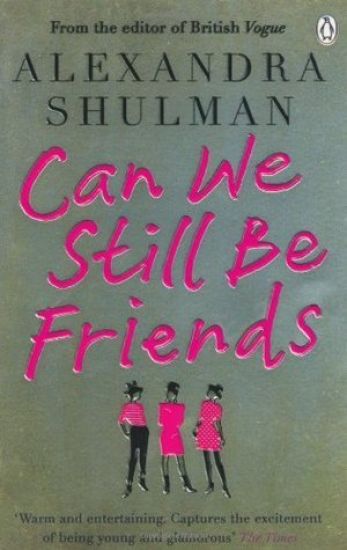
Can We Still Be Friends is the debut novel by the editor of British Vogue, Alexandra Shulman.Summer, 1983. Best friends, Sal, Annie and Kendra are fresh-faced and fresh out of university. Three very different girls about to walk three very different but equally tangled paths . . .Sal's the aspiring journalist whose personal demons threaten to destroy everything she achieves. Annie's the domestic beauty, convinced that marriage will give her everything she wants. And Kendra, the daughter of chic, liberal parents, is searching for her an identity all of her own.As they plunge headlong into the years of pixie boots and shoulder pads, Duran Duran and Margaret Thatcher, they find that for all their plans and hopes and dreams, nothing in life is certain - and that includes friendship.'Exquisite time travel . . . Every detail - from fashion, design and music to social tribes and verbal tics - is spot on' Guardian'Warm and entertaining . . . captures the excitement of being young and glamorous at a time when the sky really did seem to be the limit' The Times'Wonderfully evokes that ping-pong between trivial and tremendous so characteristic of the Eighties . . . great on atmosphere . . . An engaging debut, alive with human sympathy' Wendy Holden, Daily MailAlexandra Shulman has edited British Vogue since 1992. She is a contributor to The Times, Daily Mail, Guardian and Daily Telegraph and lives in London. This is her first novel.
Outsiders see things others don't. Blessed with status, love, wealth and connections the Tennisons seemed the most enviable of families - until Antonella and Matteo Fullardi, dangerously attractive Italian siblings and offspring of an Italian fashion dynasty, enter their well-managed lives.
The secret diary of Vogue Editor-in-Chief Alexandra Shulman and the real story behind the BBC ABSOLUTELY FASHION documentary.'One of the great social diaries of our time . . . should become a classic.' Sunday Times'Eye-popping, brilliantly candid' Evening StandardWhat a year for Vogue! Alexandra Shulman reveals the emotional and logistical minefield of producing the 100th anniversary issue (that Duchess of Cambridge cover surprise), organizing the star-studded Vogue 100 Gala, working with designers from Victoria Beckham to Karl Lagerfeld and contributors from David Bailey to Alexa Chung. All under the continual scrutiny of a television documentary crew.But narrowly-contained domestic chaos hovers - spontaneous combustion in the kitchen, a temperamental boiler and having to send bin day reminders all the way from Milan fashion week. For anyone who wants to know what the life of a fashion magazine editor is really like, or for any woman who loves her job, this is a rich, honest and sharply observed account of a year lived at the centre of British fashion and culture.
How do globalization and internationalization impact music education around the world? By acknowledging different cultural values and priorities, Alexandra Kertz-Welzel's vision challenges the current state of international music education and higher education, which has been dominated by English-language scholarship. Her framework utilizes an interdisciplinary approach and emphasizes the need for developing a pluralistic mode of thinking, while underlining shared foundations and goals. She explores issues of educational transfer, differences in academic discourses worldwide, and the concept of the global mindset to help facilitate much-needed transformations in global music education. This thinking and research, she argues, provides a means for better understanding global transfers of knowledge and ways to avoid culturally and linguistically hegemonic standards. Globalizing Music Education: A Framework is a timely call to action for a more conscious internationalization of music education in which everyone can play a part.
How do globalization and internationalization impact music education around the world? By acknowledging different cultural values and priorities, Alexandra Kertz-Welzel's vision challenges the current state of international music education and higher education, which has been dominated by English-language scholarship. Her framework utilizes an interdisciplinary approach and emphasizes the need for developing a pluralistic mode of thinking, while underlining shared foundations and goals. She explores issues of educational transfer, differences in academic discourses worldwide, and the concept of the global mindset to help facilitate much-needed transformations in global music education. This thinking and research, she argues, provides a means for better understanding global transfers of knowledge and ways to avoid culturally and linguistically hegemonic standards. Globalizing Music Education: A Framework is a timely call to action for a more conscious internationalization of music education in which everyone can play a part.
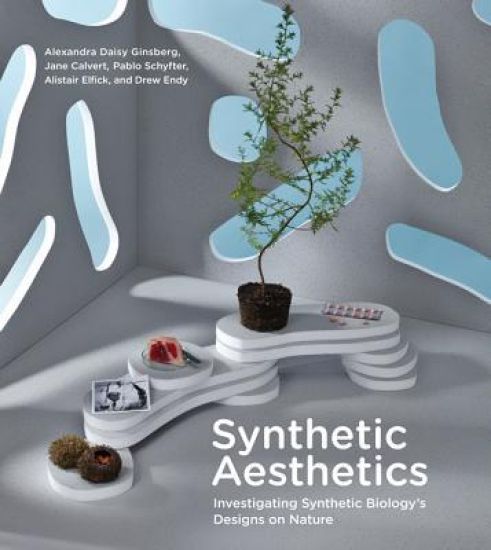
As synthetic biology transforms living matter into a medium for making, what is the role of design and its associated values? Synthetic biology manipulates the stuff of life. For synthetic biologists, living matter is programmable material. In search of carbon-neutral fuels, sustainable manufacturing techniques, and innovative drugs, these researchers aim to redesign existing organisms and even construct completely novel biological entities. Some synthetic biologists see themselves as designers, inventing new products and applications. But if biology is viewed as a malleable, engineerable, designable medium, what is the role of design and how will its values apply?In this book, synthetic biologists, artists, designers, and social scientists investigate synthetic biology and design. After chapters that introduce the science and set the terms of the discussion, the book follows six boundary-crossing collaborations between artists and designers and synthetic biologists from around the world, helping us understand what it might mean to 'design nature.' These collaborations have resulted in biological computers that calculate form; speculative packaging that builds its own contents; algae that feeds on circuit boards; and a sampling of human cheeses. They raise intriguing questions about the scientific process, the delegation of creativity, our relationship to designed matter, and, the importance of critical engagement. Should these projects be considered art, design, synthetic biology, or something else altogether?Synthetic biology is driven by its potential; some of these projects are fictions, beyond the current capabilities of the technology. Yet even as fictions, they help illuminate, question, and even shape the future of the field.
A powerful collection of perspectives on the contemporary and evolving meanings of home, and how they capture both the shared and conflicting narratives that impact the USA today. Home is shaped by many factors: culture, region, environment, citizenship, economics, state of mind, and more. Edited by Alexandra Cunningham Cameron, Christina De Leon, and Michelle Joan Wilkinson, Making Home explores the diverse perspectives on home across the United States, US Territories, and Tribal Nations to reveal how design impacts this country, its value systems, and the people who inhabit its landscapes. Positioning home not only as a place of dwelling but also as a complex and highly subjective ecosystem, contributors show how notions of home resonate through private and public consciousness to inform the shared or conflicting histories that impact our country. Probing urgent topics related to home such as colonialism, technological innovation, landscapes and the environment, and aesthetics and culture, Making Home uses the framework of design to pair investigative and practical analyses with imaginative and speculative ones. Contributors include designers, scholars, writers, artists, and critical thinkers across disciplines whose work and lived experiences illustrate specific circumstances that shape the contemporary home. Contributors: Brian Adams, AphroChic, Joe Baker, Joseph Becker, La Vaughn Belle, Frank Blazquez, Lori Brown, Michael Bullock, CareHaus, Mona Chalabi, Katrina Collins, Michelle Commander, Sean Connelly, Reverand Houston Cyprus, Design Earth, Designing Justice + Designing Spaces, Leah DeVun, Heather Dewey Hagborg, Terrol Dew Johnson, Jarrett Earnest, Sofia Gallisa Muriente, Cruz Garcia, Roxane Gay, Sophia Gebara, Curry Hackett, David Hartt, Hord, Coplan, Macht, Joyce Hwang, Alan Isaac, Sandra Jackson-Dumont, Dalton Johnson, Kenneth Kuper, Ruba Katrib, Elleza Kelley, Michelle Lanier, Natalia LaSalle Morillo, Liam Lee, Brent Leggs, Dominic Leong, Sarah Lopez, Gervais Marsh, Carlos Martin, Catherine E. McKinley, Joiri Minaya, Tommy Mishima, Victoria Munro, Maria Nicanor, Caroline O Connell, Camille Okhio, Betty Poncho, Sheila Pree Bright, Ronald Rael, Suchi Reddy, Katherine Simone Reynolds, Roque Raquel Salas Rivera, Tracey Robertson Carter, Dr. Yashica Robinson, William Scott, Siddhartha V. Shah, Amie Siegel, SITU Research, Gretchen Sorin, Carlos Soto, Renee Stout, Journey Streams, Isabel Strauss, Davone Tines, Gene Tinnie, Dr. Wallis Tinnie, Cornelius Tulloch, Whitney Lee White, Kevin Young, John Zeisel. A copublication with the Cooper Hewitt, Smithsonian Design Museum.
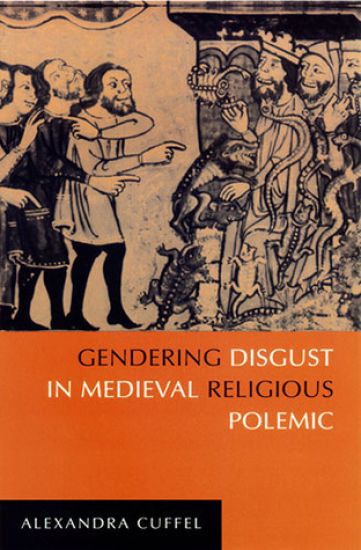
In Gendering Disgust in Medieval Religious Polemic, Alexandra Cuffel analyzes medieval Jewish, Christian, and Muslim uses of gendered bodily imagery and metaphors of impurity in their visual and verbal polemic against one another. Drawing from a rich array of sources—including medical texts, bestiaries, Muslim apocalyptic texts, midrash, biblical commentaries, kabbalistic literature, Hebrew liturgical poetry, and theological tracts from late antiquity to the mid-fourteenth century—Cuffel examines attitudes toward the corporeal body and its relationship to divinity. She shows that these religious traditions shared notions of the human body as distasteful, with many believers viewing corporeality and communion with the divine as incompatible. In particular, she explores how authors from each religious tradition targeted the woman's body as antithetical to holiness. Foul smell, bodily fluids and states, and animals were employed by these religious communities as powerful tropes, which they used to mark their religious opponents as sinful, filthy, and unacceptable. By defining and denigrating the religious "other," each group wielded bodily insult as a means of resistance, of inciting violence, and of creating community boundaries. Representations of impurity or filth designed to inspire revulsion served also to reassure audiences of their religious and sometimes physical superiority and to encourage oppressive measures toward the minority. Yet, even in the midst of opposing one another, their very polemic demonstrates that Jews, Christians, and Muslims held basic cultural assumptions and symbols in common while inflecting their meanings differently.
In Gendering Disgust in Medieval Religious Polemic, Alexandra Cuffel analyzes medieval Jewish, Christian, and Muslim uses of gendered bodily imagery and metaphors of impurity in their visual and verbal polemic against one another. Drawing from a rich array of sources—including medical texts, bestiaries, Muslim apocalyptic texts, midrash, biblical commentaries, kabbalistic literature, Hebrew liturgical poetry, and theological tracts from late antiquity to the mid-fourteenth century—Cuffel examines attitudes toward the corporeal body and its relationship to divinity. She shows that these religious traditions shared notions of the human body as distasteful, with many believers viewing corporeality and communion with the divine as incompatible. In particular, she explores how authors from each religious tradition targeted the woman's body as antithetical to holiness. Foul smell, bodily fluids and states, and animals were employed by these religious communities as powerful tropes, which they used to mark their religious opponents as sinful, filthy, and unacceptable. By defining and denigrating the religious "other," each group wielded bodily insult as a means of resistance, of inciting violence, and of creating community boundaries. Representations of impurity or filth designed to inspire revulsion served also to reassure audiences of their religious and sometimes physical superiority and to encourage oppressive measures toward the minority. Yet, even in the midst of opposing one another, their very polemic demonstrates that Jews, Christians, and Muslims held basic cultural assumptions and symbols in common while inflecting their meanings differently.
Bribery plays a significant role in international criminal activity. Terrorists pay bribes. Money-launderers pay bribes. Those who traffic in people, narcotics, and illegal arms pay bribes. People pay immigration officers not to ask, customs officials not to inspect, and police officers not to investigate. Bribes follow patterns that are not at all mysterious to the officials, salesmen, and citizens who seek them and pay them. Using a series of international cases, Wrage examines bribery, peeling back the mystique and ambiguity and exposing the very simple transactions that lie beneath. She shows how these seemingly everyday transactions can affect security, democratization, and human aid. Examples from around the world help to illustrate the nature of the problem and efforts at combating it. Bribery plays a significant role in international criminal activity. Terrorists pay bribes. Money-launderers pay bribes. Those who traffic in people, narcotics, and illegal arms pay bribes. People pay immigration officers not to ask, customs officials not to inspect, and police officers not to investigate. At corporate headquarters in the United States, it can be easy to dismiss modest bribes in distant countries as an unfortunate cost of doing business. Bribes follow patterns that are not at all mysterious to the officials, salesmen, and citizens who seek them and pay them. Using a series of international cases, Wrage examines bribery, peeling back the mystique and ambiguity and exposing the very simple transactions that lie beneath. She shows how these seemingly everyday transactions can affect security, democratization, and human aid around the globe. Bribery and Extortion presents a clear picture of the world of bribery and the havoc it can wreak on whole populations. Wrage covers commercial bribery, administrative and service-based bribery, and extortion. She considers bribery and extortion at both high levels of government and lower levels on the street. Examples from around the world help to illustrate the nature of the problem and efforts at combating it. The book concludes with practical suggestions and an assessment of current efforts to stem the tide of bribery and restore transparency to everyday transactions in all realms.
Alexandra David-Neel was the first European woman to meet the Dalai Lama and in 1924 became the first to enter the forbidden Tibetan capital, Lhasa. She had already spent a decade travelling through China, living in a cave on the Tibetan border, where she learned about Buddhism from hermits, mystics and bandits. Magic and Mystery in Tibet records the mysterious, magical world David-Neel discovered in Tibet. Among the extraordinary events she describes are the Tibetan mystics who could live naked in temperatures below freezing, the psychic sports practiced in Tibet, the lamas who could run for incredible distances without rest, food or drink and the monks who could defy gravity.
In the 1970s the Quinault and Suquamish, like dozens of Indigenous nations across the United States, asserted their sovereignty by applying their laws to everyone on their reservations. This included arresting non-Indians for minor offenses, and two of those arrests triggered federal litigation that had big implications for Indian tribes' place in the American political system. Tribal governments had long sought to manage affairs in their territories, and their bid for all-inclusive reservation jurisdiction was an important, bold move, driven by deeply rooted local histories as well as pan-Indian activism. They believed federal law supported their case.In a 1978 decision that reverberated across Indian country and beyond, the Supreme Court struck a blow to their efforts by ruling in Oliphant v. Suquamish Indian Tribe that non-Indians were not subject to tribal prosecution for criminal offenses. The court cited two centuries of US legal history to justify their decision but relied solely on the interpretations of non-Indians.In Reclaiming the Reservation, Alexandra Harmon delves into Quinault, Suquamish, and pan-tribal histories to illuminate the roots of Indians' claim of regulatory power in their reserved homelands. She considers the promises and perils of relying on the US legal system to address the damage caused by colonial dispossession. She also shows how tribes have responded since 1978, seeking and often finding new ways to protect their interests and assert their sovereignty.Reclaiming the Reservation is the 2020 winner of the Robert G. Athearn Prize for a published book on the twentieth-century American West, presented by the Western History Association.
In the 1970s the Quinault and Suquamish, like dozens of Indigenous nations across the United States, asserted their sovereignty by applying their laws to everyone on their reservations. This included arresting non-Indians for minor offenses, and two of those arrests triggered federal litigation that had big implications for Indian tribes' place in the American political system. Tribal governments had long sought to manage affairs in their territories, and their bid for all-inclusive reservation jurisdiction was an important, bold move, driven by deeply rooted local histories as well as pan-Indian activism. They believed federal law supported their case.In a 1978 decision that reverberated across Indian country and beyond, the Supreme Court struck a blow to their efforts by ruling in Oliphant v. Suquamish Indian Tribe that non-Indians were not subject to tribal prosecution for criminal offenses. The court cited two centuries of US legal history to justify their decision but relied solely on the interpretations of non-Indians.In Reclaiming the Reservation, Alexandra Harmon delves into Quinault, Suquamish, and pan-tribal histories to illuminate the roots of Indians' claim of regulatory power in their reserved homelands. She considers the promises and perils of relying on the US legal system to address the damage caused by colonial dispossession. She also shows how tribes have responded since 1978, seeking and often finding new ways to protect their interests and assert their sovereignty.Reclaiming the Reservation is the 2020 winner of the Robert G. Athearn Prize for a published book on the twentieth-century American West, presented by the Western History Association.
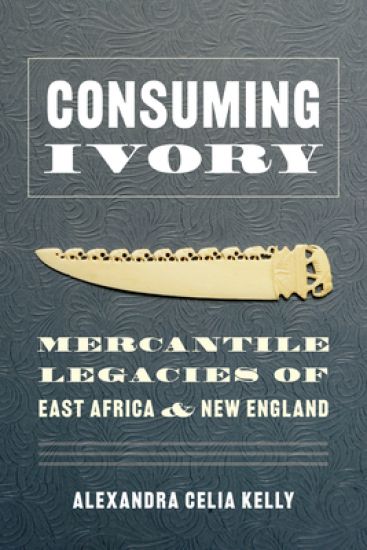
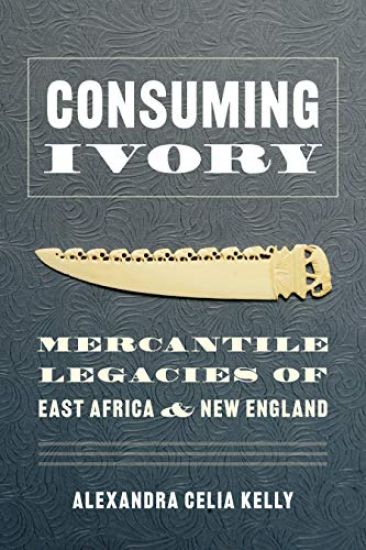
Examines the complex global impact of the ivory tradeThe economic prosperity of two nineteenth- and early-twentieth-century New England towns rested on factories that manufactured piano keys, billiard balls, combs, and other items made of ivory imported from East Africa. Yet while towns like Ivoryton and Deep River, Connecticut, thrived, the African ivory trade left in its wake massive human exploitation and ecological devastation. At the same time, dynamic East African engagement with capitalism and imperialism took place within these trade histories.Drawing from extensive archival and field research in New England, Great Britain, and Tanzania, Alexandra Kelly investigates the complex global legacies of the historical ivory trade. She not only explains the complexities of this trade but also analyzes Anglo-American narratives about Africa, questioning why elephants and ivory feature so centrally in those representations. From elephant conservation efforts to the cultural heritage industries in New England and East Africa, her study reveals the ongoing global repercussions of the ivory craze and will be of interest to anthropologists, archaeologists, historians, and conservationists.
Examines the complex global impact of the ivory tradeThe economic prosperity of two nineteenth- and early-twentieth-century New England towns rested on factories that manufactured piano keys, billiard balls, combs, and other items made of ivory imported from East Africa. Yet while towns like Ivoryton and Deep River, Connecticut, thrived, the African ivory trade left in its wake massive human exploitation and ecological devastation. At the same time, dynamic East African engagement with capitalism and imperialism took place within these trade histories.Drawing from extensive archival and field research in New England, Great Britain, and Tanzania, Alexandra Kelly investigates the complex global legacies of the historical ivory trade. She not only explains the complexities of this trade but also analyzes Anglo-American narratives about Africa, questioning why elephants and ivory feature so centrally in those representations. From elephant conservation efforts to the cultural heritage industries in New England and East Africa, her study reveals the ongoing global repercussions of the ivory craze and will be of interest to anthropologists, archaeologists, historians, and conservationists.
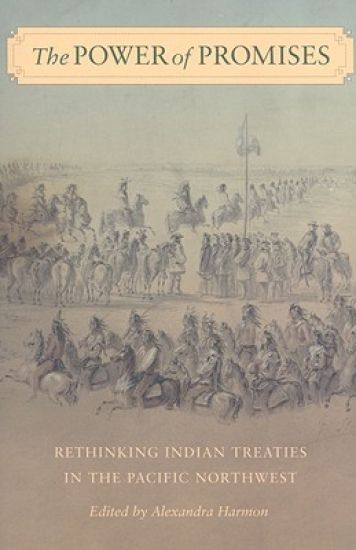
Treaties with Native American groups in the Pacific Northwest have had profound and long-lasting implications for land ownership, resource access, and political rights in both the United States and Canada. In The Power of Promises, a distinguished group of scholars, representing many disciplines, discuss the treaties' legacies.In North America, where treaties have been employed hundreds of times to define relations between indigenous and colonial societies, many such pacts have continuing legal force, and many have been the focus of recent, high-stakes legal contests. The Power of Promises shows that Indian treaties have implications for important aspects of human history and contemporary existence, including struggles for political and cultural power, law's effect on people's self-conceptions, the functions of stories about the past, and the process of defining national and ethnic identities.
Treaties with Native American groups in the Pacific Northwest have had profound and long-lasting implications for land ownership, resource access, and political rights in both the United States and Canada. In The Power of Promises, a distinguished group of scholars, representing many disciplines, discuss the treaties' legacies.In North America, where treaties have been employed hundreds of times to define relations between indigenous and colonial societies, many such pacts have continuing legal force, and many have been the focus of recent, high-stakes legal contests. The Power of Promises shows that Indian treaties have implications for important aspects of human history and contemporary existence, including struggles for political and cultural power, law's effect on people's self-conceptions, the functions of stories about the past, and the process of defining national and ethnic identities.