This textbook has been prepared keeping in mind the exact need of the students and syllabus specified by S.P.P.U. Every efforts has been taken to give clear concepts of various terms relating to the subject. We hope that this book will be very useful to the students and also to teachers. Study of this book will help the students to get an idea and understand the subject thoroughly.
A rapid reference guide to the approach and management of orthopaedic emergencies, this book provides quick differential diagnosis and treatment guidance for the emergency physician and orthopaedic resident and trainee. Chapters detail the initial management of musculoskeletal injuries, including reduction, splinting, and casting techniques for specific fractures and soft tissue injuries. A stepwise, how-to approach ensures easy learning, and an abundance of images provide clarity in instruction. This book also helps the reader identify those patients who can be appropriately treated as outpatients and patients who require urgent and emergent orthopaedic consultation.
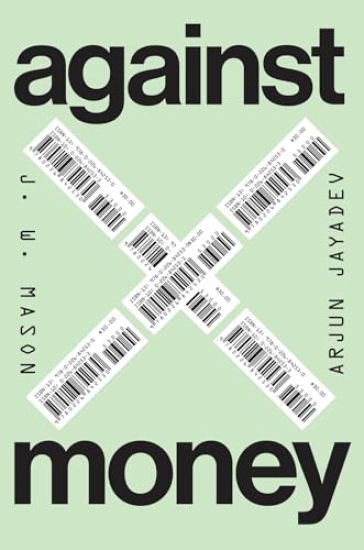
A powerful deconstruction of humanity’s most influential invention, from the acclaimed economists J. W. Mason and Arjun Jayadev. Money is unavoidably fundamental to our daily lives. It lurks behind the swipe of a card when buying groceries; in looming student-loan debts; in the prices of things we want; and in our subconscious navigation of the modern world. Money is an invisible convenience that saves us, as a society, the hassle of bartering for goods and services—a reflection, in our pockets and on our phones, of the hard facts of scarcity and desire. Or is it something more? In this revelatory book, economists J. W. Mason and Arjun Jayadev explain how and why money is so deeply misunderstood by the world it dominates—and what the dangerous implications of this misunderstanding are. Against Money tackles the most strongly held “truths” of economics, arguing that the world of money actually never has been an impartial representation of the world of things. Instead, its existence in different forms—debt, capital, liquidity, and interest—increasingly shapes events in the real world rather than just reflecting them; sometimes opening new forms of cooperation, and sometimes exercising a malevolent domination. Human existence is not just facilitated by money, but also governed by it. Perfect for fans of Thomas Piketty and David Graeber, Against Money is an erudite, disruptive intervention against the illusions and tyrannies of money. Mason and Jayadev present a radically different way of thinking about money—imagining a hopeful future in which it no longer defines the possibilities of our collective existence.
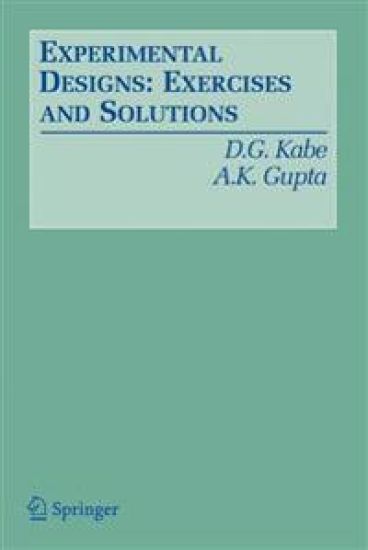
This volume is a collection of exercises with their solutions in Design and Analysis of Experiments. At present there is not a single book which collects such exercises. Theseexercises have been collected by the authors during the last four decadesduring their student and teaching years. They should prove useful to graduate students and research workers in Statistics. In Chapter I, theoretical results that are needed for understanding the material in this book, are given. Chapter 2 lists the exercises which have been collected by the authors. The solutions of these problems are given in Chapter 3. Finally an index is provided for quick reference. Grateful appreciation for financial support for Dr. Kabe's research at St. Mary's University is extended to National Research Council of Canada and St. May's Uni versity Senate Research Committee. For his visit to the Department ofMathematics and Statistics the authors are thankful to the Bowling Green State University.
This monograph focuses on a case study of a newly constructed passive cooled four-story building in a composite (monsoon) climate. The total initial embodied energy, CO2 emissions, annual energy saving and CO2 credit of the building were evaluated as part of the case study.
Peter Kairouz; H. Brendan McMahan; Brendan Avent; Aurélien Bellet; Mehdi Bennis; Arjun Nitin Bhagoji; Kallista Bonawit; Zachary Charles; Graham Cormode; Rachel Cummings; Rafael G. L. D’Oliveira; Hubert Eichner; Salim El Rouayheb; David Evans; Josh Gardner; Zachary Garrett; Adrià Gascón; Badih Ghazi; Phillip B. Gibbons; Marco Gruteser; Zaid Harchaoui; Chaoyang He; Lie He; Zhouyuan Huo; Ben Hutchinson; Justin Hsu; Martin Jaggi; Tara Javidi; Gauri Joshi; Mikhail Khodak; Jakub Konecný; Aleksandra Korolova; Farinaz Koushanfar
The term Federated Learning was coined as recently as 2016 to describe a machine learning setting where multiple entities collaborate in solving a machine learning problem, under the coordination of a central server or service provider. Each client’s raw data is stored locally and not exchanged or transferred; instead, focused updates intended for immediate aggregation are used to achieve the learning objective. Since then, the topic has gathered much interest across many different disciplines and the realization that solving many of these interdisciplinary problems likely requires not just machine learning but techniques from distributed optimization, cryptography, security, differential privacy, fairness, compressed sensing, systems, information theory, statistics, and more. This monograph has contributions from leading experts across the disciplines, who describe the latest state-of-the art from their perspective. These contributions have been carefully curated into a comprehensive treatment that enables the reader to understand the work that has been done and get pointers to where effort is required to solve many of the problems before Federated Learning can become a reality in practical systems. Researchers working in the area of distributed systems will find this monograph an enlightening read that may inspire them to work on the many challenging issues that are outlined. This monograph will get the reader up to speed quickly and easily on what is likely to become an increasingly important topic: Federated Learning.