The Benedictines is a comprehensive book written by David Knowles that explores the history and significance of the Benedictine order in the Christian faith. The book delves into the origins of the order, tracing its roots back to the life and teachings of St. Benedict of Nursia in the 6th century. It examines the key tenets of Benedictine spirituality and the ways in which the order has evolved over time to adapt to changing social and political contexts.The Benedictines also provides a detailed account of the impact of the order on European history, particularly during the Middle Ages. It explores the role of Benedictine monasteries in the development of agriculture, education, and the arts, as well as their contributions to the spread of Christianity throughout the continent.Throughout the book, Knowles draws on a wide range of primary sources, including letters, diaries, and other historical documents, to provide a nuanced and insightful account of the Benedictine order. He also explores the challenges and controversies that have faced the order over the centuries, from conflicts with secular authorities to debates over the proper interpretation of Benedictine teachings.Overall, The Benedictines is an engaging and informative book that offers a rich and detailed account of one of the most important and influential religious orders in the history of Christianity.This scarce antiquarian book is a facsimile reprint of the old original and may contain some imperfections such as library marks and notations. Because we believe this work is culturally important, we have made it available as part of our commitment for protecting, preserving, and promoting the world's literature in affordable, high quality, modern editions, that are true to their original work.
A Benedictine Bibliography V1-2 is a two-volume reference book written by Oliver Leonard Kapsner, a renowned Benedictine scholar. The book is a comprehensive guide to the literature and history of the Benedictine Order, covering topics such as monasticism, liturgy, theology, and spirituality. The first volume contains an extensive bibliography of books, articles, and other works related to the Benedictine tradition, arranged by subject and author. The second volume includes a detailed history of the Benedictine Order, from its origins in the sixth century to the present day. The book is an invaluable resource for scholars, students, and anyone interested in the history and culture of the Benedictine Order.Two Volumes In One. Volume 1, Author Part; Volume 2, Subject Part.This scarce antiquarian book is a facsimile reprint of the old original and may contain some imperfections such as library marks and notations. Because we believe this work is culturally important, we have made it available as part of our commitment for protecting, preserving, and promoting the world's literature in affordable, high quality, modern editions, that are true to their original work.
Un nouveau commentaire biblique de la lettre de saint Paul aux Eph siens, en explorant les b n dictions dont les chr tiens re oivent de Dieu par Sa gr ce.
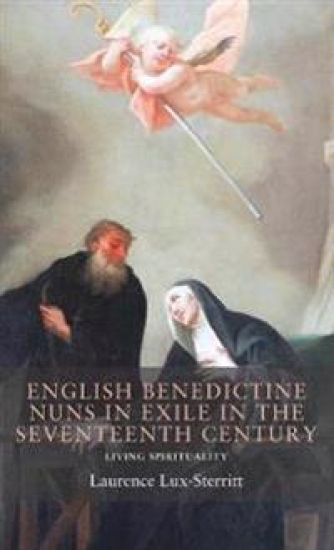
This study of English Benedictine nuns is based upon a wide variety of original manuscripts, including chronicles, death notices, clerical instructions, texts of spiritual guidance, but also the nuns' own collections of notes. It highlights the tensions between the contemplative ideal and the nuns' personal experiences, illustrating the tensions between theory and practice in the ideal of being dead to the world. It shows how Benedictine convents were both cut-off and enclosed yet very much in touch with the religious and political developments at home, but also proposes a different approach to the history of nuns, with a study of emotions and the senses in the cloister, delving into the textual analysis of the nuns' personal and communal documents to explore aspect of a lived spirituality, when the body which so often hindered the spirit, at times enabled spiritual experience.
Un commentaire sur la lettre de saint Paul aux Ephesiens En lui nous avons la redemption par son sang, le pardon des peches, selon la richesse de sa grace (Ephesiens 1:7) Quelque temps apres sa conversion, Saul decida que son deuxieme nom Paul etait desormais plus adapte a sa nouvelle vie. Le Saul nom signifiait destructeur et c'est ce qu'il etait autrefois, alors que le nom de Paul signifie travailleur et c'est certainement ce qu'il etait devenu. Par la grace de Dieu Paul recut un ministere, quelque chose pour lequel il fut toujours reconnaissant, meme s'il se toujours considerait comme en etant indigne. La vie de Paul illustre la grace de Dieu, qui transforme ce qui est inutile, non rentable, et recalcitrant en serviteurs de Dieu de grande valeur. Dans l'Epitre aux Ephesiens, Paul explore les grandes doctrines de la grace de Dieu, doctrines qui lui devinrent precieuses par experience personnelle. Que Dieu permette que, lors de notre etude de ces doctrines, non seulement que notre comprehension aille augmentant, mais que nos coeurs puissent etre a nouveau touches pour rendre un culte a Celui qui nous a sauves par Sa grace.
The Benedictine Way is a mentality, an attitude characteristic of the monastic life. It consists of certain elements that are essential to the life: continual prayer, lectio divina, community life, the opus Dei, work, separation from the world, and the specifically Benedictine vows of obedience, stability and conversatio morum. These elements are necessary means for monks and nuns on their road to union with God. While the book was intended originally as a basis for the formation of novices and juniors in monasteries, it also provides material for renewal and re-formation for older monks and nuns. It can also be used by Benedictine oblates or by any lay Christian who is hungering for prayer and wants instruction on how to pray. Benedictine prayer is simple and direct, and anyone who wants to return to the sources of Christian spirituality will easily appreciate The Benedictine Way. --From the Introduction
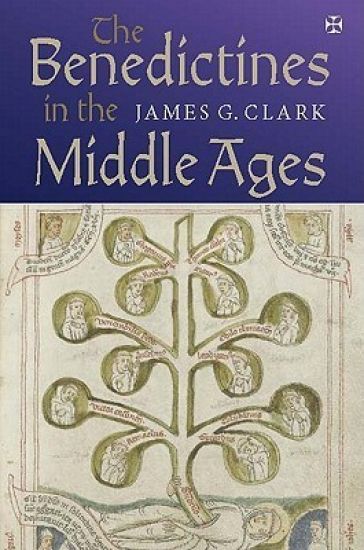
A comprehensive survey of the origins, development, and influence of the most important monastic order in the middle ages. The men and women that followed the sixth-century customs of Benedict of Nursia (c.480-c.547) formed the most enduring, influential, numerous and widespread religious order of the Latin middle ages. Their liturgical practice, and their acquired taste for learning, served as a model for the medieval church as a whole: while new orders arose, they took some of their customs, and their observant and spiritual outlook, from the Regula Benedicti. The Benedictines may also be counted among the founders of medieval Europe. In many regions of the continent they created, or consolidated, the first Christian communities; they also directed the development of their social organisation, economy, and environment, and exerted a powerful influence on their emerging cultural and intellectual trends. This book, the first comparative study of its kind, follows the Benedictine Order over eleven centuries, from their early diaspora to the challenge of continental reformation. JAMES G. CLARK is Professor of History, University of Exeter.