
Kirjahaku
Etsi kirjoja tekijän nimen, kirjan nimen tai ISBN:n perusteella.
1000 tulosta hakusanalla Byron Perry
Lady Byron Vindicated
Harriet Beecher Stowe
Createspace Independent Publishing Platform
2012
nidottu
Lord Byron: Childe Harold's Pilgrimage
George Gordon Lord Byron
Createspace Independent Publishing Platform
2012
nidottu
Dream Searcher: Memoirs Actor, Filmmaker, Author William Byron Hillman
William Byron Hillman
Createspace Independent Publishing Platform
2013
nidottu
Uncle Byron's Antiquated Time-Machine: To Save a President
Ian Ronald Johannesen
Createspace Independent Publishing Platform
2013
nidottu
Lady Byron Vindicated
Harriet Beecher Stowe
Createspace Independent Publishing Platform
2013
nidottu
Lord Byron's Boat: A William Gillette Mystery
Michael Evan Engelmann
Createspace Independent Publishing Platform
2015
nidottu
Lady Byron Vindicated
Harriet Beecher Stowe
Createspace Independent Publishing Platform
2015
nidottu
Cashel Byron's Profession
George Bernard Shaw
Createspace Independent Publishing Platform
2015
nidottu
Lady Byron Vindicated
Harriet Beecher Stowe
Createspace Independent Publishing Platform
2015
nidottu
Lady Byron Vindicated
Harriet Beecher Stowe
Createspace Independent Publishing Platform
2015
nidottu
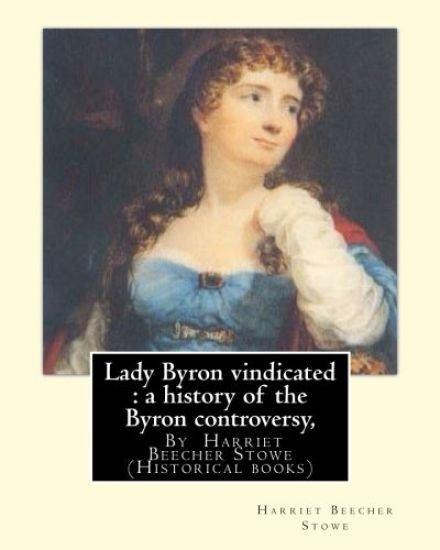
Lady Byron vindicated: a history of the Byron controversy, from its beginning: in 1816 to the present time, By Harriet Beecher Stowe (Historical books
Harriet Beecher Stowe
Createspace Independent Publishing Platform
2016
nidottu
An impassioned defense of Lady Byron for having left her husband, this work helped stir up the posthumous controversy between the supporters of Lord Byron & those of his wife. George Gordon Byron (later Noel), 6th Baron Byron, FRS (22 January 1788 - 19 April 1824), commonly known simply as Lord Byron, was an English poet and a leading figure in the Romantic movement. Among his best-known works are the lengthy narrative poems Don Juan and Childe Harold's Pilgrimage, and the short lyric "She Walks in Beauty". Anne Isabella Noel Byron, 11th Baroness Wentworth and Baroness Byron (17 May 1792 - 16 May 1860), nicknamed Annabella, was the wife of poet George Gordon Byron, more commonly known as Lord Byron. Harriet Elisabeth Beecher Stowe ( June 14, 1811 - July 1, 1896) was an American abolitionist and author. She came from a famous religious family and is best known for her novel Uncle Tom's Cabin (1852). It depicts the harsh life for African Americans under slavery. It reached millions as a novel and play, and became influential in the United States and Great Britain. It energized anti-slavery forces in the American North, while provoking widespread anger in the South. She wrote 30 books, including novels, three travel memoirs, and collections of articles and letters. She was influential for both her writings and her public stands on social issues of the day.Harriet Elisabeth Beecher was born in Litchfield, Connecticut, on June 14, 1811.She was the seventh of 13 children born to outspoken Calvinist preacher Lyman Beecher and Roxana (Foote), a deeply religious woman who died when Stowe was only five years old. Roxana's maternal grandfather was General Andrew Ward of the Revolutionary War. Her notable siblings included a sister, Catharine Beecher, who became an educator and author, as well as brothers who became ministers: including Henry Ward Beecher, who became a famous preacher and abolitionist, Charles Beecher, and Edward Beecher.Harriet enrolled in the Hartford Female Seminary run by her older sister Catharine, where she received a traditional academic education usually reserved for males at the time with a focus in the classics, including study of languages and mathematics. Among her classmates was Sarah P. Willis, who later wrote under the pseudonym Fanny Fern.In 1832, at the age of 21, Harriet Beecher moved to Cincinnati, Ohio to join her father, who had become the president of Lane Theological Seminary. There, she also joined the Semi-Colon Club, a literary salon and social club whose members included the Beecher sisters, Caroline Lee Hentz, Salmon P. Chase (future governor of the state and Secretary of Treasury under President Lincoln), Emily Blackwell, and others.Cincinnati's trade and shipping business on the Ohio River was booming, drawing numerous migrants from different parts of the country, including many free blacks, as well as Irish immigrants who worked on the state's canals and railroads. Areas of the city had been wrecked in the Cincinnati riots of 1829, when ethnic Irish attacked blacks, trying to push competitors out of the city. Beecher met a number of African Americans who had suffered in those attacks, and their experience contributed to her later writing about slavery. Riots took place again in 1836 and 1841, driven also by native-born anti-abolitionists. It was in the literary club that she met Calvin Ellis Stowe, a widower who was a professor at the seminary. The two married on January 6, 1836.He was an ardent critic of slavery, and the Stowes supported the Underground Railroad, temporarily housing several fugitive slaves in their home. Most slaves continued north to secure freedom in Canada. The Stowes had seven children together, including twin daughters.
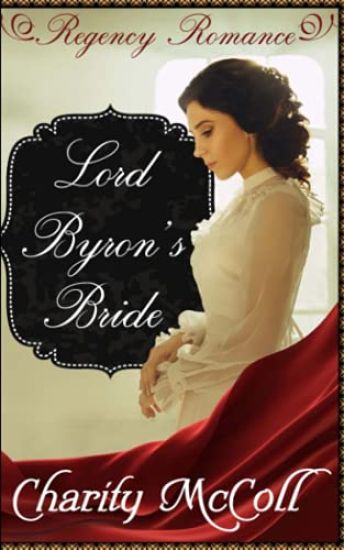
Lord Byron's Bride: Regency Romance
Charity McColl
Createspace Independent Publishing Platform
2016
nidottu
Lord Byron Whittaker is a true catch. He's as thoroughbred as the stallions he loves to ride. Betrothed to the lovely Lady Sophia, his life really is to be envied...until the day he is thrown from his uncontrollable horse. The once vivacious Lord, now a paraplegic, loses all hope. Worse, he loses his fianc e. His perfect existence comes crumbling down around him, and the only person able to handle this changed, angry man is his gentle yet firm caregiver, Cecilia Fountain. Charged with his private care, Cecilia helps Lord Whittaker on his road to recovery. And recover he does - so swiftly, in fact, that he soon finds himself back in his old life, forgetting the woman who put up with him and loved him in secret during his darkest days. Rejected, Cecilia returns to work at the hospital. Unable to forget him, though, she dreams of one day being back in the arms of the first man she ever truly loved....
Lord Byron and Lady Caroline Lamb: Mad, Bad And Dangerous To Know: The Passionate and Public Affair That Scandalised Regency England
Joanne Hayle
Createspace Independent Publishing Platform
2016
nidottu
The poet Lord Byron became a star overnight, he was the toast of Regency society, adored by women who clamoured to meet him.When he met the married Lady Caroline Lamb, the niece of Georgiana, Duchess of Devonshire, in 1812 scandalous passions were ignited. Regency England bore witness to their public displays of indifference and criticism while privately Byron and Caro carried out an intense affair that led to talk of an elopement. After Lord Byron ended their relationship, Lady Caroline Lamb's obessive behaviour, her improbable but public suicide attempt, substance abuse and questions about her sanity marked the rest of her life.She wrote as passionately as she felt, Glenarvon, was a fictional and melodramatic account of her relationship with the infamous Lord Byron.He wrote about and to her in his poems after his passions cooled, sometimes using hateful comments. Byron went on to marry and have several more lovers, male and female, scandal followed him wherever he went.So, was Lord Byron mad, bad and dangerous to know and when did Caroline coin this phrase?How did Caroline's husband, William Lamb, later Lord Melbourne, Queen Victoria's first Prime Minister, react to such a public embarrassment?Were the rumours about Byron's passions true?Find out in this book about one of the most passionate affairs in English history and the resulting public and literary outbursts between two fiery and larger than life figures. Their compelling story could have been written in a regency romance novel.
Lady Byron Vindicated
Harriet Beecher Stowe
Createspace Independent Publishing Platform
2016
nidottu