Kirjojen hintavertailu. Mukana 11 627 067 kirjaa ja 12 kauppaa.

Kirjahaku

Etsi kirjoja tekijän nimen, kirjan nimen tai ISBN:n perusteella.

1000 tulosta hakusanalla C. Edwards Lester

The morning's war. NOVEL By: C. E. (Charles Edward) Montague (Original Classics)

The morning's war. NOVEL By: C. E. (Charles Edward) Montague (Original Classics)

C. E. (Charles Edward) Montague

Createspace Independent Publishing Platform
2016
nidottu
Charles Edward Montague, (1 January 1867 - 28 May 1928), was an English journalist, known also as a writer of novels and essays.Montague was born and brought up in London, the son of an Irish Roman Catholic priest who had left the church to marry. He was educated at the City of London School and Balliol College, Oxford. 1] At Oxford he gained a First in Classical Moderations (1887) and a Second in Literae Humaniores (1889). In 1890 he was recruited by C. P. Scott to the Manchester Guardian, where he became a noted leader writer and critic; while Scott was an M.P. between 1895-1906 he was de facto editor of the paper. He married Scott's daughter Madeline in 1898. While working at the paper, Montague became a supporter of Irish Home Rule. Montague was against the First World War prior to its commencement, but once it started he believed that it was right to support it in the hope of a swift resolution. In 1914, Montague was 47, which was well over the age for enlistment. But in order to enlist, he dyed his white hair black to enable him to fool the Army into accepting him. H. W. Nevinson would later write that "Montague is the only man I know whose white hair in a single night turned dark through courage." He began as a grenadier-sergeant, and rose to lieutenant and then captain of intelligence in 1915. Later in the war, he became an armed escort for VIPs visiting the battlefield. He escorted such personalities as H.G. Wells and Bernard Shaw. After the end of World War I he wrote in a strong anti-war vein. He wrote that "War hath no fury like a non-combatant." Disenchantment (1922), a collection of newspaper articles about the war, 1] was one of the first prose works to strongly criticise the way the war was fought, and is a pivotal text in the development of literature about the First World War. 3] 4] Disenchantment criticised the British Press' coverage of the war and the conduct of the British generals. Montague accused the latter of being influenced by the "public school ethos" which he condemned as a "gallant robust contempt for "swats" and for all who invented new means to new ends and who trained and used their brains with a will
Disenchantment. (1922), essays [thoughts on the First World War] By: C. E. (Charles Edward) Montague

Disenchantment. (1922), essays [thoughts on the First World War] By: C. E. (Charles Edward) Montague

C. E. (Charles Edward) Montague

Createspace Independent Publishing Platform
2016
nidottu
Charles Edward Montague, (1 January 1867 - 28 May 1928), was an English journalist, known also as a writer of novels and essays.Montague was born and brought up in London, the son of an Irish Roman Catholic priest who had left the church to marry. He was educated at the City of London School and Balliol College, Oxford. 1] At Oxford he gained a First in Classical Moderations (1887) and a Second in Literae Humaniores (1889). In 1890 he was recruited by C. P. Scott to the Manchester Guardian, where he became a noted leader writer and critic; while Scott was an M.P. between 1895-1906 he was de facto editor of the paper. He married Scott's daughter Madeline in 1898. While working at the paper, Montague became a supporter of Irish Home Rule. Montague was against the First World War prior to its commencement, but once it started he believed that it was right to support it in the hope of a swift resolution. In 1914, Montague was 47, which was well over the age for enlistment. But in order to enlist, he dyed his white hair black to enable him to fool the Army into accepting him. H. W. Nevinson would later write that "Montague is the only man I know whose white hair in a single night turned dark through courage." He began as a grenadier-sergeant, and rose to lieutenant and then captain of intelligence in 1915. Later in the war, he became an armed escort for VIPs visiting the battlefield. He escorted such personalities as H.G. Wells and Bernard Shaw. After the end of World War I he wrote in a strong anti-war vein. He wrote that "War hath no fury like a non-combatant." Disenchantment (1922), a collection of newspaper articles about the war, 1] was one of the first prose works to strongly criticise the way the war was fought, and is a pivotal text in the development of literature about the First World War. 3] 4] Disenchantment criticised the British Press' coverage of the war and the conduct of the British generals. Montague accused the latter of being influenced by the "public school ethos" which he condemned as a "gallant robust contempt for "swats" and for all who invented new means to new ends and who trained and used their brains with a will
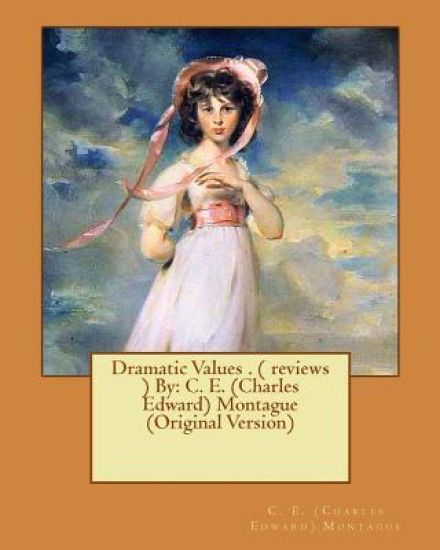
Dramatic Values . ( reviews ) By: C. E. (Charles Edward) Montague (Original Version)

Dramatic Values . ( reviews ) By: C. E. (Charles Edward) Montague (Original Version)

C. E. (Charles Edward) Montague

Createspace Independent Publishing Platform
2016
nidottu
Charles Edward Montague, (1 January 1867 - 28 May 1928), was an English journalist, known also as a writer of novels and essays.Montague was born and brought up in London, the son of an Irish Roman Catholic priest who had left the church to marry. He was educated at the City of London School and Balliol College, Oxford. 1] At Oxford he gained a First in Classical Moderations (1887) and a Second in Literae Humaniores (1889). In 1890 he was recruited by C. P. Scott to the Manchester Guardian, where he became a noted leader writer and critic; while Scott was an M.P. between 1895-1906 he was de facto editor of the paper. He married Scott's daughter Madeline in 1898. While working at the paper, Montague became a supporter of Irish Home Rule. Montague was against the First World War prior to its commencement, but once it started he believed that it was right to support it in the hope of a swift resolution. In 1914, Montague was 47, which was well over the age for enlistment. But in order to enlist, he dyed his white hair black to enable him to fool the Army into accepting him. H. W. Nevinson would later write that "Montague is the only man I know whose white hair in a single night turned dark through courage." He began as a grenadier-sergeant, and rose to lieutenant and then captain of intelligence in 1915. Later in the war, he became an armed escort for VIPs visiting the battlefield. He escorted such personalities as H.G. Wells and Bernard Shaw. After the end of World War I he wrote in a strong anti-war vein. He wrote that "War hath no fury like a non-combatant." Disenchantment (1922), a collection of newspaper articles about the war, 1] was one of the first prose works to strongly criticise the way the war was fought, and is a pivotal text in the development of literature about the First World War. 3] 4] Disenchantment criticised the British Press' coverage of the war and the conduct of the British generals. Montague accused the latter of being influenced by the "public school ethos" which he condemned as a "gallant robust contempt for "swats" and for all who invented new means to new ends and who trained and used their brains with a will
Memorial of Edward C. D. Lines

Memorial of Edward C. D. Lines

Charles B Lines

Hansebooks
2017
pokkari
Memorial of Edward C. D. Lines is an unchanged, high-quality reprint of the original edition of 1867. Hansebooks is editor of the literature on different topic areas such as research and science, travel and expeditions, cooking and nutrition, medicine, and other genres. As a publisher we focus on the preservation of historical literature. Many works of historical writers and scientists are available today as antiques only. Hansebooks newly publishes these books and contributes to the preservation of literature which has become rare and historical knowledge for the future.
Edward Leen, C.S. Sp.

Edward Leen, C.S. Sp.

Michael O'Carroll

Hassell Street Press
2021
nidottu
This work has been selected by scholars as being culturally important and is part of the knowledge base of civilization as we know it.This work is in the public domain in the United States of America, and possibly other nations. Within the United States, you may freely copy and distribute this work, as no entity (individual or corporate) has a copyright on the body of the work.Scholars believe, and we concur, that this work is important enough to be preserved, reproduced, and made generally available to the public. To ensure a quality reading experience, this work has been proofread and republished using a format that seamlessly blends the original graphical elements with text in an easy-to-read typeface.We appreciate your support of the preservation process, and thank you for being an important part of keeping this knowledge alive and relevant.
The Itinerary of King Edward the Second. Compiled by ... C. H. Hartshorne.

The Itinerary of King Edward the Second. Compiled by ... C. H. Hartshorne.

Charles Henry Hartshorne

British Library, Historical Print Editions
2011
pokkari
Title: The Itinerary of King Edward the Second. Compiled by ... C. H. Hartshorne.Publisher: British Library, Historical Print EditionsThe British Library is the national library of the United Kingdom. It is one of the world's largest research libraries holding over 150 million items in all known languages and formats: books, journals, newspapers, sound recordings, patents, maps, stamps, prints and much more. Its collections include around 14 million books, along with substantial additional collections of manuscripts and historical items dating back as far as 300 BC.The GENERAL HISTORICAL collection includes books from the British Library digitised by Microsoft. This varied collection includes material that gives readers a 19th century view of the world. Topics include health, education, economics, agriculture, environment, technology, culture, politics, labour and industry, mining, penal policy, and social order. ++++The below data was compiled from various identification fields in the bibliographic record of this title. This data is provided as an additional tool in helping to insure edition identification: ++++ British Library Hartshorne, Charles Henry; 1861. 32 p.; 4 . 9505.g.6.